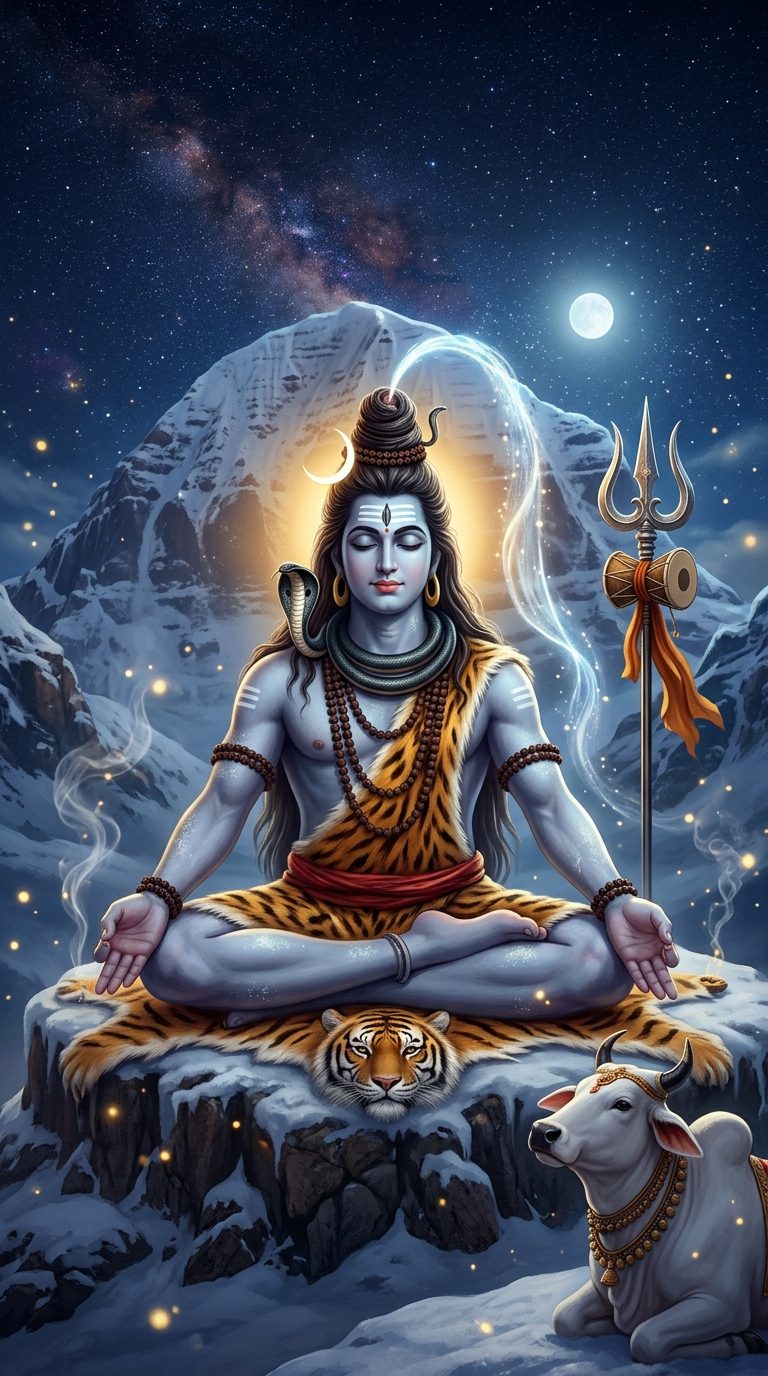
The still point at the centre of the cosmic dance
Shiva Mantras & Stotras
Shiva is the great yogi of the Himalayas — the destroyer of ignorance, the lord of meditation, and the stillness out of which the whole dance of creation arises. He is worshipped as a serene ascetic on Mount Kailash, as Nataraja the cosmic dancer, and in the formless shape of the lingam, a pillar of light with no beginning and no end.
The hymns below are some of the most loved in the Hindu tradition. Each one is given in full, with an easy way to read it aloud, the exact Sanskrit, and a line-by-line English meaning — so you can understand what you are chanting, not just repeat the sounds.
Shiva Hymns with Meaning
Ashtakam · 9 verses
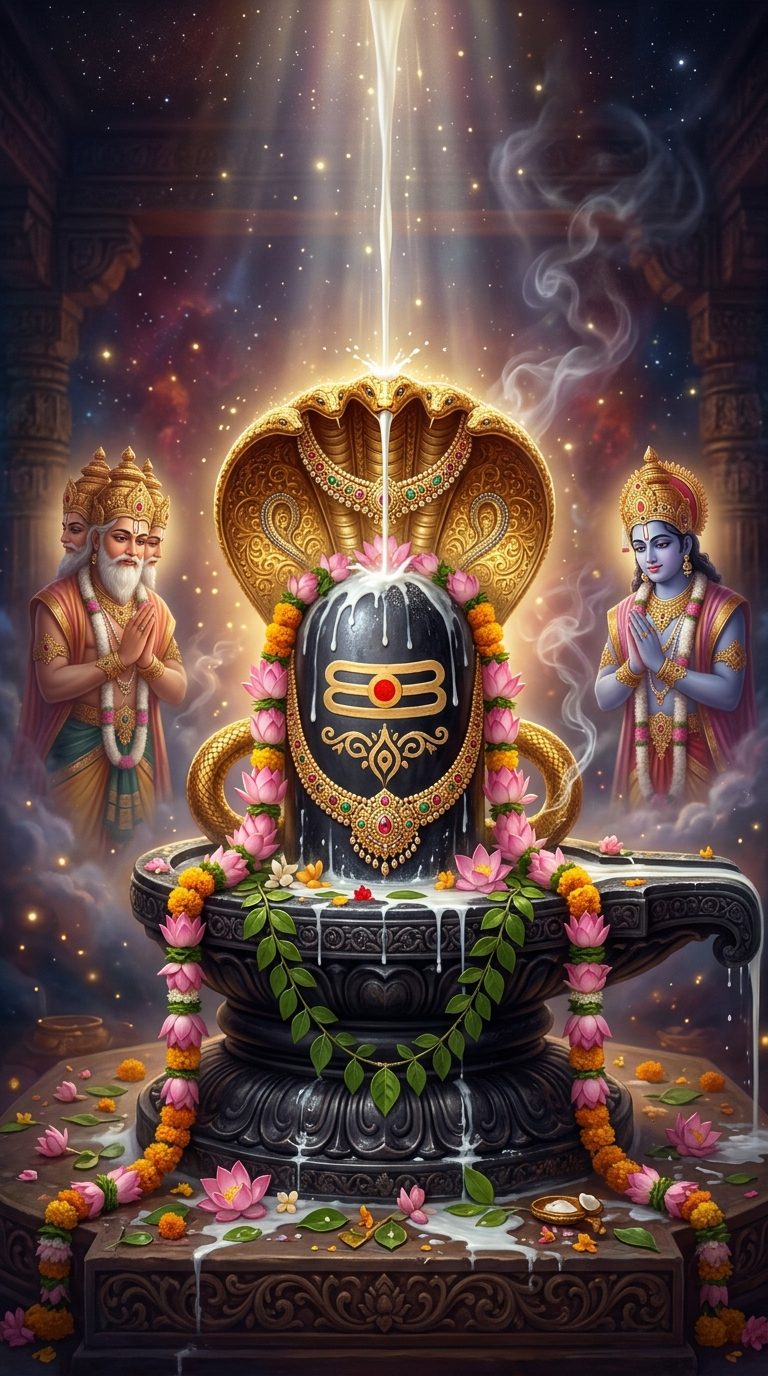
Lingashtakam
Eight short verses praising the Shiva Linga — the formless symbol of Shiva — each ending with the same heartfelt refrain: “to that Linga, the ever-auspicious Shiva, I bow.”
Mantra · 1 verses
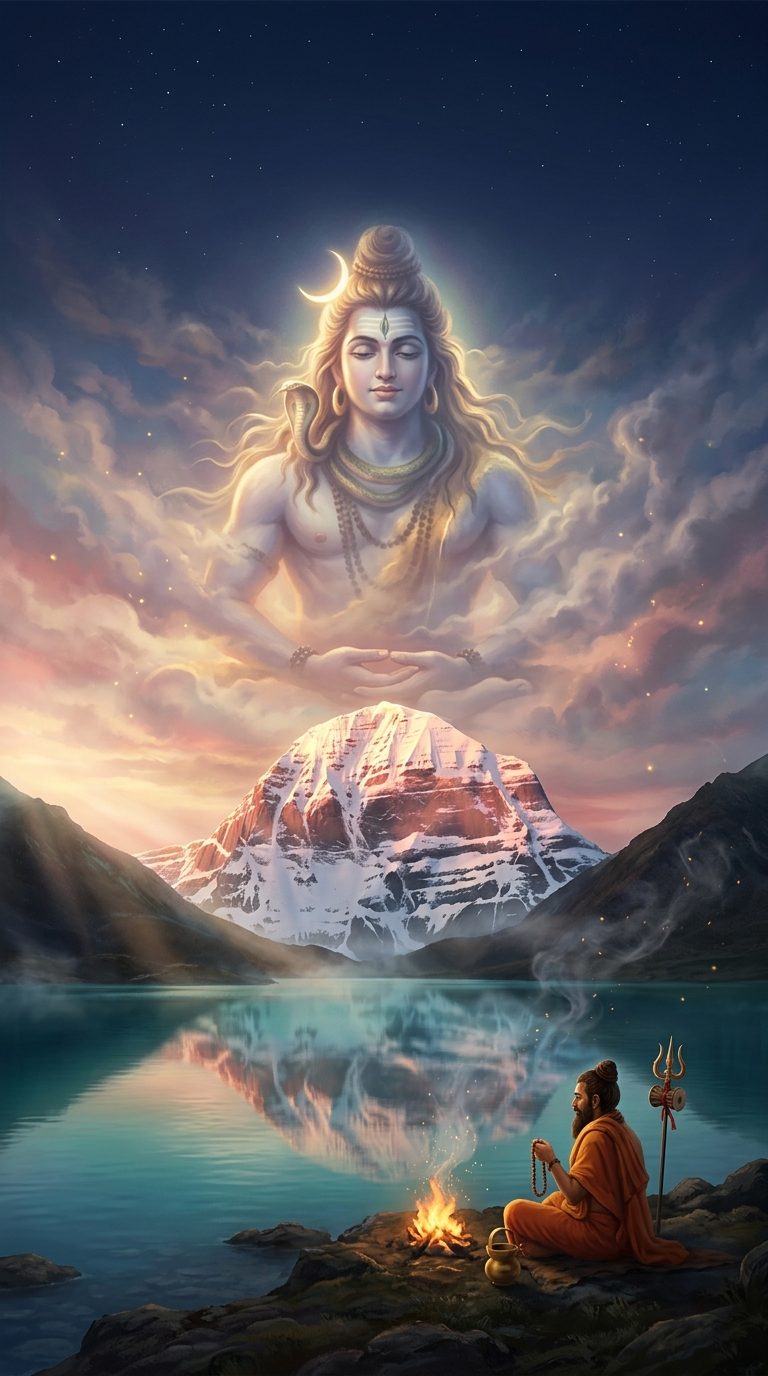
Om Namah Shivaya
The great five-syllable mantra of Shiva — “Om, I bow to Shiva” — one of the oldest and most widely chanted prayers in the world.
Stotram · 6 verses
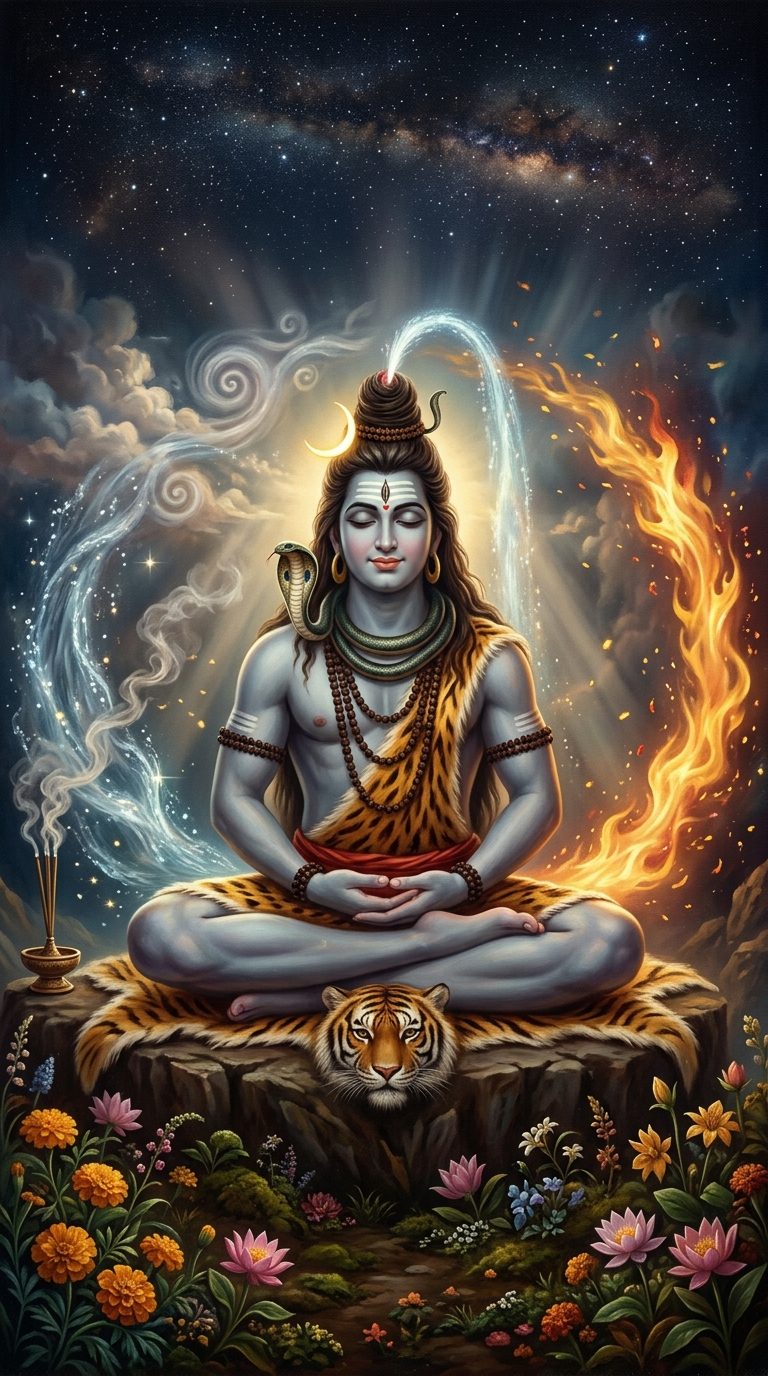
Shiva Panchakshara Stotram
Five verses for the five sacred syllables of Na-Ma-Shi-Va-Ya — each verse paints a portrait of Shiva and ends by bowing to him as one syllable of his great mantra.
Stotram · 17 verses
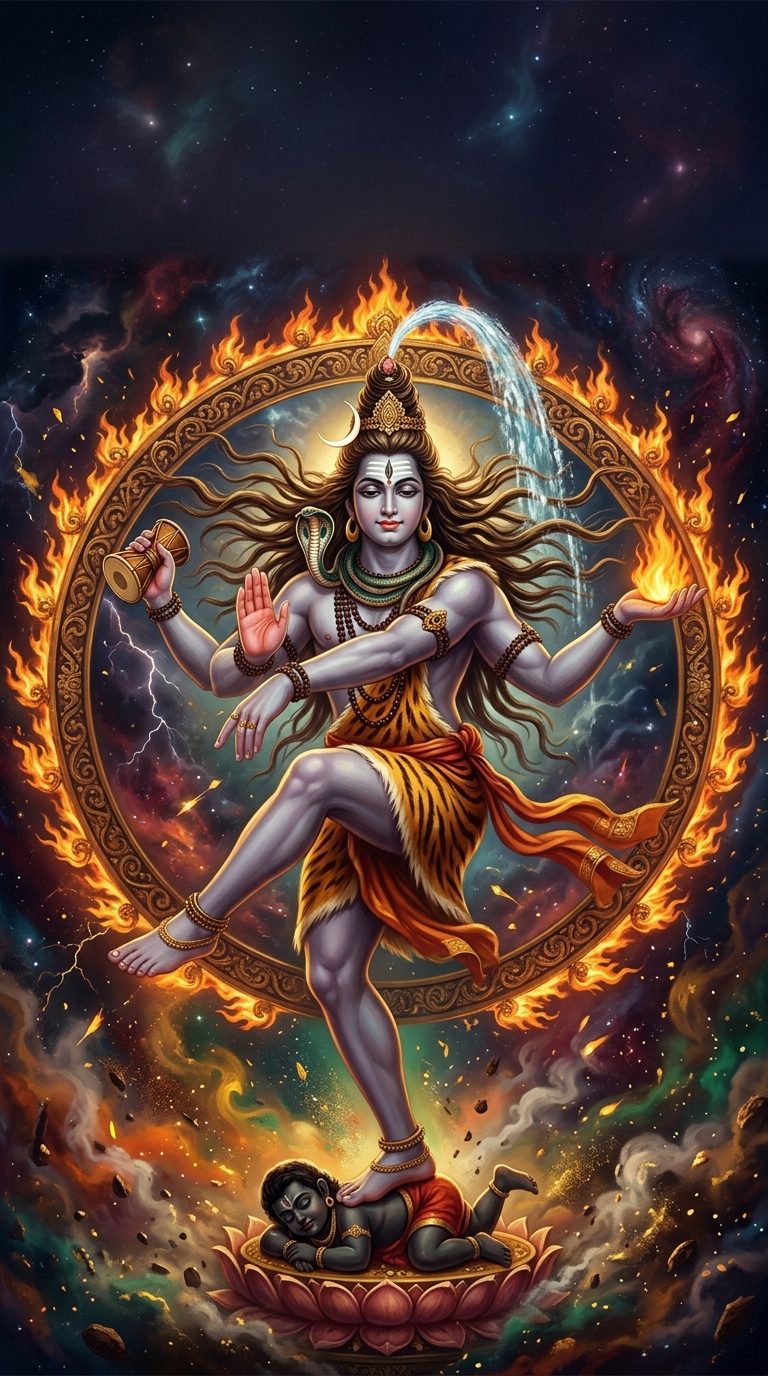
Shiva Tandava Stotram
Ravana’s thunderous hymn to Shiva’s cosmic dance — drums pounding, serpents hissing, the Ganga whirling in his hair — one of the most powerful and rhythmic hymns in Sanskrit.
Mantra · 1 verses
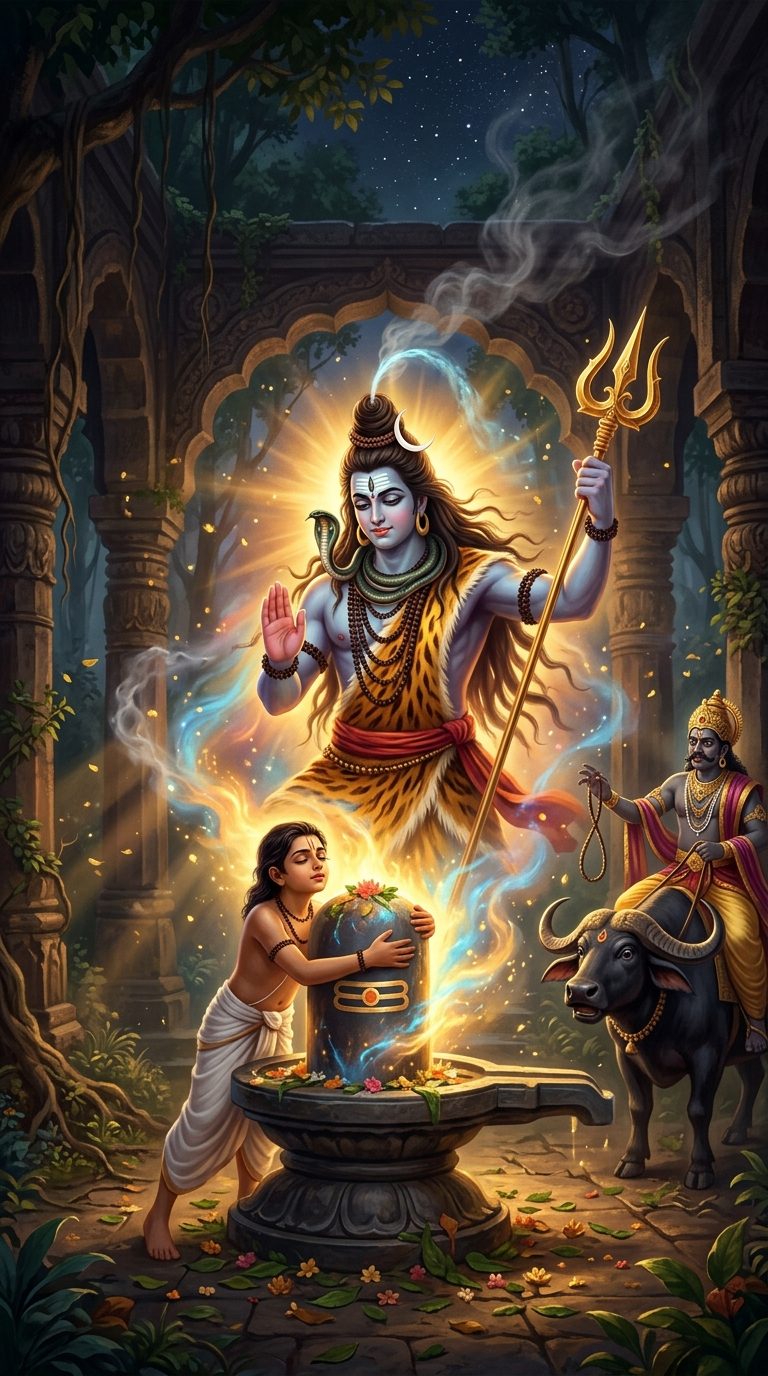
Maha Mrityunjaya Mantra
The great “death-conquering” mantra from the Rig Veda — a prayer to the three-eyed Shiva to be released from fear and death like a ripe fruit falling gently from its vine.

Stotram · 6 verses
Nirvana Shatakam
Six verses by Adi Shankaracharya that strip away everything we are not — body, mind, emotions, even religion — until only one truth is left: “I am consciousness and bliss. I am Shiva.”
Mantra · 1 verses
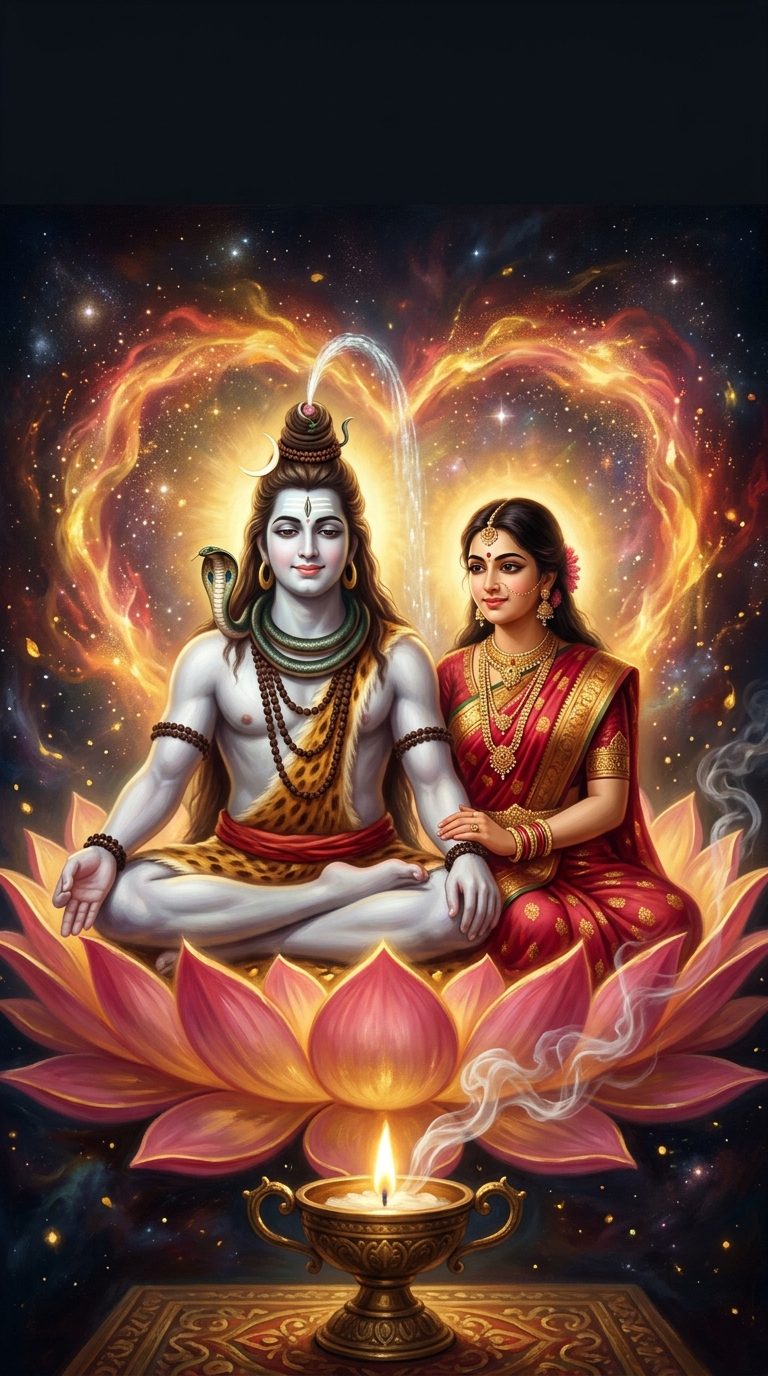
Karpur Gauram
The beautiful four-line verse sung at the end of almost every aarti — praising Shiva, white as camphor, compassion in human form, who lives in the lotus of the heart with Parvati.
Ashtakam · 9 verses
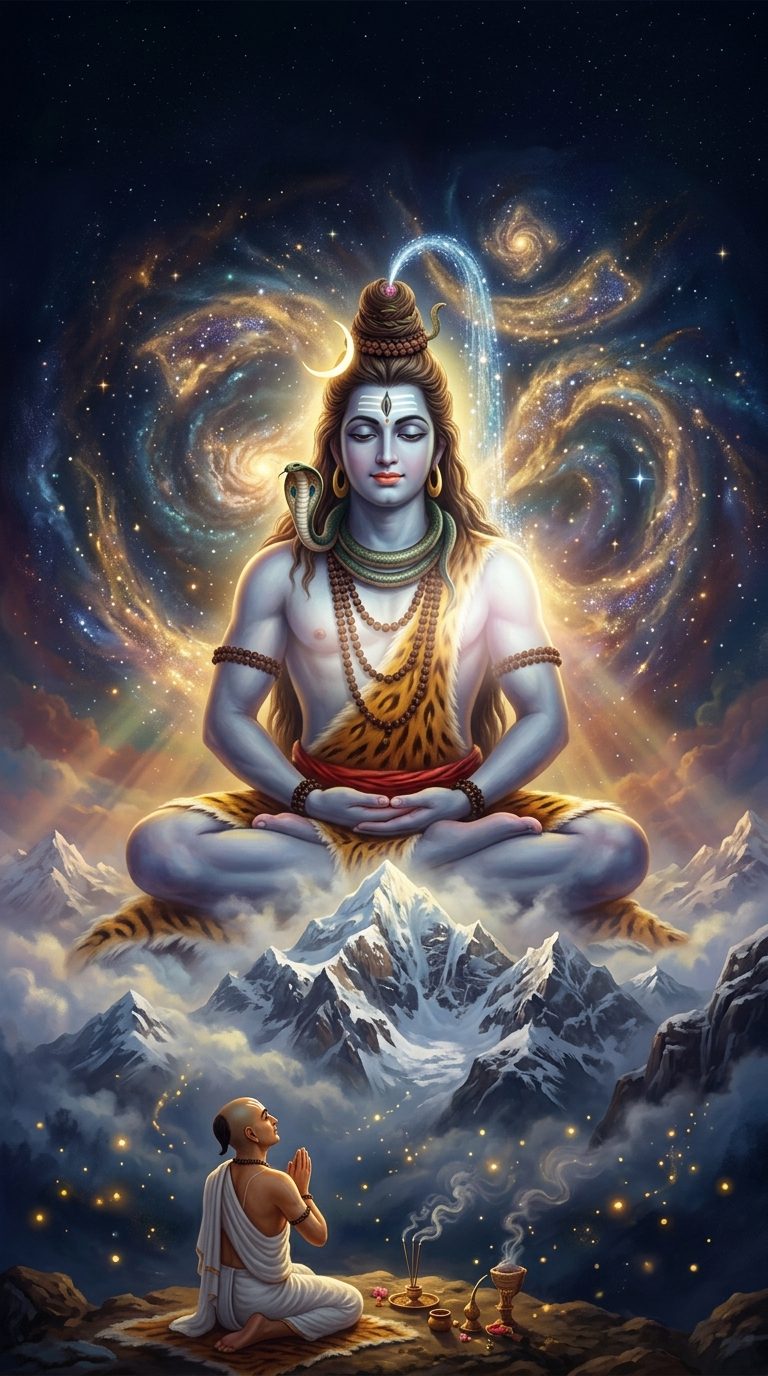
Shiva Rudrashtakam
Tulsidas’s eight verses to Shiva, beginning “Namāmīśam īśāna” — a hymn that moves from the formless, infinite Shiva to the gentle, blue-throated lord, ending in a heartfelt plea: “I know no yoga, no ritual — protect me, Shambhu.”
Ashtakam · 9 verses
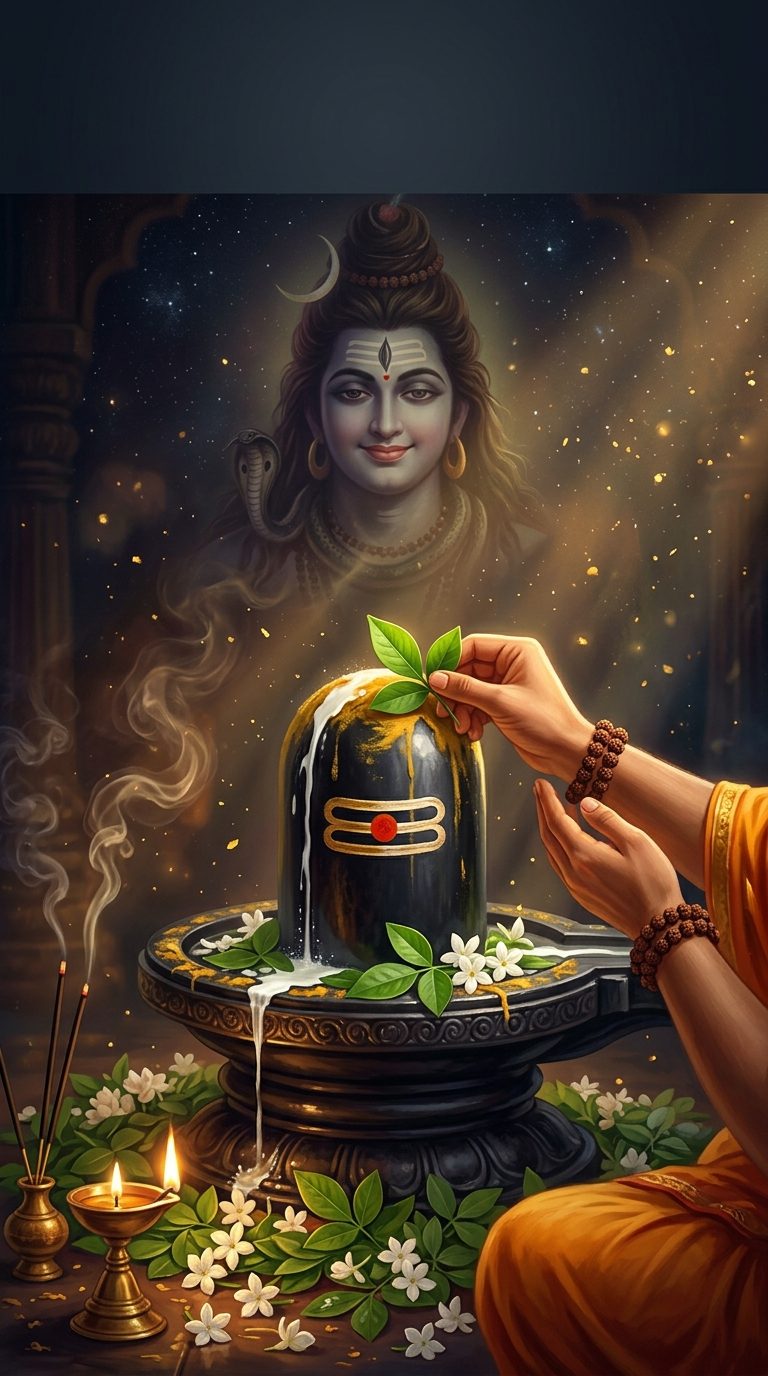
Bilvashtakam
Eight verses on offering a single three-leafed bilva leaf to Shiva — each ending ekabilvaṃ śivārpaṇam, “one bilva leaf, offered to Shiva” — the simplest and most loved of all Shiva offerings.
Ashtakam · 9 verses
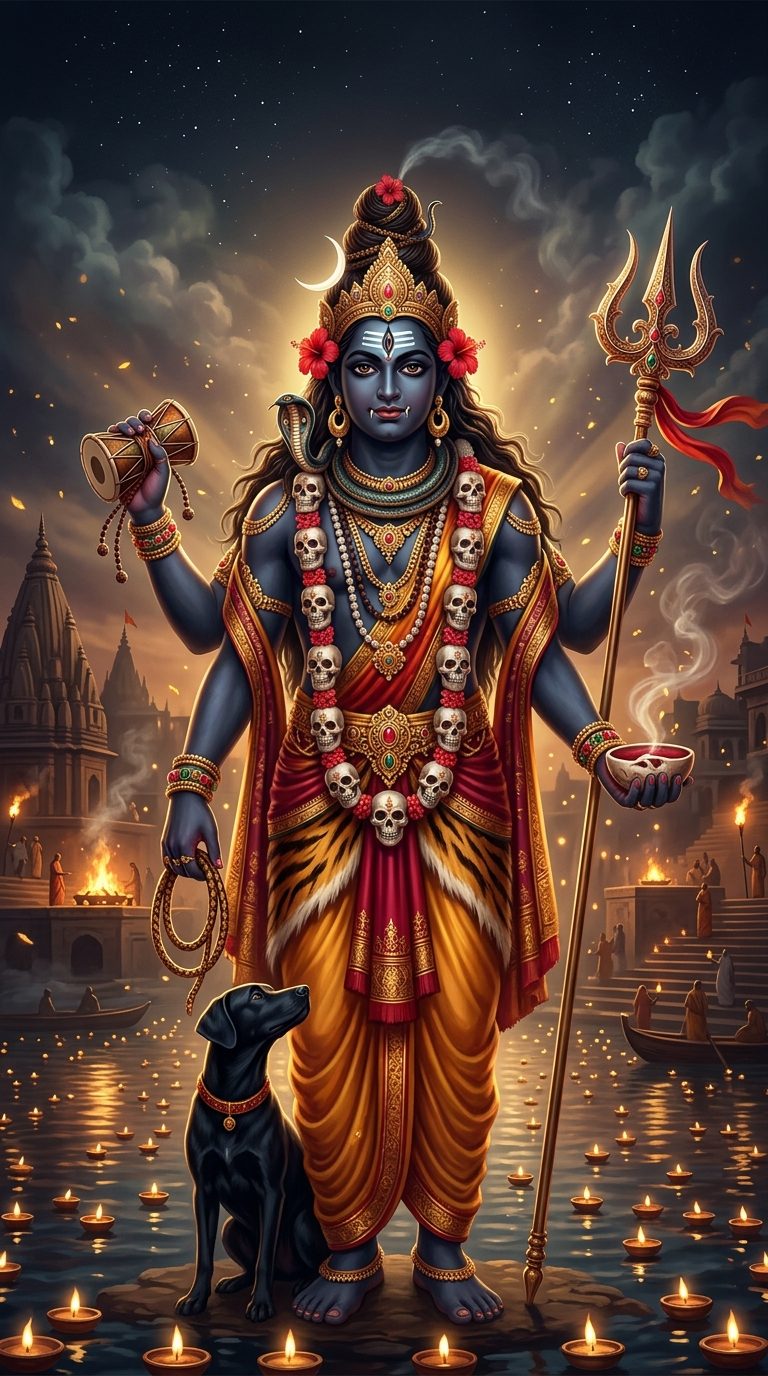
Kalabhairava Ashtakam
Adi Shankaracharya’s eight verses to Kala Bhairava, Shiva’s fierce form as master of time and guardian of Kashi — each ending “I worship Kala Bhairava, lord of the city of Kashi.”
Gayatri Mantra · 1 verses
Shiva Gayatri Mantra
The Gayatri of Shiva — “May we know the Supreme Being, may we meditate on the Great God; may Rudra awaken us” — a short Vedic prayer for clarity and inner strength.
Stotram · 4 verses
Dvadasha Jyotirlinga Stotram
Four short verses that name all twelve Jyotirlingas — Shiva’s twelve sacred “lingas of light” across India — so that remembering them morning and evening is like a pilgrimage in itself.
Stotram · 5 verses
Shiva Manasa Puja
Adi Shankaracharya’s hymn of “mental worship” — offering Shiva a jewelled throne, a feast, music and dance entirely in the imagination — ending with the realisation that every action of life can be worship.
Ashtakam · 10 verses
Chandrashekhara Ashtakam
The young sage Markandeya’s hymn to Shiva the moon-crowned, sung as death approached him — eight verses that each end, “I take refuge in Chandrashekhara — what can death do to me?”
Stotram · 10 verses
Dakshinamurthy Stotram
Adi Shankaracharya’s profound hymn to Shiva as Dakshinamurthy, the silent teacher under the banyan tree — ten verses that teach, through vivid images, that the whole world shines within one’s own Self.
Stuti · 1 verses
Karacharana Kritam Vaa
A tender prayer asking Shiva to forgive every wrong — done by hands or feet, speech or body, eyes or ears or mind, knowingly or unknowingly — ending “Glory to you, ocean of compassion.”