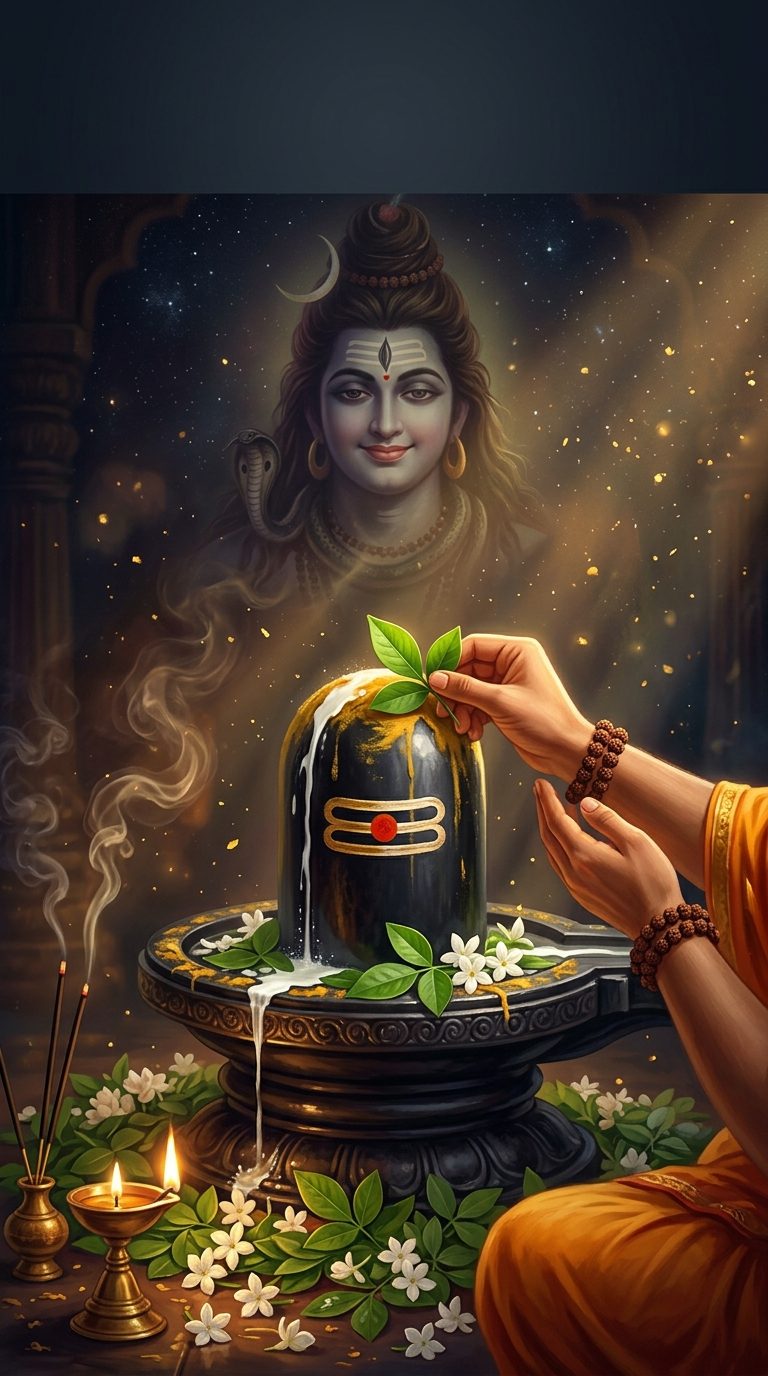
A devotee’s hands offering a single three-leafed bilva leaf onto a Shiva Linga bathed in milk, with Shiva’s face glowing above in the temple darkness
ShivaAshtakam

Bilvashtakam

Lyrics · Meaning · Audio

Eight verses on offering a single three-leafed bilva leaf to Shiva — each ending ekabilvaṃ śivārpaṇam, “one bilva leaf, offered to Shiva” — the simplest and most loved of all Shiva offerings.

Traditional hymn, author unknown

Listen

Bilvashtakam

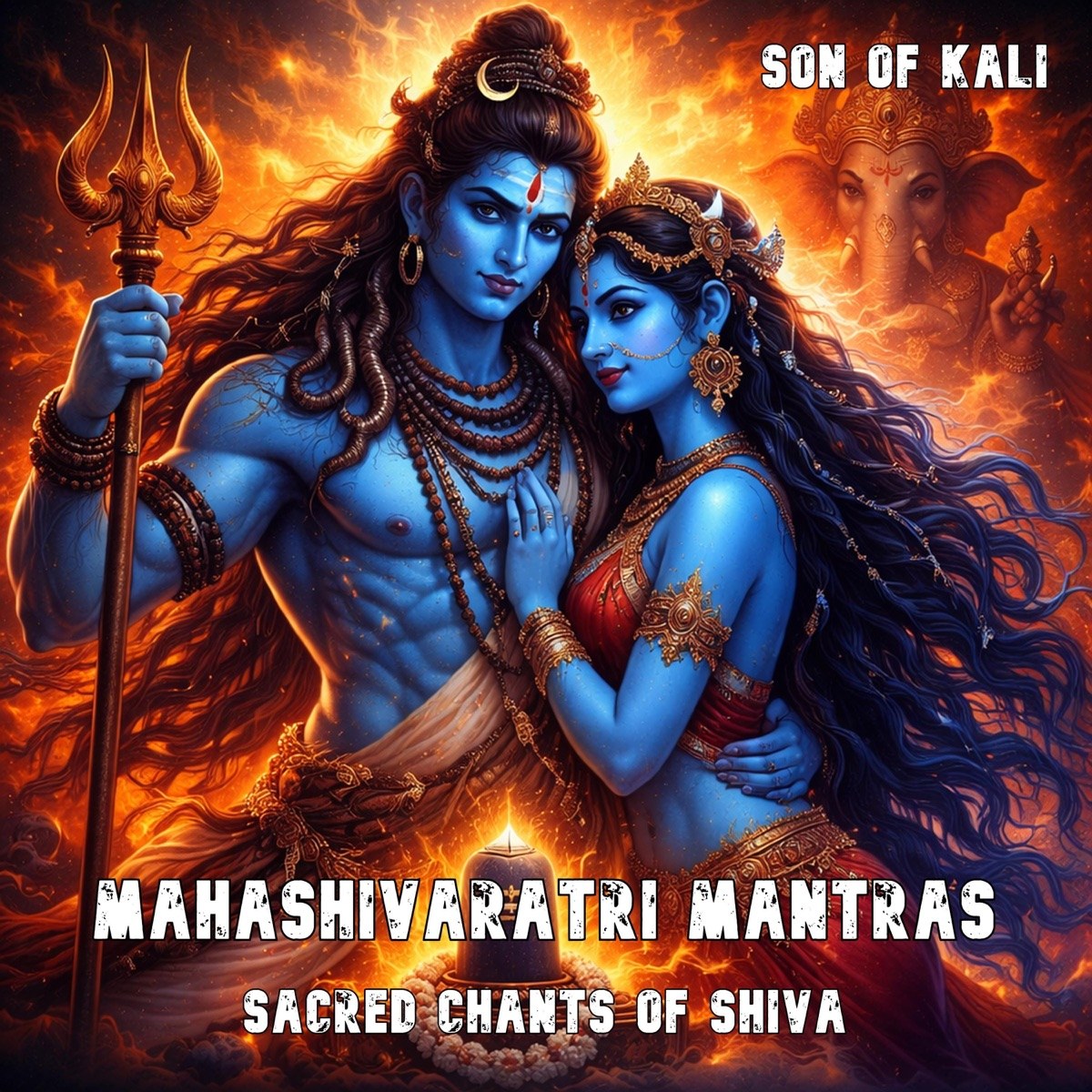
Son of Kali · Mahashivaratri Mantras

0:007:10
Deity
Shiva
Type
Ashtakam
Verses
9
Language
Sanskrit

Bilvashtakam Lyrics with Meaning

Each line shows an easy way to say it, with its English meaning. Turn on the Sanskrit, the exact pronunciation or the word-by-word meaning whenever you want to go deeper.

Verse 1

त्रिदलं त्रिगुणाकारं त्रिनेत्रं च त्रियायुधम् ।

Tridalam Trigunakaram Trinetram Cha Triyayudham

tridalaṃ triguṇākāraṃ trinetraṃ ca triyāyudham

Three-leafed, shaped like the three qualities of nature, like the three eyes and the trident,

    त्रिजन्मपापसंहारं एकबिल्वं शिवार्पणम् ॥ १ ॥

    Trijanma Papa Samharam Ekabilvam Shivarpanam

    trijanmapāpasaṃhāraṃ ekabilvaṃ śivārpaṇam

    destroying the sins of three lifetimes — one bilva leaf I offer to Shiva.

      Verse 2

      त्रिशाखैर्बिल्वपत्रैश्च अच्छिद्रैः कोमलैः शुभैः ।

      Trishakhair Bilva Patraish Cha Achchhidraih Komalaih Shubhaih

      triśākhairbilvapatraiśca acchidraiḥ komalaiḥ śubhaiḥ

      With three-pronged bilva leaves, whole, tender and beautiful,

        शिवपूजां करिष्यामि एकबिल्वं शिवार्पणम् ॥ २ ॥

        Shiva Pujam Karishyami Ekabilvam Shivarpanam

        śivapūjāṃ kariṣyāmi ekabilvaṃ śivārpaṇam

        I will worship Shiva — one bilva leaf I offer to Shiva.

          Verse 3

          अखण्डबिल्वपत्रेण पूजिते नन्दिकेश्वरे ।

          Akhanda Bilva Patrena Pujite Nandikeshvare

          akhaṇḍabilvapatreṇa pūjite nandikeśvare

          When the lord of Nandi is worshipped with an unbroken bilva leaf,

            शुद्ध्यन्ति सर्वपापेभ्यो एकबिल्वं शिवार्पणम् ॥ ३ ॥

            Shuddhyanti Sarva Papebhyo Ekabilvam Shivarpanam

            śuddhyanti sarvapāpebhyo ekabilvaṃ śivārpaṇam

            people are cleansed of all wrongs — one bilva leaf I offer to Shiva.

              Verse 4

              शालिग्रामशिलामेकां विप्राणां जातु अर्पयेत् ।

              Saligrama Shilam Ekam Vipranam Jatu Arpayet

              śāligrāmaśilāmekāṃ viprāṇāṃ jātu arpayet

              It brings the merit of giving a sacred Shaligrama stone to the learned,

                सोमयज्ञमहापुण्यं एकबिल्वं शिवार्पणम् ॥ ४ ॥

                Soma Yagya Maha Punyam Ekabilvam Shivarpanam

                somayajñamahāpuṇyaṃ ekabilvaṃ śivārpaṇam

                and the great merit of the Soma sacrifice — one bilva leaf I offer to Shiva.

                  Verse 5

                  दन्तिकोटिसहस्राणि वाजपेयशतानि च ।

                  Danti Koti Sahasrani Vajapeya Shatani Cha

                  dantikoṭisahasrāṇi vājapeyaśatāni ca

                  Like giving away countless thousands of elephants, or performing a hundred great Vajapeya sacrifices,

                    कोटिकन्यामहादानं एकबिल्वं शिवार्पणम् ॥ ५ ॥

                    Koti Kanya Mahadanam Ekabilvam Shivarpanam

                    koṭikanyāmahādānaṃ ekabilvaṃ śivārpaṇam

                    or the great gift of countless marriages — such is one bilva leaf offered to Shiva.

                      Verse 6

                      लक्ष्म्याः स्तनत उत्पन्नं महादेवस्य च प्रियम् ।

                      Lakshmyah Stanata Utpannam Mahadevasya Cha Priyam

                      lakṣmyāḥ stanata utpannaṃ mahādevasya ca priyam

                      Born from Lakshmi herself and beloved of the great god Shiva,

                        बिल्ववृक्षं प्रयच्छामि एकबिल्वं शिवार्पणम् ॥ ६ ॥

                        Bilva Vriksham Prayachchhami Ekabilvam Shivarpanam

                        bilvavṛkṣaṃ prayacchāmi ekabilvaṃ śivārpaṇam

                        is the bilva tree I offer — one bilva leaf I offer to Shiva.

                          Verse 7

                          दर्शनं बिल्ववृक्षस्य स्पर्शनं पापनाशनम् ।

                          Darshanam Bilva Vrikshasya Sparshanam Papa Nashanam

                          darśanaṃ bilvavṛkṣasya sparśanaṃ pāpanāśanam

                          Even seeing the bilva tree, even touching it, wipes away wrongs;

                            अघोरपापसंहारं एकबिल्वं शिवार्पणम् ॥ ७ ॥

                            Aghora Papa Samharam Ekabilvam Shivarpanam

                            aghorapāpasaṃhāraṃ ekabilvaṃ śivārpaṇam

                            it destroys even the gravest sins — one bilva leaf I offer to Shiva.

                              Verse 8

                              मूलतो ब्रह्मरूपाय मध्यतो विष्णुरूपिणे ।

                              Mulato Brahma Rupaya Madhyato Vishnu Rupine

                              mūlato brahmarūpāya madhyato viṣṇurūpiṇe

                              Its root is Brahma, its middle is Vishnu,

                                अग्रतः शिवरूपाय एकबिल्वं शिवार्पणम् ॥ ८ ॥

                                Agratah Shiva Rupaya Ekabilvam Shivarpanam

                                agrataḥ śivarūpāya ekabilvaṃ śivārpaṇam

                                and its tip is Shiva — one bilva leaf I offer to Shiva.

                                  Closing verse (Phala Shruti)

                                  बिल्वाष्टकमिदं पुण्यं यः पठेच्छिवसन्निधौ ।

                                  Bilvashtakam Idam Punyam Yah Pathech Chiva Sannidhau

                                  bilvāṣṭakamidaṃ puṇyaṃ yaḥ paṭhecchivasannidhau

                                  Whoever recites this holy Bilvashtakam in the presence of Shiva

                                    सर्वपापविनिर्मुक्तः शिवलोकमवाप्नुयात् ॥

                                    Sarva Papa Vinirmuktah Shivalokam Avapnuyat

                                    sarvapāpavinirmuktaḥ śivalokamavāpnuyāt

                                    is freed from all wrongs and reaches the realm of Shiva.

                                      About Bilvashtakam

                                      The bilva (also called bel or wood-apple) tree is sacred to Shiva, and its three-part leaf is the offering he loves most. Bilvashtakam, “eight verses on the bilva,” praises that leaf and promises that even one, offered with devotion, is worth more than the grandest rituals.

                                      Every verse ends with the same humble line: ekabilvaṃ śivārpaṇam — “I offer one bilva leaf to Shiva.” The hymn says this single leaf outweighs giving away thousands of elephants, performing a hundred great Vedic sacrifices, or donating a mountain of gold. The point is not the leaf itself, but the love behind it.

                                      The three leaflets carry rich symbolism: Shiva’s three eyes, his trident, the three qualities of nature (sattva, rajas, tamas), the three worlds and the three times — past, present and future. Offering the leaf is offering everything.

                                      The Stories Inside the Hymn

                                      The hunter and the bilva tree

                                      On the night of Maha Shivaratri, a hunter climbed a bilva tree to wait for prey. Restless and unable to sleep, he plucked leaves one by one and dropped them to the ground — not knowing a Shiva Linga lay hidden beneath the tree. His tears fell on it too.

                                      Without meaning to, he had kept an all-night vigil, fasted and worshipped Shiva with bilva leaves and water. Shiva appeared and blessed him with liberation. The story is told every Shivaratri to show that Shiva values the heart, not ritual perfection.

                                      Born from Lakshmi

                                      Verse 6 says the bilva tree arose from Lakshmi herself. In one story, Lakshmi offered lotuses to Shiva every day; when one day she was a single flower short, she decided to offer her own body. Pleased, Shiva turned her offering into the bilva tree, so that she would be part of his worship forever.

                                      That is why the bilva is honoured as auspicious and full of Lakshmi’s grace.

                                      How to Chant Bilvashtakam

                                      When to chant

                                      • ✦While offering bilva leaves to a Shiva Linga
                                      • ✦Mondays, Pradosham and the month of Shravan
                                      • ✦Maha Shivaratri, through the night
                                      • ✦Any time you wish to offer something simple with love

                                      How many times

                                      Once through while offering leaves; many offer one leaf at each verse, eight in all.

                                      1. 1

                                        If you have bilva leaves, choose fresh ones with all three leaflets whole.

                                      2. 2

                                        Wash them and place them before a Shiva Linga or image.

                                      3. 3

                                        Listen to the recording once with the meaning on.

                                      4. 4

                                        Chant verse by verse, offering one leaf as you say “ekabilvaṃ śivārpaṇam.”

                                      5. 5

                                        Finish with the closing verse and a few rounds of Om Namah Shivaya.

                                      Pronunciation Guide

                                      The sounds that trip people up most in this hymn, and how to say them.

                                      tridalaṃ

                                      tri-da-lum — “three-leafed.”

                                      ekabilvaṃ

                                      ay-ka-bil-vum.

                                      śivārpaṇam

                                      shi-vaar-pa-num — “offered to Shiva,” ṇ with the tongue curled back.

                                      trijanmapāpa

                                      tri-jun-ma-paa-pa.

                                      Mahashivaratri Mantras Sacred Chants of Shiva by Son of Kali

                                      The music

                                      Mahashivaratri Mantras Sacred Chants of Shiva

                                      by Son of Kali

                                      More for Shiva

                                      Frequently Asked Questions

                                      What does Bilvashtakam mean?

                                      It means “eight verses on the bilva leaf.” Each verse praises the bilva leaf and ends with “one bilva leaf, offered to Shiva.”

                                      Why is the bilva leaf offered to Shiva?

                                      Its three leaflets symbolise Shiva’s three eyes and trident, the three qualities of nature and the three worlds. Tradition says Shiva loves it more than any other offering.

                                      Who wrote Bilvashtakam?

                                      It is a traditional hymn whose author is unknown. It is found in classic collections of stotras.

                                      When is Bilvashtakam chanted?

                                      While offering bilva leaves to Shiva — especially on Mondays, in the month of Shravan and on Maha Shivaratri.

                                      Text: Traditional public-domain Sanskrit text (Brihat Stotra Ratnakara tradition). Easy reading, transliteration and English translation written for the Jaguar Medicine Tribe Mantra Library.

                                      Music: Recordings by Son of Kali, produced with AI-assisted vocals and instrumentation.

                                      Note: Benefits described here are traditional beliefs, shared for understanding — not medical or guaranteed outcomes.