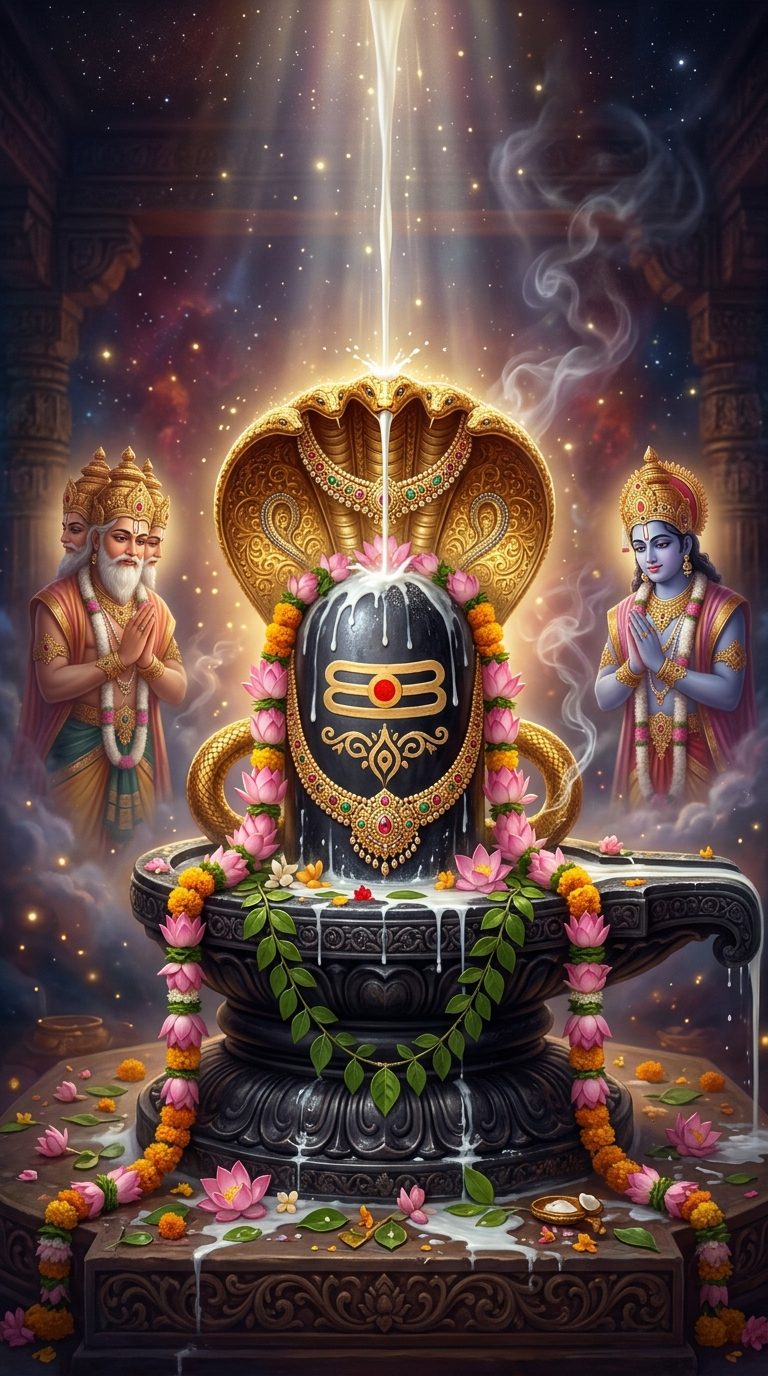
Eight short verses praising the Shiva Linga — the formless symbol of Shiva — each ending with the same heartfelt refrain: “to that Linga, the ever-auspicious Shiva, I bow.”
Traditionally attributed to Adi Shankaracharya
Listen
Lingashtakam
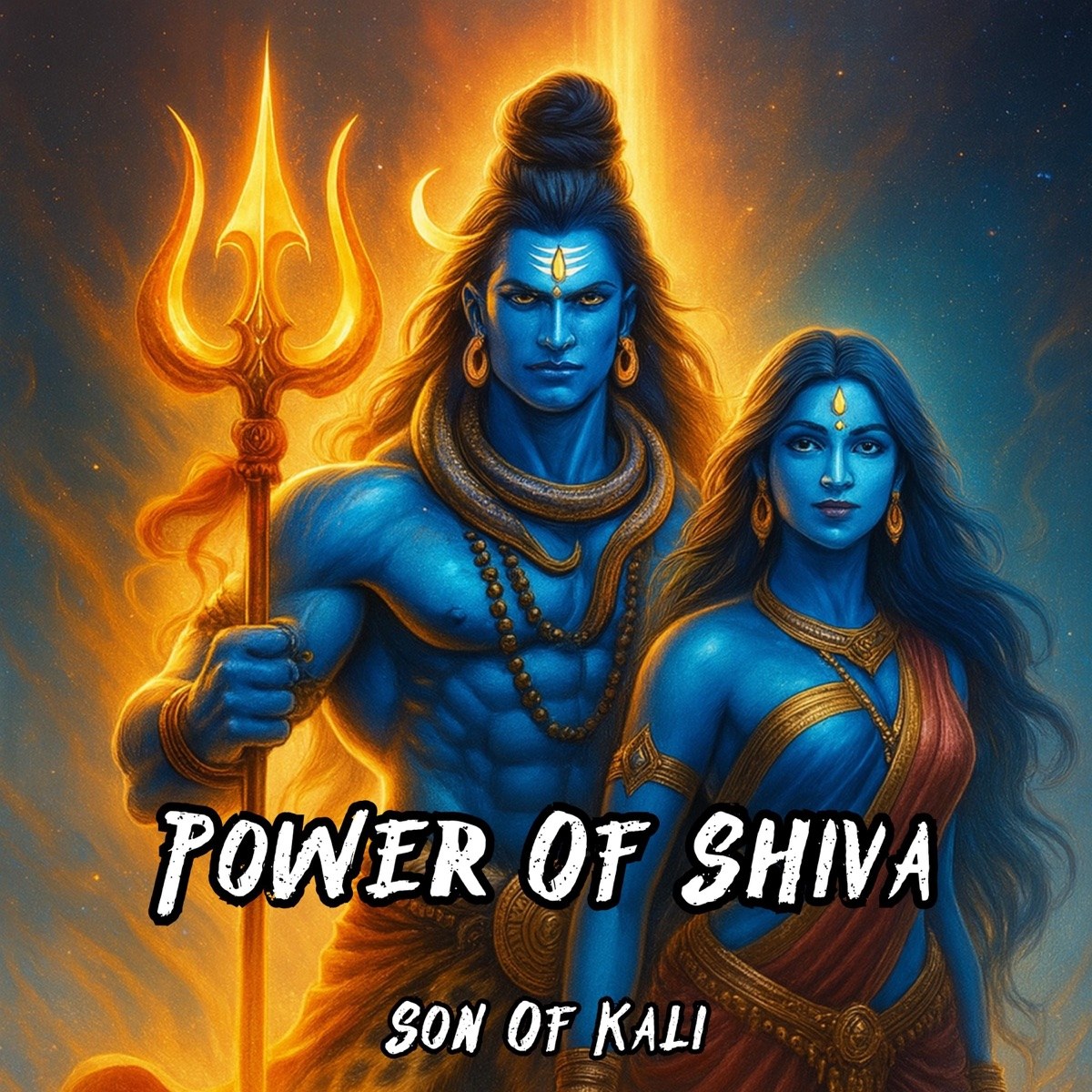
Son of Kali · Power of Shiva
0:005:15
Deity
Shiva
Type
Ashtakam
Verses
9
Language
Sanskrit
LingashtakamLyricswithMeaning
Each line shows an easy way to say it, with its English meaning. Turn on the Sanskrit, the exact pronunciation or the word-by-word meaning whenever you want to go deeper.
Verse 1
ब्रह्ममुरारि सुरार्चित लिङ्गं
Brahma Murari Surarchita Lingam
brahmamurāri surārcita liṅgaṃ
The Linga worshipped by Brahma, by Vishnu and by all the gods,
निर्मलभासित शोभित लिङ्गम् ।
Nirmala Bhasita Shobhita Lingam
nirmalabhāsita śobhita liṅgam
spotless, shining and beautiful,
जन्मज दुःख विनाशक लिङ्गं
Janmaja Duhkha Vinashaka Lingam
janmaja duḥkha vināśaka liṅgaṃ
which destroys the sorrow that comes with being born —
तत् प्रणमामि सदाशिव लिङ्गम् ॥ १ ॥
Tat Pranamami Sadashiva Lingam
tat praṇamāmi sadāśiva liṅgam
to that Linga, the ever-auspicious Shiva, I bow.
Verse 2
देवमुनि प्रवरार्चित लिङ्गं
Devamuni Pravararchita Lingam
devamuni pravarārcita liṅgaṃ
The Linga worshipped by the gods and the greatest of sages,
कामदहन करुणाकर लिङ्गम् ।
Kamadahana Karunakara Lingam
kāmadahana karuṇākara liṅgam
which burned Kama, the god of desire, and is a fountain of compassion,
रावणदर्प विनाशन लिङ्गं
Ravana Darpa Vinashana Lingam
rāvaṇadarpa vināśana liṅgaṃ
which crushed the pride of Ravana —
तत् प्रणमामि सदाशिव लिङ्गम् ॥ २ ॥
Tat Pranamami Sadashiva Lingam
tat praṇamāmi sadāśiva liṅgam
to that Linga, the ever-auspicious Shiva, I bow.
Verse 3
सर्वसुगन्ध सुलेपित लिङ्गं
Sarva Sugandha Sulepita Lingam
sarvasugandha sulepita liṅgaṃ
The Linga lovingly anointed with every kind of fragrance,
बुद्धिविवर्धन कारण लिङ्गम् ।
Buddhi Vivardhana Karana Lingam
buddhivivardhana kāraṇa liṅgam
which makes wisdom grow,
सिद्धसुरासुर वन्दित लिङ्गं
Siddha Surasura Vandita Lingam
siddhasurāsura vandita liṅgaṃ
honoured by perfected sages, by gods and by demons alike —
तत् प्रणमामि सदाशिव लिङ्गम् ॥ ३ ॥
Tat Pranamami Sadashiva Lingam
tat praṇamāmi sadāśiva liṅgam
to that Linga, the ever-auspicious Shiva, I bow.
Verse 4
कनक महामणि भूषित लिङ्गं
Kanaka Mahamani Bhushita Lingam
kanaka mahāmaṇi bhūṣita liṅgaṃ
The Linga adorned with gold and great jewels,
फणिपति वेष्टित शोभित लिङ्गम् ।
Phanipati Veshtita Shobhita Lingam
phaṇipati veṣṭita śobhita liṅgam
made splendid by the king of serpents coiled around it,
दक्षसुयज्ञ विनाशन लिङ्गं
Daksha Suyagya Vinashana Lingam
dakṣasuyajña vināśana liṅgaṃ
which brought Daksha’s grand sacrifice to ruin —
तत् प्रणमामि सदाशिव लिङ्गम् ॥ ४ ॥
Tat Pranamami Sadashiva Lingam
tat praṇamāmi sadāśiva liṅgam
to that Linga, the ever-auspicious Shiva, I bow.
Verse 5
कुङ्कुमचन्दन लेपित लिङ्गं
Kumkuma Chandana Lepita Lingam
kuṅkumacandana lepita liṅgaṃ
The Linga anointed with red kumkum and sandalwood paste,
पङ्कजहार सुशोभित लिङ्गम् ।
Pankaja Hara Sushobhita Lingam
paṅkajahāra suśobhita liṅgam
made lovely with garlands of lotus flowers,
सञ्चितपाप विनाशन लिङ्गं
Sanchita Papa Vinashana Lingam
sañcitapāpa vināśana liṅgaṃ
which wipes away the wrongs we have gathered over time —
तत् प्रणमामि सदाशिव लिङ्गम् ॥ ५ ॥
Tat Pranamami Sadashiva Lingam
tat praṇamāmi sadāśiva liṅgam
to that Linga, the ever-auspicious Shiva, I bow.
Verse 6
देवगणार्चित सेवित लिङ्गं
Devaganarchita Sevita Lingam
devagaṇārcita sevita liṅgaṃ
The Linga worshipped and served by all the hosts of gods
भावैर्भक्तिभिरेव च लिङ्गम् ।
Bhavair Bhaktibhir Eva Cha Lingam
bhāvairbhaktibhireva ca liṅgam
with true feeling and with devotion,
दिनकरकोटि प्रभाकर लिङ्गं
Dinakara Koti Prabhakara Lingam
dinakarakoṭi prabhākara liṅgaṃ
shining with the light of ten million suns —
तत् प्रणमामि सदाशिव लिङ्गम् ॥ ६ ॥
Tat Pranamami Sadashiva Lingam
tat praṇamāmi sadāśiva liṅgam
to that Linga, the ever-auspicious Shiva, I bow.
Verse 7
अष्टदलोपरि वेष्टित लिङ्गं
Ashtadalopari Veshtita Lingam
aṣṭadalopari veṣṭita liṅgaṃ
The Linga enthroned upon an eight-petalled lotus,
सर्वसमुद्भव कारण लिङ्गम् ।
Sarva Samudbhava Karana Lingam
sarvasamudbhava kāraṇa liṅgam
the cause from which everything comes into being,
अष्टदरिद्र विनाशित लिङ्गं
Ashta Daridra Vinashita Lingam
aṣṭadaridra vināśita liṅgaṃ
which ends the eight kinds of poverty —
तत् प्रणमामि सदाशिव लिङ्गम् ॥ ७ ॥
Tat Pranamami Sadashiva Lingam
tat praṇamāmi sadāśiva liṅgam
to that Linga, the ever-auspicious Shiva, I bow.
Verse 8
सुरगुरु सुरवर पूजित लिङ्गं
Suraguru Suravara Pujita Lingam
suraguru suravara pūjita liṅgaṃ
The Linga worshipped by Brihaspati, teacher of the gods, and by the greatest of the gods,
सुरवनपुष्प सदार्चित लिङ्गम् ।
Suravana Pushpa Sadarchita Lingam
suravanapuṣpa sadārcita liṅgam
honoured always with flowers from the gardens of heaven,
परात्परं परमात्मक लिङ्गं
Paratparam Paramatmaka Lingam
parātparaṃ paramātmaka liṅgaṃ
higher than the highest, whose very nature is the Supreme Self —
तत् प्रणमामि सदाशिव लिङ्गम् ॥ ८ ॥
Tat Pranamami Sadashiva Lingam
tat praṇamāmi sadāśiva liṅgam
to that Linga, the ever-auspicious Shiva, I bow.
Closing verse (Phala Shruti)
लिङ्गाष्टकमिदं पुण्यं
Lingashtakam Idam Punyam
liṅgāṣṭakamidaṃ puṇyaṃ
Whoever recites this holy Lingashtakam
यः पठेच्छिवसन्निधौ ।
Yah Pathech Chiva Sannidhau
yaḥ paṭhecchivasannidhau
in the presence of Shiva
शिवलोकमवाप्नोति
Shivalokam Avapnoti
śivalokamavāpnoti
reaches the realm of Shiva
शिवेन सह मोदते ॥
Shivena Saha Modate
śivena saha modate
and rejoices there together with Shiva.
✦ ✦ ✦
AboutLingashtakam
Lingashtakam means “eight verses on the Linga.” It is one of the best-loved hymns to Shiva, sung every day in homes and temples across India and wherever Hindu families have settled around the world. Each verse praises the Shiva Linga from a different angle — its beauty, its power, the stories it holds — and every verse returns to the same refrain: tat praṇamāmi sadāśiva liṅgam, “to that Linga, the ever-auspicious Shiva, I bow.”
The Linga is not a statue of a figure. It is the formless symbol of Shiva: a smooth, rounded pillar set on a base, representing the infinite that has no beginning and no end. Bowing to the Linga means bowing to the divine beyond every shape and name — which is why the hymn can call it both “adorned with gold and jewels” and “higher than the highest.”
The hymn is popularly attributed to the 8th-century sage Adi Shankaracharya, though no early manuscript settles the question. Its Sanskrit is simple, rhythmic and full of repetition, which makes it one of the easiest stotras to learn — a perfect first hymn for anyone beginning to chant.
✦ ✦ ✦
TheStoriesInsidetheHymn
Thepillarofendlesslight
Verse 1 says the Linga is worshipped by Brahma and by Murari (Vishnu), and verse 8 calls it “higher than the highest.” Both point to one of Shiva’s greatest stories.
Brahma the creator and Vishnu the preserver once argued over which of them was supreme. Suddenly a blazing pillar of fire appeared between them, stretching endlessly up and down. Vishnu became a boar and dug downward to find its base; Brahma became a swan and flew upward to find its top. After ages of searching, neither found an end. Shiva then emerged from the pillar, and both gods bowed to him. That pillar of light is the first Linga — the form with no beginning and no end.
Kamaburnedtoash
Verse 2 calls Shiva kāmadahana, “the one who burned Kama.” Kama, the god of desire, was sent to shoot his flower-arrow at Shiva while he sat in deep meditation, so that Shiva would fall in love with Parvati. The arrow struck, Shiva’s third eye opened, and its fire turned Kama to ash.
Moved by the grief of Kama’s wife Rati, Shiva later allowed Kama to live on without a body — which is why desire is invisible and everywhere. The story is read as awareness mastering desire rather than being driven by it.
Ravanaandthemountain
Verse 2 also praises the Linga that “crushed the pride of Ravana.” The mighty king of Lanka tried to lift Mount Kailash, Shiva’s home, to carry it away. Shiva simply pressed down with one toe, pinning Ravana beneath the mountain.
Humbled, Ravana sang Shiva’s praises until he was released and blessed — the tradition says this is how the thunderous Shiva Tandava Stotram was born.
Daksha’ssacrifice
Verse 4 recalls the destruction of Daksha’s grand fire sacrifice. Daksha, father of Shiva’s first wife Sati, held a great ritual and deliberately left Shiva out. Sati went anyway, was humiliated by her father, and gave up her life in the sacrificial fire.
In grief and fury Shiva sent his fierce form Virabhadra, who destroyed the ritual. Daksha was later restored to life, humbled, and became a devotee. The story warns that ritual performed with pride and without love is empty.
✦ ✦ ✦
HowtoChantLingashtakam
When to chant
✦Mondays (Somavara), the day traditionally dedicated to Shiva
✦Pradosham, the twilight hour on the 13th day of each lunar fortnight
✦Maha Shivaratri and the holy month of Shravan
✦While offering water or milk to a Shiva Linga (abhishekam), or near any Shiva shrine — the closing verse specifically praises chanting “in the presence of Shiva”
How many times
Once through is a complete practice. Many people chant it three times; 11 or 108 recitations are kept for a special vow or festival.
1
Sit facing a Shiva Linga or an image of Shiva — or simply close your eyes and picture a pillar of soft light.
2
Light a lamp or a stick of incense if you like, and take a few slow breaths.
3
Listen to the recording once while reading the English meaning, so you know what each verse is saying.
4
Then chant along using the easy reading, one verse at a time. Turn on “Show Sanskrit” or “Exact pronunciation” whenever you want to check a sound.
5
Finish with the closing verse (phala shruti) and sit in silence for a moment.
✦ ✦ ✦
PronunciationGuide
The sounds that trip people up most in this hymn, and how to say them.
ṅ — liṅgam
The “ng” of “sing”, flowing straight into the g: ling-gam.
ṃ — liṅgaṃ
A soft humming close on the vowel, lips nearly closed: ling-gum.
ś, ṣ — śiva, bhūṣita
Both are said “sh”: shi-va, bhoo-shi-ta.
ā, ī, ū — long vowels
Hold them twice as long as the short ones: mu-raa-ri, pra-na-maa-mi.
Lingashtakam is made of two Sanskrit words: Linga, the formless symbol of Shiva, and ashtakam, a hymn of eight verses. It means “eight verses in praise of the Shiva Linga.” A ninth closing verse describes the blessing of chanting it.
WhowroteLingashtakam?
It is popularly attributed to the 8th-century philosopher-saint Adi Shankaracharya, who composed many devotional hymns. There is no early manuscript that proves this, so most scholars treat the authorship as traditional rather than certain.
WhenisthebesttimetochantLingashtakam?
It can be chanted any day, but it is traditionally sung on Mondays (Shiva’s day), at Pradosham twilight, during Maha Shivaratri and the month of Shravan, and while offering water or milk to a Shiva Linga.
WhatarethebenefitsofchantingLingashtakam?
The closing verse says that whoever recites it in Shiva’s presence reaches Shiva’s realm and rejoices with him. Traditionally it is chanted for peace of mind, devotion and the removal of past wrongs. Many people simply find its steady rhythm calming and centring.
IsLingashtakamgoodforbeginners?
Yes. It is one of the easiest Sanskrit hymns to learn: short lines, simple rhythm, and the same refrain at the end of every verse. Start by listening while you read the meaning, then chant along with the easy reading.
HowlongdoesittaketochantLingashtakam?
Recited at a steady pace it takes about three minutes. The Son of Kali recording on this page, set to music, runs a little over five minutes.