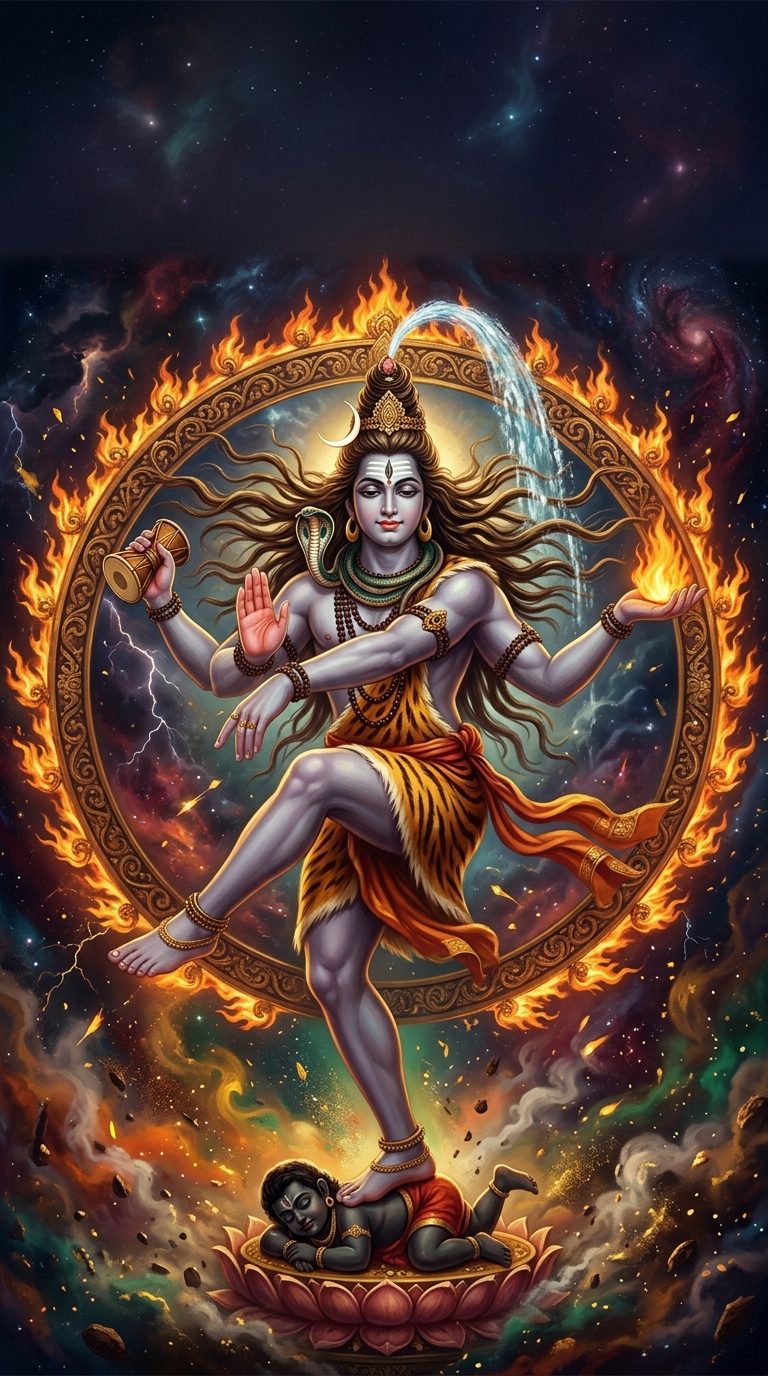
Shiva as Nataraja dancing the cosmic Tandava inside a ring of fire, his matted locks flying, amid a storm of thunder and galaxies
ShivaStotram

Shiva Tandava Stotram

Lyrics · Meaning · Audio

Ravana’s thunderous hymn to Shiva’s cosmic dance — drums pounding, serpents hissing, the Ganga whirling in his hair — one of the most powerful and rhythmic hymns in Sanskrit.

Traditionally composed by Ravana, king of Lanka

Listen

Shiva Tandava Stotram

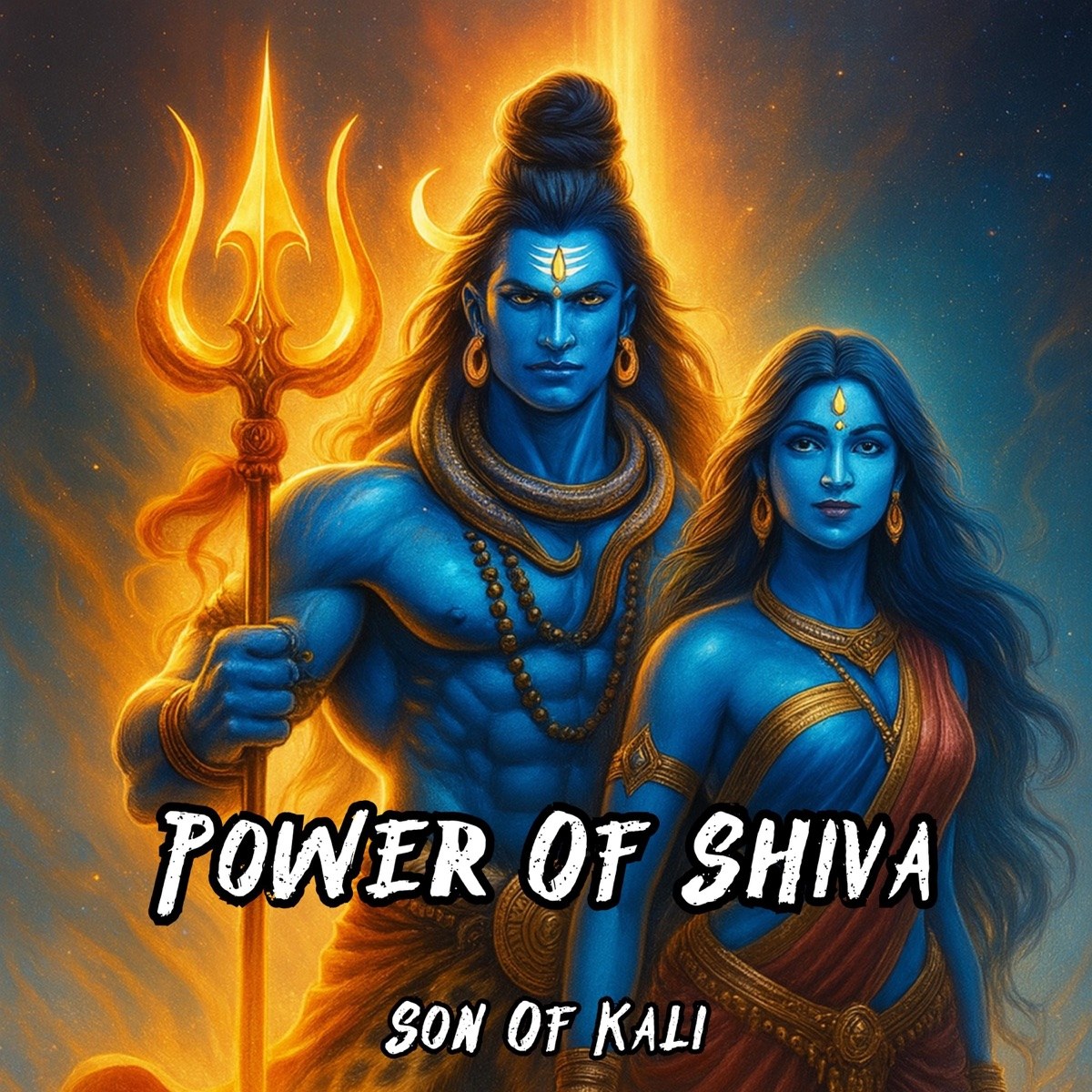
Son of Kali · Power of Shiva

0:005:40
Deity
Shiva
Type
Stotram
Verses
17
Language
Sanskrit

Shiva Tandava Stotram Lyrics with Meaning

Each line shows an easy way to say it, with its English meaning. Turn on the Sanskrit, the exact pronunciation or the word-by-word meaning whenever you want to go deeper.

Verse 1

जटाटवीगलज्जलप्रवाहपावितस्थले

Jatatavi Galajjala Pravaha Pavita Sthale

jaṭāṭavīgalajjalapravāhapāvitasthale

His neck made holy by the streams pouring from the forest of his matted hair,

    गलेऽवलम्ब्य लम्बितां भुजङ्गतुङ्गमालिकाम् ।

    Gale Valambya Lambitam Bhujanga Tunga Malikam

    gale'valambya lambitāṃ bhujaṅgatuṅgamālikām

    a great serpent hanging around his throat like a garland,

      डमड्डमड्डमड्डमन्निनादवड्डमर्वयं

      Damad Damad Damad Daman Ninadavad Damarvayam

      ḍamaḍḍamaḍḍamaḍḍamanninādavaḍḍamarvayaṃ

      his little drum sounding “damad-damad-damad-dam” —

        चकार चण्डताण्डवं तनोतु नः शिवः शिवम् ॥ १ ॥

        Chakara Chanda Tandavam Tanotu Nah Shivah Shivam

        cakāra caṇḍatāṇḍavaṃ tanotu naḥ śivaḥ śivam

        may Shiva, who danced this fierce Tandava, fill our lives with blessings.

          Verse 2

          जटाकटाहसम्भ्रमभ्रमन्निलिम्पनिर्झरी-

          Jata Kataha Sambhrama Bhraman Nilimpa Nirjhari

          jaṭākaṭāhasambhramabhramannilimpanirjharī-

          In the deep bowl of his matted locks the river of the gods whirls and spins,

            विलोलवीचिवल्लरीविराजमानमूर्धनि ।

            Vilola Vichi Vallari Virajamana Murdhani

            vilolavīcivallarīvirājamānamūrdhani

            his head shining with her restless waves like trailing vines;

              धगद्धगद्धगज्ज्वलल्ललाटपट्टपावके

              Dhagad Dhagad Dhagaj Jvalal Lalata Patta Pavake

              dhagaddhagaddhagajjvalallalāṭapaṭṭapāvake

              on his forehead a fire blazes “dhagad-dhagad-dhagad,”

                किशोरचन्द्रशेखरे रतिः प्रतिक्षणं मम ॥ २ ॥

                Kishora Chandra Shekhare Ratih Pratikshanam Mama

                kiśoracandraśekhare ratiḥ pratikṣaṇaṃ mama

                and a young crescent moon is his crown — may my love for him grow every moment.

                  Verse 3

                  धराधरेन्द्रनन्दिनीविलासबन्धुबन्धुर-

                  Dharadharendra Nandini Vilasa Bandhu Bandhura

                  dharādharendranandinīvilāsabandhubandhura-

                  He delights in the playful grace of the mountain king’s daughter, Parvati,

                    स्फुरद्दिगन्तसन्ततिप्रमोदमानमानसे ।

                    Sphurad Diganta Santati Pramodamana Manase

                    sphuraddigantasantatipramodamānamānase

                    his mind rejoicing in the shining expanse of all directions;

                      कृपाकटाक्षधोरणीनिरुद्धदुर्धरापदि

                      Kripa Kataksha Dhorani Niruddha Durdharapadi

                      kṛpākaṭākṣadhoraṇīniruddhadurdharāpadi

                      his steady, compassionate glance holds back even unbearable misfortune —

                        क्वचिद्दिगम्बरे मनो विनोदमेतु वस्तुनि ॥ ३ ॥

                        Kvachid Digambare Mano Vinodam Etu Vastuni

                        kvaciddigambare mano vinodametu vastuni

                        may my mind find its joy in that sky-clad reality.

                          Verse 4

                          जटाभुजङ्गपिङ्गलस्फुरत्फणामणिप्रभा-

                          Jata Bhujanga Pingala Sphurat Phana Mani Prabha

                          jaṭābhujaṅgapiṅgalasphuratphaṇāmaṇiprabhā-

                          The tawny serpents in his hair flash light from the jewels on their hoods,

                            कदम्बकुङ्कुमद्रवप्रलिप्तदिग्वधूमुखे ।

                            Kadamba Kunkuma Drava Pralipta Digvadhu Mukhe

                            kadambakuṅkumadravapraliptadigvadhūmukhe

                            painting the faces of the goddesses of the directions as if with liquid saffron;

                              मदान्धसिन्धुरस्फुरत्त्वगुत्तरीयमेदुरे

                              Madandha Sindhura Sphurat Tvag Uttariya Medure

                              madāndhasindhurasphurattvaguttarīyamedure

                              he wears the gleaming hide of a maddened elephant as his shawl —

                                मनो विनोदमद्भुतं बिभर्तु भूतभर्तरि ॥ ४ ॥

                                Mano Vinodam Adbhutam Bibhartu Bhuta Bhartari

                                mano vinodamadbhutaṃ bibhartu bhūtabhartari

                                may my mind find wondrous joy in him, the lord who sustains all beings.

                                  Verse 5

                                  सहस्रलोचनप्रभृत्यशेषलेखशेखर-

                                  Sahasra Lochana Prabhrity Ashesha Lekha Shekhara

                                  sahasralocanaprabhṛtyaśeṣalekhaśekhara-

                                  Flowers falling from the crowns of thousand-eyed Indra and all the gods

                                    प्रसूनधूलिधोरणीविधूसराङ्घ्रिपीठभूः ।

                                    Prasuna Dhuli Dhorani Vidhusara Anghri Pitha Bhuh

                                    prasūnadhūlidhoraṇīvidhūsarāṅghripīṭhabhūḥ

                                    dust his footstool grey with their pollen;

                                      भुजङ्गराजमालया निबद्धजाटजूटकः

                                      Bhujanga Raja Malaya Nibaddha Jata Jutakah

                                      bhujaṅgarājamālayā nibaddhajāṭajūṭakaḥ

                                      his coiled locks are tied with a garland made of the king of serpents —

                                        श्रिये चिराय जायतां चकोरबन्धुशेखरः ॥ ५ ॥

                                        Shriye Chiraya Jayatam Chakora Bandhu Shekharah

                                        śriye cirāya jāyatāṃ cakorabandhuśekharaḥ

                                        may he who wears the moon, friend of the chakora bird, bring us lasting good fortune.

                                          Verse 6

                                          ललाटचत्वरज्वलद्धनञ्जयस्फुलिङ्गभा-

                                          Lalata Chatvara Jvalad Dhananjaya Sphulinga Bha

                                          lalāṭacatvarajvaladdhanañjayasphuliṅgabhā-

                                          With sparks from the fire blazing on the broad square of his forehead

                                            निपीतपञ्चसायकं नमन्निलिम्पनायकम् ।

                                            Nipita Pancha Sayakam Naman Nilimpa Nayakam

                                            nipītapañcasāyakaṃ namannilimpanāyakam

                                            he consumed Kama of the five arrows, and the king of the gods bows before him;

                                              सुधामयूखलेखया विराजमानशेखरं

                                              Sudha Mayukha Lekhaya Virajamana Shekharam

                                              sudhāmayūkhalekhayā virājamānaśekharaṃ

                                              his crown shines with the nectar-cool crescent of the moon —

                                                महाकपालि सम्पदे शिरो जटालमस्तु नः ॥ ६ ॥

                                                Maha Kapali Sampade Shiro Jatalam Astu Nah

                                                mahākapāli sampade śiro jaṭālamastu naḥ

                                                may that great skull-bearer, his head crowned with matted locks, bring us every blessing.

                                                  Verse 7

                                                  करालभालपट्टिकाधगद्धगद्धगज्ज्वल-

                                                  Karala Bhala Pattika Dhagad Dhagad Dhagaj Jvala

                                                  karālabhālapaṭṭikādhagaddhagaddhagajjvala-

                                                  On the fearsome plate of his forehead a fire roars “dhagad-dhagad,”

                                                    द्धनञ्जयाहुतीकृतप्रचण्डपञ्चसायके ।

                                                    Dhananjaya Ahuti Krita Prachanda Pancha Sayake

                                                    ddhanañjayāhutīkṛtapracaṇḍapañcasāyake

                                                    into which he offered fierce Kama, the five-arrowed, as an oblation;

                                                      धराधरेन्द्रनन्दिनीकुचाग्रचित्रपत्रक-

                                                      Dharadharendra Nandini Kuchagra Chitra Patraka

                                                      dharādharendranandinīkucāgracitrapatraka-

                                                      he alone is the artist who paints delicate leaf-designs on the bosom of Parvati —

                                                        प्रकल्पनैकशिल्पिनि त्रिलोचने रतिर्मम ॥ ७ ॥

                                                        Prakalpanaika Shilpini Trilochane Ratir Mama

                                                        prakalpanaikaśilpini trilocane ratirmama

                                                        in that three-eyed one my heart delights.

                                                          Verse 8

                                                          नवीनमेघमण्डलीनिरुद्धदुर्धरस्फुरत्-

                                                          Navina Megha Mandali Niruddha Durdhara Sphurat

                                                          navīnameghamaṇḍalīniruddhadurdharasphurat-

                                                          Dark as a moonless midnight hidden under fresh, heavy rain clouds

                                                            कुहूनिशीथिनीतमःप्रबन्धबद्धकन्धरः ।

                                                            Kuhu Nishithini Tamah Prabandha Baddha Kandharah

                                                            kuhūniśīthinītamaḥprabandhabaddhakandharaḥ

                                                            is his throat, which holds that deep darkness;

                                                              निलिम्पनिर्झरीधरस्तनोतु कृत्तिसिन्धुरः

                                                              Nilimpa Nirjhari Dharas Tanotu Kritti Sindhurah

                                                              nilimpanirjharīdharastanotu kṛttisindhuraḥ

                                                              he bears the river of the gods and wears the elephant’s hide —

                                                                कलानिधानबन्धुरः श्रियं जगद्धुरन्धरः ॥ ८ ॥

                                                                Kala Nidhana Bandhurah Shriyam Jagad Dhurandharah

                                                                kalānidhānabandhuraḥ śriyaṃ jagaddhurandharaḥ

                                                                lovely with the moon, carrier of the whole world’s burden: may he bring us prosperity.

                                                                  Verse 9

                                                                  प्रफुल्लनीलपङ्कजप्रपञ्चकालिमप्रभा-

                                                                  Praphulla Nila Pankaja Prapancha Kalima Prabha

                                                                  praphullanīlapaṅkajaprapañcakālimaprabhā-

                                                                  His throat gleams with the dark beauty of fully opened blue lotuses,

                                                                    वलम्बिकण्ठकन्दलीरुचिप्रबद्धकन्धरम् ।

                                                                    Valambi Kantha Kandali Ruchi Prabaddha Kandharam

                                                                    valambikaṇṭhakandalīruciprabaddhakandharam

                                                                    his neck wrapped in that deep, shining blue —

                                                                      स्मरच्छिदं पुरच्छिदं भवच्छिदं मखच्छिदं

                                                                      Smarachchidam Purachchidam Bhavachchidam Makhachchidam

                                                                      smaracchidaṃ puracchidaṃ bhavacchidaṃ makhacchidaṃ

                                                                      destroyer of Kama, of the three demon cities, of worldly bondage, of Daksha’s sacrifice,

                                                                        गजच्छिदान्धकच्छिदं तमन्तकच्छिदं भजे ॥ ९ ॥

                                                                        Gajachchid Andhakachchidam Tam Antakachchidam Bhaje

                                                                        gajacchidāndhakacchidaṃ tamantakacchidaṃ bhaje

                                                                        slayer of the elephant demon and of Andhaka, conqueror of death itself — him I worship.

                                                                          Verse 10

                                                                          अखर्वसर्वमङ्गलाकलाकदम्बमञ्जरी-

                                                                          Akharva Sarva Mangala Kala Kadamba Manjari

                                                                          akharvasarvamaṅgalākalākadambamañjarī-

                                                                          Like a bee drawn to the nectar flowing from the blossoming graces

                                                                            रसप्रवाहमाधुरीविजृम्भणामधुव्रतम् ।

                                                                            Rasa Pravaha Madhuri Vijrimbhana Madhuvratam

                                                                            rasapravāhamādhurīvijṛmbhaṇāmadhuvratam

                                                                            of the all-auspicious Parvati, he delights in their sweetness —

                                                                              स्मरान्तकं पुरान्तकं भवान्तकं मखान्तकं

                                                                              Smarantakam Purantakam Bhavantakam Makhantakam

                                                                              smarāntakaṃ purāntakaṃ bhavāntakaṃ makhāntakaṃ

                                                                              the end of Kama, of the three cities, of worldly bondage, of the proud sacrifice,

                                                                                गजान्तकान्धकान्तकं तमन्तकान्तकं भजे ॥ १० ॥

                                                                                Gajantakandhakantakam Tam Antakantakam Bhaje

                                                                                gajāntakāndhakāntakaṃ tamantakāntakaṃ bhaje

                                                                                the end of the elephant demon and of Andhaka, the end even of death — him I worship.

                                                                                  Verse 11

                                                                                  जयत्वदभ्रविभ्रमभ्रमद्भुजङ्गमश्वस-

                                                                                  Jayatvad Abhra Vibhrama Bhramad Bhujangama Shvasa

                                                                                  jayatvadabhravibhramabhramadbhujaṅgamaśvasa-

                                                                                  Victory to Shiva! Serpents whirl wildly through the sky around him,

                                                                                    द्विनिर्गमत्क्रमस्फुरत्करालभालहव्यवाट् ।

                                                                                    Dvinirgamat Krama Sphurat Karala Bhala Havyavat

                                                                                    dvinirgamatkramasphuratkarālabhālahavyavāṭ

                                                                                    their hissing breath fanning the fierce fire on his forehead;

                                                                                      धिमिद्धिमिद्धिमिद्ध्वनन्मृदङ्गतुङ्गमङ्गल-

                                                                                      Dhimid Dhimid Dhimid Dhvanan Mridanga Tunga Mangala

                                                                                      dhimiddhimiddhimiddhvananmṛdaṅgatuṅgamaṅgala-

                                                                                      to the loud, auspicious “dhimid-dhimid-dhimid” of the mridanga drum,

                                                                                        ध्वनिक्रमप्रवर्तितप्रचण्डताण्डवः शिवः ॥ ११ ॥

                                                                                        Dhvani Krama Pravartita Prachanda Tandavah Shivah

                                                                                        dhvanikramapravartitapracaṇḍatāṇḍavaḥ śivaḥ

                                                                                        Shiva dances his ferocious Tandava.

                                                                                          Verse 12

                                                                                          दृषद्विचित्रतल्पयोर्भुजङ्गमौक्तिकस्रजोर्

                                                                                          Drishad Vichitra Talpayor Bhujanga Mauktika Srajor

                                                                                          dṛṣadvicitratalpayorbhujaṅgamauktikasrajor

                                                                                          Seeing a stone and a lavish bed as one, a snake and a pearl necklace as one,

                                                                                            गरिष्ठरत्नलोष्ठयोः सुहृद्विपक्षपक्षयोः ।

                                                                                            Garishtha Ratna Loshthayoh Suhrid Vipaksha Pakshayoh

                                                                                            gariṣṭharatnaloṣṭhayoḥ suhṛdvipakṣapakṣayoḥ

                                                                                            a priceless jewel and a lump of earth as one, friend and enemy as one,

                                                                                              तृणारविन्दचक्षुषोः प्रजामहीमहेन्द्रयोः

                                                                                              Trinaravinda Chakshushoh Praja Mahi Mahendrayoh

                                                                                              tṛṇāravindacakṣuṣoḥ prajāmahīmahendrayoḥ

                                                                                              a blade of grass and lotus-eyed beauty as one, a common subject and an emperor as one —

                                                                                                समप्रवृत्तिकः कदा सदाशिवं भजाम्यहम् ॥ १२ ॥

                                                                                                Sama Pravrittikah Kada Sadashivam Bhajamyaham

                                                                                                samapravṛttikaḥ kadā sadāśivaṃ bhajāmyaham

                                                                                                when will I, seeing everything equally, worship the ever-auspicious Shiva?

                                                                                                  Verse 13

                                                                                                  कदा निलिम्पनिर्झरीनिकुञ्जकोटरे वसन्

                                                                                                  Kada Nilimpa Nirjhari Nikunja Kotare Vasan

                                                                                                  kadā nilimpanirjharīnikuñjakoṭare vasan

                                                                                                  When will I live in a hollow among the groves beside the river of the gods,

                                                                                                    विमुक्तदुर्मतिः सदा शिरःस्थमञ्जलिं वहन् ।

                                                                                                    Vimukta Durmatih Sada Shirah Stham Anjalim Vahan

                                                                                                    vimuktadurmatiḥ sadā śiraḥsthamañjaliṃ vahan

                                                                                                    free of every wrong thought, my joined palms always raised above my head,

                                                                                                      विमुक्तलोललोचनाललामभाललग्नकं

                                                                                                      Vimukta Lola Lochana Lalama Bhala Lagnakam

                                                                                                      vimuktalolalocanālalāmabhālalagnakaṃ

                                                                                                      my restless eyes made still, fixed on the one with the sacred mark upon his brow,

                                                                                                        शिवेति मन्त्रमुच्चरन् कदा सुखी भवाम्यहम् ॥ १३ ॥

                                                                                                        Shiveti Mantram Uchcharan Kada Sukhi Bhavamyaham

                                                                                                        śiveti mantramuccaran kadā sukhī bhavāmyaham

                                                                                                        chanting the mantra “Shiva” — when will I be truly happy?

                                                                                                          Verse 14

                                                                                                          निलिम्पनाथनागरीकदम्बमौलमल्लिका-

                                                                                                          Nilimpa Natha Nagari Kadamba Maula Mallika

                                                                                                          nilimpanāthanāgarīkadambamaulamallikā-

                                                                                                          Lovely with the jasmine woven into the hair of the maidens of Indra’s heavenly city,

                                                                                                            निगुम्फनिर्भरक्षरन्मधूष्णिकामनोहरः ।

                                                                                                            Nigumpha Nirbhara Ksharan Madhushnika Manoharah

                                                                                                            nigumphanirbharakṣaranmadhūṣṇikāmanoharaḥ

                                                                                                            enchanting with the honey that drips from those garlands —

                                                                                                              तनोतु नो मनोमुदं विनोदिनीमहर्निशं

                                                                                                              Tanotu No Mano Mudam Vinodinim Aharnisham

                                                                                                              tanotu no manomudaṃ vinodinīmaharniśaṃ

                                                                                                              may the radiance of his body bring our minds delight, day and night —

                                                                                                                परश्रियः परं पदं तदङ्गजत्विषां चयः ॥ १४ ॥

                                                                                                                Para Shriyah Param Padam Tad Angaja Tvisham Chayah

                                                                                                                paraśriyaḥ paraṃ padaṃ tadaṅgajatviṣāṃ cayaḥ

                                                                                                                that shining light, the highest home of supreme beauty.

                                                                                                                  Verse 15

                                                                                                                  प्रचण्डवाडवानलप्रभाशुभप्रचारणी

                                                                                                                  Prachanda Vadavanala Prabha Shubha Pracharani

                                                                                                                  pracaṇḍavāḍavānalaprabhāśubhapracāraṇī

                                                                                                                  Blazing like the fierce fire beneath the ocean, spreading blessings everywhere,

                                                                                                                    महाष्टसिद्धिकामिनीजनावहूतजल्पना ।

                                                                                                                    Mahashta Siddhi Kamini Janavahuta Jalpana

                                                                                                                    mahāṣṭasiddhikāminījanāvahūtajalpanā

                                                                                                                    calling forth the eight great spiritual powers like attendant maidens,

                                                                                                                      विमुक्तवामलोचनाविवाहकालिकध्वनिः

                                                                                                                      Vimukta Vama Lochana Vivaha Kalika Dhvanih

                                                                                                                      vimuktavāmalocanāvivāhakālikadhvaniḥ

                                                                                                                      ringing out like the joyful sound at the wedding of lovely-eyed Parvati —

                                                                                                                        शिवेति मन्त्रभूषणा जगज्जयाय जायताम् ॥ १५ ॥

                                                                                                                        Shiveti Mantra Bhushana Jagaj Jayaya Jayatam

                                                                                                                        śiveti mantrabhūṣaṇā jagajjayāya jāyatām

                                                                                                                        may the word “Shiva,” jewel of all mantras, bring victory to the whole world.

                                                                                                                          Closing verse 1 (Phala Shruti)

                                                                                                                          इमं हि नित्यमेवमुक्तमुत्तमोत्तमं स्तवं

                                                                                                                          Imam Hi Nityam Evam Uktam Uttamottamam Stavam

                                                                                                                          imaṃ hi nityamevamuktamuttamottamaṃ stavaṃ

                                                                                                                          Whoever daily recites, remembers or speaks this supreme hymn, just as it is given here,

                                                                                                                            पठन्स्मरन्ब्रुवन्नरो विशुद्धिमेति सन्ततम् ।

                                                                                                                            Pathan Smaran Bruvan Naro Vishuddhim Eti Santatam

                                                                                                                            paṭhansmaranbruvannaro viśuddhimeti santatam

                                                                                                                            is purified for ever;

                                                                                                                              हरे गुरौ सुभक्तिमाशु याति नान्यथा गतिं

                                                                                                                              Hare Gurau Subhaktim Ashu Yati Nanyatha Gatim

                                                                                                                              hare gurau subhaktimāśu yāti nānyathā gatiṃ

                                                                                                                              they quickly come to true devotion to Shiva, the great teacher — there is no other path,

                                                                                                                                विमोहनं हि देहिनां सुशङ्करस्य चिन्तनम् ॥ १६ ॥

                                                                                                                                Vimohanam Hi Dehinam Sushankarasya Chintanam

                                                                                                                                vimohanaṃ hi dehināṃ suśaṅkarasya cintanam

                                                                                                                                for thinking of the gracious Shankara frees every embodied being from delusion.

                                                                                                                                  Closing verse 2 (Phala Shruti)

                                                                                                                                  पूजावसानसमये दशवक्त्रगीतं

                                                                                                                                  Pujavasana Samaye Dashavaktra Gitam

                                                                                                                                  pūjāvasānasamaye daśavaktragītaṃ

                                                                                                                                  Whoever, at the close of worship, recites this hymn sung by ten-headed Ravana,

                                                                                                                                    यः शम्भुपूजनपरं पठति प्रदोषे ।

                                                                                                                                    Yah Shambhu Pujana Param Pathati Pradoshe

                                                                                                                                    yaḥ śambhupūjanaparaṃ paṭhati pradoṣe

                                                                                                                                    devoted to Shambhu, at the twilight hour of Pradosha —

                                                                                                                                      तस्य स्थिरां रथगजेन्द्रतुरङ्गयुक्तां

                                                                                                                                      Tasya Sthiram Ratha Gajendra Turanga Yuktam

                                                                                                                                      tasya sthirāṃ rathagajendraturaṅgayuktāṃ

                                                                                                                                      to them Shambhu gives lasting prosperity, rich with chariots, elephants and horses,

                                                                                                                                        लक्ष्मीं प्रसादसमये प्रददाति शम्भुः ॥

                                                                                                                                        Lakshmim Prasada Samaye Pradadati Shambhuh

                                                                                                                                        lakṣmīṃ prasādasamaye pradadāti śambhuḥ

                                                                                                                                        as his gift of grace.

                                                                                                                                          About Shiva Tandava Stotram

                                                                                                                                          The Shiva Tandava Stotram is a hymn to Shiva’s tandava, the wild cosmic dance through which he destroys and recreates the universe. It is famous for its sound as much as its meaning: long, rolling compound words and drum-like syllables — ḍamaḍ-ḍamaḍ, dhagad-dhagad, dhimid-dhimid — make the verses feel like the dance itself. Every line follows the same galloping rhythm (the pañcacāmara metre), which is why it is so thrilling to chant and so popular in music.

                                                                                                                                          The hymn paints Shiva in vivid detail: the Ganga crashing through the forest of his matted hair, serpents hissing around his neck, a fire blazing in his third eye, the crescent moon on his crown, his throat dark with the poison he swallowed to save the world. Alongside the fierce imagery are tender lines of longing — “when will I be happy, chanting the name of Shiva?”

                                                                                                                                          By tradition the hymn was composed by Ravana, the ten-headed king of Lanka, who was also a great scholar and a devoted worshipper of Shiva. The final verses promise that anyone who recites it at the twilight hour of Pradosha will receive lasting prosperity and grace.

                                                                                                                                          The Stories Inside the Hymn

                                                                                                                                          Ravana under Mount Kailash

                                                                                                                                          Proud of his strength, Ravana decided to lift Mount Kailash itself and carry it home to Lanka. As the mountain shook, Shiva simply pressed down with his big toe — and Ravana was pinned beneath it, crying out in pain.

                                                                                                                                          Trapped, Ravana began to sing Shiva’s praises, pouring out verse after verse of this hymn. Moved by his devotion, Shiva released him and gave him the name Ravana, “the one who roared,” along with a divine sword. The story shows how even great pride can turn into devotion.

                                                                                                                                          What the Tandava means

                                                                                                                                          Shiva’s tandava is not just a dance of destruction. In the image of Nataraja, the Lord of Dance, it shows five cosmic acts at once: creation (the drum in his hand), preservation (his raised, blessing hand), destruction (the fire), concealment (his foot pressing down the demon of ignorance) and grace (his lifted foot, offering release).

                                                                                                                                          Every rhythm of the universe — atoms, seasons, breath, birth and death — is pictured as part of that one endless dance.

                                                                                                                                          How to Chant Shiva Tandava Stotram

                                                                                                                                          When to chant

                                                                                                                                          • ✦Pradosham, the evening twilight on the 13th day of each lunar fortnight — the hymn itself praises chanting at Pradosha
                                                                                                                                          • ✦Mondays, Maha Shivaratri and the month of Shravan
                                                                                                                                          • ✦At the end of evening worship
                                                                                                                                          • ✦Whenever you need energy, courage or to break through heaviness

                                                                                                                                          How many times

                                                                                                                                          Once through is a full practice. Learn it in parts — two or three verses at a time — before attempting the whole hymn.

                                                                                                                                          1. 1

                                                                                                                                            Read the meaning of the first few verses before you chant them.

                                                                                                                                          2. 2

                                                                                                                                            Listen to the recording and tap along to the beat — each line has the same galloping rhythm.

                                                                                                                                          3. 3

                                                                                                                                            Chant slowly at first, one line at a time, using the easy reading. Speed comes later.

                                                                                                                                          4. 4

                                                                                                                                            Use “Exact pronunciation” to check the long compound words.

                                                                                                                                          5. 5

                                                                                                                                            Finish with the closing verses and sit for a moment with the energy of the hymn.

                                                                                                                                          Pronunciation Guide

                                                                                                                                          The sounds that trip people up most in this hymn, and how to say them.

                                                                                                                                          jaṭāṭavī

                                                                                                                                          The ṭ sounds are said with the tongue curled back: ja-TAA-ta-vee.

                                                                                                                                          ḍamaḍḍamaḍ…

                                                                                                                                          Like a drumbeat: dum-ud-dum-ud-dum-ud-dum. Keep it crisp and even.

                                                                                                                                          dhagaddhagad…

                                                                                                                                          Breathy “dh”: dhug-ud-dhug-ud. It imitates the crackle of fire.

                                                                                                                                          caṇḍatāṇḍavaṃ

                                                                                                                                          “c” is “ch”: chun-da-taan-da-vum.

                                                                                                                                          kṣ — pratikṣaṇaṃ

                                                                                                                                          Said “ksh”: pra-ti-ksha-num.

                                                                                                                                          śivaḥ śivam

                                                                                                                                          “Shi-vah shi-vum” — the first is “Shiva,” the second means “auspiciousness.”

                                                                                                                                          Power of Shiva by Son of Kali

                                                                                                                                          The music

                                                                                                                                          Power of Shiva

                                                                                                                                          by Son of Kali

                                                                                                                                          More for Shiva

                                                                                                                                          Frequently Asked Questions

                                                                                                                                          Who wrote the Shiva Tandava Stotram?

                                                                                                                                          By tradition it was composed by Ravana, the king of Lanka, while he was trapped under Mount Kailash. Ravana is remembered as both a great scholar and a devoted worshipper of Shiva.

                                                                                                                                          What does Shiva Tandava Stotram mean?

                                                                                                                                          It means “hymn of Shiva’s Tandava.” The tandava is Shiva’s fierce cosmic dance of destruction and renewal, and the hymn describes and praises it.

                                                                                                                                          When should the Shiva Tandava Stotram be chanted?

                                                                                                                                          The closing verse recommends chanting it at Pradosha, the evening twilight. Mondays, Maha Shivaratri and the month of Shravan are also popular.

                                                                                                                                          What are the benefits of chanting it?

                                                                                                                                          The closing verse says Shiva grants lasting prosperity and grace to those who recite it at twilight. Many people chant it for energy, courage and focus, and to feel close to Shiva.

                                                                                                                                          Why is it so hard to pronounce?

                                                                                                                                          It uses very long Sanskrit compound words and drum-like sounds to imitate the dance. Learn it slowly, two or three verses at a time, using the easy reading and the recording.

                                                                                                                                          How many verses does it have?

                                                                                                                                          Fifteen main verses plus two closing verses (phala shruti) describing the benefits of reciting it — seventeen in all in the most common version.
                                                                                                                                          Text: Traditional public-domain Sanskrit text (Sanskrit Wikisource, “Ravanakrita Shiva Tandava Stotram”), using common sung readings in verses 4 and 6. Easy reading, transliteration and English translation written for the Jaguar Medicine Tribe Mantra Library.

                                                                                                                                          Music: Recordings by Son of Kali, produced with AI-assisted vocals and instrumentation.

                                                                                                                                          Note: Benefits described here are traditional beliefs, shared for understanding — not medical or guaranteed outcomes.