Maha Mrityunjaya means “the great victory over death.” The mantra is far older than most Hindu prayers: it comes from the Rig Veda (book 7, hymn 59, verse 12), where it is credited to the sage Vasishtha, and it is repeated in the Yajurveda. For thousands of years it has been chanted for healing, for protection, and at the bedside of the sick and the dying.
Its central image is beautifully gentle. A cucumber or gourd ripening on the vine does not need to be torn off — when it is ready, it simply releases from the stem. The prayer asks for that kind of freedom: to let go of fear, attachment and death naturally, without violence, while never being separated from the deathless (amṛta), our eternal nature.
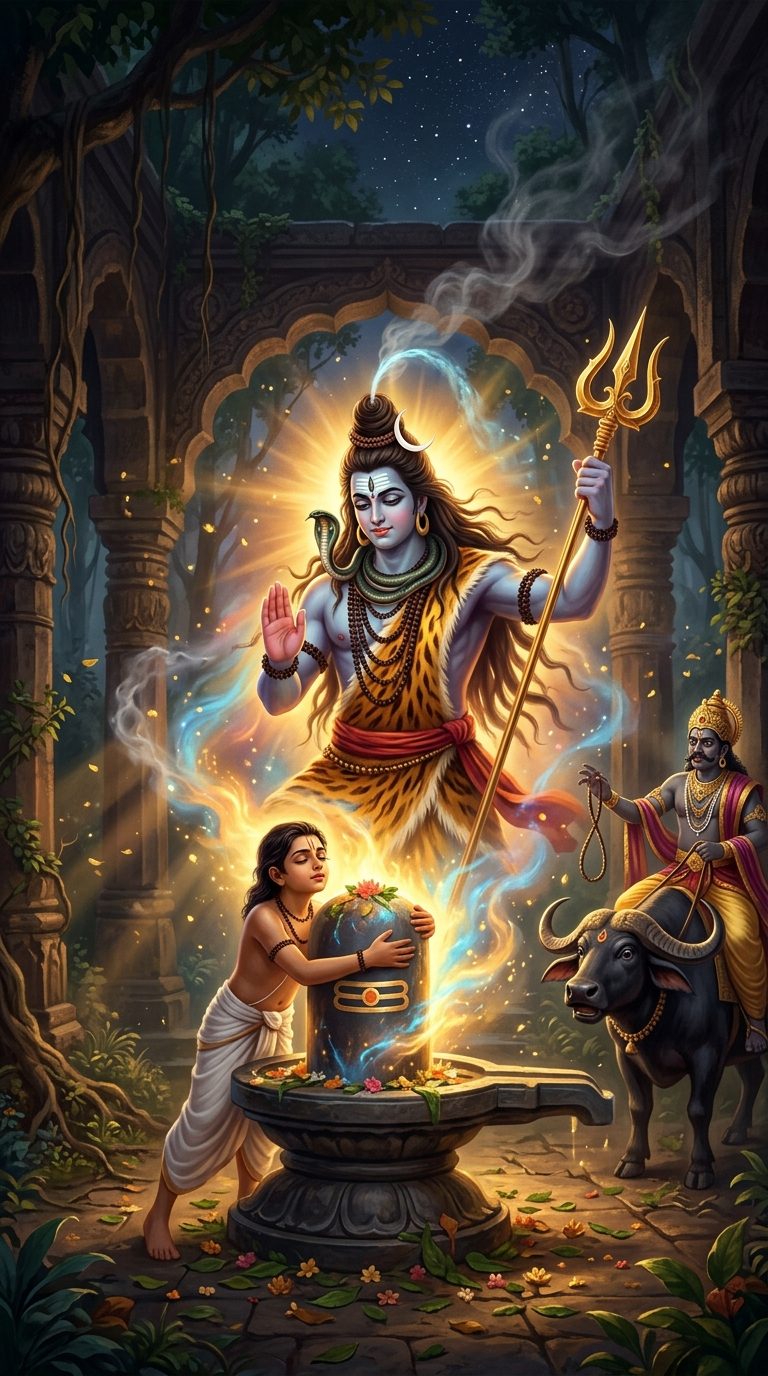
The mantra is addressed to Tryambaka, “the three-eyed one” — Shiva, whose third eye sees past the surface of things. The word sugandhim, “fragrant,” is a lovely detail: the divine is pictured not as frightening but as a sweet fragrance that pervades everything and nourishes all life.