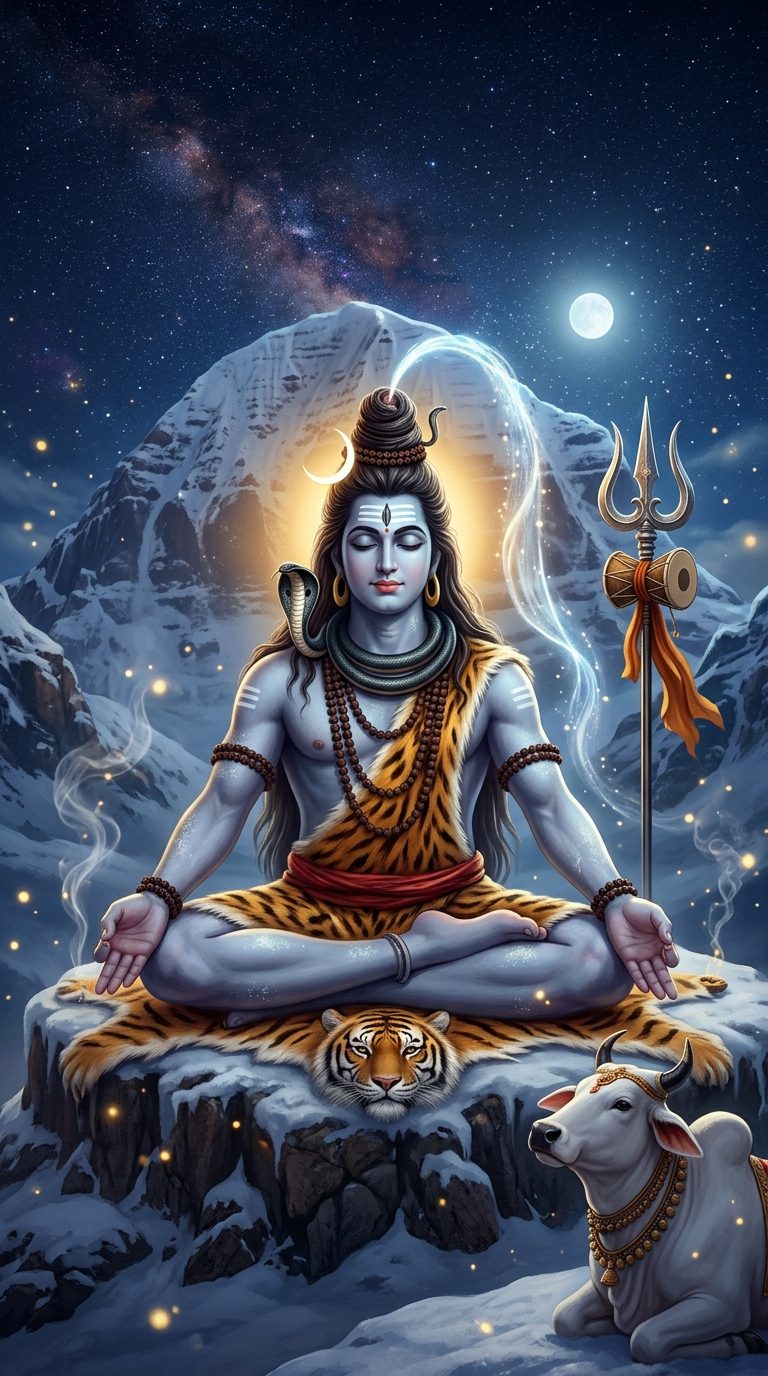
A devotee meditating with closed eyes as a golden vision of inner worship rises from their heart, Shiva on a jewelled throne receiving offerings of light
ShivaStotram

Shiva Manasa Puja

Lyrics · Meaning · Audio

Adi Shankaracharya’s hymn of “mental worship” — offering Shiva a jewelled throne, a feast, music and dance entirely in the imagination — ending with the realisation that every action of life can be worship.

Attributed to Adi Shankaracharya

Listen

Shiva Manasa Puja

Son of Kali · Sacred Shiva Chants

0:004:44
Deity
Shiva
Type
Stotram
Verses
5
Language
Sanskrit

Shiva Manasa Puja Lyrics with Meaning

Each line shows an easy way to say it, with its English meaning. Turn on the Sanskrit, the exact pronunciation or the word-by-word meaning whenever you want to go deeper.

Verse 1

रत्नैः कल्पितमासनं हिमजलैः स्नानं च दिव्याम्बरं

Ratnaih Kalpitam Asanam Himajalaih Snanam Cha Divyambaram

ratnaiḥ kalpitamāsanaṃ himajalaiḥ snānaṃ ca divyāmbaraṃ

I have imagined for you a throne of jewels, a bath in cool Himalayan water, and divine robes,

    नानारत्नविभूषितं मृगमदामोदाङ्कितं चन्दनम् ।

    Nana Ratna Vibhushitam Mrigamada Modankitam Chandanam

    nānāratnavibhūṣitaṃ mṛgamadāmodāṅkitaṃ candanam

    ornaments of many jewels, and sandal paste fragrant with musk,

      जातीचम्पकबिल्वपत्ररचितं पुष्पं च धूपं तथा

      Jati Champaka Bilva Patra Rachitam Pushpam Cha Dhupam Tatha

      jātīcampakabilvapatraracitaṃ puṣpaṃ ca dhūpaṃ tathā

      flowers of jasmine and champak, bilva leaves, and incense,

        दीपं देव दयानिधे पशुपते हृत्कल्पितं गृह्यताम् ॥ १ ॥

        Dipam Deva Dayanidhe Pashupate Hritkalpitam Grihyatam

        dīpaṃ deva dayānidhe paśupate hṛtkalpitaṃ gṛhyatām

        and a lamp — O Lord, treasure of compassion, Pashupati, accept these offerings made in my heart.

          Verse 2

          सौवर्णे नवरत्नखण्डरचिते पात्रे घृतं पायसं

          Sauvarne Navaratna Khanda Rachite Patre Ghritam Payasam

          sauvarṇe navaratnakhaṇḍaracite pātre ghṛtaṃ pāyasaṃ

          In a golden bowl set with the nine gems, I offer ghee and sweet rice pudding,

            भक्ष्यं पञ्चविधं पयोदधियुतं रम्भाफलं पानकम् ।

            Bhakshyam Panchavidham Payo Dadhi Yutam Rambhaphalam Panakam

            bhakṣyaṃ pañcavidhaṃ payodadhiyutaṃ rambhāphalaṃ pānakam

            five kinds of food, with milk and curd, bananas and a sweet drink,

              शाकानामयुतं जलं रुचिकरं कर्पूरखण्डोज्ज्वलं

              Shakanam Ayutam Jalam Ruchikaram Karpura Khandojjvalam

              śākānāmayutaṃ jalaṃ rucikaraṃ karpūrakhaṇḍojjvalaṃ

              countless vegetable dishes, delicious water, a bright flame of camphor,

                ताम्बूलं मनसा मया विरचितं भक्त्या प्रभो स्वीकुरु ॥ २ ॥

                Tambulam Manasa Maya Virachitam Bhaktya Prabho Svikuru

                tāmbūlaṃ manasā mayā viracitaṃ bhaktyā prabho svīkuru

                and betel — all prepared by me in my mind with devotion; O Lord, accept them.

                  Verse 3

                  छत्रं चामरयोर्युगं व्यजनकं चादर्शकं निर्मलं

                  Chhatram Chamarayor Yugam Vyajanakam Chadarshakam Nirmalam

                  chatraṃ cāmarayoryugaṃ vyajanakaṃ cādarśakaṃ nirmalaṃ

                  A royal umbrella, a pair of yak-tail whisks, a fan and a spotless mirror,

                    वीणाभेरिमृदङ्गकाहलकला गीतं च नृत्यं तथा ।

                    Vina Bheri Mridanga Kahala Kala Gitam Cha Nrityam Tatha

                    vīṇābherimṛdaṅgakāhalakalā gītaṃ ca nṛtyaṃ tathā

                    the music of veena, kettle-drum, mridanga and horn, singing and dancing,

                      साष्टाङ्गं प्रणतिः स्तुतिर्बहुविधा ह्येतत्समस्तं मया

                      Sashtangam Pranatih Stutir Bahuvidha Hyetat Samastam Maya

                      sāṣṭāṅgaṃ praṇatiḥ stutirbahuvidhā hyetatsamastaṃ mayā

                      full prostration and many kinds of hymns — all this I have

                        सङ्कल्पेन समर्पितं तव विभो पूजां गृहाण प्रभो ॥ ३ ॥

                        Sankalpena Samarpitam Tava Vibho Pujam Grihana Prabho

                        saṅkalpena samarpitaṃ tava vibho pūjāṃ gṛhāṇa prabho

                        offered to you in my imagination; O all-pervading Lord, accept my worship.

                          Verse 4

                          आत्मा त्वं गिरिजा मतिः सहचराः प्राणाः शरीरं गृहं

                          Atma Tvam Girija Matih Sahacharah Pranah Shariram Griham

                          ātmā tvaṃ girijā matiḥ sahacarāḥ prāṇāḥ śarīraṃ gṛhaṃ

                          You are my Self, Parvati is my mind, my life-breaths are your attendants, my body is your temple,

                            पूजा ते विषयोपभोगरचना निद्रा समाधिस्थितिः ।

                            Puja Te Vishayopabhoga Rachana Nidra Samadhi Sthitih

                            pūjā te viṣayopabhogaracanā nidrā samādhisthitiḥ

                            the enjoyments of my senses are your worship, my sleep is your samadhi,

                              सञ्चारः पदयोः प्रदक्षिणविधिः स्तोत्राणि सर्वा गिरो

                              Sancharah Padayoh Pradakshina Vidhih Stotrani Sarva Giro

                              sañcāraḥ padayoḥ pradakṣiṇavidhiḥ stotrāṇi sarvā giro

                              my walking is circling around you, all my words are hymns to you —

                                यद्यत्कर्म करोमि तत्तदखिलं शम्भो तवाराधनम् ॥ ४ ॥

                                Yad Yat Karma Karomi Tat Tad Akhilam Shambho Tavaradhanam

                                yadyatkarma karomi tattadakhilaṃ śambho tavārādhanam

                                whatever I do, all of it is your worship, O Shambhu.

                                  Verse 5 (Prayer for forgiveness)

                                  करचरणकृतं वाक्कायजं कर्मजं वा

                                  Karacharana Kritam Vak Kayajam Karmajam Va

                                  karacaraṇakṛtaṃ vākkāyajaṃ karmajaṃ vā

                                  Whatever wrong I have done with hands or feet, with speech or body, or through my actions,

                                    श्रवणनयनजं वा मानसं वापराधम् ।

                                    Shravana Nayanajam Va Manasam Vaparadham

                                    śravaṇanayanajaṃ vā mānasaṃ vāparādham

                                    through my ears or eyes, or in my mind —

                                      विहितमविहितं वा सर्वमेतत्क्षमस्व

                                      Vihitam Avihitam Va Sarvam Etat Kshamasva

                                      vihitamavihitaṃ vā sarvametatkṣamasva

                                      whether done as I should or as I should not — forgive me all of it.

                                        जय जय करुणाब्धे श्रीमहादेव शम्भो ॥ ५ ॥

                                        Jaya Jaya Karunabdhe Shri Mahadeva Shambho

                                        jaya jaya karuṇābdhe śrīmahādeva śambho

                                        Victory, victory to you, ocean of compassion, glorious great god Shambhu!

                                          About Shiva Manasa Puja

                                          Mānasa pūjā means worship performed in the mind. Instead of physical flowers, lamps and food, the devotee imagines the most splendid offerings possible — a throne of jewels, a bath in Himalayan water, silk robes, a golden bowl of sweets, a royal umbrella, music and dance — and offers them to Shiva with love. Tradition says a puja offered sincerely in the heart is as complete as any outer ritual, and sometimes more so.

                                          The hymn, attributed to Adi Shankaracharya, builds the inner worship step by step, the way a temple puja unfolds. Then in the famous fourth verse it turns everything inside out: “You are my Self, Parvati is my mind… my sleep is your samadhi, my walking is circling you, all my words are your hymns — whatever I do, Shambhu, is your worship.”

                                          That verse turns ordinary life into prayer. It is often quoted on its own as one of the most beautiful lines in Hindu devotion. The hymn traditionally closes with the verse Karacharana Kritam, asking forgiveness for anything imperfect.

                                          The Stories Inside the Hymn

                                          The poor devotee’s feast

                                          A popular story tells of a poor man who longed to offer Shiva a grand puja but owned nothing. Each day he imagined it instead: gold vessels, fine silks, rich sweets. One day, imagining he was serving hot sweet rice, he burned his finger in his mind — and found a real blister on his hand.

                                          Shiva appeared and told him that his imagined offerings had reached him more fully than any rich man’s ritual. The story captures the spirit of Manasa Puja.

                                          Life as worship

                                          Verse 4 maps a whole life onto the temple: the body is the shrine, the Self is the deity, the mind is the goddess, breath the attendants, food and pleasure the offerings, sleep the deepest meditation, walking the circling of the shrine.

                                          Nothing needs to be renounced — only seen differently. That is why many teachers recommend chanting it at the start of the day.

                                          How to Chant Shiva Manasa Puja

                                          When to chant

                                          • ✦As a morning or evening prayer
                                          • ✦When you cannot perform an outer puja
                                          • ✦Mondays and Maha Shivaratri
                                          • ✦Before meditation

                                          How many times

                                          Once through, slowly, picturing each offering.

                                          1. 1

                                            Close your eyes and picture Shiva seated before you.

                                          2. 2

                                            With each line, vividly imagine the offering — its colour, fragrance and sound.

                                          3. 3

                                            Follow the recording and the meaning, verse by verse.

                                          4. 4

                                            On verse 4, feel your whole life becoming an offering.

                                          5. 5

                                            End with the closing verse, asking forgiveness for anything imperfect.

                                          Pronunciation Guide

                                          The sounds that trip people up most in this hymn, and how to say them.

                                          mānasa pūjā

                                          maa-na-sa poo-jaa — “worship in the mind.”

                                          hṛtkalpitaṃ

                                          hrit-kul-pi-tum — “created in the heart.”

                                          svīkuru

                                          swee-ku-ru — “please accept.”

                                          tavārādhanam

                                          ta-vaa-raa-dha-num — “your worship.”

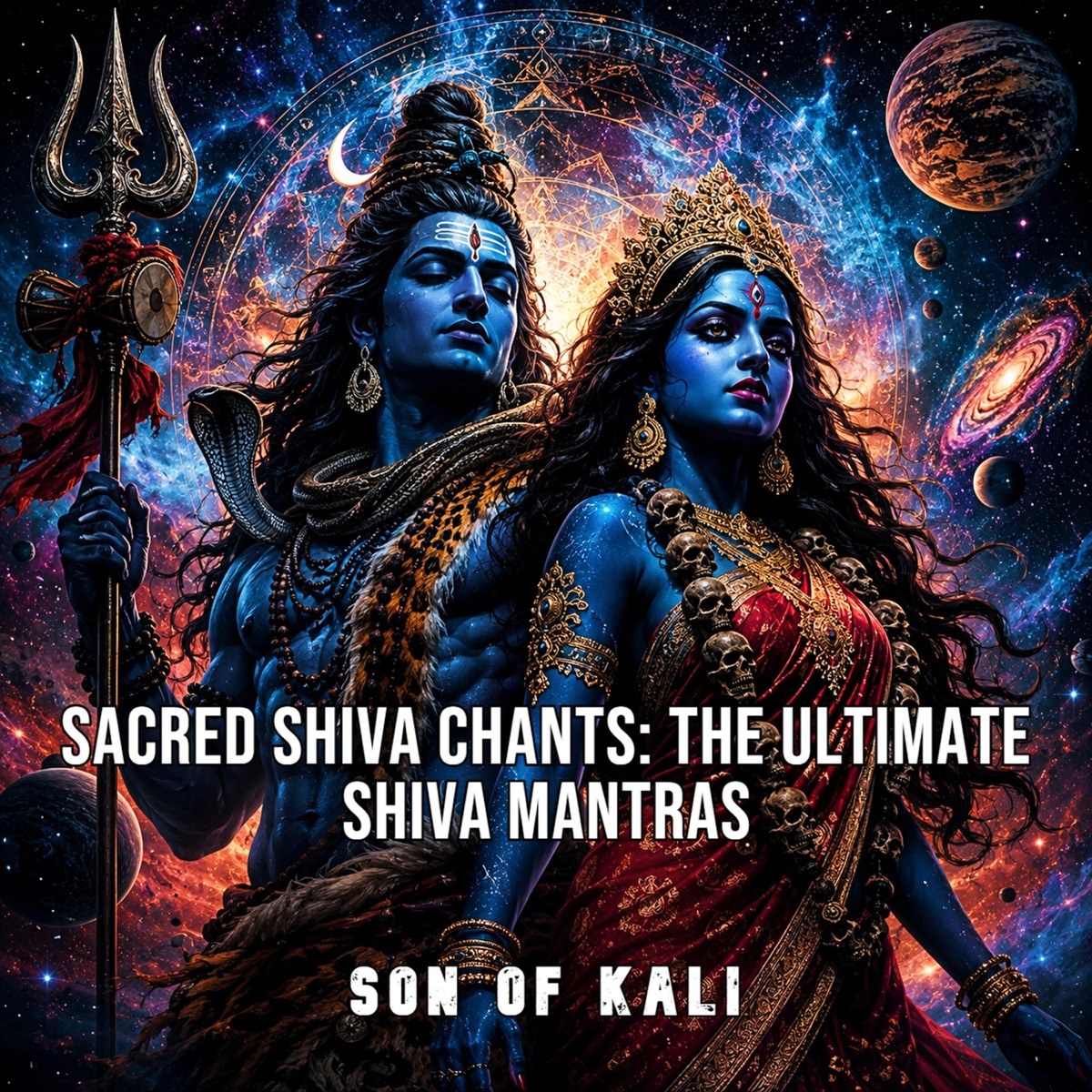
                                          Sacred Shiva Chants: The Ultimate Shiva Mantras by Son of Kali

                                          The music

                                          Sacred Shiva Chants: The Ultimate Shiva Mantras

                                          by Son of Kali

                                          More for Shiva

                                          Frequently Asked Questions

                                          What is Shiva Manasa Puja?

                                          It is a hymn of mental worship attributed to Adi Shankaracharya, in which every offering to Shiva is made in the imagination, ending with the idea that all of life can be worship.

                                          What does “Manasa Puja” mean?

                                          Manasa means “of the mind” and puja means “worship.” It is worship performed inwardly rather than with physical items.

                                          Is mental worship as valid as a physical puja?

                                          Many traditions teach that worship offered sincerely in the heart is complete in itself — the hymn itself asks Shiva to accept what is “created in the heart.”

                                          What is the most famous verse of Shiva Manasa Puja?

                                          Verse 4, “Atma tvam girija matih…” — “You are my Self, Parvati is my mind… whatever I do, all of it is your worship, O Shambhu.”

                                          Text: Shiva Manasa Puja attributed to Adi Shankaracharya — public domain (Sanskrit Wikisource), with the customary closing verse from the Shiva Aparadha Kshamapana Stotram. Easy reading, transliteration and English translation written for the Jaguar Medicine Tribe Mantra Library.

                                          Music: Recordings by Son of Kali, produced with AI-assisted vocals and instrumentation.

                                          Note: Benefits described here are traditional beliefs, shared for understanding — not medical or guaranteed outcomes.