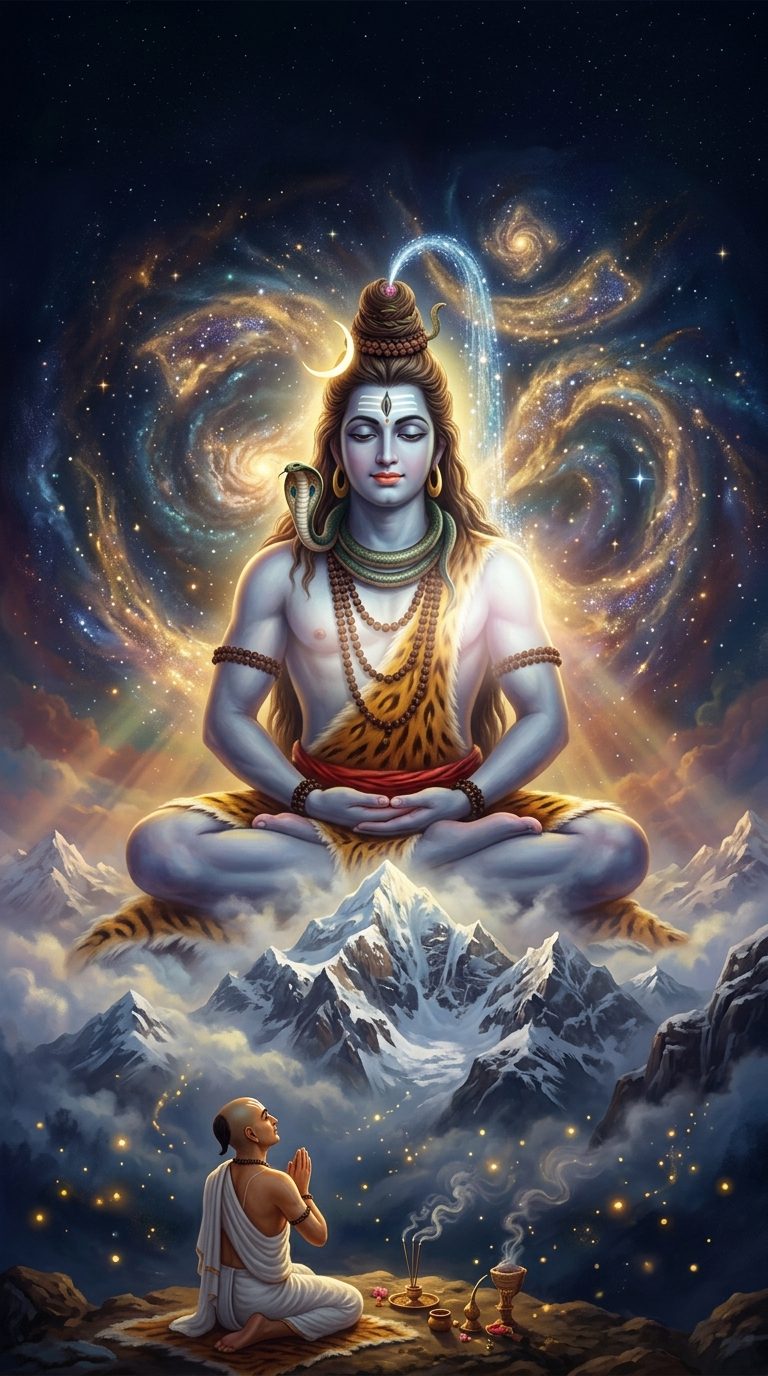
A towering serene Shiva made of soft white light meditating above the peaks of Kailash, with the poet-saint Tulsidas kneeling in prayer below
ShivaAshtakam

Shiva Rudrashtakam

Lyrics · Meaning · Audio

Tulsidas’s eight verses to Shiva, beginning “Namāmīśam īśāna” — a hymn that moves from the formless, infinite Shiva to the gentle, blue-throated lord, ending in a heartfelt plea: “I know no yoga, no ritual — protect me, Shambhu.”

Composed by Goswami Tulsidas (Ramcharitmanas, Uttara Kanda)

Listen

Shiva Rudrashtakam

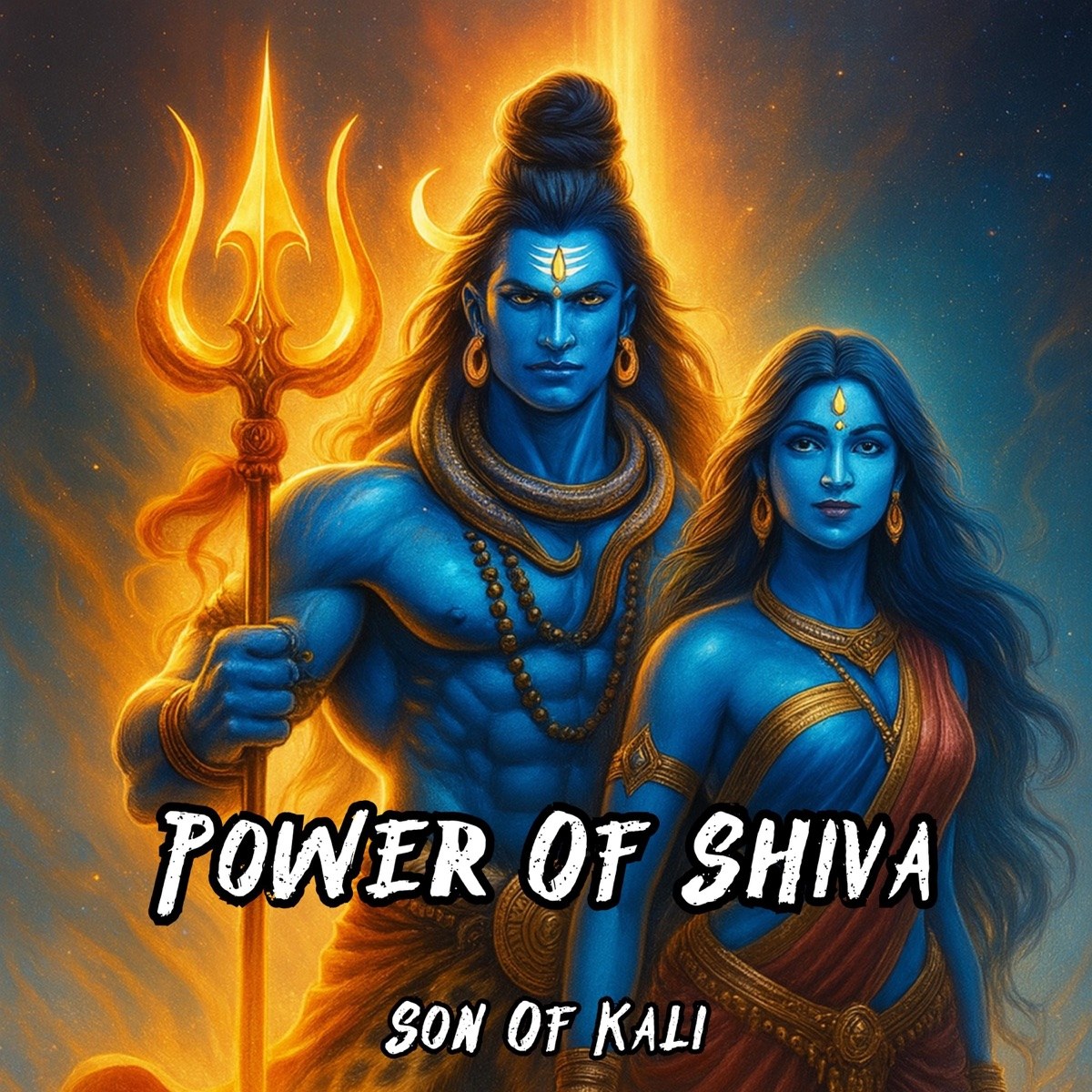
Son of Kali · Power of Shiva

0:006:44
Deity
Shiva
Type
Ashtakam
Verses
9
Language
Sanskrit

Shiva Rudrashtakam Lyrics with Meaning

Each line shows an easy way to say it, with its English meaning. Turn on the Sanskrit, the exact pronunciation or the word-by-word meaning whenever you want to go deeper.

Verse 1

नमामीशमीशान निर्वाणरूपं

Namami Shamishana Nirvana Rupam

namāmīśamīśāna nirvāṇarūpaṃ

I bow to the Lord, the ruler of all, whose very form is liberation,

    विभुं व्यापकं ब्रह्म वेदस्वरूपम् ।

    Vibhum Vyapakam Brahma Veda Svarupam

    vibhuṃ vyāpakaṃ brahma vedasvarūpam

    the all-powerful, all-pervading Brahman, the very essence of the Vedas;

      निजं निर्गुणं निर्विकल्पं निरीहं

      Nijam Nirgunam Nirvikalpam Niriham

      nijaṃ nirguṇaṃ nirvikalpaṃ nirīhaṃ

      the true Self, beyond all qualities and all thought, free of all desire,

        चिदाकाशमाकाशवासं भजेऽहम् ॥ १ ॥

        Chidakasham Akasha Vasam Bhaje Ham

        cidākāśamākāśavāsaṃ bhaje'ham

        the sky of consciousness, clothed in the sky — him I worship.

          Verse 2

          निराकारमोङ्कारमूलं तुरीयं

          Nirakaram Omkara Mulam Turiyam

          nirākāramoṅkāramūlaṃ turīyaṃ

          The formless one, the root of the sacred Om, the fourth state beyond waking, dream and sleep,

            गिराज्ञानगोतीतमीशं गिरीशम् ।

            Gira Gyana Gotitam Isham Girisham

            girājñānagotītamīśaṃ girīśam

            beyond words, knowledge and the senses, the Lord, the lord of the mountain;

              करालं महाकालकालं कृपालं

              Karalam Mahakala Kalam Kripalam

              karālaṃ mahākālakālaṃ kṛpālaṃ

              fearsome, the death even of great Time itself, and yet so compassionate,

                गुणागारसंसारपारं नतोऽहम् ॥ २ ॥

                Gunagara Samsara Param Nato Ham

                guṇāgārasaṃsārapāraṃ nato'ham

                treasure-house of virtues, beyond the cycle of birth and death — to him I bow.

                  Verse 3

                  तुषाराद्रिसंकाशगौरं गभीरं

                  Tusharadri Sankasha Gauram Gabhiram

                  tuṣārādrisaṃkāśagauraṃ gabhīraṃ

                  Fair as the snowy Himalaya, deep and profound,

                    मनोभूतकोटिप्रभाश्रीशरीरम् ।

                    Manobhuta Koti Prabha Shri Shariram

                    manobhūtakoṭiprabhāśrīśarīram

                    his body more radiant and beautiful than ten million gods of love;

                      स्फुरन्मौलिकल्लोलिनी चारुगङ्गा

                      Sphuran Mauli Kallolini Charu Ganga

                      sphuranmaulikallolinī cārugaṅgā

                      on his head sparkles the lovely, rippling Ganga,

                        लसद्भालबालेन्दु कण्ठे भुजङ्गा ॥ ३ ॥

                        Lasad Bhala Balendu Kanthe Bhujanga

                        lasadbhālabālendu kaṇṭhe bhujaṅgā

                        a young moon shines on his brow, and serpents circle his throat.

                          Verse 4

                          चलत्कुण्डलं भ्रूसुनेत्रं विशालं

                          Chalat Kundalam Bhru Sunetram Vishalam

                          calatkuṇḍalaṃ bhrūsunetraṃ viśālaṃ

                          His earrings sway, his eyebrows are beautiful and his eyes wide,

                            प्रसन्नाननं नीलकण्ठं दयालम् ।

                            Prasannananam Nilakantham Dayalam

                            prasannānanaṃ nīlakaṇṭhaṃ dayālam

                            his face is serene, his throat blue, his heart full of kindness;

                              मृगाधीशचर्माम्बरं मुण्डमालं

                              Mrigadhisha Charmambaram Munda Malam

                              mṛgādhīśacarmāmbaraṃ muṇḍamālaṃ

                              he wears a lion’s skin and a garland of skulls —

                                प्रियं शङ्करं सर्वनाथं भजामि ॥ ४ ॥

                                Priyam Shankaram Sarva Natham Bhajami

                                priyaṃ śaṅkaraṃ sarvanāthaṃ bhajāmi

                                the beloved Shankara, lord of all, I worship.

                                  Verse 5

                                  प्रचण्डं प्रकृष्टं प्रगल्भं परेशं

                                  Prachandam Prakrishtam Pragalbham Pareshan

                                  pracaṇḍaṃ prakṛṣṭaṃ pragalbhaṃ pareśaṃ

                                  Fierce, supreme, fearless, the highest lord,

                                    अखण्डं अजं भानुकोटिप्रकाशम् ।

                                    Akhandam Ajam Bhanu Koti Prakasham

                                    akhaṇḍaṃ ajaṃ bhānukoṭiprakāśam

                                    undivided, unborn, shining like ten million suns;

                                      त्रयःशूलनिर्मूलनं शूलपाणिं

                                      Trayah Shula Nirmulanam Shula Panim

                                      trayaḥśūlanirmūlanaṃ śūlapāṇiṃ

                                      who uproots the three kinds of suffering, trident in hand —

                                        भजेऽहं भवानीपतिं भावगम्यम् ॥ ५ ॥

                                        Bhaje Ham Bhavani Patim Bhava Gamyam

                                        bhaje'haṃ bhavānīpatiṃ bhāvagamyam

                                        I worship the husband of Bhavani, reached only through love.

                                          Verse 6

                                          कलातीतकल्याणकल्पान्तकारी

                                          Kalatita Kalyana Kalpanta Kari

                                          kalātītakalyāṇakalpāntakārī

                                          Beyond all parts and measures, all-auspicious, who brings each cosmic age to its end,

                                            सदासज्जनानन्ददाता पुरारी ।

                                            Sada Sajjananda Data Purari

                                            sadāsajjanānandadātā purārī

                                            who always gives joy to the good, destroyer of the three demon cities,

                                              चिदानन्दसंदोहमोहापहारी

                                              Chidananda Sandoha Mohapahari

                                              cidānandasaṃdohamohāpahārī

                                              ocean of consciousness and bliss, who takes away delusion —

                                                प्रसीद प्रसीद प्रभो मन्मथारी ॥ ६ ॥

                                                Prasida Prasida Prabho Manmathari

                                                prasīda prasīda prabho manmathārī

                                                be gracious, be gracious, O Lord, conqueror of desire.

                                                  Verse 7

                                                  न यावद् उमानाथपादारविन्दं

                                                  Na Yavad Umanatha Padaravindam

                                                  na yāvad umānāthapādāravindaṃ

                                                  As long as people do not worship the lotus feet of Uma’s lord,

                                                    भजन्तीह लोके परे वा नराणाम् ।

                                                    Bhajantiha Loke Pare Va Naranam

                                                    bhajantīha loke pare vā narāṇām

                                                    in this world or the next,

                                                      न तावत्सुखं शान्तिसन्तापनाशं

                                                      Na Tavat Sukham Shanti Santapa Nasham

                                                      na tāvatsukhaṃ śāntisantāpanāśaṃ

                                                      there is no happiness, no peace, no end to their pain —

                                                        प्रसीद प्रभो सर्वभूताधिवासम् ॥ ७ ॥

                                                        Prasida Prabho Sarva Bhutadhivasam

                                                        prasīda prabho sarvabhūtādhivāsam

                                                        be gracious, O Lord who lives within all beings.

                                                          Verse 8

                                                          न जानामि योगं जपं नैव पूजां

                                                          Na Janami Yogam Japam Naiva Pujam

                                                          na jānāmi yogaṃ japaṃ naiva pūjāṃ

                                                          I know no yoga, no japa, no ritual worship;

                                                            नतोऽहं सदा सर्वदा शम्भु तुभ्यम् ।

                                                            Nato Ham Sada Sarvada Shambhu Tubhyam

                                                            nato'haṃ sadā sarvadā śambhu tubhyam

                                                            I simply bow to you, Shambhu, always and forever.

                                                              जराजन्मदुःखौघतातप्यमानं

                                                              Jara Janma Duhkhaugha Tatapyamanam

                                                              jarājanmaduḥkhaughatātapyamānaṃ

                                                              Burning in the flood of suffering — old age, birth and pain —

                                                                प्रभो पाहि आपन्नमामीश शम्भो ॥ ८ ॥

                                                                Prabho Pahi Apannam Amisha Shambho

                                                                prabho pāhi āpannamāmīśa śambho

                                                                O Lord, protect me in my distress, O ruler, O Shambhu.

                                                                  Closing verse (Phala Shruti)

                                                                  रुद्राष्टकमिदं प्रोक्तं विप्रेण हरतोषये ।

                                                                  Rudrashtakam Idam Proktam Viprena Haratoshaye

                                                                  rudrāṣṭakamidaṃ proktaṃ vipreṇa haratoṣaye

                                                                  This Rudrashtakam was spoken by a brahmin to please Hara (Shiva);

                                                                    ये पठन्ति नरा भक्त्या तेषां शम्भुः प्रसीदति ॥

                                                                    Ye Pathanti Nara Bhaktya Tesham Shambhuh Prasidati

                                                                    ye paṭhanti narā bhaktyā teṣāṃ śambhuḥ prasīdati

                                                                    Shambhu is pleased with all who recite it with devotion.

                                                                      About Shiva Rudrashtakam

                                                                      Shiva Rudrashtakam is one of the most beautiful Shiva hymns ever written. It was composed by Goswami Tulsidas, the 16th-century poet of the Ramcharitmanas, and it appears inside that great work, in the Uttara Kanda. Although Tulsidas wrote mostly in Awadhi, this hymn is in flowing, musical Sanskrit.

                                                                      The hymn begins with Shiva beyond all form: nirvāṇa-rūpa, the form of liberation itself, all-pervading, beyond qualities, beyond words and the senses. Then it slowly brings him into view — fair as the snowy Himalaya, the Ganga sparkling on his head, a crescent moon on his brow, serpents at his throat, a garland of skulls, a lion-skin as his garment, his face full of kindness.

                                                                      Its final verses are disarmingly honest: “I know no yoga, no japa, no puja. I simply bow to you, always.” That humility — devotion without technique — is why so many people love it.

                                                                      The Stories Inside the Hymn

                                                                      The curse and the prayer

                                                                      In the Ramcharitmanas, Kakabhushundi (a sage who lived as a crow) tells how, in an earlier life, he was a proud student who disrespected his own guru in a temple of Shiva. Shiva’s voice thundered a curse upon him.

                                                                      His gentle guru was not angry. Instead, he sang this Rudrashtakam to calm Shiva and ask for mercy on his student. Pleased, Shiva softened the curse. The hymn’s closing line says it was “spoken by a brahmin to please Hara” — that guru.

                                                                      From the formless to the face

                                                                      The first two verses describe Shiva as pure consciousness: without form, beyond the three qualities of nature, beyond thought. The middle verses give him a face, ornaments and companions.

                                                                      The hymn shows that both are true together — the infinite and the intimate — and that a devotee can approach the infinite through a loving form.

                                                                      How to Chant Shiva Rudrashtakam

                                                                      When to chant

                                                                      • ✦Mondays, Pradosham and Maha Shivaratri
                                                                      • ✦The month of Shravan
                                                                      • ✦When seeking forgiveness or healing in a relationship
                                                                      • ✦As an evening prayer

                                                                      How many times

                                                                      Once through is a full practice. Many chant it daily during Shravan.

                                                                      1. 1

                                                                        Sit before a Shiva Linga or image, or simply close your eyes.

                                                                      2. 2

                                                                        Read the meaning of all eight verses first.

                                                                      3. 3

                                                                        Listen to the recording; the hymn has a steady, gentle rhythm.

                                                                      4. 4

                                                                        Chant verse by verse, letting the last two verses be a personal prayer.

                                                                      5. 5

                                                                        Finish with the closing verse and a moment of silence.

                                                                      Pronunciation Guide

                                                                      The sounds that trip people up most in this hymn, and how to say them.

                                                                      namāmīśamīśāna

                                                                      na-maa-mee-sha-mee-shaa-na — “I bow to the lord, the ruler.”

                                                                      nirvāṇarūpaṃ

                                                                      nir-vaa-na-roo-pum.

                                                                      cidākāśa

                                                                      chi-daa-kaa-sha — “the sky of consciousness.”

                                                                      bhaje’haṃ

                                                                      bha-jay-hum — “I worship.”

                                                                      śambho

                                                                      shum-bho.

                                                                      Power of Shiva by Son of Kali

                                                                      The music

                                                                      Power of Shiva

                                                                      by Son of Kali

                                                                      More for Shiva

                                                                      Frequently Asked Questions

                                                                      Who wrote Shiva Rudrashtakam?

                                                                      It was composed by Goswami Tulsidas and appears in the Uttara Kanda of his Ramcharitmanas, in the story of Kakabhushundi.

                                                                      What does Namami Shamishan mean?

                                                                      “Namāmīśam īśāna” means “I bow to the lord, the ruler of all.” It is the opening of the hymn.

                                                                      Is Rudrashtakam in Sanskrit or Hindi?

                                                                      It is in Sanskrit, even though Tulsidas wrote most of the Ramcharitmanas in Awadhi (an old form of Hindi).

                                                                      What are the benefits of chanting Rudrashtakam?

                                                                      The closing verse says Shambhu is pleased with those who recite it with devotion. Traditionally it is chanted for Shiva’s grace, forgiveness, peace and relief from suffering.

                                                                      When should it be chanted?

                                                                      Mondays, Pradosham, Maha Shivaratri and during Shravan are the most traditional times.

                                                                      Text: Ramcharitmanas, Uttara Kanda, by Goswami Tulsidas — public domain (cross-checked with Sanskrit Wikisource). Easy reading, transliteration and English translation written for the Jaguar Medicine Tribe Mantra Library.

                                                                      Music: Recordings by Son of Kali, produced with AI-assisted vocals and instrumentation.

                                                                      Note: Benefits described here are traditional beliefs, shared for understanding — not medical or guaranteed outcomes.