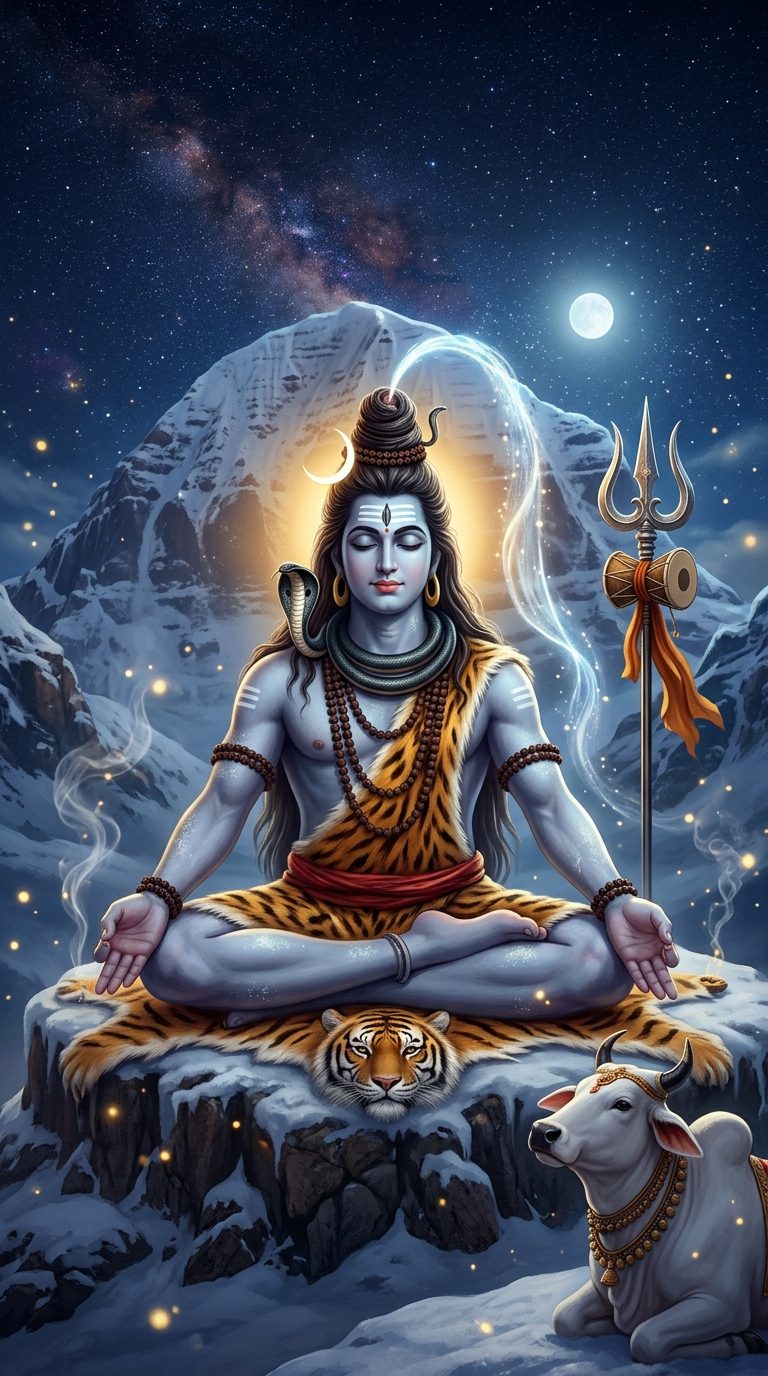
Lord Shiva as the essence of the Vedas seated in meditation on a lotus of light, sages reading palm-leaf Vedas before him
ShivaStotram

Vedasara Shiva Stava

Lyrics · Meaning · Audio

Adi Shankaracharya’s “essence of the Vedas” in praise of Shiva — moving from his beautiful form to the formless reality “that is neither earth nor water, fire nor wind, nor space,” the source and end of the universe.

Attributed to Adi Shankaracharya

Listen

Vedasara Shiva Stava

Son of Kali · Power of Shiva

0:004:33
Deity
Shiva
Type
Stotram
Verses
11
Language
Sanskrit

Vedasara Shiva Stava Lyrics with Meaning

Each line shows an easy way to say it, with its English meaning. Turn on the Sanskrit, the exact pronunciation or the word-by-word meaning whenever you want to go deeper.

Verse 1

पशूनां पतिं पापनाशं परेशं गजेन्द्रस्य कृत्तिं वसानं वरेण्यम् ।

Pashunam Patim Papanasham Paresham Gajendrasya Krittim Vasanam Varenyam

paśūnāṃ patiṃ pāpanāśaṃ pareśaṃ gajendrasya kṛttiṃ vasānaṃ vareṇyam

The lord of creatures, destroyer of sin, the supreme Lord, wearing the hide of the king of elephants, most worthy of worship,

    जटाजूटमध्ये स्फुरद्गाङ्गवारिं महादेवमेकं स्मरामि स्मरारिम् ॥ १ ॥

    Jatajuta Madhye Sphurad Ganga Varim Mahadevam Ekam Smarami Smararim

    jaṭājūṭamadhye sphuradgāṅgavāriṃ mahādevamekaṃ smarāmi smarārim

    the Ganga’s waters sparkling in his matted hair — I remember the one great God, the enemy of desire.

      Verse 2

      महेशं सुरेशं सुरारातिनाशं विभुं विश्वनाथं विभूत्यङ्गभूषम् ।

      Mahesham Suresham Surarati Nasham Vibhum Vishvanatham Vibhutyanga Bhusham

      maheśaṃ sureśaṃ surārātināśaṃ vibhuṃ viśvanāthaṃ vibhūtyaṅgabhūṣam

      The great Lord, lord of the gods, destroyer of the gods’ enemies, all-pervading, lord of the universe, his body adorned with sacred ash,

        विरूपाक्षमिन्द्वर्कवह्नित्रिनेत्रं सदानन्दमीडे प्रभुं पञ्चवक्त्रम् ॥ २ ॥

        Virupaksham Indvarka Vahni Trinetram Sadanandam Ide Prabhum Panchavaktram

        virūpākṣamindvarkavahnitrinetraṃ sadānandamīḍe prabhuṃ pañcavaktram

        of uncommon eyes — the moon, sun and fire — ever blissful: I praise the five-faced Lord.

          Verse 3

          गिरीशं गणेशं गले नीलवर्णं गवेन्द्राधिरूढं गुणातीतरूपम् ।

          Girisham Ganesham Gale Nilavarnam Gavendradhirudham Gunatita Rupam

          girīśaṃ gaṇeśaṃ gale nīlavarṇaṃ gavendrādhirūḍhaṃ guṇātītarūpam

          Lord of the mountain, lord of the hosts, blue at the throat, riding the king of bulls, whose nature is beyond all qualities,

            भवं भास्वरं भस्मना भूषिताङ्गं भवानीकलत्रं भजे पञ्चवक्त्रम् ॥ ३ ॥

            Bhavam Bhasvaram Bhasmana Bhushitangam Bhavani Kalatram Bhaje Panchavaktram

            bhavaṃ bhāsvaraṃ bhasmanā bhūṣitāṅgaṃ bhavānīkalatraṃ bhaje pañcavaktram

            the source of being, radiant, adorned with ash, husband of Bhavani — I worship the five-faced Lord.

              Verse 4

              शिवाकान्त शम्भो शशाङ्कार्धमौले महेशान शूलिन् जटाजूटधारिन् ।

              Shivakanta Shambho Shashankardha Maule Maheshana Shulin Jatajuta Dharin

              śivākānta śambho śaśāṅkārdhamaule maheśāna śūlin jaṭājūṭadhārin

              O beloved of Shivaa, O Shambhu, crowned with the half-moon, O great Lord, bearer of the trident and matted locks,

                त्वमेको जगद्व्यापको विश्वरूप प्रसीद प्रसीद प्रभो पूर्णरूप ॥ ४ ॥

                Tvameko Jagad Vyapako Vishvarupa Prasida Prasida Prabho Purnarupa

                tvameko jagadvyāpako viśvarūpa prasīda prasīda prabho pūrṇarūpa

                you alone pervade the world, O universal form — be gracious, be gracious, O Lord, O complete one.

                  Verse 5

                  परात्मानमेकं जगद्बीजमाद्यं निरीहं निराकारमोङ्कारवेद्यम् ।

                  Paratmanam Ekam Jagad Bijam Adyam Niriham Nirakaram Omkara Vedyam

                  parātmānamekaṃ jagadbījamādyaṃ nirīhaṃ nirākāramoṅkāravedyam

                  The one supreme Self, the first seed of the world, free of desire, formless, known through Om —

                    यतो जायते पाल्यते येन विश्वं तमीशं भजे लीयते यत्र विश्वम् ॥ ५ ॥

                    Yato Jayate Palyate Yena Vishvam Tamisham Bhaje Liyate Yatra Vishvam

                    yato jāyate pālyate yena viśvaṃ tamīśaṃ bhaje līyate yatra viśvam

                    from whom the universe is born, by whom it is sustained, and into whom it dissolves — that Lord I worship.

                      Verse 6

                      न भूमिर्न चापो न वह्निर्न वायुर्न चाकाशमास्ते न तन्द्रा न निद्रा ।

                      Na Bhumir Na Chapo Na Vahnir Na Vayur Na Chakasham Aste Na Tandra Na Nidra

                      na bhūmirna cāpo na vahnirna vāyurna cākāśamāste na tandrā na nidrā

                      Not earth, not water, not fire, not wind, not space; no weariness, no sleep,

                        न ग्रीष्मो न शीतं न देशो न वेषो न यस्यास्ति मूर्तिस्त्रिमूर्तिं तमीडे ॥ ६ ॥

                        Na Grishmo Na Shitam Na Desho Na Vesho Na Yasyasti Murtis Trimurtim Tamide

                        na grīṣmo na śītaṃ na deśo na veṣo na yasyāsti mūrtistrimūrtiṃ tamīḍe

                        no heat, no cold, no place, no garment — the one who has no form, yet takes three forms, I praise.

                          Verse 7

                          अजं शाश्वतं कारणं कारणानां शिवं केवलं भासकं भासकानाम् ।

                          Ajam Shashvatam Karanam Karananam Shivam Kevalam Bhasakam Bhasakanam

                          ajaṃ śāśvataṃ kāraṇaṃ kāraṇānāṃ śivaṃ kevalaṃ bhāsakaṃ bhāsakānām

                          Unborn, eternal, the cause of all causes, auspicious, alone, the light that lights all lights,

                            तुरीयं तमःपारमाद्यन्तहीनं प्रपद्ये परं पावनं द्वैतहीनम् ॥ ७ ॥

                            Turiyam Tamahparam Adyantahinam Prapadye Param Pavanam Dvaitahinam

                            turīyaṃ tamaḥpāramādyantahīnaṃ prapadye paraṃ pāvanaṃ dvaitahīnam

                            the fourth state, beyond darkness, without beginning or end — I take refuge in the supreme, purifying, non-dual one.

                              Verse 8

                              नमस्ते नमस्ते विभो विश्वमूर्ते नमस्ते नमस्ते चिदानन्दमूर्ते ।

                              Namaste Namaste Vibho Vishvamurte Namaste Namaste Chidananda Murte

                              namaste namaste vibho viśvamūrte namaste namaste cidānandamūrte

                              Salutations, salutations to you, O all-pervading one whose form is the universe; salutations, salutations, O form of consciousness and bliss;

                                नमस्ते नमस्ते तपोयोगगम्य नमस्ते नमस्ते श्रुतिज्ञानगम्य ॥ ८ ॥

                                Namaste Namaste Tapoyoga Gamya Namaste Namaste Shruti Jnana Gamya

                                namaste namaste tapoyogagamya namaste namaste śrutijñānagamya

                                salutations, salutations, O you reached by austerity and yoga; salutations, salutations, O you reached through the wisdom of scripture.

                                  Verse 9

                                  प्रभो शूलपाणे विभो विश्वनाथ महादेव शम्भो महेश त्रिनेत्र ।

                                  Prabho Shulapane Vibho Vishvanatha Mahadeva Shambho Mahesha Trinetra

                                  prabho śūlapāṇe vibho viśvanātha mahādeva śambho maheśa trinetra

                                  O Lord, trident in hand, all-pervading lord of the universe, great God, Shambhu, great Lord, three-eyed one,

                                    शिवाकान्त शान्त स्मरारे पुरारे त्वदन्यो वरेण्यो न मान्यो न गण्यः ॥ ९ ॥

                                    Shivakanta Shanta Smarare Purare Tvadanyo Varenyo Na Manyo Na Ganyah

                                    śivākānta śānta smarāre purāre tvadanyo vareṇyo na mānyo na gaṇyaḥ

                                    beloved of Shivaa, peaceful one, enemy of Kama, enemy of Tripura — none but you is worthy of worship, honour or regard.

                                      Verse 10

                                      शम्भो महेश करुणामय शूलपाणे गौरीपते पशुपते पशुपाशनाशिन् ।

                                      Shambho Mahesha Karunamaya Shulapane Gauripate Pashupate Pashupasha Nashin

                                      śambho maheśa karuṇāmaya śūlapāṇe gaurīpate paśupate paśupāśanāśin

                                      O Shambhu, great Lord, full of compassion, trident-bearer, husband of Gauri, lord of creatures, destroyer of the bonds that tie them,

                                        काशीपते करुणया जगदेतदेकस्त्वं हंसि पासि विदधासि महेश्वरोऽसि ॥ १० ॥

                                        Kashipate Karunaya Jagad Etad Ekas Tvam Hamsi Pasi Vidadhasi Maheshvarosi

                                        kāśīpate karuṇayā jagadetadekastvaṃ haṃsi pāsi vidadhāsi maheśvaro'si

                                        O lord of Kashi — out of compassion, you alone create, protect and dissolve this world; you are the great Lord.

                                          Verse 11

                                          त्वत्तो जगद्भवति देव भव स्मरारे त्वय्येव तिष्ठति जगन्मृड विश्वनाथ ।

                                          Tvatto Jagad Bhavati Deva Bhava Smarare Tvayyeva Tishthati Jagan Mrida Vishvanatha

                                          tvatto jagadbhavati deva bhava smarāre tvayyeva tiṣṭhati jaganmṛḍa viśvanātha

                                          From you the world arises, O God, O Bhava, enemy of Kama; in you alone it abides, O gracious one, lord of the universe;

                                            त्वय्येव गच्छति लयं जगदेतदीश लिङ्गात्मके हर चराचरविश्वरूपिन् ॥ ११ ॥

                                            Tvayyeva Gacchati Layam Jagad Etad Isha Lingatmake Hara Characharavishvarupin

                                            tvayyeva gacchati layaṃ jagadetadīśa liṅgātmake hara carācaraviśvarūpin

                                            into you alone this world dissolves, O Lord, O Hara, whose nature is the Linga, whose form is all that moves and does not move.

                                              About Vedasara Shiva Stava

                                              Vedasāra means “the essence of the Vedas.” In eleven verses, Shankaracharya distils what he saw as the Vedic teaching about Shiva.

                                              The first verses describe Shiva in form: lord of creatures, wearing the elephant hide, the Ganga sparkling in his hair, five-faced, three-eyed, blue-throated, riding the bull. Then the hymn turns: Shiva is the one supreme Self, the seed of the world, beyond desire and form, known through Om — from whom the universe is born, by whom it is sustained and into whom it dissolves.

                                              Verse 6 is especially famous: “Not earth, not water, not fire, not wind, not space; no sleep, no weariness, no summer or winter, no place, no dress — the one who has no form, yet is the three forms, I praise.”

                                              The Stories Inside the Hymn

                                              Form and formless

                                              Shankaracharya taught Advaita — that ultimate reality is one and beyond all form. Yet he also wrote some of the most beautiful descriptions of Shiva’s form in Sanskrit.

                                              This hymn shows how both belong together: the devotee begins with the image they can love, and is led gently to the reality the image points to.

                                              How to Chant Vedasara Shiva Stava

                                              When to chant

                                              • ✦Mondays
                                              • ✦Maha Shivaratri
                                              • ✦Before meditation
                                              • ✦When studying Vedanta

                                              How many times

                                              Once.

                                              1. 1

                                                Sit before a Shiva Linga or image, or simply close your eyes.

                                              2. 2

                                                Chant the first verses picturing Shiva’s form.

                                              3. 3

                                                In the later verses, let the image soften into stillness.

                                              4. 4

                                                End in silent meditation.

                                              Pronunciation Guide

                                              The sounds that trip people up most in this hymn, and how to say them.

                                              paśūnāṃ

                                              pa-shoo-naam — “of all creatures.”

                                              smarārim

                                              sma-raa-rim — “enemy of Kama.”

                                              pañcavaktram

                                              pun-cha-vuk-trum — “five-faced.”

                                              Power of Shiva by Son of Kali

                                              The music

                                              Power of Shiva

                                              by Son of Kali

                                              More for Shiva

                                              Frequently Asked Questions

                                              Who wrote the Vedasara Shiva Stava?

                                              It is attributed to Adi Shankaracharya.

                                              What does Vedasara mean?

                                              “The essence of the Vedas.” The hymn sums up the Vedic vision of Shiva as the one supreme reality.

                                              What does Mahadevam Ekam Smarami Smararim mean?

                                              “I remember the one great God, the enemy of Kama (desire).”

                                              Text: Traditional public-domain Sanskrit hymn. Easy reading, transliteration and English translation written for the Jaguar Medicine Tribe Mantra Library.

                                              Music: Recordings by Son of Kali, produced with AI-assisted vocals and instrumentation.

                                              Note: Benefits described here are traditional beliefs, shared for understanding — not medical or guaranteed outcomes.