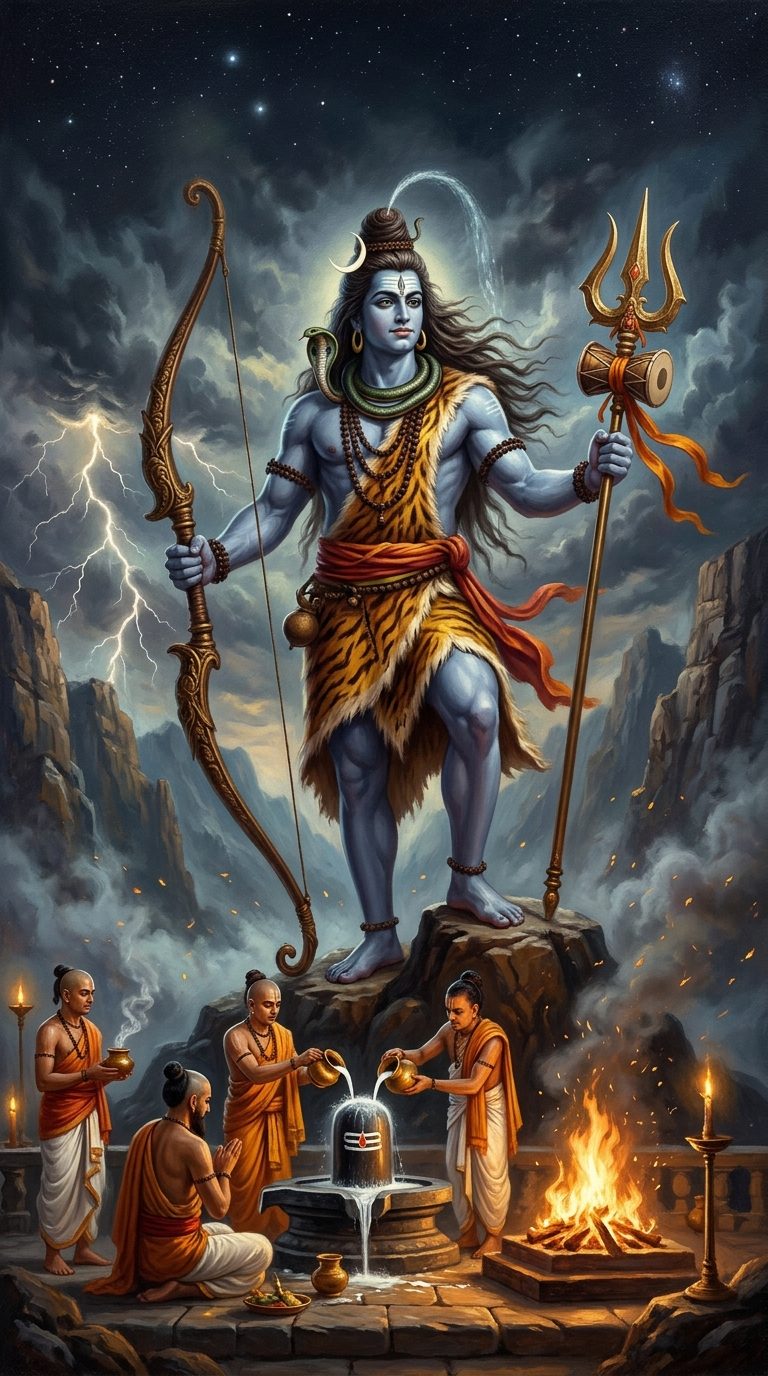
Rudra-Shiva in his majestic Vedic form standing on a mountain under a lightning-filled sky, priests below pouring milk over a Shiva Linga
ShivaSuktam

Sri Rudram (Namakam & Chamakam)

Lyrics · Meaning · Audio

The greatest Vedic hymn to Shiva: the Namakam, eleven sections of “namo” — salutations to Rudra in every form, from the fierce archer to the trees, rivers, potters and thieves — and the Chamakam, eleven sections of “cha me,” asking that every good thing in life be “mine too.” The source of Om Namah Shivaya.

Krishna Yajurveda, Taittiriya Samhita 4.5 (Namakam) and 4.7 (Chamakam)

Listen

Sri Rudram (Namakam & Chamakam)

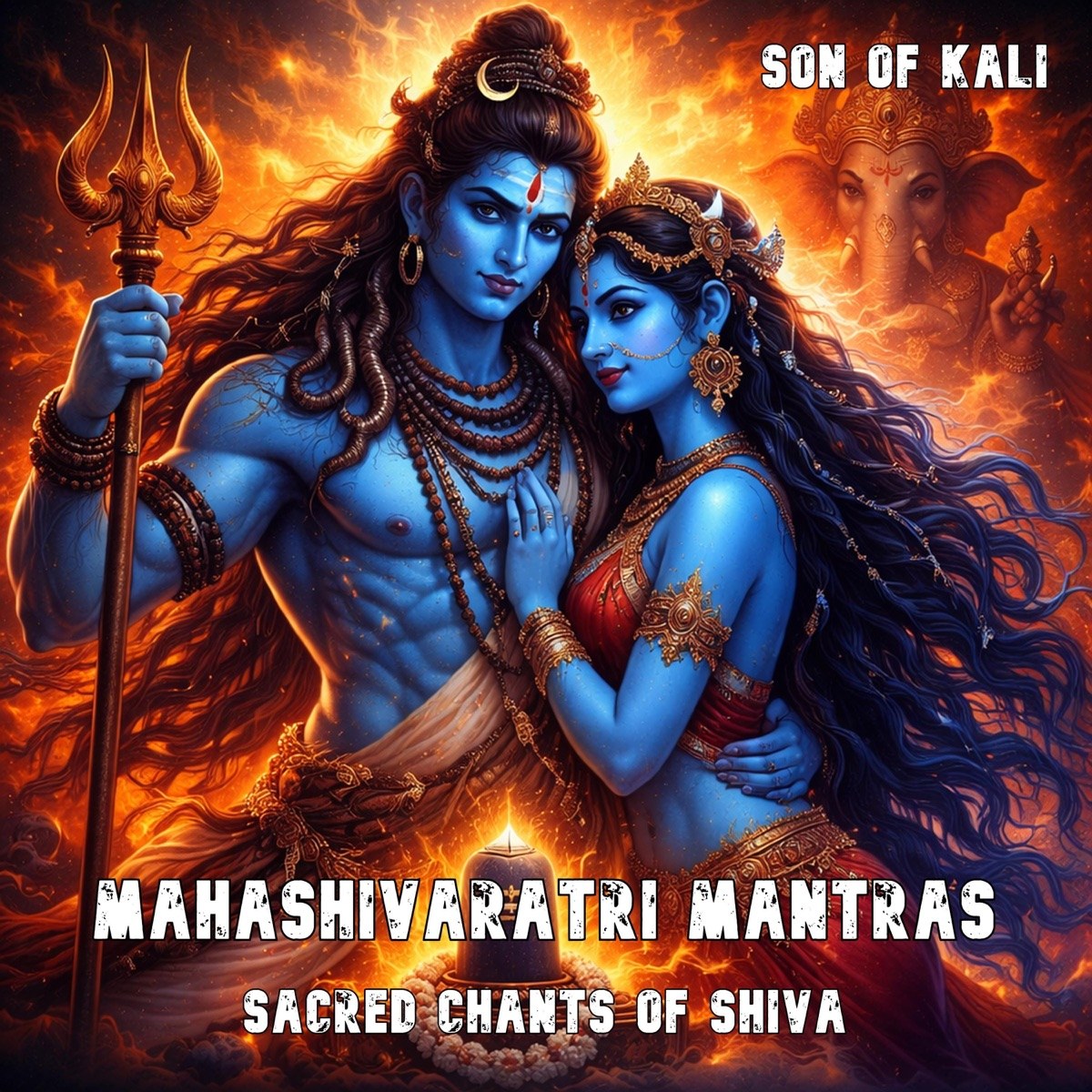
Son of Kali · Mahashivaratri Mantras

0:007:58
Deity
Shiva
Type
Suktam
Verses
25
Language
Sanskrit

Sri Rudram (Namakam & Chamakam) Lyrics with Meaning

Each line shows an easy way to say it, with its English meaning. Turn on the Sanskrit, the exact pronunciation or the word-by-word meaning whenever you want to go deeper.

Namakam — Anuvaka 1: Turn your gentle face to us

नमस्ते रुद्रमन्यव उतोत इषवे नमः ।

Namaste Rudramanyava Utota Ishave Namah

namaste rudramanyava utota iṣave namaḥ

Salutations to your anger, O Rudra, and to your arrow;

    नमस्ते अस्तु धन्वने बाहुभ्यामुत ते नमः ॥ १।१॥

    Namaste Astu Dhanvane Bahubhyamuta Te Namah

    namaste astu dhanvane bāhubhyāmuta te namaḥ

    salutations to your bow, and to your two arms.

      यात इषुः शिवतमा शिवं बभूव ते धनुः ।

      Yata Ishuh Shivatama Shivam Babhuva Te Dhanuh

      yāta iṣuḥ śivatamā śivaṃ babhūva te dhanuḥ

      May your arrow become most auspicious, may your bow be gentle,

        शिवा शरव्या या तव तया नो रुद्र मृडय ॥ १।२॥

        Shiva Sharavya Ya Tava Taya No Rudra Mridaya

        śivā śaravyā yā tava tayā no rudra mṛḍaya

        and with your quiver that is kind, O Rudra, make us happy.

          या ते रुद्र शिवा तनूरघोराऽपापकाशिनी ।

          Ya Te Rudra Shiva Tanuraghorapapakashini

          yā te rudra śivā tanūraghorā'pāpakāśinī

          O Rudra, your form that is auspicious, not terrible, revealing no evil —

            तया नस्तनुवा शन्तमया गिरिशञ्ज्ताभिचाकशीहि ॥ १।३॥

            Taya Nastanuva Shantamaya Girishanjtabhichakashihi

            tayā nastanuvā śantamayā giriśañjtābhicākaśīhi

            with that most peaceful form, O dweller of the mountain, look upon us.

              यामिषुं गिरिशञ्ज्त हस्ते बिभर्ष्यस्तवे ।

              Yamishum Girishanjta Haste Bibharshyastave

              yāmiṣuṃ giriśañjta haste bibharṣyastave

              The arrow you hold in your hand to shoot, O dweller of the mountain,

                शिवां गिरित्र तां कुरु मा हि{म्+}सीः पुरुषं जगत् ॥ १।४॥

                Shivam Giritra Tam Kuru Ma Hi{m+}sih Purusham Jagat

                śivāṃ giritra tāṃ kuru mā hi{m+}sīḥ puruṣaṃ jagat

                make it gentle, protector of the mountain; harm neither people nor the world.

                  शिवेन वचसा त्वा गिरिशाच्छा वदामसि ।

                  Shivena Vachasa Tva Girishaccha Vadamasi

                  śivena vacasā tvā giriśācchā vadāmasi

                  We approach you with auspicious words, O mountain Lord, to praise you,

                    यथा नः सर्वमिज्जगदयक्ष्मसुमना असत् ॥ १।५॥

                    Yatha Nah Sarvamijjagadayakshmasumana Asat

                    yathā naḥ sarvamijjagadayakṣmasumanā asat

                    so that our whole world may be free of illness and of good mind.

                      अध्यवोचदधि वक्ता प्रथमो दैव्यो भिषक् ।

                      Adhyavochadadhi Vakta Prathamo Daivyo Bhishak

                      adhyavocadadhi vaktā prathamo daivyo bhiṣak

                      The advocate has spoken for us, the first, the divine physician;

                        अहीश्च सर्वाञ्जम्भयन्त्सर्वाश्च यातुधान्यः ॥ १।६॥

                        Ahishcha Sarvanjambhayantsarvashcha Yatudhanyah

                        ahīśca sarvāñjambhayantsarvāśca yātudhānyaḥ

                        crush all serpents and all sorceresses.

                          असौ यस्ताम्रो अरुण उत बभ्रुः सुमञ्ज्गलः ।

                          Asau Yastamro Aruna Uta Babhruh Sumanjgalah

                          asau yastāmro aruṇa uta babhruḥ sumañjgalaḥ

                          He who is copper-red, crimson, brown and most auspicious — the sun —

                            ये चेमारुद्रा अभितो दिक्षु ।

                            Ye Chemarudra Abhito Dikshu

                            ye cemārudrā abhito dikṣu

                            and the thousands of Rudras who surround him in every direction,

                              श्रिताः सहस्रशोऽवैषाहेड ईमहे ॥ १।७॥

                              Shritah Sahasrashovaishaheda Imahe

                              śritāḥ sahasraśo'vaiṣāheḍa īmahe

                              we pacify their anger.

                                असौ योऽवसर्पति नीलग्रीवो विलोहितः ।

                                Asau Yovasarpati Nilagrivo Vilohitah

                                asau yo'vasarpati nīlagrīvo vilohitaḥ

                                He who moves across the sky, blue-throated and red,

                                  उतैनं गोपा अदृशन्नदृशन्नुदहार्यः ।

                                  Utainam Gopa Adrishannadrishannudaharyah

                                  utainaṃ gopā adṛśannadṛśannudahāryaḥ

                                  the cowherds have seen him, the water-carriers have seen him,

                                    उतैनं विश्वा भूतानि स दृष्टो मृडयाति नः ॥ १।८॥

                                    Utainam Vishva Bhutani Sa Drishto Mridayati Nah

                                    utainaṃ viśvā bhūtāni sa dṛṣṭo mṛḍayāti naḥ

                                    and all beings have seen him — may he, so seen, make us happy.

                                      नमो अस्तु नीलग्रीवाय सहस्राक्षाय मीढुषे ।

                                      Namo Astu Nilagrivaya Sahasrakshaya Midhushe

                                      namo astu nīlagrīvāya sahasrākṣāya mīḍhuṣe

                                      Salutations to the blue-throated one, thousand-eyed, giver of rain;

                                        अथो ये अस्य सत्वानोऽहं तेभ्योऽकरन्नमः ॥ १।९॥

                                        Atho Ye Asya Satvanoham Tebhyokarannamah

                                        atho ye asya satvāno'haṃ tebhyo'karannamaḥ

                                        and to his followers, I offer my salutations.

                                          प्रमुञ्ज्च धन्वनस्त्वमुभयोरार्त्नियोर्ज्याम् ।

                                          Pramunjcha Dhanvanastvamubhayorartniyorjyam

                                          pramuñjca dhanvanastvamubhayorārtniyorjyām

                                          Loosen the string from both ends of your bow,

                                            याश्च ते हस्त इषवः परा ता भगवो वप ॥ १।१०॥

                                            Yashcha Te Hasta Ishavah Para Ta Bhagavo Vapa

                                            yāśca te hasta iṣavaḥ parā tā bhagavo vapa

                                            and cast away the arrows in your hand, O Lord.

                                              अवतत्य धनुस्त्व सहस्राक्ष शतेषुधे ।

                                              Avatatya Dhanustva Sahasraksha Shateshudhe

                                              avatatya dhanustva sahasrākṣa śateṣudhe

                                              Unstring your bow, thousand-eyed one with a hundred quivers,

                                                निशीर्य शल्यानां मुखा शिवो नः सुमना भव ॥ १।११॥

                                                Nishirya Shalyanam Mukha Shivo Nah Sumana Bhava

                                                niśīrya śalyānāṃ mukhā śivo naḥ sumanā bhava

                                                blunt the points of your arrows, and be kind and gentle to us.

                                                  विज्यं धनुः कपर्दिनो विशल्यो बाणवा उत ।

                                                  Vijyam Dhanuh Kapardino Vishalyo Banava Uta

                                                  vijyaṃ dhanuḥ kapardino viśalyo bāṇavā uta

                                                  May the bow of the matted-haired one be unstrung, his quiver empty of arrows,

                                                    अनेशन्नस्येषव आभुरस्य निषञ्ज्गथिः ॥ १।१२॥

                                                    Aneshannasyeshava Abhurasya Nishanjgathih

                                                    aneśannasyeṣava ābhurasya niṣañjgathiḥ

                                                    his arrows gone and his scabbard empty.

                                                      या ते हेतिर्मीढुष्टम हस्ते बभूव ते धनुः ।

                                                      Ya Te Hetirmidhushtama Haste Babhuva Te Dhanuh

                                                      yā te hetirmīḍhuṣṭama haste babhūva te dhanuḥ

                                                      That weapon in your hand, O most bountiful, and your bow —

                                                        तयाऽस्मान्विश्वतस्त्वमयक्ष्मया परिब्भुज ॥ १।१३॥

                                                        Tayasmanvishvatastvamayakshmaya Paribbhuja

                                                        tayā'smānviśvatastvamayakṣmayā paribbhuja

                                                        with them protect us on every side, free of illness.

                                                          नमस्ते अस्त्वायुधायानातताय धृष्णवे ।

                                                          Namaste Astvayudhayanatataya Dhrishnave

                                                          namaste astvāyudhāyānātatāya dhṛṣṇave

                                                          Salutations to your weapon, not drawn but bold,

                                                            उभाभ्यामुत ते नमो बाहुभ्यां तव धन्वने ॥ १।१४॥

                                                            Ubhabhyamuta Te Namo Bahubhyam Tava Dhanvane

                                                            ubhābhyāmuta te namo bāhubhyāṃ tava dhanvane

                                                            and salutations to both your arms and to your bow.

                                                              परि ते धन्वनो हेतिरस्मान्व्रुणक्तु विश्वतः ।

                                                              Pari Te Dhanvano Hetirasmanvrunaktu Vishvatah

                                                              pari te dhanvano hetirasmānvruṇaktu viśvataḥ

                                                              May the weapon of your bow avoid us on every side,

                                                                अथो य इषुधिस्तवारे अस्मन्निधेहि तम् ॥ १।१५॥

                                                                Atho Ya Ishudhistavare Asmannidhehi Tam

                                                                atho ya iṣudhistavāre asmannidhehi tam

                                                                and the quiver that is yours, place it far away from us.

                                                                  Anuvaka 1 — Closing salutation

                                                                  नमस्ते अस्तु भगवन् विश्वेश्वराय महादेवाय त्र्यम्बकाय

                                                                  Namaste Astu Bhagavan Vishveshvaraya Mahadevaya Tryambakaya

                                                                  namaste astu bhagavan viśveśvarāya mahādevāya tryambakāya

                                                                  Salutations to you, Lord — lord of the universe, great God, three-eyed,

                                                                    त्रिपुरान्तकाय त्रिकाग्निकालाय कालाग्निरुद्राय

                                                                    Tripurantakaya Trikagnikalaya Kalagnirudraya

                                                                    tripurāntakāya trikāgnikālāya kālāgnirudrāya

                                                                    destroyer of Tripura, of the three fires and of time, the fire of time,

                                                                      नीलकण्ठाय मृत्युञ्जयाय सर्वेश्वराय

                                                                      Nilakanthaya Mrityunjayaya Sarveshvaraya

                                                                      nīlakaṇṭhāya mṛtyuñjayāya sarveśvarāya

                                                                      blue-throated, conqueror of death, lord of all,

                                                                        सदाशिवाय श्रीमन्महादेवाय नमः ॥ २।०॥

                                                                        Sadashivaya Shrimanmahadevaya Namah

                                                                        sadāśivāya śrīmanmahādevāya namaḥ

                                                                        ever auspicious, the glorious great God — salutations.

                                                                          Anuvaka 2: The lord of all things

                                                                          नमो हिरण्यबाहवे सेनान्ये दिशाञ्ज् च पतये नमो नमो

                                                                          Namo Hiranyabahave Senanye Dishanj Cha Pataye Namo Namo

                                                                          namo hiraṇyabāhave senānye diśāñj ca pataye namo namo

                                                                          Salutations to the golden-armed leader of armies, lord of the directions;

                                                                            वृक्षेभ्यो हरिकेशेभ्यः पशूनां पतये नमो नमः

                                                                            Vrikshebhyo Harikeshebhyah Pashunam Pataye Namo Namah

                                                                            vṛkṣebhyo harikeśebhyaḥ paśūnāṃ pataye namo namaḥ

                                                                            to the trees with green hair, the lord of all creatures;

                                                                              सस्पिञ्चराय त्विषीमते पथीनां पतये नमो नमो

                                                                              Saspincharaya Tvishimate Pathinam Pataye Namo Namo

                                                                              saspiñcarāya tviṣīmate pathīnāṃ pataye namo namo

                                                                              to the one bright as young grass, the radiant lord of paths;

                                                                                बभ्लुशाय विव्याधिनेऽन्नानां पतये नमो नमो

                                                                                Babhlushaya Vivyadhinennanam Pataye Namo Namo

                                                                                babhluśāya vivyādhine'nnānāṃ pataye namo namo

                                                                                to the tawny piercer, lord of food;

                                                                                  हरिकेशायोपवीतिने पुष्टानां पतये नमो नमो

                                                                                  Harikeshayopavitine Pushtanam Pataye Namo Namo

                                                                                  harikeśāyopavītine puṣṭānāṃ pataye namo namo

                                                                                  to the green-haired one wearing the sacred thread, lord of the well-nourished;

                                                                                    भवस्य हेत्यै जगतां पतये नमो नमो

                                                                                    Bhavasya Hetyai Jagatam Pataye Namo Namo

                                                                                    bhavasya hetyai jagatāṃ pataye namo namo

                                                                                    to the weapon of existence, lord of the worlds;

                                                                                      रुद्रायातताविने क्षेत्राणां पतये नमो नमः

                                                                                      Rudrayatatavine Kshetranam Pataye Namo Namah

                                                                                      rudrāyātatāvine kṣetrāṇāṃ pataye namo namaḥ

                                                                                      to Rudra with drawn bow, lord of fields;

                                                                                        सूतायाहन्त्याय वनानां पतये नमो नमः ॥ २।१॥

                                                                                        Sutayahantyaya Vananam Pataye Namo Namah

                                                                                        sūtāyāhantyāya vanānāṃ pataye namo namaḥ

                                                                                        to the charioteer who cannot be harmed, lord of forests.

                                                                                          रोहिताय स्थपतये वृक्षाणां पतये नमो नमो

                                                                                          Rohitaya Sthapataye Vrikshanam Pataye Namo Namo

                                                                                          rohitāya sthapataye vṛkṣāṇāṃ pataye namo namo

                                                                                          Salutations to the red builder, lord of trees;

                                                                                            मन्त्रिणे वाणिजाय कक्षाणां पतये नमो नमो

                                                                                            Mantrine Vanijaya Kakshanam Pataye Namo Namo

                                                                                            mantriṇe vāṇijāya kakṣāṇāṃ pataye namo namo

                                                                                            to the counsellor and merchant, lord of bushes;

                                                                                              भुवञ्ज्तये वारिवस्कृतायौषधीनां पतये नमो नम

                                                                                              Bhuvanjtaye Varivaskritayaushadhinam Pataye Namo Nama

                                                                                              bhuvañjtaye vārivaskṛtāyauṣadhīnāṃ pataye namo nama

                                                                                              to the creator of the world who blesses his devotees, lord of herbs;

                                                                                                उच्चैर्घोषायाक्रन्दयते पत्तीनां पतये नमो नमः

                                                                                                Uchchairghoshayakrandayate Pattinam Pataye Namo Namah

                                                                                                uccairghoṣāyākrandayate pattīnāṃ pataye namo namaḥ

                                                                                                to the loud-roaring one who makes enemies weep, lord of foot-soldiers;

                                                                                                  कृत्स्नवीताय धावते सत्वनां पतये नमः ॥ २।२॥

                                                                                                  Kritsnavitaya Dhavate Satvanam Pataye Namah

                                                                                                  kṛtsnavītāya dhāvate satvanāṃ pataye namaḥ

                                                                                                  to the fully armoured, swift-moving lord of the brave.

                                                                                                    About Sri Rudram (Namakam & Chamakam)

                                                                                                    Sri Rudram is the heart of the Krishna Yajurveda and one of the oldest hymns to Shiva — thousands of years old. It is chanted in temples during Rudrabhishekam, the bathing of the Shiva Linga with water, milk and honey, and is considered the most powerful Vedic prayer for peace, healing and protection.

                                                                                                    The first half, the Namakam (from namaḥ, “salutation”), begins by asking Rudra to put away his anger and his arrows and to show his gentle, healing form. Then come hundreds of salutations: to Rudra as the lord of armies, forests, paths, healers and herbs; as the thief and the lord of thieves; as the potter, the carpenter and the hunter; in the river, the well, the cloud and the lightning — the whole universe, high and low, is Rudra. The mantra namaḥ śivāya — the source of Om Namah Shivaya — appears in the eighth section.

                                                                                                    The second half, the Chamakam (from ca me, “and to me”), is a long, joyful list of everything a full life needs — strength, breath, food, wealth, friendship, knowledge, health, the grains of the field, the rites of worship — each one asked for “and to me.” Because the text is very long, the page shows the opening first — press “Show the full text” for the rest.

                                                                                                    The Stories Inside the Hymn

                                                                                                    Fierce and gentle

                                                                                                    Rudra means “the roarer” — the storm god of the Vedas, whose arrows bring illness. The Namakam opens by turning him gently: “May your arrow become auspicious, may your bow be kind; with that form of yours that is gentle and healing, look upon us.”

                                                                                                    By the eighth section he is called śiva — the auspicious one. The whole hymn is a journey from fear to love.

                                                                                                    Everything is Rudra

                                                                                                    Few hymns anywhere honour the Divine in so many ordinary and even disreputable forms: thieves and robbers, carpenters and chariot-makers, dogs and their keepers, the dust, the leaves, the grass.

                                                                                                    The Vedic seers saw no place where Rudra is not — which is why chanting the Rudram is said to bless the whole world.

                                                                                                    How to Chant Sri Rudram (Namakam & Chamakam)

                                                                                                    When to chant

                                                                                                    • ✦Mondays and Pradosham
                                                                                                    • ✦Maha Shivaratri and the month of Shravan
                                                                                                    • ✦During Rudrabhishekam
                                                                                                    • ✦For healing, peace and protection

                                                                                                    How many times

                                                                                                    Once; Ekadasha Rudram is eleven recitations of the Namakam, each followed by one section of the Chamakam.

                                                                                                    1. 1

                                                                                                      Sit before a Shiva Linga; if possible, pour water or milk over it as you chant.

                                                                                                    2. 2

                                                                                                      Follow the recording — Vedic chanting has precise rhythm and pitch.

                                                                                                    3. 3

                                                                                                      Read the meaning of each section beforehand to feel what you are offering.

                                                                                                    4. 4

                                                                                                      End with the Mrityunjaya mantra and Om Shanti.

                                                                                                    Pronunciation Guide

                                                                                                    The sounds that trip people up most in this hymn, and how to say them.

                                                                                                    namaste rudra manyava

                                                                                                    na-mas-tay rud-ra mun-ya-va.

                                                                                                    namo namaḥ

                                                                                                    na-mo na-mah.

                                                                                                    ca me

                                                                                                    cha may — “and to me.”

                                                                                                    Mahashivaratri Mantras Sacred Chants of Shiva by Son of Kali

                                                                                                    The music

                                                                                                    Mahashivaratri Mantras Sacred Chants of Shiva

                                                                                                    by Son of Kali

                                                                                                    More for Shiva

                                                                                                    Frequently Asked Questions

                                                                                                    What is Sri Rudram?

                                                                                                    A Vedic hymn to Shiva as Rudra from the Krishna Yajurveda (Taittiriya Samhita), in two parts: the Namakam (salutations) and the Chamakam (requests).

                                                                                                    Is Om Namah Shivaya from the Rudram?

                                                                                                    Yes — the words namaḥ śivāya appear in the eighth section (anuvaka) of the Namakam, which is why the Rudram is honoured as the source of the Panchakshara mantra.

                                                                                                    What are the benefits of chanting Sri Rudram?

                                                                                                    Tradition holds that it brings peace, healing, protection from fear and misfortune, and the removal of sins; the Chamakam asks for every blessing of a full life.

                                                                                                    Why is the meaning shown line by line?

                                                                                                    The Vedic text is chanted in fixed units; the translation follows the lines of the source edition so you can follow along while listening.

                                                                                                    Text: Public-domain Vedic text (Taittiriya Samhita 4.5 and 4.7), checked against the sanskritdocuments.org edition; accent marks omitted. Easy reading and English translation written for the Jaguar Medicine Tribe Mantra Library.

                                                                                                    Music: Recordings by Son of Kali, produced with AI-assisted vocals and instrumentation.

                                                                                                    Note: Benefits described here are traditional beliefs, shared for understanding — not medical or guaranteed outcomes.