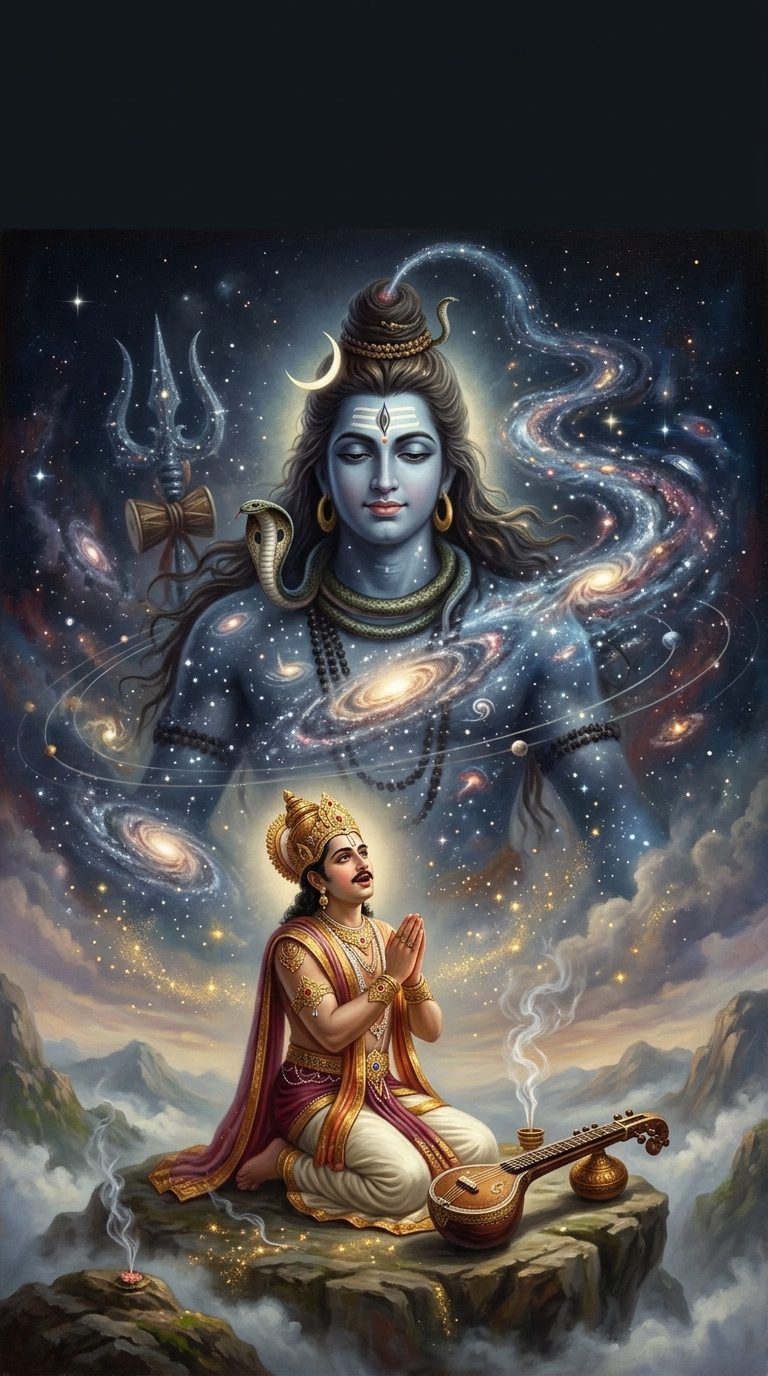
The celestial musician Pushpadanta kneeling and singing before the infinite cosmic form of Shiva that fills the universe
ShivaStotram

Shiva Mahimna Stotram

Lyrics · Meaning · Audio

The celebrated “Hymn to the Greatness of Shiva,” sung by the gandharva Pushpadanta to win back his lost powers — beginning “If even Brahma’s praise falls short of your greatness, then no one’s words can be blamed for falling short,” and ending “There is no god greater than Shiva, no hymn greater than the Mahimna.”

By the gandharva Pushpadanta (named in verses 35 and 38)

Listen

Shiva Mahimna Stotram

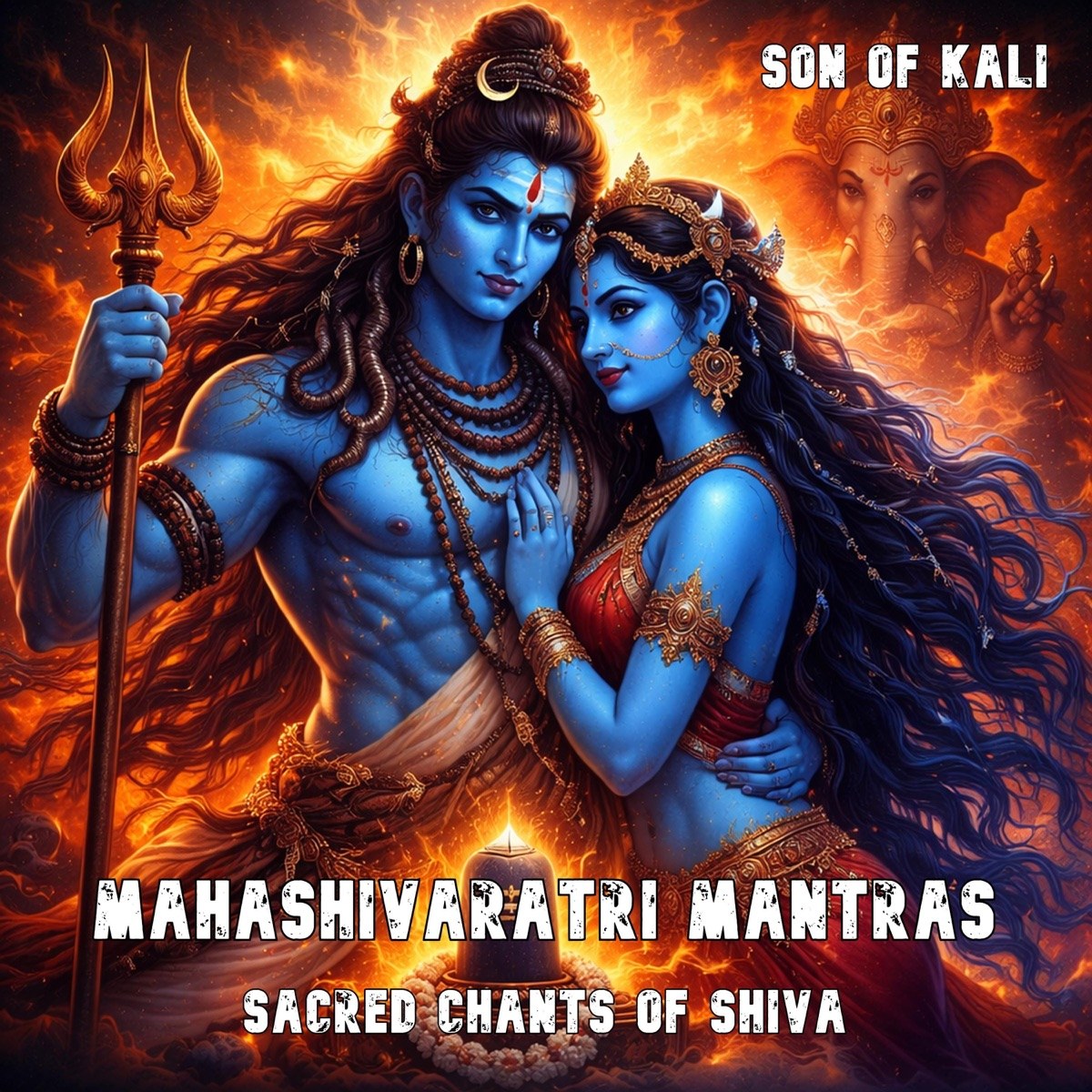
Son of Kali · Mahashivaratri Mantras

0:005:14
Deity
Shiva
Type
Stotram
Verses
43
Language
Sanskrit

Shiva Mahimna Stotram Lyrics with Meaning

Each line shows an easy way to say it, with its English meaning. Turn on the Sanskrit, the exact pronunciation or the word-by-word meaning whenever you want to go deeper.

Verse 1

महिम्नः पारं ते परमविदुषो यद्यसदृशी

Mahimnah Param Te Paramavidusho Yadyasadrishi

mahimnaḥ pāraṃ te paramaviduṣo yadyasadṛśī

If a hymn by one who does not know the furthest limit of your greatness is unworthy of you,

    स्तुतिर्ब्रह्मादीनामपि तदवसन्नास्त्वयि गिरः ।

    Stutirbrahmadinamapi Tadavasannastvayi Girah

    stutirbrahmādīnāmapi tadavasannāstvayi giraḥ

    then even the praises of Brahma and the gods fall short of you;

      अथावाच्यः सर्वः स्वमतिपरिणामावधि गृणन्

      Athavachyah Sarvah Svamatiparinamavadhi Grinan

      athāvācyaḥ sarvaḥ svamatipariṇāmāvadhi gṛṇan

      but if no one is to blame who praises you as far as their mind can reach,

        ममाप्येष स्तोत्रे हर निरपवादः परिकरः ॥ १ ॥

        Mamapyesha Stotre Hara Nirapavadah Parikarah

        mamāpyeṣa stotre hara nirapavādaḥ parikaraḥ

        then my attempt at this hymn too, O Hara, is beyond reproach.

          Verse 2

          अतीतः पन्थानं तव च महिमा वाङ्मनसयोः

          Atitah Panthanam Tava Cha Mahima Vanmanasayoh

          atītaḥ panthānaṃ tava ca mahimā vāṅmanasayoḥ

          Your greatness lies beyond the reach of speech and mind;

            अतद्व्यावृत्त्या यं चकितमभिधत्ते श्रुतिरपि ।

            Atadvyavrittya Yam Chakitamabhidhatte Shrutirapi

            atadvyāvṛttyā yaṃ cakitamabhidhatte śrutirapi

            even the Vedas speak of it fearfully, only by saying “not this.”

              स कस्य स्तोतव्यः कतिविधगुणः कस्य विषयः

              Sa Kasya Stotavyah Katividhagunah Kasya Vishayah

              sa kasya stotavyaḥ katividhaguṇaḥ kasya viṣayaḥ

              Who can praise it? How many qualities has it? Whose object can it be?

                पदे त्वर्वाचीने पतति न मनः कस्य न वचः ॥ २ ॥

                Pade Tvarvachine Patati Na Manah Kasya Na Vachah

                pade tvarvācīne patati na manaḥ kasya na vacaḥ

                Yet whose mind and words do not fall upon your later, manifest form?

                  Verse 3

                  मधुस्फीता वाचः परमममृतं निर्मितवतः

                  Madhusphita Vachah Paramamamritam Nirmitavatah

                  madhusphītā vācaḥ paramamamṛtaṃ nirmitavataḥ

                  O Brahman, you created the Vedas, words sweet with honey and supreme nectar —

                    तव ब्रह्मन् किं वागपि सुरगुरोर्विस्मयपदम् ।

                    Tava Brahman Kim Vagapi Suragurorvismayapadam

                    tava brahman kiṃ vāgapi suragurorvismayapadam

                    can even the speech of the gods’ teacher amaze you?

                      मम त्वेतां वाणीं गुणकथनपुण्येन भवतः

                      Mama Tvetam Vanim Gunakathanapunyena Bhavatah

                      mama tvetāṃ vāṇīṃ guṇakathanapuṇyena bhavataḥ

                      But I wish to purify my own speech by the merit of telling your virtues —

                        पुनामीत्यर्थेऽस्मिन् पुरमथन बुद्धिर्व्यवसिता ॥ ३ ॥

                        Punamityarthesmin Puramathana Buddhirvyavasita

                        punāmītyarthe'smin puramathana buddhirvyavasitā

                        O destroyer of Tripura, for this my mind is resolved.

                          Verse 4

                          तवैश्वर्यं यत्तज्जगदुदयरक्षाप्रलयकृत्

                          Tavaishvaryam Yattajjagadudayarakshapralayakrit

                          tavaiśvaryaṃ yattajjagadudayarakṣāpralayakṛt

                          Your sovereignty, which brings about the creation, protection and dissolution of the world,

                            त्रयीवस्तु व्यस्तं तिसृषु गुणभिन्नासु तनुषु ।

                            Trayivastu Vyastam Tisrishu Gunabhinnasu Tanushu

                            trayīvastu vyastaṃ tisṛṣu guṇabhinnāsu tanuṣu

                            is taught by the three Vedas and divided into three forms of different qualities.

                              अभव्यानामस्मिन्वरद रमणीयामरमणीं

                              Abhavyanamasminvarada Ramaniyamaramanim

                              abhavyānāmasminvarada ramaṇīyāmaramaṇīṃ

                              O giver of boons, some dull-witted people here raise their voices

                                विहन्तुं व्याक्रोशीं विदधत इहैके जडधियः ॥ ४ ॥

                                Vihantum Vyakroshim Vidadhata Ihaike Jadadhiyah

                                vihantuṃ vyākrośīṃ vidadhata ihaike jaḍadhiyaḥ

                                to attack it with arguments that please only the foolish.

                                  Verse 5

                                  किमीहः किङ्कायः स खलु किमुपायस्त्रिभुवनं

                                  Kimihah Kinkayah Sa Khalu Kimupayastribhuvanam

                                  kimīhaḥ kiṅkāyaḥ sa khalu kimupāyastribhuvanaṃ

                                  “With what desire, what body, what means, does the Creator create the three worlds?

                                    किमाधारो धाता सृजति किमुपादान इति च ।

                                    Kimadharo Dhata Srijati Kimupadana Iti Cha

                                    kimādhāro dhātā sṛjati kimupādāna iti ca

                                    On what support, from what material?” —

                                      अतर्क्यैश्वर्ये त्वय्यनवसर दुःस्थो हतधियः

                                      Atarkyaishvarye Tvayyanavasara Duhstho Hatadhiyah

                                      atarkyaiśvarye tvayyanavasara duḥstho hatadhiyaḥ

                                      such misguided reasoning about you, whose power is beyond logic,

                                        कुतर्कोऽयं कांश्चिन्मुखरयति मोहाय जगताम् ॥ ५ ॥

                                        Kutarkoyam Kamshchinmukharayati Mohaya Jagatam

                                        kutarko'yaṃ kāṃścinmukharayati mohāya jagatām

                                        only makes some people talk, and confuses the world.

                                          Verse 6

                                          अजन्मानो लोकाः किमवयववन्तोऽपि जगतां

                                          Ajanmano Lokah Kimavayavavantopi Jagatam

                                          ajanmāno lokāḥ kimavayavavanto'pi jagatāṃ

                                          Are the worlds, though made of parts, unborn?

                                            अधिष्ठातारं किं भवविधिरनादृत्य भवति ।

                                            Adhishthataram Kim Bhavavidhiranadritya Bhavati

                                            adhiṣṭhātāraṃ kiṃ bhavavidhiranādṛtya bhavati

                                            Can creation happen without a ruler of the worlds?

                                              अनीशो वा कुर्याद्भुवनजनने कः परिकरो

                                              Anisho Va Kuryadbhuvanajanane Kah Parikaro

                                              anīśo vā kuryādbhuvanajanane kaḥ parikaro

                                              If someone other than the Lord made the universe, what would their tools be?

                                                यतो मन्दास्त्वां प्रत्यमरवर संशेरत इमे ॥ ६ ॥

                                                Yato Mandastvam Pratyamaravara Samsherata Ime

                                                yato mandāstvāṃ pratyamaravara saṃśerata ime

                                                Only the dull, O best of gods, doubt you.

                                                  Verse 7 — Every path leads to you

                                                  त्रयी साङ्ख्यं योगः पशुपतिमतं वैष्णवमिति

                                                  Trayi Sankhyam Yogah Pashupatimatam Vaishnavamiti

                                                  trayī sāṅkhyaṃ yogaḥ paśupatimataṃ vaiṣṇavamiti

                                                  The three Vedas, Sankhya, Yoga, the Pashupata teaching, the Vaishnava way —

                                                    प्रभिन्ने प्रस्थाने परमिदमदः पथ्यमिति च ।

                                                    Prabhinne Prasthane Paramidamadah Pathyamiti Cha

                                                    prabhinne prasthāne paramidamadaḥ pathyamiti ca

                                                    in these different paths, people say “this is best, that is right,”

                                                      रुचीनां वैचित्र्यादृजुकुटिल नानापथजुषां

                                                      Ruchinam Vaichitryadrijukutila Nanapathajusham

                                                      rucīnāṃ vaicitryādṛjukuṭila nānāpathajuṣāṃ

                                                      according to their different tastes, taking straight or winding paths;

                                                        नृणामेको गम्यस्त्वमसि पयसामर्णव इव ॥ ७ ॥

                                                        Nrinameko Gamyastvamasi Payasamarnava Iva

                                                        nṛṇāmeko gamyastvamasi payasāmarṇava iva

                                                        yet you alone are the goal of all people, as the ocean is the goal of all rivers.

                                                          Verse 8

                                                          महोक्षः खट्वाङ्गं परशुरजिनं भस्म फणिनः

                                                          Mahokshah Khatvangam Parashurajinam Bhasma Phaninah

                                                          mahokṣaḥ khaṭvāṅgaṃ paraśurajinaṃ bhasma phaṇinaḥ

                                                          A great bull, a skull-staff, an axe, a hide, ash and snakes,

                                                            कपालं चेतीयत्तव वरद तन्त्रोपकरणम् ।

                                                            Kapalam Chetiyattava Varada Tantropakaranam

                                                            kapālaṃ cetīyattava varada tantropakaraṇam

                                                            and a skull — these alone, O giver of boons, are your household goods;

                                                              सुरास्तां तामृद्धिं दधति तु भवद्भूप्रणिहितां

                                                              Surastam Tamriddhim Dadhati Tu Bhavadbhupranihitam

                                                              surāstāṃ tāmṛddhiṃ dadhati tu bhavadbhūpraṇihitāṃ

                                                              yet the gods hold their wealth only because you gave it with a glance of your brow.

                                                                न हि स्वात्मारामं विषयमृगतृष्णा भ्रमयति ॥ ८ ॥

                                                                Na Hi Svatmaramam Vishayamrigatrishna Bhramayati

                                                                na hi svātmārāmaṃ viṣayamṛgatṛṣṇā bhramayati

                                                                The mirage of the senses does not lead astray one who delights in the Self.

                                                                  Verse 9

                                                                  ध्रुवं कश्चिद्ब्रूते सकलमपरस्त्वं ध्रुवमिति

                                                                  Dhruvam Kashchidbrute Sakalamaparastvam Dhruvamiti

                                                                  dhruvaṃ kaścidbrūte sakalamaparastvaṃ dhruvamiti

                                                                  One says the whole world is permanent, another that it is impermanent,

                                                                    परो ध्रौव्याध्रौव्ये जगति गदति व्यस्तविषये ।

                                                                    Paro Dhrauvyadhrauvye Jagati Gadati Vyastavishaye

                                                                    paro dhrauvyādhrauvye jagati gadati vyastaviṣaye

                                                                    another that it is both, each speaking of a different aspect;

                                                                      समस्तेऽप्येतस्मिन्पुरमथन तैर्विस्मित इव

                                                                      Samastepyetasminpuramathana Tairvismita Iva

                                                                      samaste'pyetasminpuramathana tairvismita iva

                                                                      amazed by all of them, O destroyer of Tripura,

                                                                        स्तुवन्जिह्रेमि त्वां न खलु ननु धृष्टा मुखरता ॥ ९ ॥

                                                                        Stuvanjihremi Tvam Na Khalu Nanu Dhrishta Mukharata

                                                                        stuvanjihremi tvāṃ na khalu nanu dhṛṣṭā mukharatā

                                                                        I am not ashamed to praise you — my talkativeness is surely bold.

                                                                          Verse 10 — The pillar of fire

                                                                          तवैश्वर्यं यत्नाद्यदुपरि विरिञ्चिर्हरिरधः

                                                                          Tavaishvaryam Yatnadyadupari Virinchirhariradhah

                                                                          tavaiśvaryaṃ yatnādyadupari viriñcirhariradhaḥ

                                                                          When, to measure your glory, Brahma went upward and Vishnu downward with great effort,

                                                                            परिच्छेत्तुं यातावनलमनलस्कन्धवपुषः

                                                                            Paricchettum Yatavanalamanalaskandhavapushah

                                                                            paricchettuṃ yātāvanalamanalaskandhavapuṣaḥ

                                                                            they could not reach the end of you, whose form was a pillar of fire;

                                                                              ततो भक्तिश्रद्धाभरगुरुगृणद्भ्यां गिरिश यत्

                                                                              Tato Bhaktishraddhabharagurugrinadbhyam Girisha Yat

                                                                              tato bhaktiśraddhābharagurugṛṇadbhyāṃ giriśa yat

                                                                              then, O lord of the mountain, as they praised you, heavy with devotion and faith,

                                                                                स्वयं तस्थे ताभ्यां तव किमनुवृत्तिर्न फलति ॥ १० ॥

                                                                                Svayam Tasthe Tabhyam Tava Kimanuvrittirna Phalati

                                                                                svayaṃ tasthe tābhyāṃ tava kimanuvṛttirna phalati

                                                                                you yourself stood before them. Does worship of you ever fail to bear fruit?

                                                                                  About Shiva Mahimna Stotram

                                                                                  The Shiva Mahimna Stotram is one of the most loved and most quoted hymns in all of Sanskrit. It is attributed to Pushpadanta, a gandharva (celestial musician), and is famous both for its poetry and its philosophy.

                                                                                  It begins with humility — if even the Vedas fall silent before your greatness, my small hymn is no worse than theirs — and then explores Shiva from every angle: the Lord beyond all philosophies, to whom every path leads “as all rivers lead to the ocean”; the ascetic whose only possessions are a bull, a skull-staff, an axe, a hide, ash and snakes; the pillar of fire whose top and bottom Brahma and Vishnu could not find; the destroyer of Tripura, of Kama, of Daksha’s sacrifice; the dancer whose stamping shakes the earth.

                                                                                  Its final verses give the hymn’s story and the famous line: mahimno nāparā stutiḥ — “there is no hymn greater than the Mahimna.” Because the hymn is long, the page shows the opening verses first — press “Show the full text” for the rest.

                                                                                  The Stories Inside the Hymn

                                                                                  The thief of flowers

                                                                                  Pushpadanta loved flowers and used his gandharva power of invisibility to steal them from the garden of King Chitraratha, an ardent devotee of Shiva who offered them in worship. To catch the thief, the king scattered Shiva’s nirmalya — flowers already offered to Shiva — on the path.

                                                                                  Pushpadanta stepped on them without knowing, lost his powers and became visible. Realising his fault, he composed this hymn. Shiva was so pleased that he restored his powers.

                                                                                  Every path leads to you

                                                                                  Verse 7 is one of the most quoted lines in Hindu thought: the Vedas, Sankhya, Yoga, the Shaiva and Vaishnava traditions are different paths, chosen by different temperaments, straight or winding — yet “you alone are the goal of all people, as the ocean is the goal of all rivers.”

                                                                                  Swami Vivekananda quoted it in his famous address to the World’s Parliament of Religions in Chicago in 1893.

                                                                                  How to Chant Shiva Mahimna Stotram

                                                                                  When to chant

                                                                                  • ✦Mondays and Maha Shivaratri
                                                                                  • ✦Pradosham
                                                                                  • ✦The month of Shravan
                                                                                  • ✦Daily, once, twice or three times as the hymn recommends

                                                                                  How many times

                                                                                  Once.

                                                                                  1. 1

                                                                                    Sit before a Shiva Linga and offer water or a bilva leaf.

                                                                                  2. 2

                                                                                    Chant slowly; the verses are rich and are best savoured.

                                                                                  3. 3

                                                                                    Pause on verse 7 and verse 32, two of the most beloved.

                                                                                  4. 4

                                                                                    End with Om Namah Shivaya.

                                                                                  Pronunciation Guide

                                                                                  The sounds that trip people up most in this hymn, and how to say them.

                                                                                  mahimnaḥ

                                                                                  ma-him-nah — “of the greatness.”

                                                                                  puṣpadanta

                                                                                  push-pa-dun-ta.

                                                                                  dhūrjaṭeḥ

                                                                                  dhoor-ja-tay — “of the one with heavy matted locks.”

                                                                                  Mahashivaratri Mantras Sacred Chants of Shiva by Son of Kali

                                                                                  The music

                                                                                  Mahashivaratri Mantras Sacred Chants of Shiva

                                                                                  by Son of Kali

                                                                                  More for Shiva

                                                                                  Frequently Asked Questions

                                                                                  Who wrote the Shiva Mahimna Stotram?

                                                                                  The gandharva Pushpadanta, who is named in the closing verses.

                                                                                  What does Mahimna mean?

                                                                                  “Of the greatness.” The hymn praises the greatness of Shiva, which even the Vedas cannot fully describe.

                                                                                  What is the most famous verse?

                                                                                  Verse 7, which says that all spiritual paths, straight or winding, lead to Shiva as all rivers lead to the ocean — quoted by Swami Vivekananda in Chicago in 1893.

                                                                                  What are its benefits?

                                                                                  The hymn says whoever recites it daily with devotion and a pure heart becomes equal to Rudra in Shiva’s world, and here gains wealth, long life, children and fame.

                                                                                  Text: Public-domain Sanskrit hymn, checked against the sanskritdocuments.org edition (prevalent 43-verse version). Easy reading and English translation written for the Jaguar Medicine Tribe Mantra Library.

                                                                                  Music: Recordings by Son of Kali, produced with AI-assisted vocals and instrumentation.

                                                                                  Note: Benefits described here are traditional beliefs, shared for understanding — not medical or guaranteed outcomes.