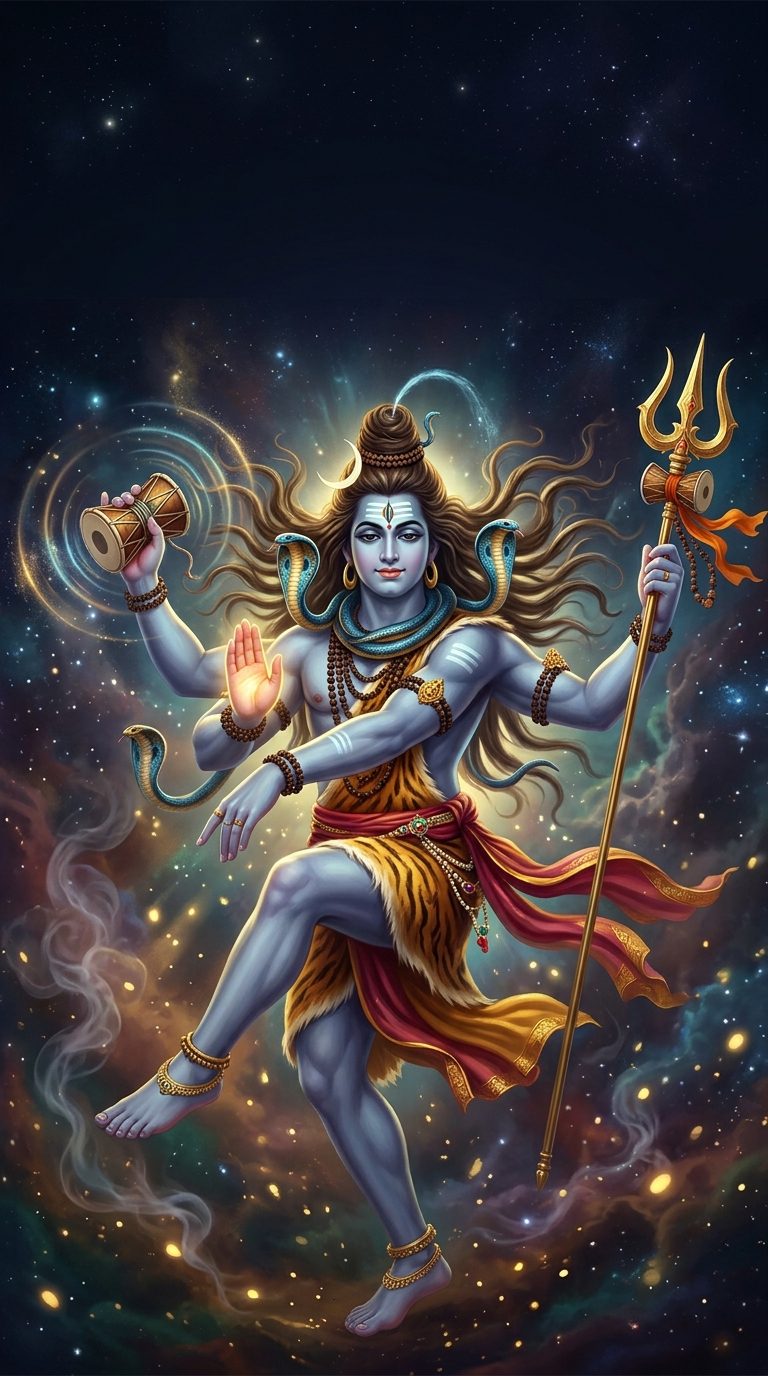
Lord Shiva in dynamic cosmic motion, cobras rising around him in a rhythmic spiral of blue-gold light, the damaru sending rings of rhythm into space
ShivaStotram

Shiva Bhujangam

Lyrics · Meaning · Audio

Shankaracharya’s 40-verse hymn in the flowing “serpent” metre — from Ganesha and Shiva’s cosmic form, through a moving prayer for courage at the hour of death, to the ecstatic realisation “Shivo’ham, Shivo’ham — I am Shiva, I am Shiva.”

By Adi Shankaracharya

Listen

Shiva Bhujangam

Son of Kali · Sacred Shiva Chants

0:005:27
Deity
Shiva
Type
Stotram
Verses
40
Language
Sanskrit

Shiva Bhujangam Lyrics with Meaning

Each line shows an easy way to say it, with its English meaning. Turn on the Sanskrit, the exact pronunciation or the word-by-word meaning whenever you want to go deeper.

Verse 1 — Ganesha

गलद्दानगण्डं मिलद्भृङ्गषण्डं

Galaddanagandam Miladbhringashandam

galaddānagaṇḍaṃ miladbhṛṅgaṣaṇḍaṃ

His cheeks flowing with temple-nectar, bees swarming around him,

    चलच्चारुशुण्डं जगत्त्राणशौण्डम् ।

    Chalachcharushundam Jagattranashaundam

    calaccāruśuṇḍaṃ jagattrāṇaśauṇḍam

    his lovely trunk swaying, mighty in protecting the world,

      कनद्दन्तकाण्डं विपद्भङ्गचण्डं

      Kanaddantakandam Vipadbhangachandam

      kanaddantakāṇḍaṃ vipadbhaṅgacaṇḍaṃ

      his tusk gleaming, fierce in breaking misfortune,

        शिवप्रेमपिण्डं भजे वक्रतुण्डम् ॥ १ ॥

        Shivapremapindam Bhaje Vakratundam

        śivapremapiṇḍaṃ bhaje vakratuṇḍam

        the very embodiment of Shiva’s love — I worship the curved-trunked Ganesha.

          Verse 2

          अनाद्यन्तमाद्यं परं तत्त्वमर्थं

          Anadyantamadyam Param Tattvamartham

          anādyantamādyaṃ paraṃ tattvamarthaṃ

          Without beginning or end, yet the first; the supreme reality, the true meaning;

            चिदाकारमेकं तुरीयं त्वमेयम् ।

            Chidakaramekam Turiyam Tvameyam

            cidākāramekaṃ turīyaṃ tvameyam

            consciousness in form, one, the fourth state, immeasurable;

              हरिब्रह्ममृग्यं परब्रह्मरूपं

              Haribrahmamrigyam Parabrahmarupam

              haribrahmamṛgyaṃ parabrahmarūpaṃ

              sought by Vishnu and Brahma, the supreme Brahman in form,

                मनोवागतीतं महःशैवमीडे ॥ २ ॥

                Manovagatitam Mahahshaivamide

                manovāgatītaṃ mahaḥśaivamīḍe

                beyond mind and speech — I praise that light of Shiva.

                  Verse 3

                  स्वशक्त्यादिशक्त्यन्तसिंहासनस्थं

                  Svashaktyadishaktyantasimhasanastham

                  svaśaktyādiśaktyantasiṃhāsanasthaṃ

                  Seated on a lion-throne of all powers, from his own power to the last,

                    मनोहारिसर्वाङ्गरत्नोरुभूषम् ।

                    Manoharisarvangaratnorubhusham

                    manohārisarvāṅgaratnorubhūṣam

                    adorned with great jewels on every enchanting limb,

                      जटाहीन्दुगङ्गास्थिशम्याकमौलिं

                      Jatahindugangasthishamyakamaulim

                      jaṭāhīndugaṅgāsthiśamyākamauliṃ

                      his crown bearing matted hair, serpent, moon, Ganga, bones and shami leaves —

                        पराशक्तिमित्रं नुमः पञ्चवक्त्रम् ॥ ३ ॥

                        Parashaktimitram Numah Panchavaktram

                        parāśaktimitraṃ numaḥ pañcavaktram

                        the friend of supreme Shakti, the five-faced: we bow to you.

                          Verse 4

                          शिवेशानतत्पूरुषाघोरवामा-

                          Shiveshanatatpurushaghoravama-

                          śiveśānatatpūruṣāghoravāmā-

                          With your five faces — Shiva, Ishana, Tatpurusha, Aghora, Vama —

                            दिभिः पञ्चभिर्हृन्मुखैः षड्भिरङ्गैः ।

                            Dibhih Panchabhirhrinmukhaih Shadbhirangaih

                            dibhiḥ pañcabhirhṛnmukhaiḥ ṣaḍbhiraṅgaiḥ

                            and the heart and other six limbs of your mantra,

                              अनौपम्य षट्त्रिंशतं तत्त्वविद्या-

                              Anaupamya Shattrimshatam Tattvavidya-

                              anaupamya ṣaṭtriṃśataṃ tattvavidyā-

                              beyond compare, beyond the thirty-six principles of knowledge —

                                मतीतं परं त्वां कथं वेत्ति को वा ॥ ४ ॥

                                Matitam Param Tvam Katham Vetti Ko Va

                                matītaṃ paraṃ tvāṃ kathaṃ vetti ko vā

                                who could ever know you, the Supreme?

                                  Verse 5 — Half Shakti, half Shiva

                                  प्रवालप्रवाहप्रभाशोणमर्धं

                                  Pravalapravahaprabhashonamardham

                                  pravālapravāhaprabhāśoṇamardhaṃ

                                  One half red as a stream of coral,

                                    मरुत्वन्मणिश्रीमहःश्याममर्धम् ।

                                    Marutvanmanishrimahahshyamamardham

                                    marutvanmaṇiśrīmahaḥśyāmamardham

                                    the other half dark as the sapphire —

                                      गुणस्यूतमेतद्वपुः शैवमन्तः

                                      Gunasyutametadvapuh Shaivamantah

                                      guṇasyūtametadvapuḥ śaivamantaḥ

                                      this body of Shiva, woven of qualities, I hold within,

                                        स्मरामि स्मरापत्तिसम्पत्तिहेतोः ॥ ५ ॥

                                        Smarami Smarapattisampattihetoh

                                        smarāmi smarāpattisampattihetoḥ

                                        and remember it, the source of love’s fulfilment.

                                          Verse 6

                                          स्वसेवासमायातदेवासुरेन्द्रा-

                                          Svasevasamayatadevasurendra-

                                          svasevāsamāyātadevāsurendrā-

                                          Bathed by garlands of mandara flowers from the bowing crowns

                                            नमन्मौलिमन्दारमालाभिषिक्तम् ।

                                            Namanmaulimandaramalabhishiktam

                                            namanmaulimandāramālābhiṣiktam

                                            of the kings of gods and demons who come to serve you —

                                              नमस्यामि शम्भो पदाम्भोरुहं ते

                                              Namasyami Shambho Padambhoruham Te

                                              namasyāmi śambho padāmbhoruhaṃ te

                                              I bow, O Shambhu, to your lotus feet,

                                                भवाम्भोधिपोतं भवानीविभाव्यम् ॥ ६ ॥

                                                Bhavambhodhipotam Bhavanivibhavyam

                                                bhavāmbhodhipotaṃ bhavānīvibhāvyam

                                                the boat across the ocean of existence, meditated on by Bhavani.

                                                  Verse 7

                                                  जगन्नाथ मन्नाथ गौरीसनाथ

                                                  Jagannatha Mannatha Gaurisanatha

                                                  jagannātha mannātha gaurīsanātha

                                                  Lord of the world, my Lord, husband of Gauri,

                                                    प्रपन्नानुकम्पिन्विपन्नार्तिहारिन् ।

                                                    Prapannanukampinvipannartiharin

                                                    prapannānukampinvipannārtihārin

                                                    compassionate to those who come to you, remover of the pain of the afflicted,

                                                      महःस्तोममूर्ते समस्तैकबन्धो

                                                      Mahahstomamurte Samastaikabandho

                                                      mahaḥstomamūrte samastaikabandho

                                                      embodiment of a mass of light, the one friend of all —

                                                        नमस्ते नमस्ते पुनस्ते नमोऽस्तु ॥ ७ ॥

                                                        Namaste Namaste Punaste Namostu

                                                        namaste namaste punaste namo'stu

                                                        salutations, salutations to you, again and again salutations.

                                                          Verse 8

                                                          विरूपाक्ष विश्वेश विश्वादिदेव

                                                          Virupaksha Vishvesha Vishvadideva

                                                          virūpākṣa viśveśa viśvādideva

                                                          O Virupaksha, Lord of the universe, first God of all,

                                                            त्रयीमूल शम्भो शिव त्र्यम्बक त्वम् ।

                                                            Trayimula Shambho Shiva Tryambaka Tvam

                                                            trayīmūla śambho śiva tryambaka tvam

                                                            root of the three Vedas, Shambhu, Shiva, three-eyed one,

                                                              प्रसीद स्मर त्राहि पश्यावमुक्त्यै

                                                              Prasida Smara Trahi Pashyavamuktyai

                                                              prasīda smara trāhi paśyāvamuktyai

                                                              be gracious, remember me, save me, look upon me for my release,

                                                                क्षमां प्राप्नुहि त्र्यक्ष मां रक्ष मोदात्॥ ८ ॥

                                                                Kshamam Prapnuhi Tryaksha Mam Raksha Modat

                                                                kṣamāṃ prāpnuhi tryakṣa māṃ rakṣa modāt

                                                                forgive me, O three-eyed one, and protect me joyfully.

                                                                  Verse 9

                                                                  महादेव देवेश देवादिदेव

                                                                  Mahadeva Devesha Devadideva

                                                                  mahādeva deveśa devādideva

                                                                  “Mahadeva, Lord of gods, first God of gods,

                                                                    स्मरारे पुरारे यमारे हरेति ।

                                                                    Smarare Purare Yamare Hareti

                                                                    smarāre purāre yamāre hareti

                                                                    enemy of Kama, of Tripura, of Death, O Hara!” —

                                                                      ब्रुवाणः स्मरिष्यामि भक्त्या भवन्तं

                                                                      Bruvanah Smarishyami Bhaktya Bhavantam

                                                                      bruvāṇaḥ smariṣyāmi bhaktyā bhavantaṃ

                                                                      saying this, I will remember you with devotion;

                                                                        ततो मे दयाशील देव प्रसीद ॥ ९ ॥

                                                                        Tato Me Dayashila Deva Prasida

                                                                        tato me dayāśīla deva prasīda

                                                                        so be gracious to me, O compassionate God.

                                                                          Verse 10

                                                                          त्वदन्यः शरण्यः प्रपन्नस्य नेति

                                                                          Tvadanyah Sharanyah Prapannasya Neti

                                                                          tvadanyaḥ śaraṇyaḥ prapannasya neti

                                                                          For one who has surrendered there is no refuge but you —

                                                                            प्रसीद स्मरन्नेव हन्यास्तु दैन्यम् ।

                                                                            Prasida Smaranneva Hanyastu Dainyam

                                                                            prasīda smaranneva hanyāstu dainyam

                                                                            be gracious; just by remembering, destroy my misery.

                                                                              न चेत्ते भवेद्भक्तवात्सल्यहानि-

                                                                              Na Chette Bhavedbhaktavatsalyahani-

                                                                              na cette bhavedbhaktavātsalyahāni-

                                                                              If not, your love for your devotees would be diminished —

                                                                                स्ततो मे दयालो सदा संनिधेहि ॥ १० ॥

                                                                                Stato Me Dayalo Sada Samnidhehi

                                                                                stato me dayālo sadā saṃnidhehi

                                                                                so, O kind one, stay always near me.

                                                                                  About Shiva Bhujangam

                                                                                  The Shiva Bhujangam is one of Adi Shankaracharya’s great hymns, written in bhujaṅgaprayāta — “the serpent’s movement” — a rippling metre that suits Shiva, who wears serpents as ornaments (as the last verse playfully notes).

                                                                                  It opens with Ganesha, then praises Shiva as the formless reality beyond mind and speech, five-faced, half Shakti and half Shiva. The heart of the hymn is a run of verses about the moment of death: when the messengers of Yama come, when family weep around the bed, when breath fails and speech blurs — “then may my mind rest in your lotus feet; then say to me, ‘Do not fear, my child.’”

                                                                                  It ends in non-dual realisation: “I know no other god than Shiva — I am Shiva, I am Shiva, I am Shiva, I am Shiva.” Because the hymn is long, the page shows the opening verses first — press “Show the full text” for the rest.

                                                                                  The Stories Inside the Hymn

                                                                                  “Do not fear, child”

                                                                                  Verse 20 imagines the sound of the bells on the neck of Yama’s buffalo coming closer at the end of life. Shankara asks that at that moment Shiva ride up on his bull and say, “vatsa mā bhīḥ” — “child, do not be afraid.”

                                                                                  It is one of the most tender lines in Sanskrit devotional poetry, and the reason many people chant this hymn for the dying.

                                                                                  How to Chant Shiva Bhujangam

                                                                                  When to chant

                                                                                  • ✦Mondays and Maha Shivaratri
                                                                                  • ✦Pradosham
                                                                                  • ✦At the bedside of the sick or dying
                                                                                  • ✦When facing fear of death

                                                                                  How many times

                                                                                  Once.

                                                                                  1. 1

                                                                                    Sit before a Shiva Linga or image.

                                                                                  2. 2

                                                                                    Let the rhythm carry you; the metre is meant to flow.

                                                                                  3. 3

                                                                                    Slow down for the verses about the end of life and say them as a personal prayer.

                                                                                  4. 4

                                                                                    End with “Shivo’ham” repeated softly, then silence.

                                                                                  Pronunciation Guide

                                                                                  The sounds that trip people up most in this hymn, and how to say them.

                                                                                  śivo'ham

                                                                                  shi-voh-hum — “I am Shiva.”

                                                                                  bhujaṅga

                                                                                  bhu-jung-ga — “serpent.”

                                                                                  vatsa mā bhīḥ

                                                                                  vut-sa maa bheeh — “child, do not fear.”

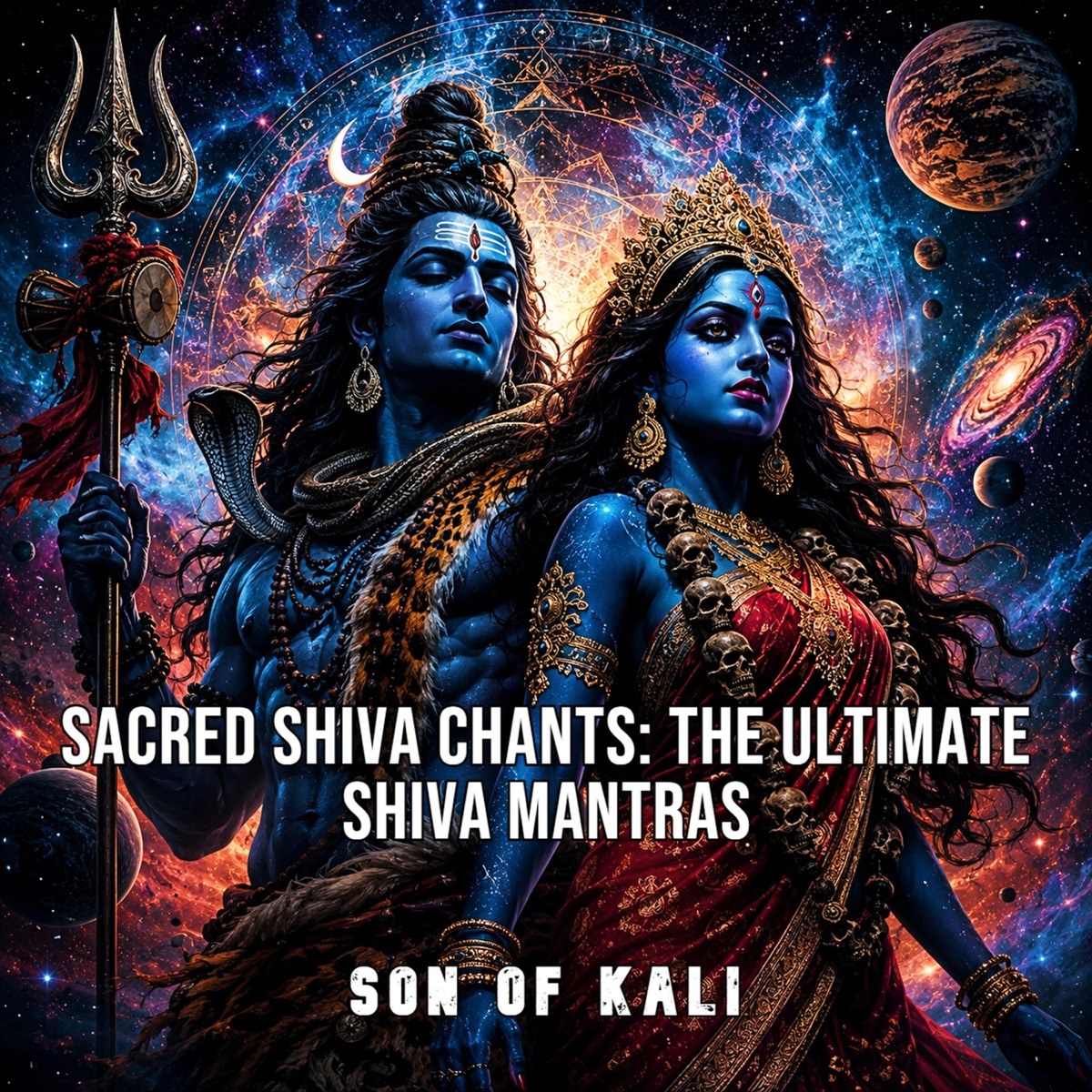
                                                                                  Sacred Shiva Chants: The Ultimate Shiva Mantras by Son of Kali

                                                                                  The music

                                                                                  Sacred Shiva Chants: The Ultimate Shiva Mantras

                                                                                  by Son of Kali

                                                                                  More for Shiva

                                                                                  Frequently Asked Questions

                                                                                  Who wrote the Shiva Bhujangam?

                                                                                  Adi Shankaracharya; the colophon names him as the disciple of Govinda Bhagavatpada.

                                                                                  What does Shivoham mean?

                                                                                  “I am Shiva” — the non-dual realisation that the Self and Shiva are one.

                                                                                  Why is it chanted for the dying?

                                                                                  Many verses ask Shiva to protect and comfort the devotee at the moment of death, saying “Do not fear, my child.”

                                                                                  What are its benefits?

                                                                                  The last verse promises good children, long life, health and prosperity to those who recite it with devotion.

                                                                                  Text: Public-domain Sanskrit hymn by Adi Shankaracharya, checked against the sanskritdocuments.org edition. Easy reading and English translation written for the Jaguar Medicine Tribe Mantra Library.

                                                                                  Music: Recordings by Son of Kali, produced with AI-assisted vocals and instrumentation.

                                                                                  Note: Benefits described here are traditional beliefs, shared for understanding — not medical or guaranteed outcomes.