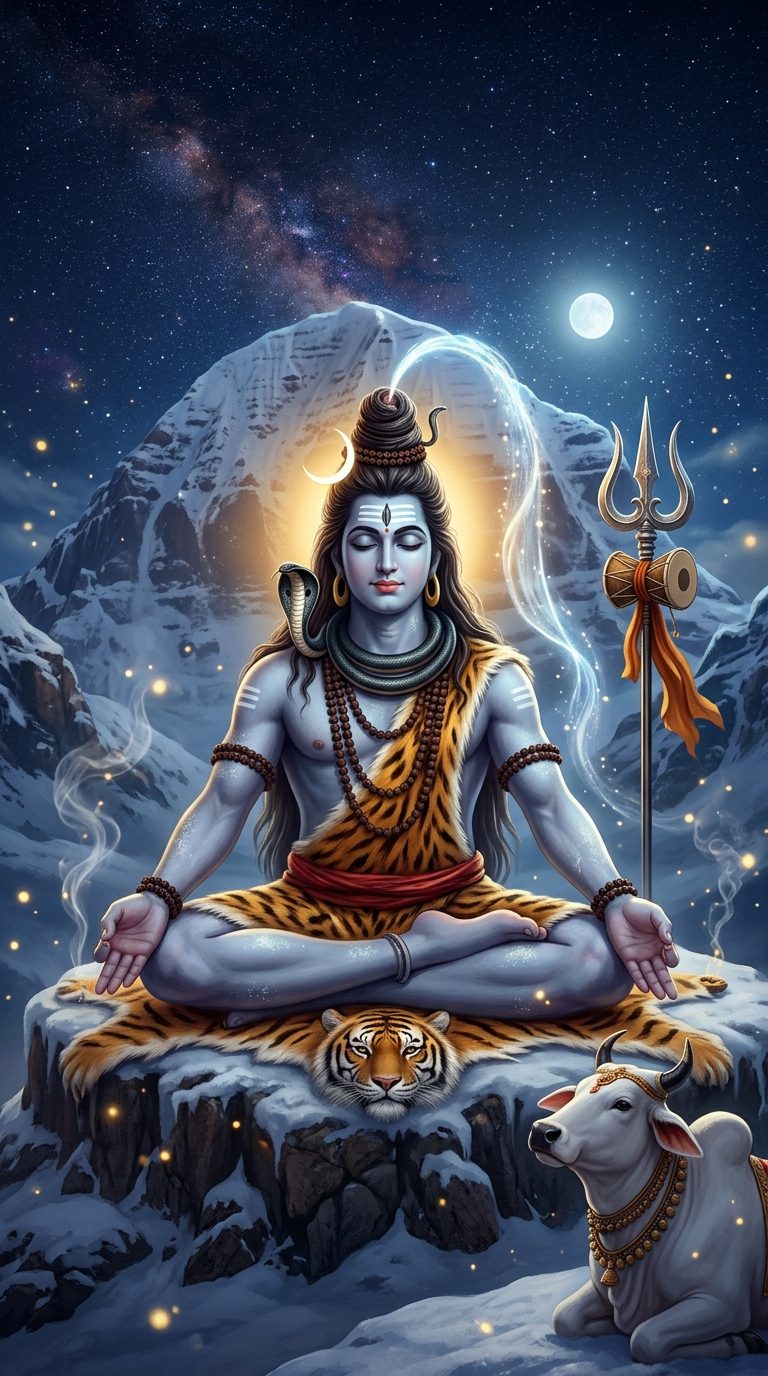
Pradosha twilight on Mount Kailash, Lord Shiva dancing joyfully between the horns of Nandi while the gods play instruments around him
ShivaAshtakam

Pradosha Stotra Ashtakam

Lyrics · Meaning · Audio

The hymn for Pradosham, Shiva’s sacred twilight — describing the moment when Shiva dances on Kailash while the gods play music, and why worshipping him at that hour is said to bring great blessing.

From the Skanda Purana tradition

Listen

Pradosha Stotra Ashtakam

Son of Kali · Sacred Shiva Chants

0:005:49
Deity
Shiva
Type
Ashtakam
Verses
8
Language
Sanskrit

Pradosha Stotra Ashtakam Lyrics with Meaning

Each line shows an easy way to say it, with its English meaning. Turn on the Sanskrit, the exact pronunciation or the word-by-word meaning whenever you want to go deeper.

Verse 1

सत्यं ब्रवीमि परलोकहितं ब्रवीमि सारं ब्रवीम्युपनिषद्धृदयं ब्रवीमि ।

Satyam Bravimi Paraloka Hitam Bravimi Saram Bravimyupanishad Hridayam Bravimi

satyaṃ bravīmi paralokahitaṃ bravīmi sāraṃ bravīmyupaniṣaddhṛdayaṃ bravīmi

I speak the truth; I speak what is good for the next world; I speak the essence; I speak the heart of the Upanishads:

    संसारमुल्बणमसारमवाप्य जन्तोः सारोऽयमीश्वरपदाम्बुरुहस्य सेवा ॥ १ ॥

    Samsaram Ulbanam Asaram Avapya Jantoh Saroyam Ishvara Padamburuhasya Seva

    saṃsāramulbaṇamasāramavāpya jantoḥ sāro'yamīśvarapadāmburuhasya sevā

    for a being who has fallen into this harsh, empty world, the one real thing is service to the Lord’s lotus feet.

      Verse 2

      ये नार्चयन्ति गिरिशं समये प्रदोषे ये नार्चितं शिवमपि प्रणमन्ति चान्ये ।

      Ye Narchayanti Girisham Samaye Pradoshe Ye Narchitam Shivamapi Pranamanti Chanye

      ye nārcayanti giriśaṃ samaye pradoṣe ye nārcitaṃ śivamapi praṇamanti cānye

      Those who do not worship the mountain Lord at the hour of Pradosha, and those who do not even bow to Shiva when others worship him,

        एतत्कथां श्रुतिपुटैर्न पिबन्ति मूढास्ते जन्मजन्मसु भवन्ति नरा दरिद्राः ॥ २ ॥

        Etat Katham Shrutiputair Na Pibanti Mudhaste Janma Janmasu Bhavanti Nara Daridrah

        etatkathāṃ śrutipuṭairna pibanti mūḍhāste janmajanmasu bhavanti narā daridrāḥ

        the foolish who do not drink in this story with their ears — they remain poor in birth after birth.

          Verse 3

          ये वै प्रदोषसमये परमेश्वरस्य कुर्वन्त्यनन्यमनसोऽङ्घ्रिसरोजपूजाम् ।

          Ye Vai Pradosha Samaye Parameshvarasya Kurvantyananya Manasonghri Saroja Pujam

          ye vai pradoṣasamaye parameśvarasya kurvantyananyamanaso'ṅghrisarojapūjām

          But those who, at the hour of Pradosha, worship the lotus feet of the supreme Lord with undivided minds

            नित्यं प्रवृद्धधनधान्यकलत्रपुत्रसौभाग्यसम्पदधिकास्त इहैव लोके ॥ ३ ॥

            Nityam Pravriddha Dhana Dhanya Kalatra Putra Saubhagya Sampadadhikasta Ihaiva Loke

            nityaṃ pravṛddhadhanadhānyakalatraputrasaubhāgyasampadadhikāsta ihaiva loke

            always increase in wealth, grain, family, children, good fortune and abundance, in this very world.

              Verse 4

              कैलासशैलभवने त्रिजगज्जनित्रीं गौरीं निवेश्य कनकाचितरत्नपीठे ।

              Kailasa Shaila Bhavane Trijagaj Janitrim Gaurim Niveshya Kanakachita Ratnapithe

              kailāsaśailabhavane trijagajjanitrīṃ gaurīṃ niveśya kanakācitaratnapīṭhe

              In his home on Mount Kailash, having seated Gauri, mother of the three worlds, on a jewelled throne set with gold,

                नृत्यं विधातुमभिवाञ्छति शूलपाणौ देवाः प्रदोषसमये नु भजन्ति सर्वे ॥ ४ ॥

                Nrityam Vidhatum Abhivanchhati Shulapanau Devah Pradosha Samaye Nu Bhajanti Sarve

                nṛtyaṃ vidhātumabhivāñchati śūlapāṇau devāḥ pradoṣasamaye nu bhajanti sarve

                when the trident-bearer wishes to dance, at the hour of Pradosha all the gods come to worship him.

                  Verse 5

                  वाग्देवी धृतवल्लकी शतमखो वेणुं दधत्पद्मजस्तालोन्निद्रकरो रमा भगवती गेयप्रयोगान्विता ।

                  Vagdevi Dhrita Vallaki Shatamakho Venum Dadhat Padmajas Talonnidrakaro Rama Bhagavati Geya Prayoganvita

                  vāgdevī dhṛtavallakī śatamakho veṇuṃ dadhatpadmajastālonnidrakaro ramā bhagavatī geyaprayogānvitā

                  Saraswati holds the veena, Indra the flute, Brahma keeps the beat with his hands, blessed Lakshmi sings,

                    विष्णुः सान्द्रमृदङ्गवादनपटुर्देवाः समन्तात्स्थिताः सेवन्ते तमनु प्रदोषसमये देवं मृडानीपतिम् ॥ ५ ॥

                    Vishnuh Sandra Mridanga Vadana Patur Devah Samantat Sthitah Sevante Tamanu Pradosha Samaye Devam Mridanipatim

                    viṣṇuḥ sāndramṛdaṅgavādanapaṭurdevāḥ samantātsthitāḥ sevante tamanu pradoṣasamaye devaṃ mṛḍānīpatim

                    Vishnu skilfully plays the deep drum, and the gods stand all around, serving the husband of Mridani at the hour of Pradosha.

                      Verse 6

                      गन्धर्वयक्षपतगोरगसिद्धसाध्यविद्याधरामरवराप्सरसां गणांश्च ।

                      Gandharva Yaksha Patagoraga Siddha Sadhya Vidyadharamara Varapsarasam Ganamshcha

                      gandharvayakṣapatagoragasiddhasādhyavidyādharāmaravarāpsarasāṃ gaṇāṃśca

                      Hosts of gandharvas, yakshas, birds, serpents, siddhas, sadhyas, vidyadharas, gods and fine apsaras,

                        येऽन्ये त्रिलोकनिलयाः सहभूतवर्गाः प्राप्ते प्रदोषसमये हरपार्श्वसंस्थाः ॥ ६ ॥

                        Yenye Triloka Nilayah Saha Bhutavargah Prapte Pradosha Samaye Hara Parshva Samsthah

                        ye'nye trilokanilayāḥ sahabhūtavargāḥ prāpte pradoṣasamaye harapārśvasaṃsthāḥ

                        and all the other beings of the three worlds with all their kinds — when Pradosha comes, they gather beside Hara.

                          Verse 7

                          अतः प्रदोषे शिव एक एव पूज्योऽथ नान्ये हरिपद्मजाद्याः ।

                          Atah Pradoshe Shiva Eka Eva Pujyotha Nanye Hari Padmajadyah

                          ataḥ pradoṣe śiva eka eva pūjyo'tha nānye haripadmajādyāḥ

                          Therefore, at Pradosha, Shiva alone is to be worshipped, not Vishnu, Brahma or the others,

                            तस्मिन्महेशे विधिनेज्यमाने सर्वे प्रसीदन्ति सुराधिनाथाः ॥ ७ ॥

                            Tasmin Maheshe Vidhinejyamane Sarve Prasidanti Suradhinathah

                            tasminmaheśe vidhinejyamāne sarve prasīdanti surādhināthāḥ

                            for when that great Lord is worshipped properly, all the rulers of the gods are pleased.

                              Verse 8 — from the story

                              एष ते तनयः पूर्वजन्मनि ब्राह्मणोत्तमः ।

                              Esha Te Tanayah Purvajanmani Brahmanottamah

                              eṣa te tanayaḥ pūrvajanmani brāhmaṇottamaḥ

                              (The sage said:) In a former life this son of yours was an excellent brahmin,

                                प्रतिग्रहैर्वयो निन्ये न दानाद्यैः सुकर्मभिः ॥ ८ ॥

                                Pratigrahair Vayo Ninye Na Danadyaih Sukarmabhih

                                pratigrahairvayo ninye na dānādyaiḥ sukarmabhiḥ

                                who spent his life only accepting gifts, never in giving or other good deeds.

                                  About Pradosha Stotra Ashtakam

                                  Pradoṣa is the twilight period on the thirteenth day (Trayodashi) of each lunar fortnight. It is one of the most important times for Shiva worship, especially in South India, where temples hold a special Pradosham abhishekam for Shiva and Nandi.

                                  This hymn explains why. The opening verse declares, “I speak the truth, the essence of the Upanishads: in this worthless world, the one real thing is service to the Lord’s lotus feet.” The next verses warn those who neglect twilight worship and promise prosperity to those who keep it.

                                  Then comes a beautiful scene: on Kailash at twilight, Shiva seats Parvati on a jewelled throne and begins to dance. Saraswati plays the veena, Indra the flute, Brahma keeps time, Lakshmi sings and Vishnu plays the drum — every being in the three worlds gathers around him.

                                  The Stories Inside the Hymn

                                  The dance between the horns

                                  On Pradosham devotees try to glimpse Shiva “between the horns of Nandi” — looking at the Linga through the space between the bull’s horns in the temple.

                                  Tradition says that at this hour Shiva, having drunk the cosmic poison, danced in joy between Nandi’s horns, and the gods were saved.

                                  The widow and the two boys

                                  In the Skanda Purana these verses are spoken by the sage Shandilya to a poor widow who had taken in a lost prince alongside her own son. He explains the boy’s misfortune by his past life — the eighth verse — and teaches both boys Pradosha worship.

                                  They keep it faithfully; the prince regains his kingdom and the widow’s son finds treasure. That is why the last verse reads like part of a story.

                                  How to Chant Pradosha Stotra Ashtakam

                                  When to chant

                                  • ✦Pradosham — twilight on Trayodashi, twice each lunar month
                                  • ✦Shani Pradosham (when Pradosha falls on a Saturday) is especially honoured
                                  • ✦Monday evenings
                                  • ✦Maha Shivaratri

                                  How many times

                                  Once at twilight.

                                  1. 1

                                    Around sunset on Pradosha, light a lamp before Shiva and Nandi.

                                  2. 2

                                    Offer water, milk or bilva leaves to the Linga if you have one.

                                  3. 3

                                    Chant the hymn, picturing Shiva’s dance on Kailash.

                                  4. 4

                                    Finish with Om Namah Shivaya.

                                  Pronunciation Guide

                                  The sounds that trip people up most in this hymn, and how to say them.

                                  pradoṣa

                                  pra-doh-sha — “twilight.”

                                  bravīmi

                                  bra-vee-mi — “I declare.”

                                  mṛḍānīpatim

                                  mri-daa-nee-pa-tim — “husband of Mridani (Parvati).”

                                  Sacred Shiva Chants: The Ultimate Shiva Mantras by Son of Kali

                                  The music

                                  Sacred Shiva Chants: The Ultimate Shiva Mantras

                                  by Son of Kali

                                  More for Shiva

                                  Frequently Asked Questions

                                  What is Pradosham?

                                  The sacred twilight period on Trayodashi, the 13th lunar day, twice a month — a special time for worshipping Shiva and Nandi.

                                  Why is Shiva worshipped at Pradosha?

                                  Tradition says that at this hour Shiva dances on Kailash and all the gods gather to worship him, so prayer offered then is especially powerful.

                                  What are its benefits?

                                  The hymn says those who worship Shiva at Pradosha grow in wealth, harvests, family and good fortune in this very life.

                                  Text: Traditional public-domain Sanskrit hymn. Easy reading, transliteration and English translation written for the Jaguar Medicine Tribe Mantra Library.

                                  Music: Recordings by Son of Kali, produced with AI-assisted vocals and instrumentation.

                                  Note: Benefits described here are traditional beliefs, shared for understanding — not medical or guaranteed outcomes.