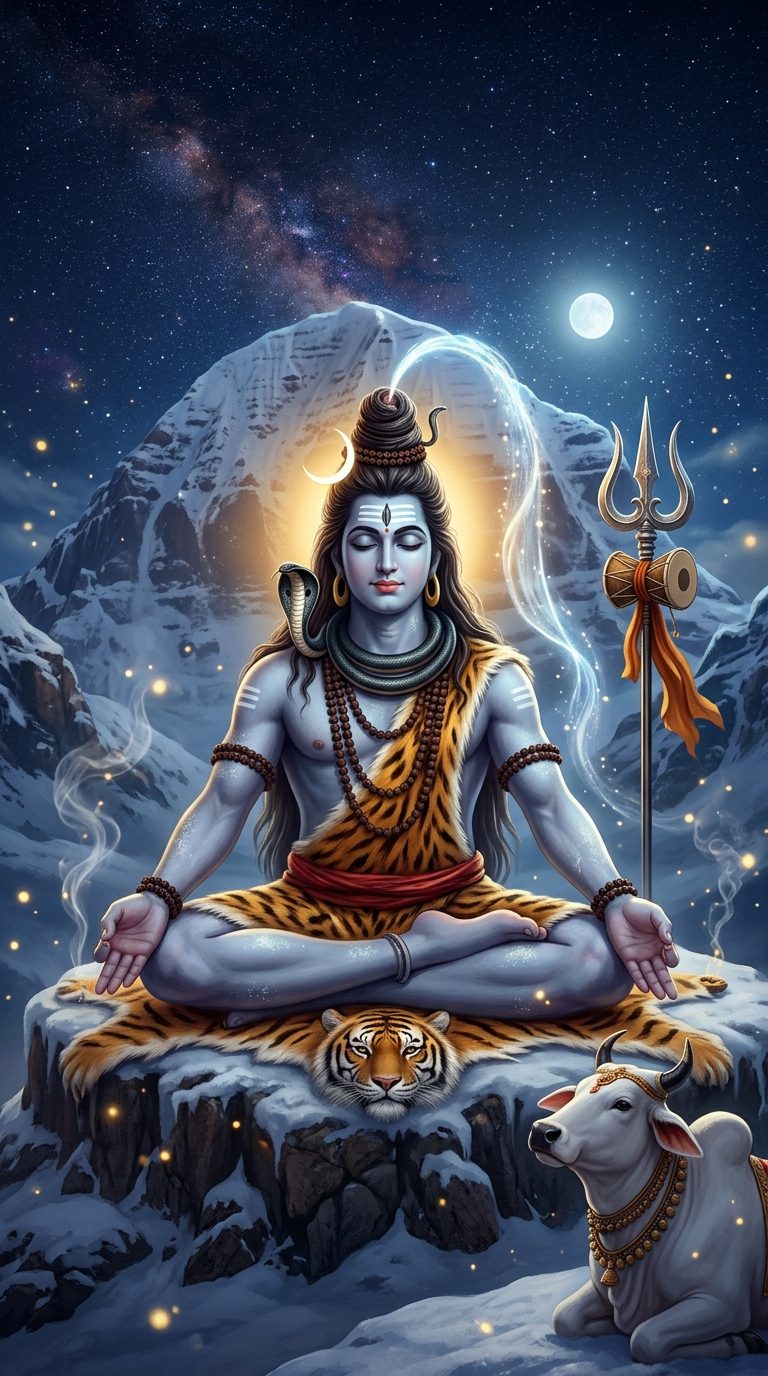
Lord Shiva blessing a poor family outside their hut at dusk, golden light from his hand burning away dark shadows of poverty
ShivaStotram

Daridraya Dahana Shiva Stotram

Lyrics · Meaning · Audio

The sage Vasishtha’s hymn to Shiva as “the one who burns away the suffering of poverty” — eight verses, each ending “Daridrya Duhkha Dahanaya Namah Shivaya.”

Attributed to the sage Vasishtha

Listen

Daridraya Dahana Shiva Stotram

Son of Kali · Power of Shiva

0:005:06
Deity
Shiva
Type
Stotram
Verses
9
Language
Sanskrit

Daridraya Dahana Shiva Stotram Lyrics with Meaning

Each line shows an easy way to say it, with its English meaning. Turn on the Sanskrit, the exact pronunciation or the word-by-word meaning whenever you want to go deeper.

Verse 1

विश्वेश्वराय नरकार्णवतारणाय कर्णामृताय शशिशेखरधारणाय ।

Vishveshvaraya Narakarnava Taranaya Karnamritaya Shashishekhara Dharanaya

viśveśvarāya narakārṇavatāraṇāya karṇāmṛtāya śaśiśekharadhāraṇāya

To the lord of the universe, who carries us across the ocean of suffering, nectar to the ears, who wears the moon on his head,

    कर्पूरकान्तिधवलाय जटाधराय दारिद्र्यदुःखदहनाय नमः शिवाय ॥ १ ॥

    Karpura Kanti Dhavalaya Jatadharaya Daridrya Duhkha Dahanaya Namah Shivaya

    karpūrakāntidhavalāya jaṭādharāya dāridryaduḥkhadahanāya namaḥ śivāya

    white with the glow of camphor, wearer of matted locks — salutations to Shiva, who burns away the pain of poverty.

      Verse 2

      गौरीप्रियाय रजनीशकलाधराय कालान्तकाय भुजगाधिपकङ्कणाय ।

      Gauri Priyaya Rajanisha Kaladharaya Kalantakaya Bhujagadhipa Kankanaya

      gaurīpriyāya rajanīśakalādharāya kālāntakāya bhujagādhipakaṅkaṇāya

      To the beloved of Gauri, who wears a sliver of the moon, the ender of Death, whose bracelet is the king of serpents,

        गङ्गाधराय गजराजविमर्दनाय दारिद्र्यदुःखदहनाय नमः शिवाय ॥ २ ॥

        Gangadharaya Gajaraja Vimardanaya Daridrya Duhkha Dahanaya Namah Shivaya

        gaṅgādharāya gajarājavimardanāya dāridryaduḥkhadahanāya namaḥ śivāya

        bearer of the Ganga, crusher of the elephant demon — salutations to Shiva, who burns away the pain of poverty.

          Verse 3

          भक्तिप्रियाय भवरोगभयापहाय उग्राय दुर्गभवसागरतारणाय ।

          Bhakti Priyaya Bhavaroga Bhayapahaya Ugraya Durga Bhavasagara Taranaya

          bhaktipriyāya bhavarogabhayāpahāya ugrāya durgabhavasāgaratāraṇāya

          To the lover of devotion, remover of the disease and fear of worldly life, the fierce one, who ferries us across the hard ocean of existence,

            ज्योतिर्मयाय गुणनामसुनृत्यकाय दारिद्र्यदुःखदहनाय नमः शिवाय ॥ ३ ॥

            Jyotirmayaya Guna Nama Sunrityakaya Daridrya Duhkha Dahanaya Namah Shivaya

            jyotirmayāya guṇanāmasunṛtyakāya dāridryaduḥkhadahanāya namaḥ śivāya

            made of light, the beautiful dancer praised by many names — salutations to Shiva, who burns away the pain of poverty.

              Verse 4

              चर्माम्बराय शवभस्मविलेपनाय भालेक्षणाय मणिकुण्डलमण्डिताय ।

              Charmambaraya Shava Bhasma Vilepanaya Bhalekshanaya Mani Kundala Manditaya

              carmāmbarāya śavabhasmavilepanāya bhālekṣaṇāya maṇikuṇḍalamaṇḍitāya

              To him who wears a hide, smeared with the ash of the cremation ground, with an eye in his forehead, adorned with jewelled earrings,

                मञ्जीरपादयुगलाय जटाधराय दारिद्र्यदुःखदहनाय नमः शिवाय ॥ ४ ॥

                Manjira Pada Yugalaya Jatadharaya Daridrya Duhkha Dahanaya Namah Shivaya

                mañjīrapādayugalāya jaṭādharāya dāridryaduḥkhadahanāya namaḥ śivāya

                anklets on both his feet, wearer of matted locks — salutations to Shiva, who burns away the pain of poverty.

                  Verse 5

                  पञ्चाननाय फणिराजविभूषणाय हेमांशुकाय भुवनत्रयमण्डिताय ।

                  Panchananaya Phaniraja Vibhushanaya Hemamshukaya Bhuvanatraya Manditaya

                  pañcānanāya phaṇirājavibhūṣaṇāya hemāṃśukāya bhuvanatrayamaṇḍitāya

                  To the five-faced one, adorned by the king of serpents, clad in golden cloth, the ornament of the three worlds,

                    आनन्दभूमिवरदाय तमोमयाय दारिद्र्यदुःखदहनाय नमः शिवाय ॥ ५ ॥

                    Ananda Bhumi Varadaya Tamomayaya Daridrya Duhkha Dahanaya Namah Shivaya

                    ānandabhūmivaradāya tamomayāya dāridryaduḥkhadahanāya namaḥ śivāya

                    giver of the land of bliss, who also holds the dark power of dissolution — salutations to Shiva, who burns away the pain of poverty.

                      Verse 6

                      भानुप्रियाय भवसागरतारणाय कालान्तकाय कमलासनपूजिताय ।

                      Bhanu Priyaya Bhavasagara Taranaya Kalantakaya Kamalasana Pujitaya

                      bhānupriyāya bhavasāgaratāraṇāya kālāntakāya kamalāsanapūjitāya

                      To the beloved of the Sun, who carries us across the ocean of existence, the ender of Death, worshipped by lotus-seated Brahma,

                        नेत्रत्रयाय शुभलक्षणलक्षिताय दारिद्र्यदुःखदहनाय नमः शिवाय ॥ ६ ॥

                        Netratrayaya Shubha Lakshana Lakshitaya Daridrya Duhkha Dahanaya Namah Shivaya

                        netratrayāya śubhalakṣaṇalakṣitāya dāridryaduḥkhadahanāya namaḥ śivāya

                        three-eyed, marked with every auspicious sign — salutations to Shiva, who burns away the pain of poverty.

                          Verse 7

                          रामप्रियाय रघुनाथवरप्रदाय नागप्रियाय नरकार्णवतारणाय ।

                          Rama Priyaya Raghunatha Varapradaya Naga Priyaya Narakarnava Taranaya

                          rāmapriyāya raghunāthavarapradāya nāgapriyāya narakārṇavatāraṇāya

                          To the beloved of Rama, who granted boons to the lord of the Raghus, fond of serpents, who carries us across the ocean of suffering,

                            पुण्येषु पुण्यभरिताय सुरार्चिताय दारिद्र्यदुःखदहनाय नमः शिवाय ॥ ७ ॥

                            Punyeshu Punya Bharitaya Surarchitaya Daridrya Duhkha Dahanaya Namah Shivaya

                            puṇyeṣu puṇyabharitāya surārcitāya dāridryaduḥkhadahanāya namaḥ śivāya

                            the holiest of the holy, worshipped by the gods — salutations to Shiva, who burns away the pain of poverty.

                              Verse 8

                              मुक्तेश्वराय फलदाय गणेश्वराय गीतप्रियाय वृषभेश्वरवाहनाय ।

                              Mukteshvaraya Phaladaya Ganeshvaraya Gita Priyaya Vrishabheshvara Vahanaya

                              mukteśvarāya phaladāya gaṇeśvarāya gītapriyāya vṛṣabheśvaravāhanāya

                              To the lord of the liberated, the giver of fruits, the lord of the hosts, the lover of song, who rides the lordly bull,

                                मातङ्गचर्मवसनाय महेश्वराय दारिद्र्यदुःखदहनाय नमः शिवाय ॥ ८ ॥

                                Matanga Charma Vasanaya Maheshvaraya Daridrya Duhkha Dahanaya Namah Shivaya

                                mātaṅgacarmavasanāya maheśvarāya dāridryaduḥkhadahanāya namaḥ śivāya

                                clothed in an elephant’s hide, the great Lord — salutations to Shiva, who burns away the pain of poverty.

                                  Closing verse

                                  वसिष्ठेन कृतं स्तोत्रं सर्वरोगनिवारणम् ।

                                  Vasishthena Kritam Stotram Sarvaroga Nivaranam

                                  vasiṣṭhena kṛtaṃ stotraṃ sarvaroganivāraṇam

                                  This hymn, composed by Vasishtha, removes all illness,

                                    सर्वसम्पत्करं शीघ्रं पुत्रपौत्रादिवर्धनम् ।

                                    Sarva Sampatkaram Shighram Putra Pautradi Vardhanam

                                    sarvasampatkaraṃ śīghraṃ putrapautrādivardhanam

                                    quickly brings every kind of wealth, and makes children and grandchildren flourish.

                                      त्रिसन्ध्यं यः पठेन्नित्यं स हि स्वर्गमवाप्नुयात् ॥ ९ ॥

                                      Trisandhyam Yah Pathen Nityam Sa Hi Svargam Avapnuyat

                                      trisandhyaṃ yaḥ paṭhennityaṃ sa hi svargamavāpnuyāt

                                      Whoever recites it daily at the three junctions of the day attains heaven.

                                        About Daridraya Dahana Shiva Stotram

                                        Dāridrya means poverty and dahana means burning. This hymn, attributed to the great sage Vasishtha, praises Shiva as the fire that burns away poverty — not only lack of money, but every kind of poverty: of health, of joy, of spirit.

                                        Each verse lists several of Shiva’s forms and qualities — Lord of the universe, wearer of the moon, beloved of Gauri, conqueror of Death, the dancer, the friend of Rama — and ends with the same line: dāridrya-duḥkha-dahanāya namaḥ śivāya, “salutations to Shiva, who burns away the pain of poverty.”

                                        The closing verse says it removes all illness, quickly brings prosperity and blesses the family, if recited at the three junctions of the day.

                                        The Stories Inside the Hymn

                                        Vasishtha, the royal guru

                                        Vasishtha was the family teacher of the solar dynasty — the guru of King Dasharatha and of Rama himself. He is remembered as the sage of patience and wisdom.

                                        It fits that a teacher who guided kings would leave behind a hymn for the poorest: Shiva, he says, is the friend of anyone in need.

                                        How to Chant Daridraya Dahana Shiva Stotram

                                        When to chant

                                        • ✦Morning, noon and evening, as the closing verse suggests
                                        • ✦Mondays and Pradosha
                                        • ✦During financial or health difficulties
                                        • ✦The month of Shravan

                                        How many times

                                        Once at each of the three sandhyas, or once daily.

                                        1. 1

                                          Offer water and a bilva leaf to a Shiva Linga, and light a lamp.

                                        2. 2

                                          Chant each verse slowly, joining the refrain.

                                        3. 3

                                          Hold in mind whatever “poverty” you want burned away — not only money.

                                        4. 4

                                          End with a few repetitions of Om Namah Shivaya.

                                        Pronunciation Guide

                                        The sounds that trip people up most in this hymn, and how to say them.

                                        dāridrya

                                        daa-rid-rya — “poverty.”

                                        dahanāya

                                        da-ha-naa-ya — “to the one who burns.”

                                        narakārṇava

                                        na-ra-kaar-na-va.

                                        Power of Shiva by Son of Kali

                                        The music

                                        Power of Shiva

                                        by Son of Kali

                                        More for Shiva

                                        Frequently Asked Questions

                                        What does Daridraya Dahana mean?

                                        “The burning of poverty.” The hymn praises Shiva as the one who burns away the suffering of poverty.

                                        Who wrote it?

                                        The closing verse attributes it to the sage Vasishtha.

                                        What are its benefits?

                                        The hymn promises freedom from illness, swift prosperity and a flourishing family to those who recite it at the three times of the day.

                                        Is it only for money problems?

                                        No — devotees chant it for any lack in life: health, peace, relationships or spiritual strength.

                                        Text: Traditional public-domain Sanskrit hymn. Easy reading, transliteration and English translation written for the Jaguar Medicine Tribe Mantra Library.

                                        Music: Recordings by Son of Kali, produced with AI-assisted vocals and instrumentation.

                                        Note: Benefits described here are traditional beliefs, shared for understanding — not medical or guaranteed outcomes.