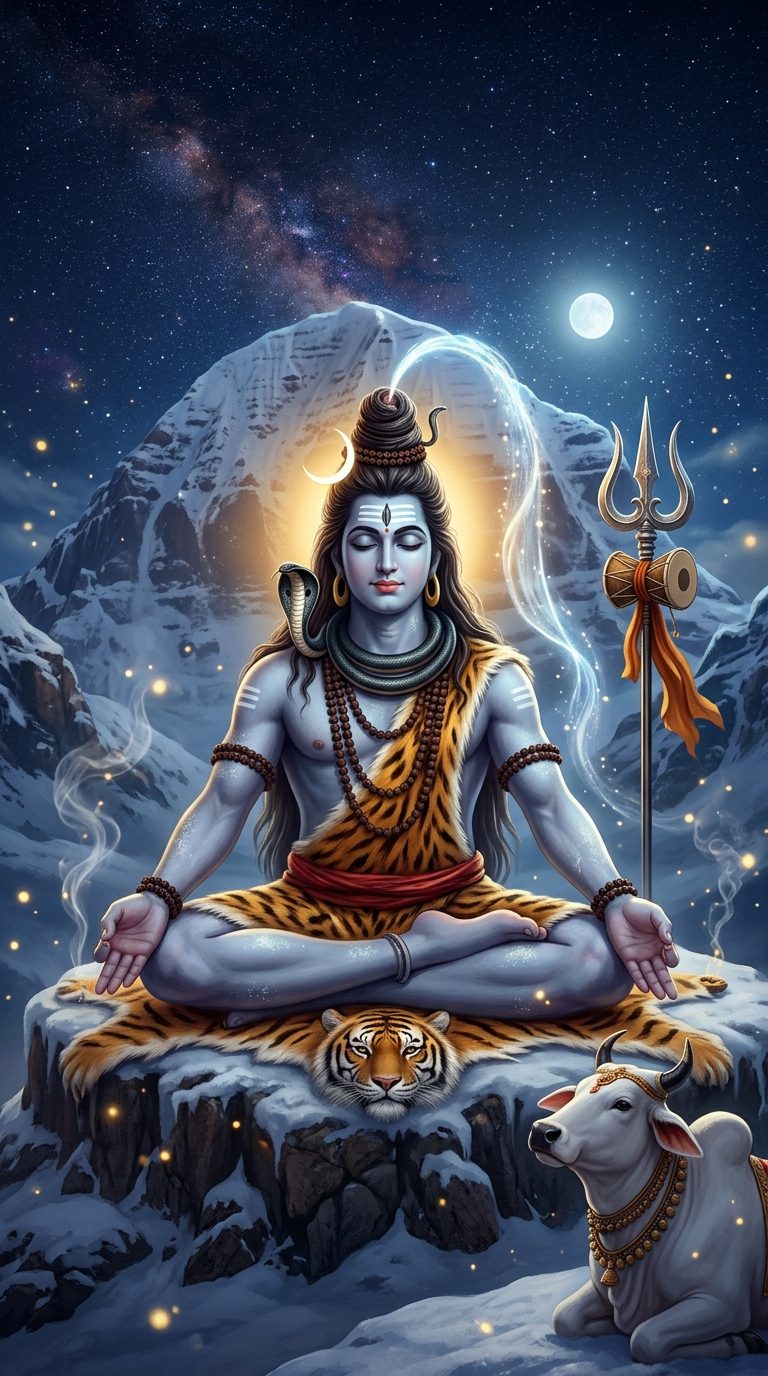
Ardhanarishvara, one divine figure divided vertically, the right half ash-blue Shiva and the left half golden Parvati
ShivaAshtakam

Ardhanarishvara Ashtakam

Lyrics · Meaning · Audio

Eight verses to Ardhanarishvara — Shiva and Parvati as one body, half and half — where every line sets the Goddess and the God side by side, ending “Namah Shivayai Cha Namah Shivaya.”

Traditionally attributed to Adi Shankaracharya

Listen

Ardhanarishvara Ashtakam

Son of Kali · Sacred Shiva Chants

0:005:27
Deity
Shiva
Type
Ashtakam
Verses
9
Language
Sanskrit

Ardhanarishvara Ashtakam Lyrics with Meaning

Each line shows an easy way to say it, with its English meaning. Turn on the Sanskrit, the exact pronunciation or the word-by-word meaning whenever you want to go deeper.

Verse 1

चाम्पेयगौरार्धशरीरकायै कर्पूरगौरार्धशरीरकाय ।

Champeya Gaurardha Sharirakayai Karpura Gaurardha Sharirakaya

cāmpeyagaurārdhaśarīrakāyai karpūragaurārdhaśarīrakāya

To her whose half-body is golden like the champak flower, and to him whose half-body is white as camphor;

    धम्मिल्लकायै च जटाधराय नमः शिवायै च नमः शिवाय ॥ १ ॥

    Dhammillakayai Cha Jatadharaya Namah Shivayai Cha Namah Shivaya

    dhammillakāyai ca jaṭādharāya namaḥ śivāyai ca namaḥ śivāya

    to her with braided hair, and to him with matted locks — salutations to Shivaa, and salutations to Shiva.

      Verse 2

      कस्तूरिकाकुङ्कुमचर्चितायै चितारजःपुञ्जविचर्चिताय ।

      Kasturika Kumkuma Charchitayai Chitarajah Punja Vicharchitaya

      kastūrikākuṅkumacarcitāyai citārajaḥpuñjavicarcitāya

      To her anointed with musk and kumkum, and to him smeared with the ash of the cremation ground;

        कृतस्मरायै विकृतस्मराय नमः शिवायै च नमः शिवाय ॥ २ ॥

        Kritasmarayai Vikritasmaraya Namah Shivayai Cha Namah Shivaya

        kṛtasmarāyai vikṛtasmarāya namaḥ śivāyai ca namaḥ śivāya

        to her who awakens love, and to him who destroyed the god of love — salutations to Shivaa, and to Shiva.

          Verse 3

          झणत्क्वणत्कङ्कणनूपुरायै पादाब्जराजत्फणिनूपुराय ।

          Jhanat Kvanat Kankana Nupurayai Padabja Rajat Phani Nupuraya

          jhaṇatkvaṇatkaṅkaṇanūpurāyai pādābjarājatphaṇinūpurāya

          To her whose bangles and anklets jingle and chime, and to him whose lotus feet shine with serpent anklets;

            हेमाङ्गदायै भुजगाङ्गदाय नमः शिवायै च नमः शिवाय ॥ ३ ॥

            Hemangadayai Bhujagangadaya Namah Shivayai Cha Namah Shivaya

            hemāṅgadāyai bhujagāṅgadāya namaḥ śivāyai ca namaḥ śivāya

            to her with golden armlets, and to him with serpent armlets — salutations to Shivaa, and to Shiva.

              Verse 4

              विशालनीलोत्पललोचनायै विकासिपङ्केरुहलोचनाय ।

              Vishala Nilotpala Lochanayai Vikasi Pankeruha Lochanaya

              viśālanīlotpalalocanāyai vikāsipaṅkeruhalocanāya

              To her with wide eyes like blue water-lilies, and to him with eyes like blossoming lotuses;

                समेक्षणायै विषमेक्षणाय नमः शिवायै च नमः शिवाय ॥ ४ ॥

                Samekshanayai Vishamekshanaya Namah Shivayai Cha Namah Shivaya

                samekṣaṇāyai viṣamekṣaṇāya namaḥ śivāyai ca namaḥ śivāya

                to her with an even number of eyes, and to him with an odd number — salutations to Shivaa, and to Shiva.

                  Verse 5

                  मन्दारमालाकलितालकायै कपालमालाङ्कितकन्धराय ।

                  Mandara Mala Kalitalakayai Kapala Malankita Kandharaya

                  mandāramālākalitālakāyai kapālamālāṅkitakandharāya

                  To her whose curls are graced with garlands of mandara flowers, and to him whose neck is marked by a garland of skulls;

                    दिव्याम्बरायै च दिगम्बराय नमः शिवायै च नमः शिवाय ॥ ५ ॥

                    Divyambarayai Cha Digambaraya Namah Shivayai Cha Namah Shivaya

                    divyāmbarāyai ca digambarāya namaḥ śivāyai ca namaḥ śivāya

                    to her in divine garments, and to him clothed only by the sky — salutations to Shivaa, and to Shiva.

                      Verse 6

                      अम्भोधरश्यामलकुन्तलायै तडित्प्रभाताम्रजटाधराय ।

                      Ambhodhara Shyamala Kuntalayai Tadit Prabha Tamra Jatadharaya

                      ambhodharaśyāmalakuntalāyai taḍitprabhātāmrajaṭādharāya

                      To her whose hair is dark as rain clouds, and to him whose matted locks are coppery as lightning;

                        निरीश्वरायै निखिलेश्वराय नमः शिवायै च नमः शिवाय ॥ ६ ॥

                        Nirishvarayai Nikhileshvaraya Namah Shivayai Cha Namah Shivaya

                        nirīśvarāyai nikhileśvarāya namaḥ śivāyai ca namaḥ śivāya

                        to her who has no lord above her, and to him who is lord of all — salutations to Shivaa, and to Shiva.

                          Verse 7

                          प्रपञ्चसृष्ट्युन्मुखलास्यकायै समस्तसंहारकताण्डवाय ।

                          Prapancha Srishtyunmukha Lasyakayai Samasta Samharaka Tandavaya

                          prapañcasṛṣṭyunmukhalāsyakāyai samastasaṃhārakatāṇḍavāya

                          To her whose gentle dance (lasya) brings forth the world, and to him whose fierce dance (tandava) dissolves it all;

                            जगज्जनन्यै जगदेकपित्रे नमः शिवायै च नमः शिवाय ॥ ७ ॥

                            Jagajjananyai Jagadeka Pitre Namah Shivayai Cha Namah Shivaya

                            jagajjananyai jagadekapitre namaḥ śivāyai ca namaḥ śivāya

                            to the Mother of the world, and to the one Father of the world — salutations to Shivaa, and to Shiva.

                              Verse 8

                              प्रदीप्तरत्नोज्ज्वलकुण्डलायै स्फुरन्महापन्नगभूषणाय ।

                              Pradipta Ratnojjvala Kundalayai Sphuran Maha Pannaga Bhushanaya

                              pradīptaratnojjvalakuṇḍalāyai sphuranmahāpannagabhūṣaṇāya

                              To her whose earrings blaze with shining jewels, and to him adorned with great glistening serpents;

                                शिवान्वितायै च शिवान्विताय नमः शिवायै च नमः शिवाय ॥ ८ ॥

                                Shivanvitayai Cha Shivanvitaya Namah Shivayai Cha Namah Shivaya

                                śivānvitāyai ca śivānvitāya namaḥ śivāyai ca namaḥ śivāya

                                to her united with Shiva, and to him united with Shivaa — salutations to Shivaa, and to Shiva.

                                  Closing verse

                                  एतत्पठेदष्टकमिष्टदं यो भक्त्या स मान्यो भुवि दीर्घजीवी ।

                                  Etat Pathed Ashtakam Ishtadam Yo Bhaktya Sa Manyo Bhuvi Dirghajivi

                                  etatpaṭhedaṣṭakamiṣṭadaṃ yo bhaktyā sa mānyo bhuvi dīrghajīvī

                                  Whoever reads with devotion this wish-granting octet is honoured on earth and lives long,

                                    प्राप्नोति सौभाग्यमनन्तकालं भूयात्सदा तस्य समस्तसिद्धिः ॥ ९ ॥

                                    Prapnoti Saubhagyam Ananta Kalam Bhuyat Sada Tasya Samasta Siddhih

                                    prāpnoti saubhāgyamanantakālaṃ bhūyātsadā tasya samastasiddhiḥ

                                    gains good fortune for endless time, and may every success always be theirs.

                                      About Ardhanarishvara Ashtakam

                                      Ardhanārīśvara — “the Lord who is half woman” — is one of the most profound images in Hindu art: a single body, the right half Shiva and the left half Parvati. It says that the masculine and feminine, stillness and energy, consciousness and power, are not two things but one.

                                      This ashtakam is built on that idea with remarkable craft. Every line has two halves: the first praises the Goddess (in the feminine form, -āyai) and the second the God (-āya). Golden skin and camphor-white skin; musk and kumkum and cremation ash; jingling anklets and serpent anklets; silk and the sky as clothing.

                                      Every verse ends namaḥ śivāyai ca namaḥ śivāya — “salutations to Shivaa (the Goddess) and salutations to Shiva.” Sung slowly, the hymn becomes a meditation on balance.

                                      The Stories Inside the Hymn

                                      The sage who would not bow to her

                                      The sage Bhringi was so devoted to Shiva that he would circle only Shiva, ignoring Parvati. To teach him, Parvati merged with Shiva into one body. Bhringi then tried to bore through the middle as a beetle to circle Shiva alone.

                                      The lesson was not lost on him in the end: there is no Shiva without Shakti. Ardhanarishvara is that teaching in visible form.

                                      How to Chant Ardhanarishvara Ashtakam

                                      When to chant

                                      • ✦Mondays and Fridays
                                      • ✦Maha Shivaratri and Navaratri
                                      • ✦For harmony in marriage and relationships
                                      • ✦When seeking inner balance

                                      How many times

                                      Once or three times.

                                      1. 1

                                        Sit before an image of Ardhanarishvara, or of Shiva and Parvati together.

                                      2. 2

                                        Chant each line slowly, noticing how it pairs the Goddess and the God.

                                      3. 3

                                        Join the refrain Namah Shivayai Cha Namah Shivaya.

                                      4. 4

                                        Rest a moment in the feeling of wholeness at the end.

                                      Pronunciation Guide

                                      The sounds that trip people up most in this hymn, and how to say them.

                                      śivāyai

                                      shi-vaa-yai — to the Goddess.

                                      śivāya

                                      shi-vaa-ya — to Shiva.

                                      cāmpeya

                                      chaam-pay-ya — the golden champak flower.

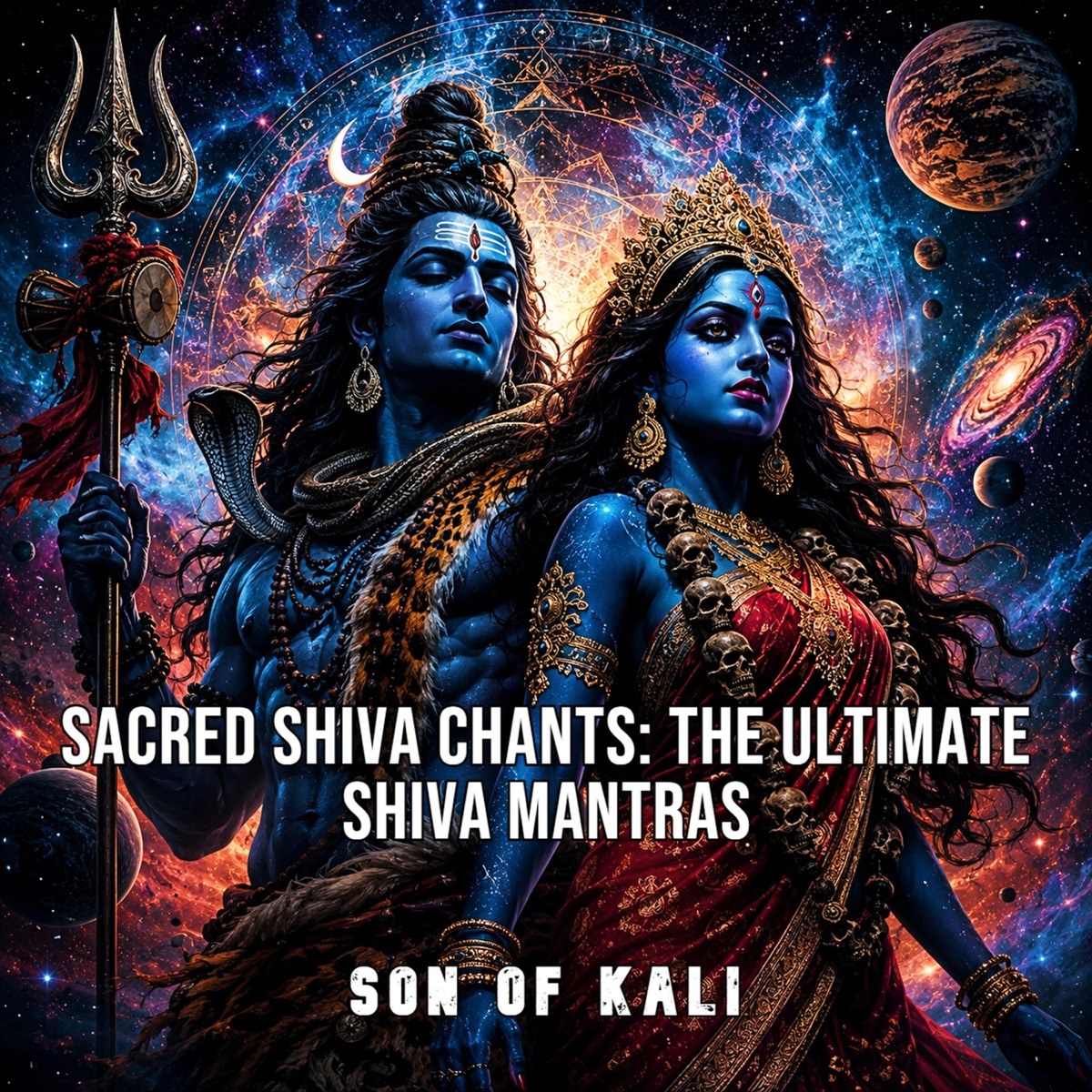
                                      Sacred Shiva Chants: The Ultimate Shiva Mantras by Son of Kali

                                      The music

                                      Sacred Shiva Chants: The Ultimate Shiva Mantras

                                      by Son of Kali

                                      More for Shiva

                                      Frequently Asked Questions

                                      What is Ardhanarishvara?

                                      A form of Shiva in which his body is half Shiva and half Parvati, showing that the masculine and feminine principles are one.

                                      What does Namah Shivayai Cha Namah Shivaya mean?

                                      “Salutations to Shivaa (the Goddess) and salutations to Shiva.” Shivāyai is the feminine form, Shivāya the masculine.

                                      Who wrote the Ardhanarishvara Ashtakam?

                                      It is traditionally attributed to Adi Shankaracharya.

                                      Why is it chanted for marriage?

                                      Because it honours the perfect union of Shiva and Parvati, devotees chant it for harmony, understanding and balance between partners.

                                      Text: Traditional public-domain Sanskrit hymn. Easy reading, transliteration and English translation written for the Jaguar Medicine Tribe Mantra Library.

                                      Music: Recordings by Son of Kali, produced with AI-assisted vocals and instrumentation.

                                      Note: Benefits described here are traditional beliefs, shared for understanding — not medical or guaranteed outcomes.