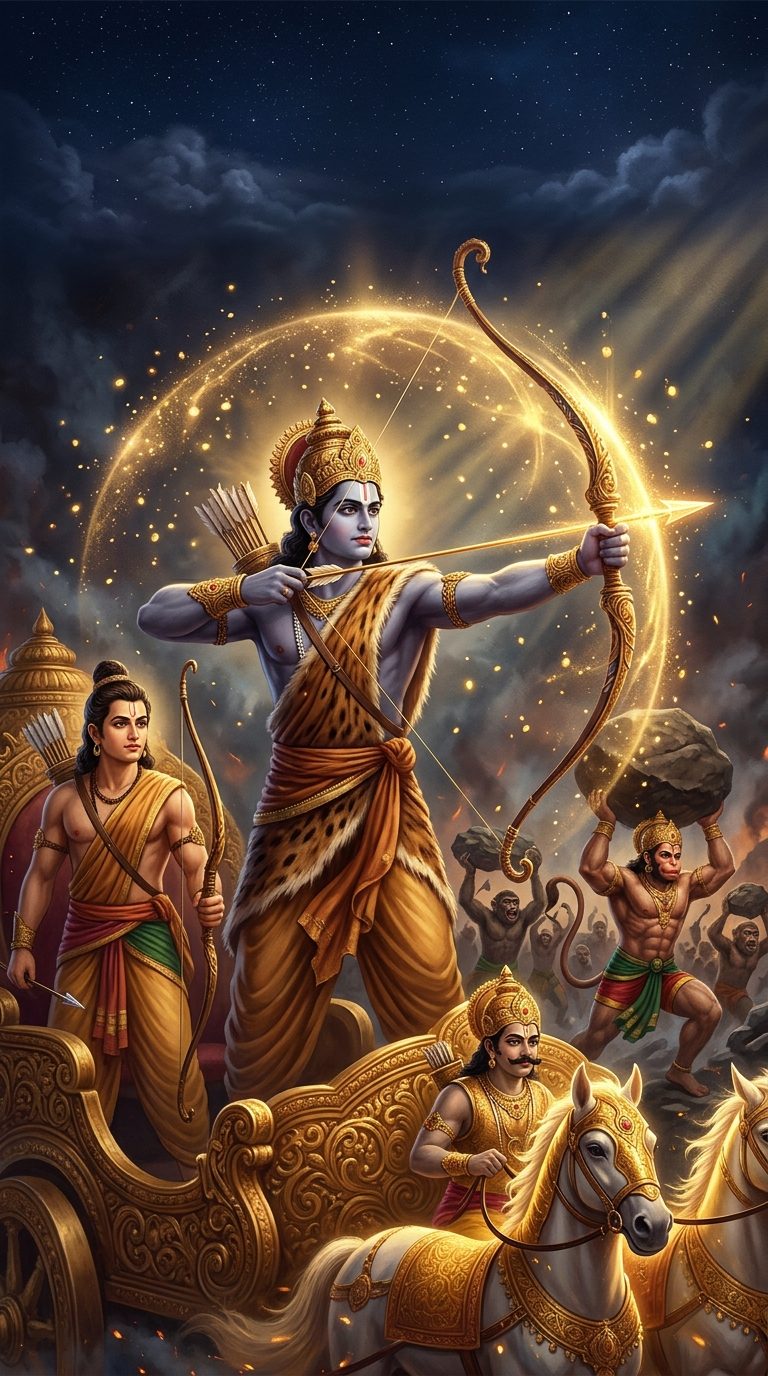
Lord Rama as a blazing warrior drawing his bow, with Lakshmana, Hanuman and the monkey army behind him, and a protective golden light around a devotee

Rama · Kavacham

Sri Rama Kavacham

Lyrics · Meaning · Audio

The “diamond armour” of Lord Rama, taught by the sage Agastya — a vivid meditation on Rama as the blazing warrior at Lanka, followed by a prayer that places a name of Rama over every part of the body, the senses, the mind and one’s loved ones.

Taught by the sage Agastya to Sutikshna, in the Ananda Ramayana

Listen

Sri Rama Kavacham

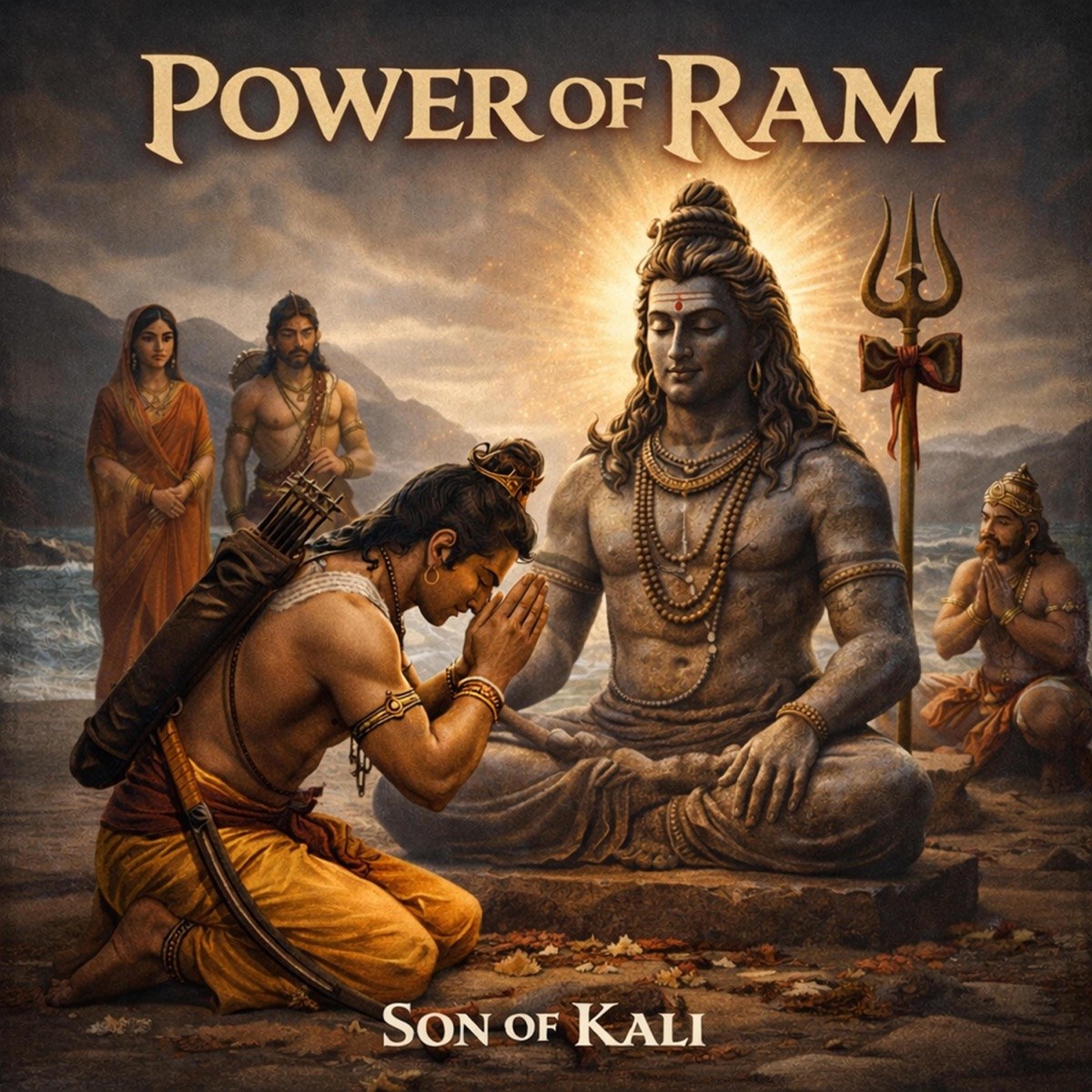
Son of Kali · Power of Ram

0:006:03
Deity
Rama
Type
Kavacham
Verses
35
Language
Sanskrit

Sri Rama Kavacham Lyrics with Meaning

Each line shows an easy way to say it, with its English meaning. Turn on the Sanskrit, the exact pronunciation or the word-by-word meaning whenever you want to go deeper.

Opening — Agastya speaks

आजानुबाहुमरविन्ददळायताक्षमाजन्मशुद्धरसहासमुखप्रसादम् ।

Ajanubahumaravindadalayatakshamajanmashuddharasahasamukhaprasadam

ājānubāhumaravindadaḻāyatākṣamājanmaśuddharasahāsamukhaprasādam

Arms reaching to the knees, eyes long as lotus petals, a face pure from birth, smiling with grace,

    श्यामं गृहीतशरचापमुदाररूपं रामं सराममभिराममनुस्मरामि ॥ १ ॥

    Shyamam Grihitasharachapamudararupam Ramam Saramamabhiramamanusmarami

    śyāmaṃ gṛhītaśaracāpamudārarūpaṃ rāmaṃ sarāmamabhirāmamanusmarāmi

    dark, holding bow and arrow, of noble form — Rama, with Sita, the delightful one, I remember.

      Verse 2

      शृणु वक्ष्याम्यहं सर्वं सुतीक्ष्ण मुनिसत्तम ।

      Shrinu Vakshyamyaham Sarvam Sutikshna Munisattama

      śṛṇu vakṣyāmyahaṃ sarvaṃ sutīkṣṇa munisattama

      Listen, Sutikshna, best of sages, I shall tell you everything —

        श्रीरामकवचं पुण्यं सर्वकामप्रदायकम् ॥ २ ॥

        Shriramakavacham Punyam Sarvakamapradayakam

        śrīrāmakavacaṃ puṇyaṃ sarvakāmapradāyakam

        the holy armour of Sri Rama, which grants every wish.

          Verse 3

          अद्वैतानन्दचैतन्यशुद्धसत्त्वैकलक्षणः ।

          Advaitanandachaitanyashuddhasattvaikalakshanah

          advaitānandacaitanyaśuddhasattvaikalakṣaṇaḥ

          Marked only by non-dual bliss, consciousness and pure goodness,

            बहिरन्तः सुतीक्ष्णात्र रामचन्द्रः प्रकाशते ॥ ३ ॥

            Bahirantah Sutikshnatra Ramachandrah Prakashate

            bahirantaḥ sutīkṣṇātra rāmacandraḥ prakāśate

            Ramachandra shines here, O Sutikshna, both without and within.

              Verse 4

              तत्त्वविद्यार्थिनो नित्यं रमन्ते चित्सुखात्मनि ।

              Tattvavidyarthino Nityam Ramante Chitsukhatmani

              tattvavidyārthino nityaṃ ramante citsukhātmani

              Those who seek the knowledge of truth always delight in the Self of consciousness and bliss;

                इति रामपदेनासौ परब्रह्माभिधीयते ॥ ४ ॥

                Iti Ramapadenasau Parabrahmabhidhiyate

                iti rāmapadenāsau parabrahmābhidhīyate

                so by the word “Rama” the supreme Brahman is named.

                  Verse 5

                  जय रामेति यन्नाम कीर्तयन्नभिवर्णयेत् ।

                  Jaya Rameti Yannama Kirtayannabhivarnayet

                  jaya rāmeti yannāma kīrtayannabhivarṇayet

                  Whoever chants the name “Jaya Rama” and praises him

                    सर्वपापैर्विनिर्मुक्तो याति विष्णोः परं पदम् ॥ ५ ॥

                    Sarvapapairvinirmukto Yati Vishnoh Param Padam

                    sarvapāpairvinirmukto yāti viṣṇoḥ paraṃ padam

                    is freed from all sins and reaches the highest abode of Vishnu.

                      Verse 6

                      श्रीरामेति परं मन्त्रं तदेव परमं पदम् ।

                      Shrirameti Param Mantram Tadeva Paramam Padam

                      śrīrāmeti paraṃ mantraṃ tadeva paramaṃ padam

                      “Sri Rama” is the supreme mantra; it is itself the highest state;

                        तदेव तारकं विद्धि जन्ममृत्युभयापहम् ।

                        Tadeva Tarakam Viddhi Janmamrityubhayapaham

                        tadeva tārakaṃ viddhi janmamṛtyubhayāpaham

                        know it to be the saviour that ferries one across, removing the fear of birth and death;

                          श्रीरामेति वदन् ब्रह्मभावमाप्नोत्यसंशयम् ॥ ६ ॥

                          Shrirameti Vadan Brahmabhavamapnotyasamshayam

                          śrīrāmeti vadan brahmabhāvamāpnotyasaṃśayam

                          saying “Sri Rama,” one surely attains the state of Brahman.

                            Invocation

                            ॐ अस्य श्रीरामकवचस्य अगस्त्य ऋषिः । अनुष्टुप् छन्दः ।

                            Om Asya Shriramakavachasya Agastya Rishih Anushtup Chhhandah

                            oṃ asya śrīrāmakavacasya agastya ṛṣiḥ anuṣṭup chandaḥ

                            Om. Of this Sri Rama Kavacham the seer is Agastya, the metre anushtubh,

                              सीतालक्ष्मणोपेतः श्रीरामचन्द्रो देवता ।

                              Sitalakshmanopetah Shriramachandro Devata

                              sītālakṣmaṇopetaḥ śrīrāmacandro devatā

                              the deity Sri Ramachandra with Sita and Lakshmana;

                                श्रीरामचन्द्रप्रसादसिद्ध्यर्थं जपे विनियोगः ॥

                                Shriramachandraprasadasiddhyartham Jape Viniyogah

                                śrīrāmacandraprasādasiddhyarthaṃ jape viniyogaḥ

                                it is recited for the grace of Sri Ramachandra.

                                  Dhyana — Verse 1

                                  अथ ध्यानं प्रवक्ष्यामि सर्वाभीष्टफलप्रदम् ।

                                  Atha Dhyanam Pravakshyami Sarvabhishtaphalapradam

                                  atha dhyānaṃ pravakṣyāmi sarvābhīṣṭaphalapradam

                                  Now I shall give the meditation, which grants every wished-for fruit:

                                    नीलजीमूतसङ्काशं विद्युद्वर्णाम्बरावृतम् ॥ १ ॥

                                    Nilajimutasankasham Vidyudvarnambaravritam

                                    nīlajīmūtasaṅkāśaṃ vidyudvarṇāmbarāvṛtam

                                    dark as a rain cloud, clothed in garments the colour of lightning,

                                      Dhyana — Verse 2

                                      कोमलाङ्गं विशालाक्षं युवानमतिसुन्दरम् ।

                                      Komalangam Vishalaksham Yuvanamatisundaram

                                      komalāṅgaṃ viśālākṣaṃ yuvānamatisundaram

                                      tender-limbed, wide-eyed, young and most beautiful,

                                        सीतासौमित्रिसहितं जटामकुटधारिणम् ॥ २ ॥

                                        Sitasaumitrisahitam Jatamakutadharinam

                                        sītāsaumitrisahitaṃ jaṭāmakuṭadhāriṇam

                                        with Sita and Lakshmana, wearing a crown of matted hair,

                                          Dhyana — Verse 3

                                          सासितूणधनुर्बाणपाणिं दानवमर्दनम् ।

                                          Sasitunadhanurbanapanim Danavamardanam

                                          sāsitūṇadhanurbāṇapāṇiṃ dānavamardanam

                                          sword, quiver, bow and arrow in his hands, crusher of demons.

                                            यदा चोरभये राजभये शत्रुभये तथा ॥ ३ ॥

                                            Yada Chorabhaye Rajabhaye Shatrubhaye Tatha

                                            yadā corabhaye rājabhaye śatrubhaye tathā

                                            When there is fear of thieves, of rulers or of enemies,

                                              Dhyana — Verse 4

                                              ध्यात्वा रघुपतिं युद्धे कालानलसमप्रभम् ।

                                              Dhyatva Raghupatim Yuddhe Kalanalasamaprabham

                                              dhyātvā raghupatiṃ yuddhe kālānalasamaprabham

                                              meditate on the Lord of the Raghus in battle, blazing like the fire of time,

                                                चीरकृष्णाजिनधरं भस्मोद्धूळितविग्रहम् ॥ ४ ॥

                                                Chirakrishnajinadharam Bhasmoddhulitavigraham

                                                cīrakṛṣṇājinadharaṃ bhasmoddhūḻitavigraham

                                                wearing bark and black deerskin, his body smeared with ash,

                                                  Dhyana — Verse 5

                                                  आकर्णाकृष्टसशरकोदण्डभुजमण्डितम् ।

                                                  Akarnakrishtasasharakodandabhujamanditam

                                                  ākarṇākṛṣṭasaśarakodaṇḍabhujamaṇḍitam

                                                  his arms adorned with the bow drawn back to the ear with its arrow,

                                                    रणे रिपून् रावणादीन् तीक्ष्णमार्गणवृष्टिभिः ॥ ५ ॥

                                                    Rane Ripun Ravanadin Tikshnamarganavrishtibhih

                                                    raṇe ripūn rāvaṇādīn tīkṣṇamārgaṇavṛṣṭibhiḥ

                                                    destroying Ravana and his enemies in battle with showers of sharp arrows,

                                                      Dhyana — Verse 6

                                                      संहरन्तं महावीरमुग्रमैन्द्ररथस्थितम् ।

                                                      Samharantam Mahaviramugramaindrarathasthitam

                                                      saṃharantaṃ mahāvīramugramaindrarathasthitam

                                                      the great hero, fierce, standing in Indra’s chariot,

                                                        लक्ष्मणाद्यैर्महावीरैर्वृतं हनुमदादिभिः ॥ ६ ॥

                                                        Lakshmanadyairmahavirairvritam Hanumadadibhih

                                                        lakṣmaṇādyairmahāvīrairvṛtaṃ hanumadādibhiḥ

                                                        surrounded by Lakshmana and the great heroes, by Hanuman and the others,

                                                          Dhyana — Verse 7

                                                          सुग्रीवाद्यैर्माहावीरैः शैलवृक्षकरोद्यतैः ।

                                                          Sugrivadyairmahaviraih Shailavrikshakarodyataih

                                                          sugrīvādyairmāhāvīraiḥ śailavṛkṣakarodyataiḥ

                                                          by Sugriva and the mighty ones, raising rocks and trees in their hands,

                                                            वेगात् करालहुङ्कारैः भुग्भुक्कारमहारवैः ॥ ७ ॥

                                                            Vegat Karalahunkaraih Bhugbhukkaramaharavaih

                                                            vegāt karālahuṅkāraiḥ bhugbhukkāramahāravaiḥ

                                                            rushing with terrible roars and great war cries,

                                                              Dhyana — Verse 8

                                                              नदद्भिः परिवादद्भिः समरे रावणं प्रति ।

                                                              Nadadbhih Parivadadbhih Samare Ravanam Prati

                                                              nadadbhiḥ parivādadbhiḥ samare rāvaṇaṃ prati

                                                              shouting and calling out in battle against Ravana —

                                                                श्रीरामशत्रुसङ्घान्मे हन मर्दय घातय ॥ ८ ॥

                                                                Shriramashatrusanghanme Hana Mardaya Ghataya

                                                                śrīrāmaśatrusaṅghānme hana mardaya ghātaya

                                                                “O Sri Rama, strike, crush and destroy the hosts of my enemies;

                                                                  Dhyana — Verse 9

                                                                  भूतप्रेतपिशाचादीन् श्रीरामाशु विनाशय ।

                                                                  Bhutapretapishachadin Shriramashu Vinashaya

                                                                  bhūtapretapiśācādīn śrīrāmāśu vināśaya

                                                                  swiftly destroy ghosts, spirits and goblins, O Sri Rama!”

                                                                    एवं ध्यात्वा जपेद्रामकवचं सिद्धिदायकम् ॥ ९ ॥

                                                                    Evam Dhyatva Japedramakavacham Siddhidayakam

                                                                    evaṃ dhyātvā japedrāmakavacaṃ siddhidāyakam

                                                                    Meditating thus, one should recite the Rama Kavacham, which grants success.

                                                                      The armour — Verse 10

                                                                      सुतीक्ष्ण वज्रकवचं शृणु वक्ष्याम्यहं शुभम् ।

                                                                      Sutikshna Vajrakavacham Shrinu Vakshyamyaham Shubham

                                                                      sutīkṣṇa vajrakavacaṃ śṛṇu vakṣyāmyahaṃ śubham

                                                                      Sutikshna, hear the auspicious diamond armour as I tell it:

                                                                        श्रीरामः पातु मे मूर्ध्नि पूर्वे च रघुवंशजः ॥ १० ॥

                                                                        Shriramah Patu Me Murdhni Purve Cha Raghuvamshajah

                                                                        śrīrāmaḥ pātu me mūrdhni pūrve ca raghuvaṃśajaḥ

                                                                        may Sri Rama protect my head, and the scion of Raghu the east;

                                                                          Verse 11

                                                                          दक्षिणे मे रघुवरः पश्चिमे पातु पावनः ।

                                                                          Dakshine Me Raghuvarah Pashchime Patu Pavanah

                                                                          dakṣiṇe me raghuvaraḥ paścime pātu pāvanaḥ

                                                                          the best of the Raghus the south, the Purifier the west;

                                                                            उत्तरे मे रघुपतिः भालं दशरथात्मजः ॥ ११ ॥

                                                                            Uttare Me Raghupatih Bhalam Dasharathatmajah

                                                                            uttare me raghupatiḥ bhālaṃ daśarathātmajaḥ

                                                                            the lord of the Raghus the north, and Dasharatha’s son my forehead;

                                                                              Verse 12

                                                                              भ्रुवोर्दूर्वादळश्यामः तयोर्मध्ये जनार्दनः ।

                                                                              Bhruvordurvadalashyamah Tayormadhye Janardanah

                                                                              bhruvordūrvādaḻaśyāmaḥ tayormadhye janārdanaḥ

                                                                              the one dark as durva grass my brows, Janardana the space between them;

                                                                                श्रोत्रं मे पातु राजेन्द्रो दृशौ राजीवलोचनः ॥ १२ ॥

                                                                                Shrotram Me Patu Rajendro Drishau Rajivalochanah

                                                                                śrotraṃ me pātu rājendro dṛśau rājīvalocanaḥ

                                                                                the king of kings my ears, the lotus-eyed one my eyes;

                                                                                  About Sri Rama Kavacham

                                                                                  The Sri Rama Kavacham comes from the Ananda Ramayana, a later retelling of the Rama story. In it the sage Agastya teaches his disciple Sutikshna a kavacham — an armour of prayer — that he calls “diamond-hard” (vajra-sammitam).

                                                                                  It opens by explaining the name: Rama is the one in whom yogis “delight” (ramante), the pure consciousness and bliss shining within and without, so the very word “Rama” names the supreme reality. Then comes a powerful dhyana — not the gentle Rama on his throne, but Rama on the battlefield of Lanka, blazing like the fire at the end of the world, drawing his bow to the ear amid the roar of the monkey army.

                                                                                  Verses 10–25 are the armour itself, asking a different name of Rama to protect each part of the body, the senses and breath, the mind and ego, one’s family and all one’s past karma. The closing verses promise protection and freedom from even the gravest sins.

                                                                                  The Stories Inside the Hymn

                                                                                  Agastya and Sutikshna

                                                                                  In the Ramayana, Rama, Sita and Lakshmana visit the hermitage of Sutikshna in the Dandaka forest, and then that of his teacher Agastya, who gives Rama divine weapons for the battles ahead.

                                                                                  The Ananda Ramayana imagines the conversation in reverse: Agastya teaching Sutikshna how to wear Rama himself as armour.

                                                                                  How to Chant Sri Rama Kavacham

                                                                                  When to chant

                                                                                  • ✦In times of fear or danger, as the hymn says
                                                                                  • ✦Ram Navami
                                                                                  • ✦Daily morning

                                                                                  How many times

                                                                                  Once, after the dhyana.

                                                                                  1. 1

                                                                                    Sit facing east before an image of Rama.

                                                                                  2. 2

                                                                                    Read the dhyana (verses 1–9 of the second part) and picture Rama as the blazing warrior.

                                                                                  3. 3

                                                                                    As each part of the body is named, touch it or bring awareness to it.

                                                                                  4. 4

                                                                                    Close by repeating “Sri Rama” several times.

                                                                                  Pronunciation Guide

                                                                                  The sounds that trip people up most in this hymn, and how to say them.

                                                                                  kavacam

                                                                                  ka-va-chum — “armour.”

                                                                                  sutīkṣṇa

                                                                                  su-teek-shna — the disciple’s name.

                                                                                  vajrasammitam

                                                                                  vuj-ra-sum-mi-tum — “equal to a diamond.”

                                                                                  Power of Ram by Son of Kali

                                                                                  The music

                                                                                  Power of Ram

                                                                                  by Son of Kali

                                                                                  More for Rama

                                                                                  You May Also Like

                                                                                  Frequently Asked Questions

                                                                                  Where does the Sri Rama Kavacham come from?

                                                                                  From the Manohara Kanda of the Ananda Ramayana, where the sage Agastya teaches it to his disciple Sutikshna.

                                                                                  What is a kavacham?

                                                                                  An “armour” prayer that asks the deity to protect each part of the body, the senses, the mind and one’s loved ones.

                                                                                  When is it recited?

                                                                                  The hymn itself mentions times of fear — of thieves, rulers or enemies — and many people recite it daily for protection.

                                                                                  How is it different from the Rama Raksha Stotram?

                                                                                  Both are protective hymns to Rama. The Rama Raksha Stotram is by Budha Kaushika; this kavacham is taught by Agastya in the Ananda Ramayana and has a different dhyana and text.
                                                                                  Text: Public-domain Sanskrit hymn from the Ananda Ramayana, checked against the sanskritdocuments.org edition. Easy reading and English translation written for the Jaguar Medicine Tribe Mantra Library.

                                                                                  Music: Recordings by Son of Kali, produced with AI-assisted vocals and instrumentation.

                                                                                  Note: Benefits described here are traditional beliefs, shared for understanding — not medical or guaranteed outcomes.