The Mantra
श्रीराम जय राम जय जय राम
Shri Ram Jai Ram Jai Jai Ram
śrīrāma jaya rāma jaya jaya rāma
Glorious Rama — victory to Rama — victory, victory to Rama!
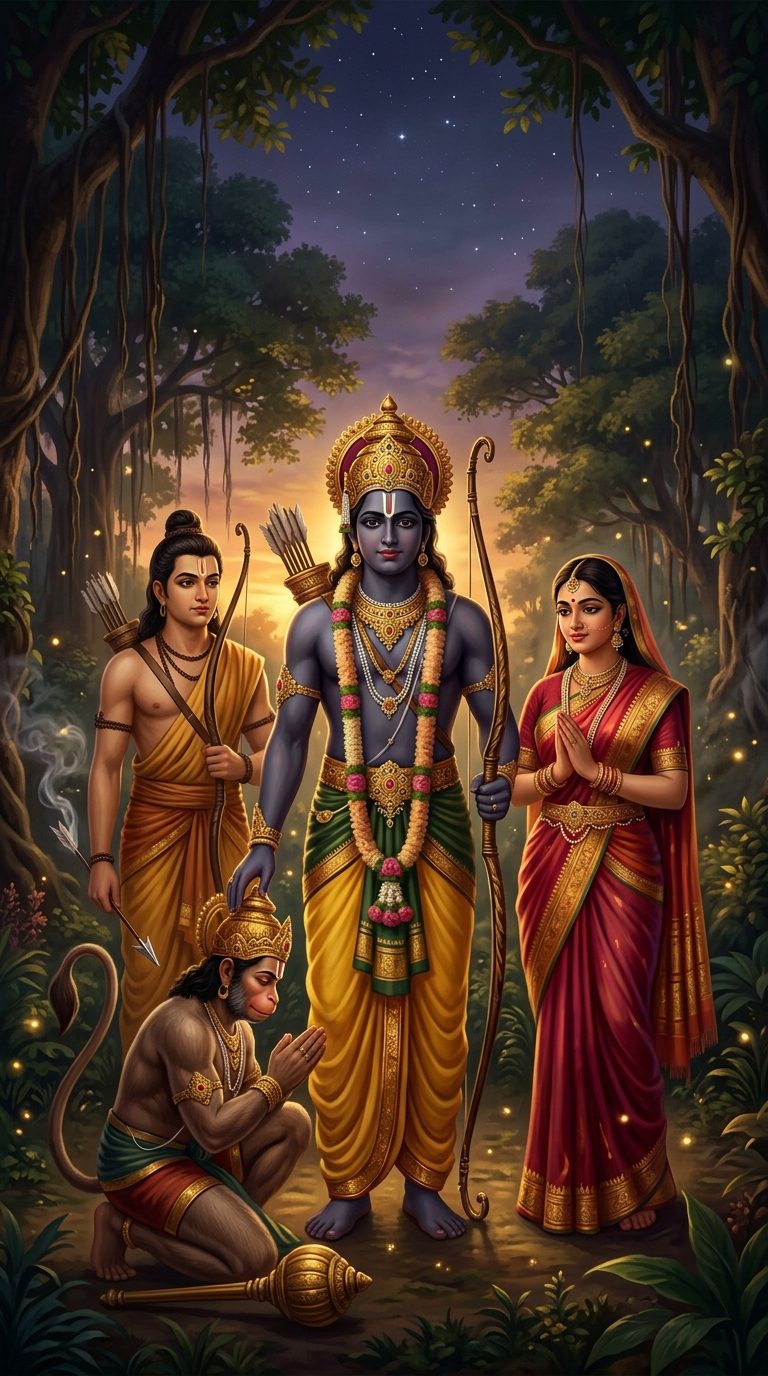
Lyrics · Meaning · Audio
The joyful thirteen-syllable chant of Rama’s name — “Shri Ram, victory to Ram, victory, victory to Ram” — sung in kirtans and repeated as japa by millions.
The thirteen-syllable Rama mantra, popularised by Samarth Ramdas
Listen
Shri Ram Jai Ram Jai Jai Ram
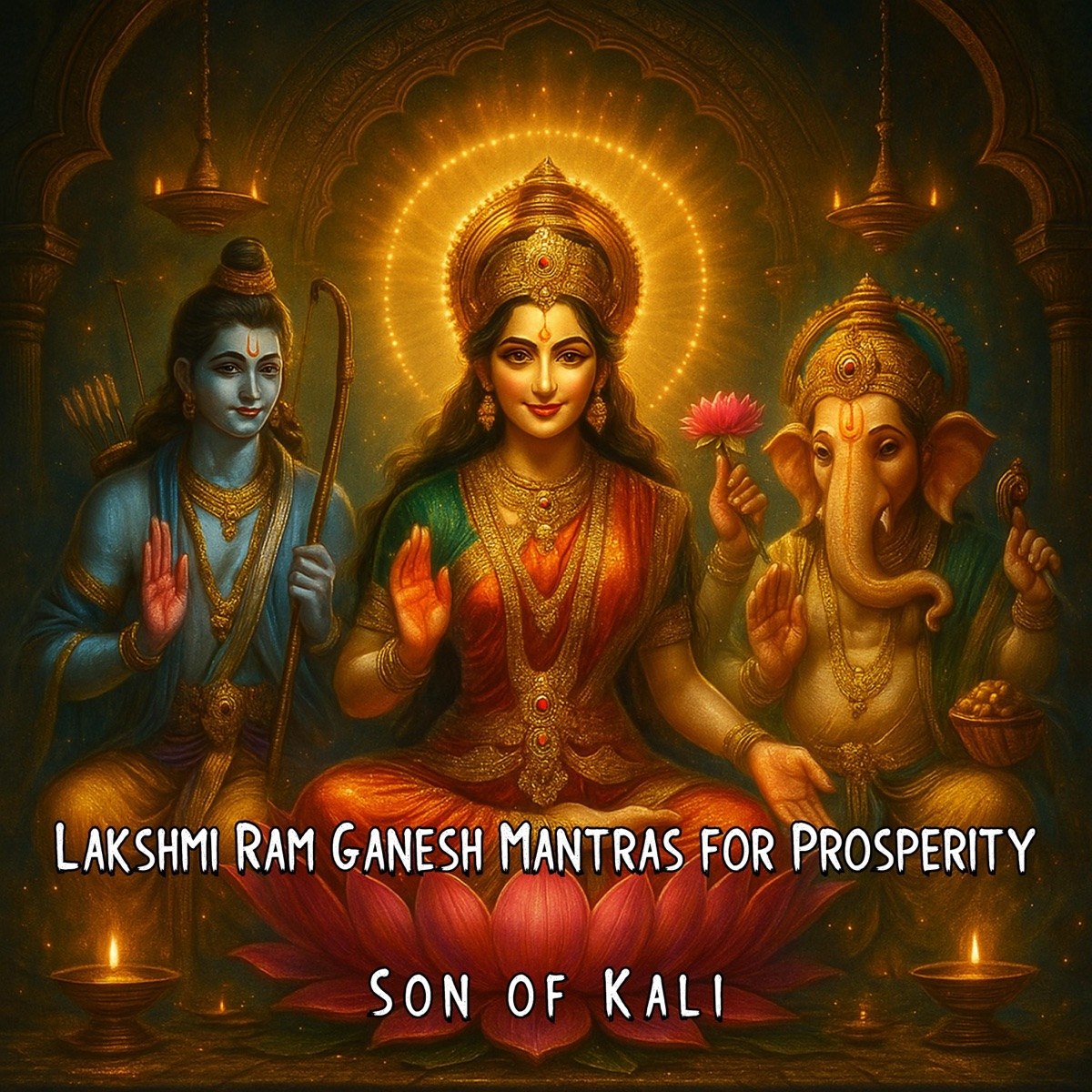
Son of Kali · Mantras for Prosperity
Each line shows an easy way to say it, with its English meaning. Turn on the Sanskrit, the exact pronunciation or the word-by-word meaning whenever you want to go deeper.
श्रीराम जय राम जय जय राम
Shri Ram Jai Ram Jai Jai Ram
śrīrāma jaya rāma jaya jaya rāma
Glorious Rama — victory to Rama — victory, victory to Rama!
Shri Ram Jai Ram Jai Jai Ram is one of the simplest and most beloved mantras in Hinduism. It has just thirteen syllables and three words — Śrī (glorious, auspicious), Rāma, and jaya (victory, glory) — yet it is chanted endlessly in kirtans, temples, homes and on pilgrimages.
It is closely associated with the 17th-century saint Samarth Ramdas of Maharashtra, who gave it to his disciples, and with the 20th-century saint Swami Ramdas (Papa Ramdas), who chanted it constantly and spread it worldwide. Mahatma Gandhi also spoke of Rama’s name as his lifelong refuge.
The idea behind it is that the name of Rama is itself a complete prayer: no ritual, no special time or place is needed. Simply repeating it, with love, purifies and steadies the heart.
A well-known tale says that when the monkeys built the bridge to Lanka, they wrote “Rama” on each stone and the stones floated. Rama himself tried throwing a stone without the name — and it sank.
The devotees laughed and said: the name of Rama is even greater than Rama. Devotion to the name carries what effort alone cannot.
In some traditions devotees take a vow to complete thirteen crore (130 million) repetitions of this thirteen-syllable mantra as a community, each person contributing their count.
It is a beautiful image of collective prayer: many voices adding up to one great offering.
When to chant
How many times
108 times on a mala, or as continuous chanting for as long as you like.
Sit comfortably or simply continue what you are doing.
Join in with the recording, matching its rhythm.
Let the chant become relaxed and joyful — it is meant to be sung.
If your mind wanders, gently return to the name.
Finish with a moment of quiet.
The sounds that trip people up most in this hymn, and how to say them.
śrī
shree.
rāma
raa-ma — in Hindi often “Raam”.
jaya
ja-ya, often sung “jai”.
What does Shri Ram Jai Ram Jai Jai Ram mean?
“Glorious Rama, victory to Rama, victory, victory to Rama.” It is a joyful celebration of Rama’s name.
Who gave this mantra?
It is associated with the saint Samarth Ramdas (17th century) and was spread worldwide by Swami Ramdas (20th century), though the chanting of Rama’s name is far older.
How many times should it be chanted?
108 times on a mala is common, but it can be chanted continuously, in kirtan or silently, any time.
Do I need initiation to chant it?
No. It is traditionally open to everyone.