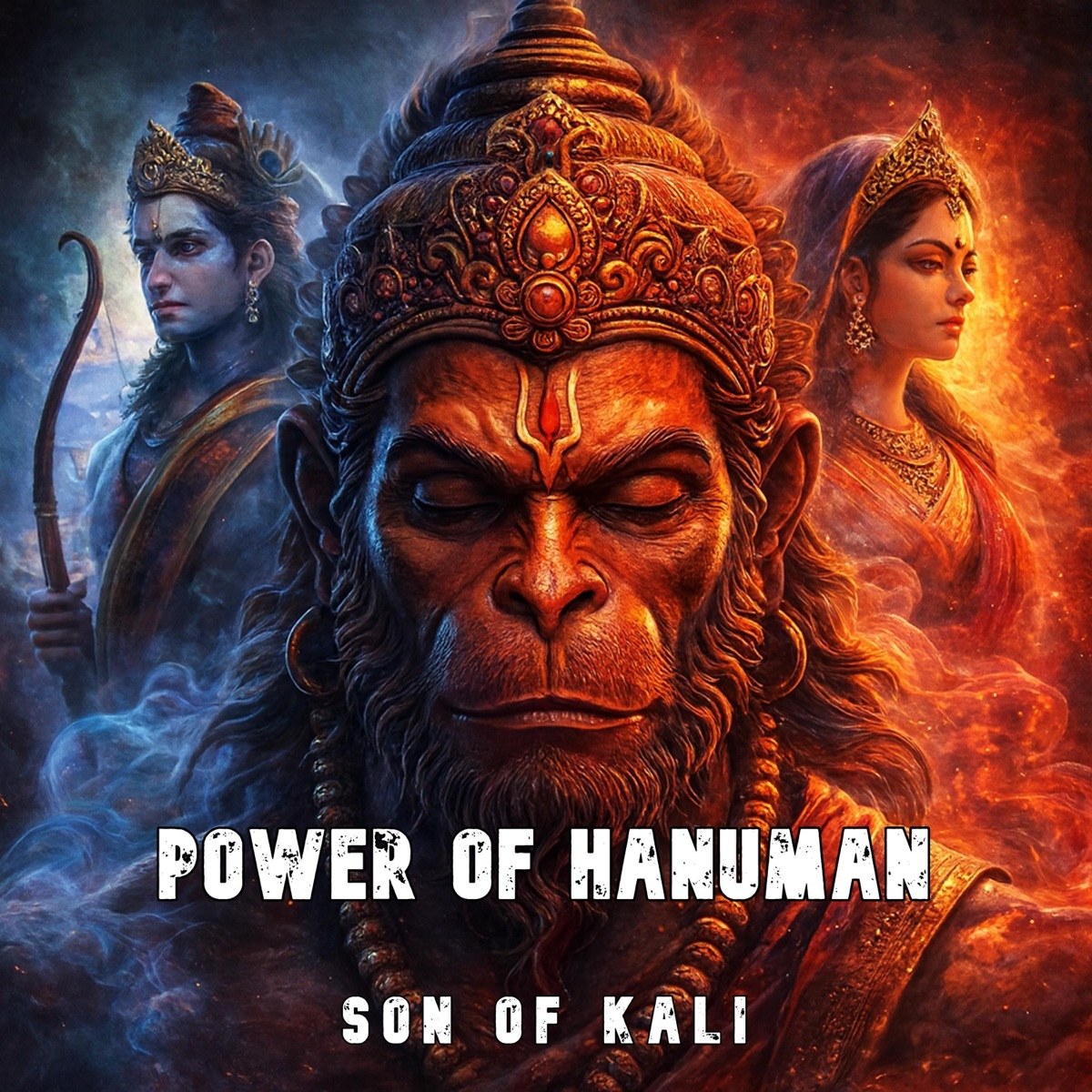
Chalisa means “forty”: the Hanuman Chalisa has forty four-line verses (chaupais), framed by two opening couplets (dohas) and one closing couplet. It was written in the 16th century by the poet-saint Tulsidas, who also wrote the Ramcharitmanas, the beloved retelling of the Ramayana. It is not in Sanskrit but in Awadhi, an old form of Hindi spoken around Ayodhya, which is why its words feel so close to modern Hindi.
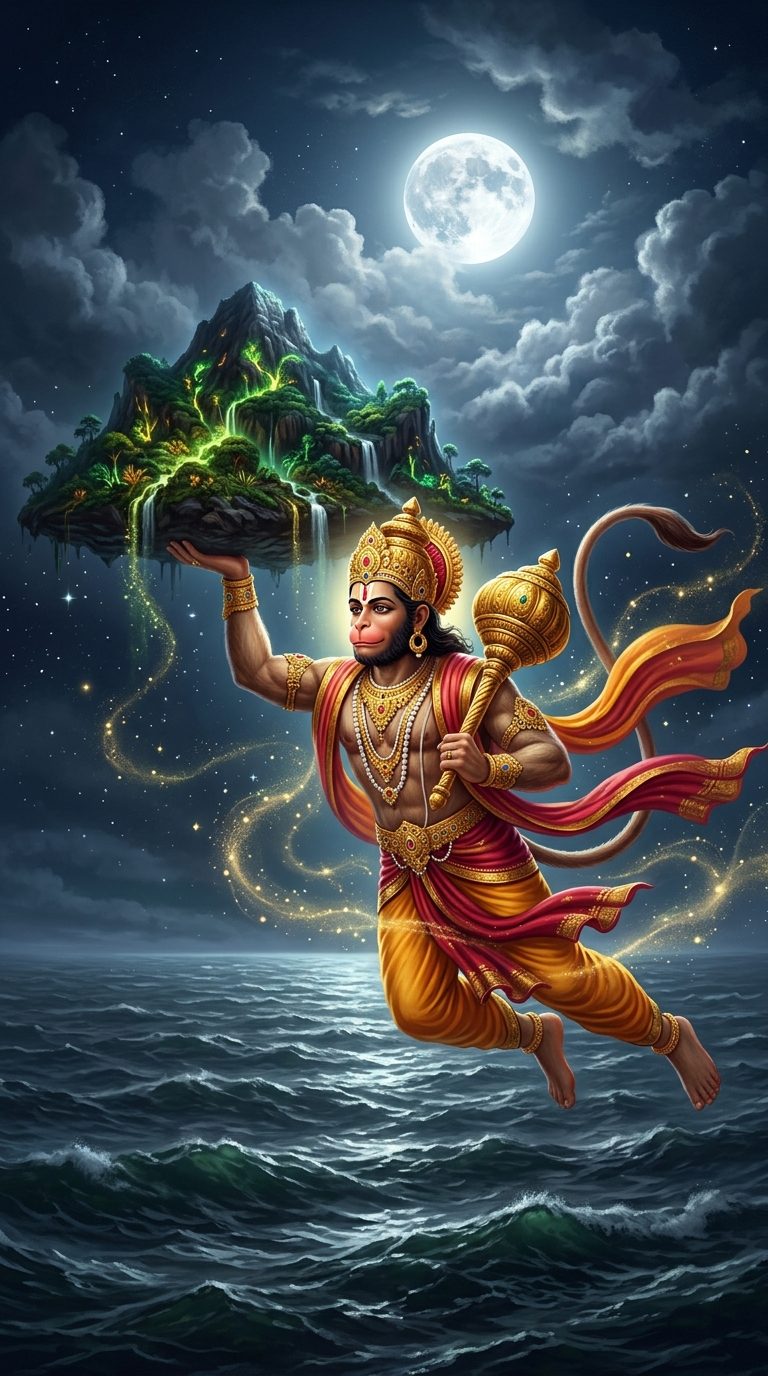
The verses tell Hanuman’s story and qualities in quick, vivid strokes: his golden body and curly hair, the mace and flag in his hands, his leap across the ocean, how he burned Lanka, brought the healing herb that saved Lakshmana, and swallowed the sun as a child thinking it was a fruit. Through all of it runs one theme — that his immense power comes entirely from his love for Rama.
For millions of people the Chalisa is a daily practice, especially on Tuesdays and Saturdays. It is chanted for courage, protection from fear and negativity, and help in difficult times — and, most of all, as a way to grow the same humble devotion that Hanuman embodies.