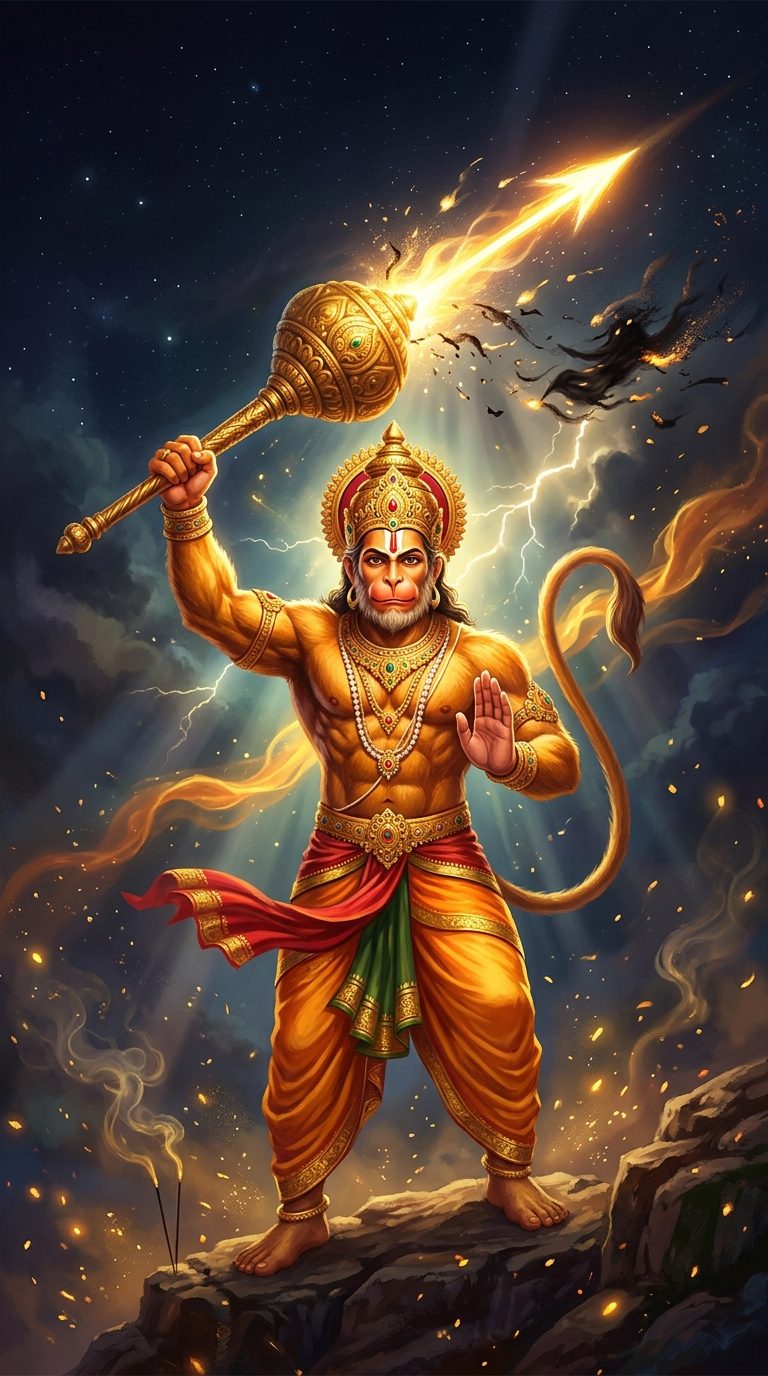
Hanuman as Bajrangbali raising his golden mace as a blazing arrow of light shoots from it, scattering dark shapes of fear across a stormy sky
HanumanStuti

Bajrang Baan

Lyrics · Meaning · Audio

The “arrow of Bajrangbali” — an urgent, fiery prayer that calls on Hanuman to come at once, by the oath of Rama, and destroy every fear, enemy and evil force troubling the devotee.

Traditionally attributed to Goswami Tulsidas

Listen

Bajrang Baan

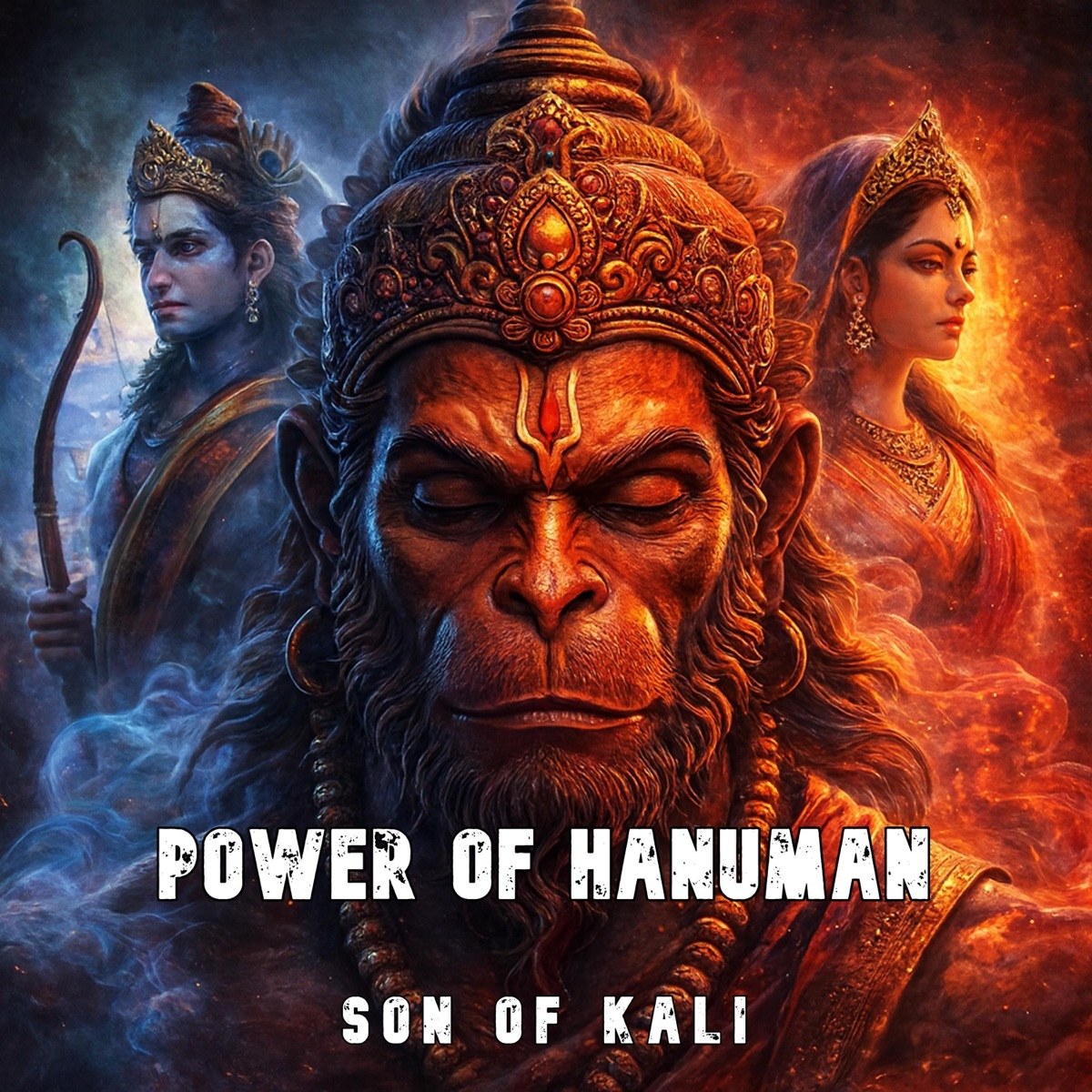
Son of Kali · Power of Hanuman

0:006:21
Deity
Hanuman
Type
Stuti
Verses
18
Language
Awadhi

Bajrang Baan Lyrics with Meaning

Each line shows an easy way to say it, with its English meaning. Turn on the Sanskrit, the exact pronunciation or the word-by-word meaning whenever you want to go deeper.

Opening couplet (Doha)

निश्चय प्रेम प्रतीति ते बिनय करैं सनमान ।

Nishchaya Prema Pratiti Te Binaya Karain Sanamana

niścaya prema pratīti te binaya karaiṃ sanamāna

Those who pray with firm resolve, love, faith and respect —

    तेहि के कारज सकल सुभ सिद्ध करैं हनुमान ॥

    Tehi Ke Karaja Sakala Subha Siddha Karain Hanumana

    tehi ke kāraja sakala subha siddha karaiṃ hanumāna

    Hanuman brings all their good works to success.

      Verse 1

      जय हनुमंत संत हितकारी । सुन लीजै प्रभु अरज हमारी ॥

      Jaya Hanumanta Santa Hitakari Suna Lijai Prabhu Araja Hamari

      jaya hanumaṃta saṃta hitakārī suna lījai prabhu araja hamārī

      Victory to Hanuman, friend of the saints — Lord, please hear my plea.

        जन के काज बिलंब न कीजै । आतुर दौरि महा सुख दीजै ॥

        Jana Ke Kaja Bilamba Na Kijai Atura Dauri Maha Sukha Dijai

        jana ke kāja bilaṃba na kījai ātura dauri mahā sukha dījai

        Do not delay in your devotee’s work — rush to us and give us great joy.

          Verse 2

          जैसे कूदि सिंधु महिपारा । सुरसा बदन पैठि बिस्तारा ॥

          Jaise Kudi Sindhu Mahipara Surasa Badana Paithi Bistara

          jaise kūdi siṃdhu mahipārā surasā badana paiṭhi bistārā

          Just as you leapt across the ocean, and entered and escaped the stretched-open mouth of Surasa,

            आगे जाय लंकिनी रोका । मारेहु लात गई सुरलोका ॥

            Age Jaya Lankini Roka Marehu Lata Gai Suraloka

            āge jāya laṃkinī rokā mārehu lāta gaī suralokā

            and when Lankini blocked your way, you struck her and she went to heaven —

              Verse 3

              जाय बिभीषन को सुख दीन्हा । सीता निरखि परमपद लीन्हा ॥

              Jaya Bibhishana Ko Sukha Dinha Sita Nirakhi Paramapada Linha

              jāya bibhīṣana ko sukha dīnhā sītā nirakhi paramapada līnhā

              you brought joy to Vibhishana, and on seeing Sita you reached the highest bliss;

                बाग उजारि सिंधु महँ बोरा । अति आतुर जमकातर तोरा ॥

                Baga Ujari Sindhu Mahan Bora Ati Atura Jamakatara Tora

                bāga ujāri siṃdhu mahaṃ borā ati ātura jamakātara torā

                you uprooted Ravana’s garden and threw it into the sea, and swiftly broke the dagger of death;

                  Verse 4

                  अक्षय कुमार मारि संहारा । लूम लपेटि लंक को जारा ॥

                  Akshaya Kumara Mari Samhara Luma Lapeti Lanka Ko Jara

                  akṣaya kumāra māri saṃhārā lūma lapeṭi laṃka ko jārā

                  you slew prince Akshaya, and with your blazing tail you set Lanka on fire;

                    लाह समान लंक जरि गई । जय जय धुनि सुरपुर नभ भई ॥

                    Laha Samana Lanka Jari Gai Jaya Jaya Dhuni Surapura Nabha Bhai

                    lāha samāna laṃka jari gaī jaya jaya dhuni surapura nabha bhaī

                    Lanka burned like lac, and cries of “Victory! Victory!” rang through the heavens.

                      Verse 5

                      अब बिलंब केहि कारन स्वामी । कृपा करहु उर अंतरयामी ॥

                      Aba Bilamba Kehi Karana Svami Kripa Karahu Ura Antarayami

                      aba bilaṃba kehi kārana svāmī kṛpā karahu ura aṃtarayāmī

                      Why the delay now, my Master? Be merciful, you who know my heart within.

                        जय जय लखन प्रान के दाता । आतुर ह्वै दुख करहु निपाता ॥

                        Jaya Jaya Lakhana Prana Ke Data Atura Hvai Dukha Karahu Nipata

                        jaya jaya lakhana prāna ke dātā ātura hvai dukha karahu nipātā

                        Victory to you, who gave back Lakshmana’s life — come quickly and destroy my sorrow.

                          Verse 6

                          जै हनुमान जयति बल-सागर । सुर-समूह-समरथ भट-नागर ॥

                          Jai Hanumana Jayati Bala Sagara Sura Samuha Samaratha Bhata Nagara

                          jai hanumāna jayati bala-sāgara sura-samūha-samaratha bhaṭa-nāgara

                          Victory to Hanuman, ocean of strength, mightier than all the gods, finest of warriors!

                            ॐ हनु हनु हनु हनुमंत हठीले । बैरिहि मारु बज्र की कीले ॥

                            Om Hanu Hanu Hanu Hanumanta Hathile Bairihi Maru Bajra Ki Kile

                            oṃ hanu hanu hanu hanumaṃta haṭhīle bairihi māru bajra kī kīle

                            Om — strike, strike, strike, determined Hanuman! Strike down the enemy with thunderbolt nails.

                              Verse 7

                              ॐ ह्रीं ह्रीं ह्रीं हनुमंत कपीसा । ॐ हुं हुं हुं हनु अरि उर सीसा ॥

                              Om Hrim Hrim Hrim Hanumanta Kapisa Om Hum Hum Hum Hanu Ari Ura Sisa

                              oṃ hrīṃ hrīṃ hrīṃ hanumaṃta kapīsā oṃ huṃ huṃ huṃ hanu ari ura sīsā

                              Om hreem hreem hreem, Hanuman, lord of monkeys! Om hum hum hum — strike the enemy’s heart and head!

                                जय अंजनि कुमार बलवंता । संकरसुवन बीर हनुमंता ॥

                                Jaya Anjani Kumara Balavanta Sankarasuvana Bira Hanumanta

                                jaya aṃjani kumāra balavaṃtā saṃkarasuvana bīra hanumaṃtā

                                Victory to Anjana’s mighty son, embodiment of Shiva, brave Hanuman!

                                  Verse 8

                                  बदन कराल काल-कुल-घालक । राम सहाय सदा प्रतिपालक ॥

                                  Badana Karala Kala Kula Ghalaka Rama Sahaya Sada Pratipalaka

                                  badana karāla kāla-kula-ghālaka rāma sahāya sadā pratipālaka

                                  Your fierce face destroys even the forces of death; you are Rama’s helper and our constant protector.

                                    भूत, प्रेत, पिसाच निसाचर । अगिन बेताल काल मारी मर ॥

                                    Bhuta Preta Pisacha Nisachara Agina Betala Kala Mari Mara

                                    bhūta preta pisāca nisācara agina betāla kāla mārī mara

                                    Ghosts, spirits, ghouls and demons of the night, fire-spirits, vampires, disease and death —

                                      Verse 9

                                      इन्हें मारु, तोहि सपथ राम की । राखु नाथ मरजाद नाम की ॥

                                      Inhen Maru Tohi Sapatha Rama Ki Rakhu Natha Marajada Nama Ki

                                      inheṃ māru tohi sapatha rāma kī rākhu nātha marajāda nāma kī

                                      strike them down — by your oath to Rama! O Lord, keep the honour of your name.

                                        सत्य होहु हरि सपथ पाइ कै । राम दूत धरु मारु धाइ कै ॥

                                        Satya Hohu Hari Sapatha Pai Kai Rama Duta Dharu Maru Dhai Kai

                                        satya hohu hari sapatha pāi kai rāma dūta dharu māru dhāi kai

                                        Be true to the Lord’s oath — messenger of Rama, rush, seize and strike!

                                          Verse 10

                                          जय जय जय हनुमंत अगाधा । दुख पावत जन केहि अपराधा ॥

                                          Jaya Jaya Jaya Hanumanta Agadha Dukha Pavata Jana Kehi Aparadha

                                          jaya jaya jaya hanumaṃta agādhā dukha pāvata jana kehi aparādhā

                                          Victory, victory, victory to fathomless Hanuman! For what fault does your devotee suffer?

                                            पूजा जप तप नेम अचारा । नहिं जानत कछु दास तुम्हारा ॥

                                            Puja Japa Tapa Nema Achara Nahin Janata Kachhu Dasa Tumhara

                                            pūjā japa tapa nema acārā nahiṃ jānata kachu dāsa tumhārā

                                            Worship, chanting, austerity, vows and ritual — your servant knows none of them.

                                              Verse 11

                                              बन उपबन मग गिरि गृह माहीं । तुम्हरे बल हौं डरपत नाहीं ॥

                                              Bana Upabana Maga Giri Griha Mahin Tumhare Bala Haun Darapata Nahin

                                              bana upabana maga giri gṛha māhīṃ tumhare bala hauṃ ḍarapata nāhīṃ

                                              In forests and groves, on roads, on mountains or at home — by your strength I am not afraid.

                                                जनकसुता हरि दास कहावौ । ताकी सपथ बिलंब न लावौ ॥

                                                Janakasuta Hari Dasa Kahavau Taki Sapatha Bilamba Na Lavau

                                                janakasutā hari dāsa kahāvau tākī sapatha bilaṃba na lāvau

                                                You are called the servant of Sita and of Rama — by her oath, do not delay.

                                                  Verse 12

                                                  जै जै जै धुनि होत अकासा । सुमिरत होय दुसह दुख नासा ॥

                                                  Jai Jai Jai Dhuni Hota Akasa Sumirata Hoya Dusaha Dukha Nasa

                                                  jai jai jai dhuni hota akāsā sumirata hoya dusaha dukha nāsā

                                                  The sky resounds with “Victory! Victory! Victory!” — remembering you destroys unbearable sorrow.

                                                    चरन पकरि, कर जोरि मनावौं । यहि औसर अब केहि गोहरावौं ॥

                                                    Charana Pakari Kara Jori Manavaun Yahi Ausara Aba Kehi Goharavaun

                                                    carana pakari kara jori manāvauṃ yahi ausara aba kehi goharāvauṃ

                                                    Holding your feet, palms joined, I implore you — at this moment, whom else can I call?

                                                      Verse 13

                                                      उठु, उठु, चलु, तोहि राम दुहाई । पायँ परौं, कर जोरि मनाई ॥

                                                      Uthu Uthu Chalu Tohi Rama Duhai Payan Paraun Kara Jori Manai

                                                      uṭhu uṭhu calu tohi rāma duhāī pāyaṃ parauṃ kara jori manāī

                                                      Rise, rise, come — I call on you in Rama’s name! I fall at your feet and beg with joined palms.

                                                        ॐ चं चं चं चं चपल चलंता । ॐ हनु हनु हनु हनु हनुमंता ॥

                                                        Om Cham Cham Cham Cham Chapala Chalanta Om Hanu Hanu Hanu Hanu Hanumanta

                                                        oṃ caṃ caṃ caṃ caṃ capala calaṃtā oṃ hanu hanu hanu hanu hanumaṃtā

                                                        Om cham cham cham cham — swift one, move! Om hanu hanu hanu hanu, Hanuman!

                                                          Verse 14

                                                          ॐ हं हं हाँक देत कपि चंचल । ॐ सं सं सहमि पराने खल-दल ॥

                                                          Om Ham Ham Hanka Deta Kapi Chanchala Om Sam Sam Sahami Parane Khala Dala

                                                          oṃ haṃ haṃ hāṃka deta kapi caṃcala oṃ saṃ saṃ sahami parāne khala-dala

                                                          Om ham ham — when the swift monkey roars, Om sam sam — the hordes of the wicked flee in terror.

                                                            अपने जन को तुरत उबारौ । सुमिरत होय आनंद हमारौ ॥

                                                            Apane Jana Ko Turata Ubarau Sumirata Hoya Ananda Hamarau

                                                            apane jana ko turata ubārau sumirata hoya ānaṃda hamārau

                                                            Rescue your devotee at once — just remembering you fills me with joy.

                                                              Verse 15

                                                              यह बजरंग-बाण जेहि मारै । ताहि कहौ फिरि कवन उबारै ॥

                                                              Yaha Bajaranga Bana Jehi Marai Tahi Kahau Phiri Kavana Ubarai

                                                              yaha bajaraṃga-bāṇa jehi mārai tāhi kahau phiri kavana ubārai

                                                              Whoever this arrow of Bajrang strikes — tell me, who could ever save them?

                                                                पाठ करै बजरंग-बाण की । हनुमत रक्षा करै प्रान की ॥

                                                                Patha Karai Bajaranga Bana Ki Hanumata Raksha Karai Prana Ki

                                                                pāṭha karai bajaraṃga-bāṇa kī hanumata rakṣā karai prāna kī

                                                                Whoever recites the Bajrang Baan — Hanuman protects their very life.

                                                                  Verse 16

                                                                  यह बजरंग बाण जो जापैं । तासों भूत-प्रेत सब कापैं ॥

                                                                  Yaha Bajaranga Bana Jo Japain Tason Bhuta Preta Saba Kapain

                                                                  yaha bajaraṃga bāṇa jo jāpaiṃ tāsoṃ bhūta-preta saba kāpaiṃ

                                                                  Before those who chant this Bajrang Baan, all ghosts and spirits tremble.

                                                                    धूप देय जो जपै हमेसा । ताके तन नहिं रहै कलेसा ॥

                                                                    Dhupa Deya Jo Japai Hamesa Take Tana Nahin Rahai Kalesa

                                                                    dhūpa deya jo japai hamesā tāke tana nahiṃ rahai kalesā

                                                                    Whoever offers incense and always chants it — no suffering remains in their body.

                                                                      Closing couplet (Doha)

                                                                      उर प्रतीति दृढ़, सरन ह्वै, पाठ करै धरि ध्यान ।

                                                                      Ura Pratiti Dridha Sarana Hvai Patha Karai Dhari Dhyana

                                                                      ura pratīti dṛṛha sarana hvai pāṭha karai dhari dhyāna

                                                                      Whoever, with firm faith in the heart, takes refuge and recites this with full attention —

                                                                        बाधा सब हर, करैं सब काम सफल हनुमान ॥

                                                                        Badha Saba Hara Karain Saba Kama Saphala Hanumana

                                                                        bādhā saba hara karaiṃ saba kāma saphala hanumāna

                                                                        Hanuman removes all their obstacles and makes all their work succeed.

                                                                          About Bajrang Baan

                                                                          Bajrang Baan means “the arrow of Bajrang” — Bajrangbali being Hanuman, “the one whose body is strong as a thunderbolt.” It is a short, intense prayer in Awadhi, traditionally attributed to Tulsidas, and it is quite different in tone from the gentle Hanuman Chalisa.

                                                                          Where the Chalisa praises, the Bajrang Baan pleads and even insists. It reminds Hanuman of his great deeds — leaping the ocean, defeating Lankini, burning Lanka, saving Lakshmana — and then asks, “Why the delay now, Lord?” It calls on him by the oath of Rama and Sita to come at once, and includes powerful seed syllables (Om hanu hanu hanu, Om hum hum hum) that are chanted like war cries against fear and negativity.

                                                                          Because of its intensity, many traditions treat the Bajrang Baan with special respect: it is recited in times of serious trouble, with a clean heart and steady faith, rather than casually.

                                                                          The Stories Inside the Hymn

                                                                          Hanuman and Lankini

                                                                          When Hanuman reached Lanka in search of Sita, he was stopped at the gate by Lankini, the fierce guardian spirit of the city. She tried to block his way, and Hanuman struck her with a single blow.

                                                                          Lankini then remembered an ancient prophecy: when a monkey defeats her, the end of Ravana’s rule is near. She let him pass, and — as the Bajrang Baan says — she was freed and went to the heavens.

                                                                          Why it is called an arrow

                                                                          An arrow flies straight and fast to its target. This prayer is meant the same way: direct, urgent and focused, calling Hanuman’s protection to one specific need.

                                                                          Tradition says that, like an arrow, it should be aimed carefully — used for protection from harm and fear, never to harm others.

                                                                          How to Chant Bajrang Baan

                                                                          When to chant

                                                                          • ✦Tuesdays and Saturdays
                                                                          • ✦In times of serious danger, fear, illness or persistent negativity
                                                                          • ✦After the Hanuman Chalisa
                                                                          • ✦Before dawn or after sunset, with a lamp lit

                                                                          How many times

                                                                          Once at a sitting is traditional. Some keep a vow of daily recitation for 21 or 41 days during a difficult time.

                                                                          1. 1

                                                                            Bathe or wash your hands and face, and sit before an image of Hanuman.

                                                                          2. 2

                                                                            Light a lamp and, if you like, incense.

                                                                          3. 3

                                                                            Recite the Hanuman Chalisa first to calm and centre the mind.

                                                                          4. 4

                                                                            Recite the Bajrang Baan with focus and faith, following the recording.

                                                                          5. 5

                                                                            End by offering thanks and chanting “Jai Shri Ram.”

                                                                          Pronunciation Guide

                                                                          The sounds that trip people up most in this hymn, and how to say them.

                                                                          bajaraṃga

                                                                          ba-jur-ung — “thunderbolt-bodied.”

                                                                          hanumaṃta

                                                                          ha-nu-munt — an Awadhi form of Hanuman.

                                                                          ॐ हनु हनु हनु

                                                                          Om ha-nu ha-nu ha-nu — chanted firmly, like a drumbeat.

                                                                          hrīṃ, huṃ

                                                                          Seed syllables: hreem and hoom, each closing in a nasal hum.

                                                                          Power of Hanuman by Son of Kali

                                                                          The music

                                                                          Power of Hanuman

                                                                          by Son of Kali

                                                                          More for Hanuman

                                                                          Frequently Asked Questions

                                                                          What does Bajrang Baan mean?

                                                                          “The arrow of Bajrang.” Bajrang (Bajrangbali) is a name of Hanuman meaning “with a body like a thunderbolt.” The prayer is meant to fly straight to Hanuman for protection.

                                                                          Who wrote the Bajrang Baan?

                                                                          It is traditionally attributed to Goswami Tulsidas, though scholars debate the authorship.

                                                                          When should Bajrang Baan be recited?

                                                                          Traditionally on Tuesdays and Saturdays, and in times of serious trouble or fear, often after the Hanuman Chalisa.

                                                                          How is it different from the Hanuman Chalisa?

                                                                          The Chalisa is a gentle hymn of praise. The Bajrang Baan is an urgent plea for immediate help, calling on Hanuman by the oath of Rama and using powerful seed syllables.
                                                                          Text: Traditional public-domain Awadhi text attributed to Goswami Tulsidas, in its standard recited form. Easy reading, transliteration and English translation written for the Jaguar Medicine Tribe Mantra Library.

                                                                          Music: Recordings by Son of Kali, produced with AI-assisted vocals and instrumentation.

                                                                          Note: Benefits described here are traditional beliefs, shared for understanding — not medical or guaranteed outcomes.