Lord Rama with lotus eyes and blue skin seated with Sita on a jewelled throne, the poet Tulsidas kneeling and singing before them
RamaStuti

Shri Ramachandra Kripalu

Lyrics · Meaning · Audio

Tulsidas’s most famous hymn to Rama — “O mind, worship the compassionate Shri Ramachandra, who takes away the terrible fear of worldly life” — a portrait of Rama’s beauty in lotus after lotus.

By Goswami Tulsidas (Vinaya Patrika)

Listen

Shri Ramachandra Kripalu

Son of Kali · Power of Ram

0:006:33
Deity
Rama
Type
Stuti
Verses
7
Language
Awadhi

Shri Ramachandra Kripalu Lyrics with Meaning

Each line shows an easy way to say it, with its English meaning. Turn on the Sanskrit, the exact pronunciation or the word-by-word meaning whenever you want to go deeper.

Verse 1

श्रीरामचन्द्र कृपालु भजु मन हरण भवभय दारुणं ।

Shri Ramachandra Kripalu Bhaju Man Haran Bhavabhaya Darunam

śrīrāmacandra kṛpālu bhaju mana haraṇa bhavabhaya dāruṇaṃ

O mind, worship the compassionate Shri Ramachandra, who takes away the terrible fear of worldly life,

    नवकञ्ज लोचन कञ्ज मुख कर कञ्ज पद कञ्जारुणं ॥ १ ॥

    Navakanja Lochan Kanja Mukh Kar Kanja Pad Kanjarunam

    navakañja locana kañja mukha kara kañja pada kañjāruṇaṃ

    whose eyes are like fresh lotuses, whose face, hands and feet are lotuses, rosy as red lotuses.

      Verse 2

      कन्दर्प अगणित अमित छवि नवनील नीरद सुन्दरं ।

      Kandarpa Aganita Amita Chhavi Navaneel Neerad Sundaram

      kandarpa agaṇita amita chavi navanīla nīrada sundaraṃ

      His beauty is greater than countless gods of love; he is lovely as a fresh dark rain cloud;

        पटपीत मानहु तडित रुचि शुचि नौमि जनक सुतावरं ॥ २ ॥

        Pat Peet Manahu Tadit Ruchi Shuchi Naumi Janak Sutavaram

        paṭapīta mānahu taḍita ruci śuci naumi janaka sutāvaraṃ

        his yellow robe gleams like lightning — I bow to the pure one, the husband of Janaka’s daughter.

          Verse 3

          भजु दीनबन्धु दिनेश दानव दैत्यवंश निकन्दनं ।

          Bhaju Deenbandhu Dinesh Danav Daityavansh Nikandanam

          bhaju dīnabandhu dineśa dānava daityavaṃśa nikandanaṃ

          Worship the friend of the humble, the sun who uproots the clans of demons,

            रघुनन्द आनन्दकन्द कोशल चन्द दशरथ नन्दनं ॥ ३ ॥

            Raghunand Anandakand Koshal Chand Dasharath Nandanam

            raghunanda ānandakanda kośala canda daśaratha nandanaṃ

            the joy of the Raghus, the root of bliss, the moon of Kosala, the son of Dasharatha.

              Verse 4

              सिर मुकुट कुण्डल तिलक चारु उदारु अङ्ग विभूषणं ।

              Sir Mukut Kundal Tilak Charu Udaru Ang Vibhushanam

              sira mukuṭa kuṇḍala tilaka cāru udāru aṅga vibhūṣaṇaṃ

              A crown on his head, earrings, a lovely tilak, ornaments on his noble limbs,

                आजानुभुज शर चाप धर संग्राम जित खरदूषणं ॥ ४ ॥

                Ajanubhuj Shar Chaap Dhar Sangram Jit Khardushanam

                ājānubhuja śara cāpa dhara saṃgrāma jita kharadūṣaṇaṃ

                arms reaching to his knees, holding bow and arrows, victor in battle over Khara and Dushana.

                  Verse 5

                  इति वदति तुलसीदास शङ्कर शेष मुनि मन रञ्जनं ।

                  Iti Vadati Tulsidas Shankar Shesh Muni Man Ranjanam

                  iti vadati tulasīdāsa śaṅkara śeṣa muni mana rañjanaṃ

                  So says Tulsidas: O delight of the minds of Shiva, Shesha and the sages,

                    मम हृदय कञ्ज निवास कुरु कामादि खलदल गञ्जनं ॥ ५ ॥

                    Mam Hriday Kanja Nivas Kuru Kamadi Khaladal Ganjanam

                    mama hṛdaya kañja nivāsa kuru kāmādi khaladala gañjanaṃ

                    make your home in the lotus of my heart, and destroy the gang of wicked desire and the rest.

                      Gauri’s blessing (Ramcharitmanas)

                      मनु जाहिं राचेउ मिलिहि सो बरु सहज सुन्दर साँवरो ।

                      Manu Jahin Racheu Milihi So Baru Sahaj Sundar Saanvaro

                      manu jāhiṃ rāceu milihi so baru sahaja sundara sā̃varo

                      The one your heart has chosen will be your husband — naturally beautiful and dark-skinned;

                        करुना निधान सुजान सीलु सनेहु जानत रावरो ॥

                        Karuna Nidhan Sujan Seelu Sanehu Janat Ravaro

                        karunā nidhāna sujāna sīlu sanehu jānata rāvaro

                        that treasury of compassion, all-knowing, knows your goodness and your love.

                          एहि भाँति गौरि असीस सुनि सिय सहित हियँ हरषीं अली ।

                          Ehi Bhanti Gauri Asees Suni Siya Sahit Hiyan Harashin Ali

                          ehi bhā̃ti gauri asīsa suni siya sahita hiyã haraṣīṃ alī

                          Hearing Gauri’s blessing in this way, Sita and her friends rejoiced in their hearts;

                            तुलसी भवानिहि पूजि पुनि पुनि मुदित मन मन्दिर चली ॥

                            Tulsi Bhavanihi Pooji Puni Puni Mudit Man Mandir Chali

                            tulasī bhavānihi pūji puni puni mudita mana mandira calī

                            says Tulsi: worshipping Bhavani again and again, Sita went home with a joyful heart.

                              Soratha

                              जानि गौरि अनुकूल सिय हिय हरषु न जाइ कहि ।

                              Jaani Gauri Anukool Siya Hiya Harashu Na Jaai Kahi

                              jāni gauri anukūla siya hiya haraṣu na jāi kahi

                              Knowing that Gauri was gracious to her, Sita’s joy could not be described;

                                मंजुल मंगल मूल बाम अंग फरकन लगे ॥

                                Manjul Mangal Mool Baam Ang Pharkan Lage

                                maṃjula maṃgala mūla bāma aṃga pharakana lage

                                her left side began to throb — a lovely sign, the root of good fortune.

                                  About Shri Ramachandra Kripalu

                                  “Shri Ramachandra Kripalu Bhaju Man” is from the Vinaya Patrika, Tulsidas’s book of devotional petitions to Rama, written in the 16th century. It is sung in temples, homes and Ramayana gatherings all over North India, especially on Rama Navami.

                                  Tulsidas speaks to his own mind: bhaju mana, “O mind, worship.” Then he paints Rama — eyes like new lotuses, lotus face, lotus hands, lotus feet; beauty greater than countless gods of love; skin dark as a fresh rain cloud; yellow silk shining like lightning.

                                  The last verse asks Rama to live in the lotus of his heart and destroy the gang of inner enemies — desire, anger and the rest. Many singers continue with verses from the Ramcharitmanas in which Goddess Gauri blesses Sita, and these are given here too.

                                  The Stories Inside the Hymn

                                  Gauri’s blessing

                                  Before her svayamvara, young Sita went to the temple of Gauri (Parvati) and prayed for Rama as her husband. The image of the Goddess smiled and spoke: “The one your heart has chosen — naturally beautiful and dark-skinned — will be yours.”

                                  Sita’s friends rejoiced, and her left arm began to throb — a sign of good fortune. These verses are often sung after the stuti.

                                  How to Chant Shri Ramachandra Kripalu

                                  When to chant

                                  • ✦Rama Navami
                                  • ✦Evening prayer
                                  • ✦Ramayana readings and kirtans
                                  • ✦Any time the mind needs gentleness

                                  How many times

                                  Once.

                                  1. 1

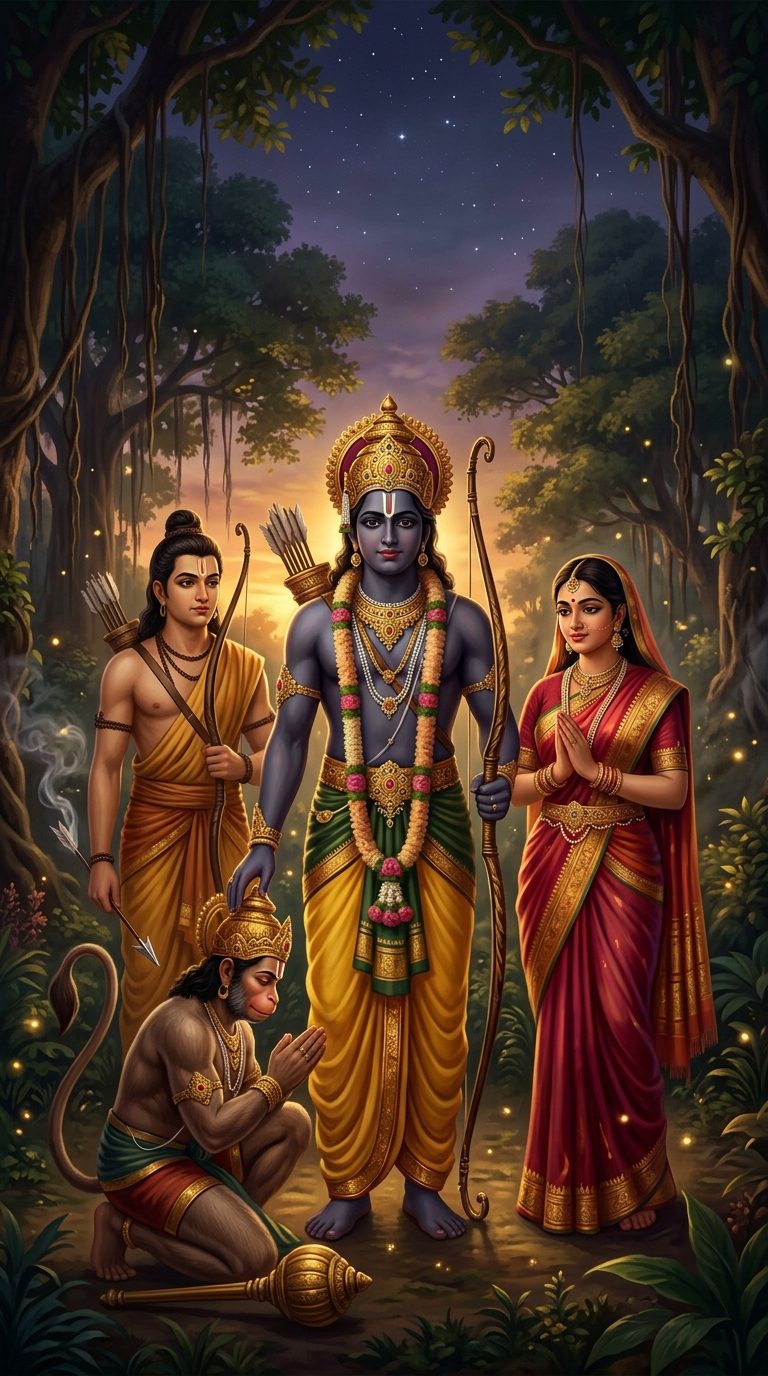
                                    Sit before an image of Rama, Sita, Lakshmana and Hanuman.

                                  2. 2

                                    Sing slowly; let each image of the lotus settle in the mind.

                                  3. 3

                                    On the last verse, picture Rama in your heart.

                                  4. 4

                                    Continue with Gauri’s blessing if you like, and close with “Siyavar Ramchandra ki jai.”

                                  Pronunciation Guide

                                  The sounds that trip people up most in this hymn, and how to say them.
                                  kṛpālu

                                  kri-paa-lu — “compassionate.”

                                  kañja

                                  kun-ja — “lotus.”

                                  kandarpa

                                  kun-dar-pa — Kama, the god of love.

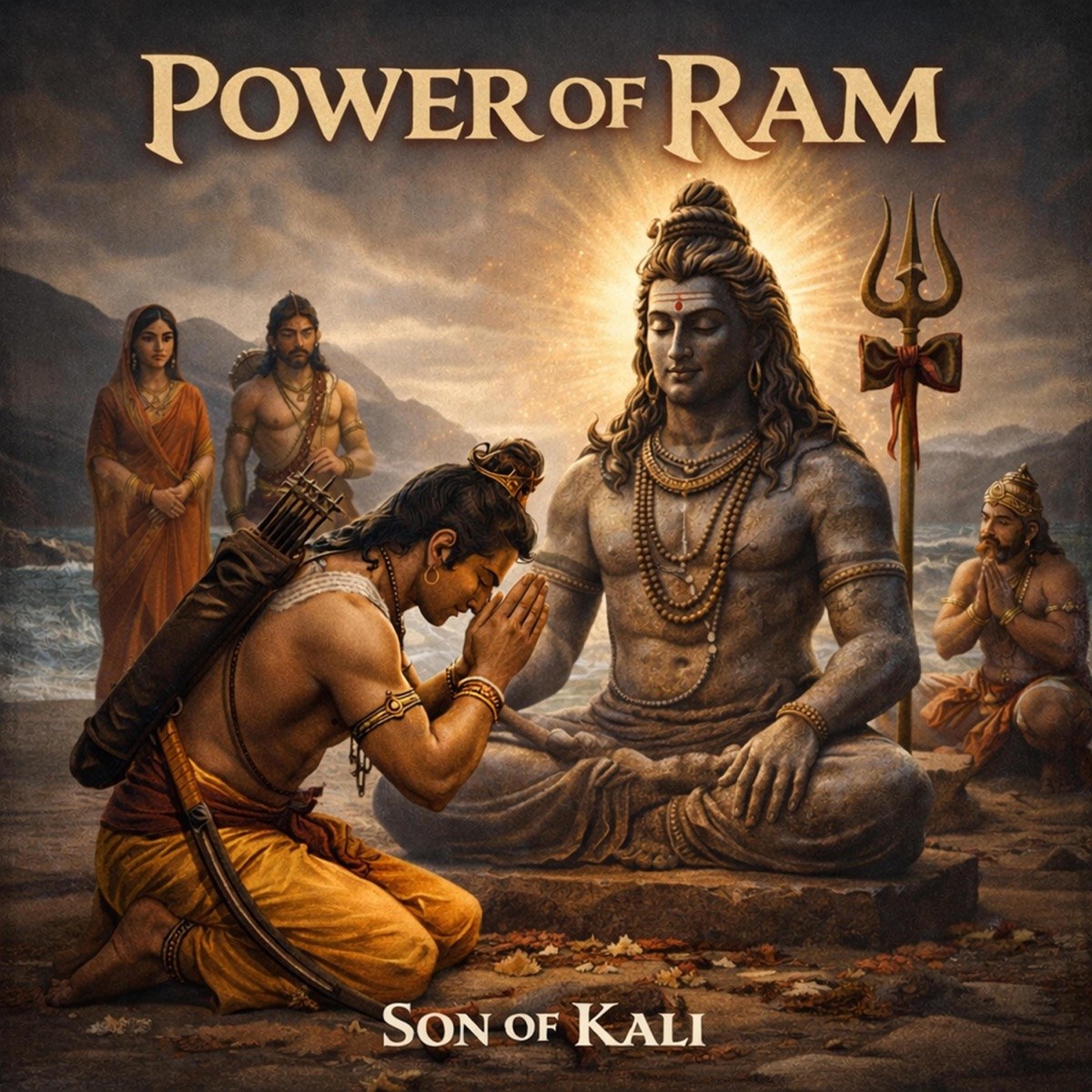
                                  Power of Ram by Son of Kali

                                  The music

                                  Power of Ram

                                  by Son of Kali

                                  More for Rama

                                  Frequently Asked Questions

                                  Who wrote Shri Ramachandra Kripalu?

                                  Goswami Tulsidas, in the Vinaya Patrika (16th century).

                                  What does Shri Ramachandra Kripalu Bhaju Man mean?

                                  “O mind, worship the compassionate Shri Ramachandra, who removes the dreadful fear of worldly existence.”

                                  Is it part of the Ramcharitmanas?

                                  The main stuti is from the Vinaya Patrika. The verses of Gauri’s blessing that are often sung after it come from the Bala Kanda of the Ramcharitmanas.

                                  Text: Traditional public-domain Awadhi hymn by Tulsidas. Easy reading, transliteration and English translation written for the Jaguar Medicine Tribe Mantra Library.

                                  Music: Recordings by Son of Kali, produced with AI-assisted vocals and instrumentation.

                                  Note: Benefits described here are traditional beliefs, shared for understanding — not medical or guaranteed outcomes.