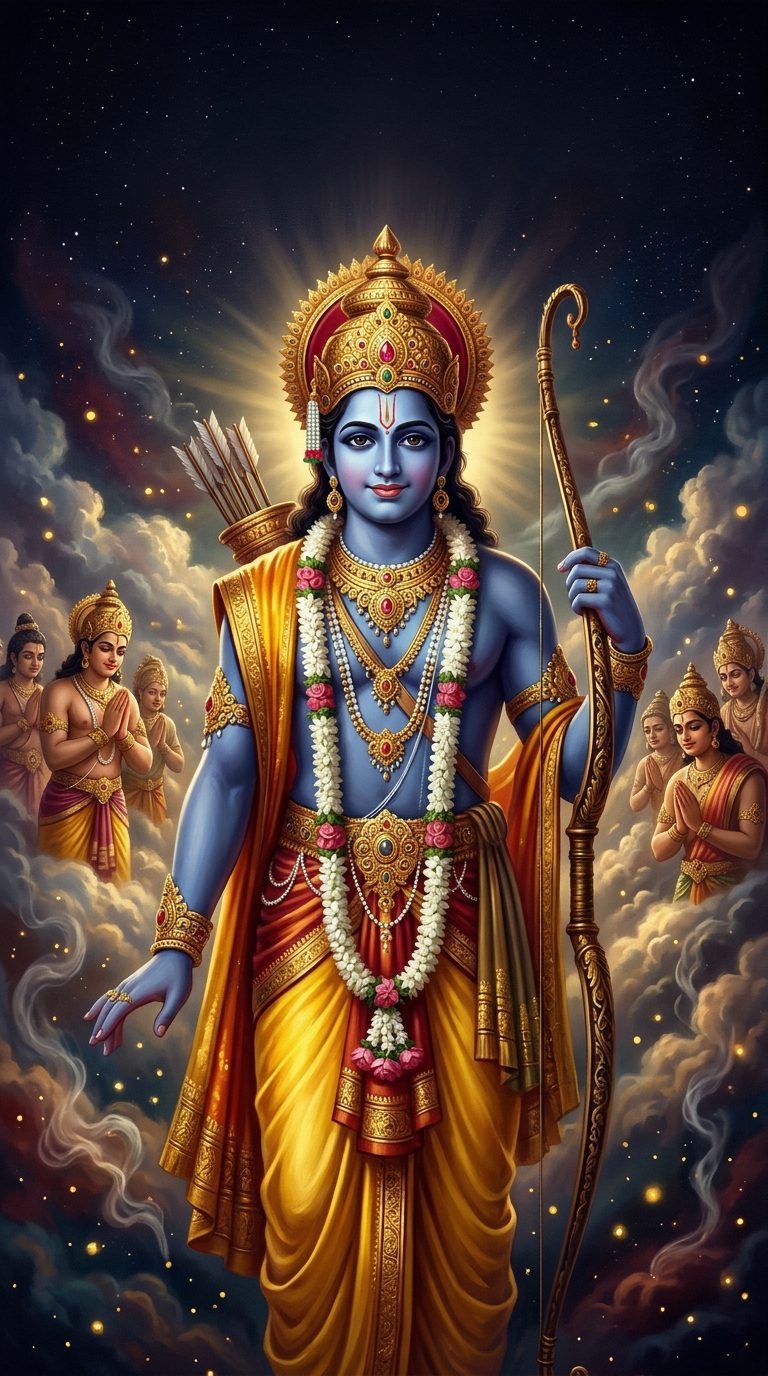
Lord Rama, dark-skinned and lotus-eyed, in golden robes holding his bow, glowing like a sapphire mountain

Rama · Stotram

Sri Raghava Stotram

Lyrics · Meaning · Audio

A graceful 17-verse hymn to Rama, the “delight of the Raghu clan” — dark as a sapphire mountain, lotus-eyed and golden-robed — that walks through the alphabet as it paints his form, and promises the highest state to whoever reads it with devotion.

Traditional, preserved in the Stotrarnava collection

Listen

Sri Raghava Stotram

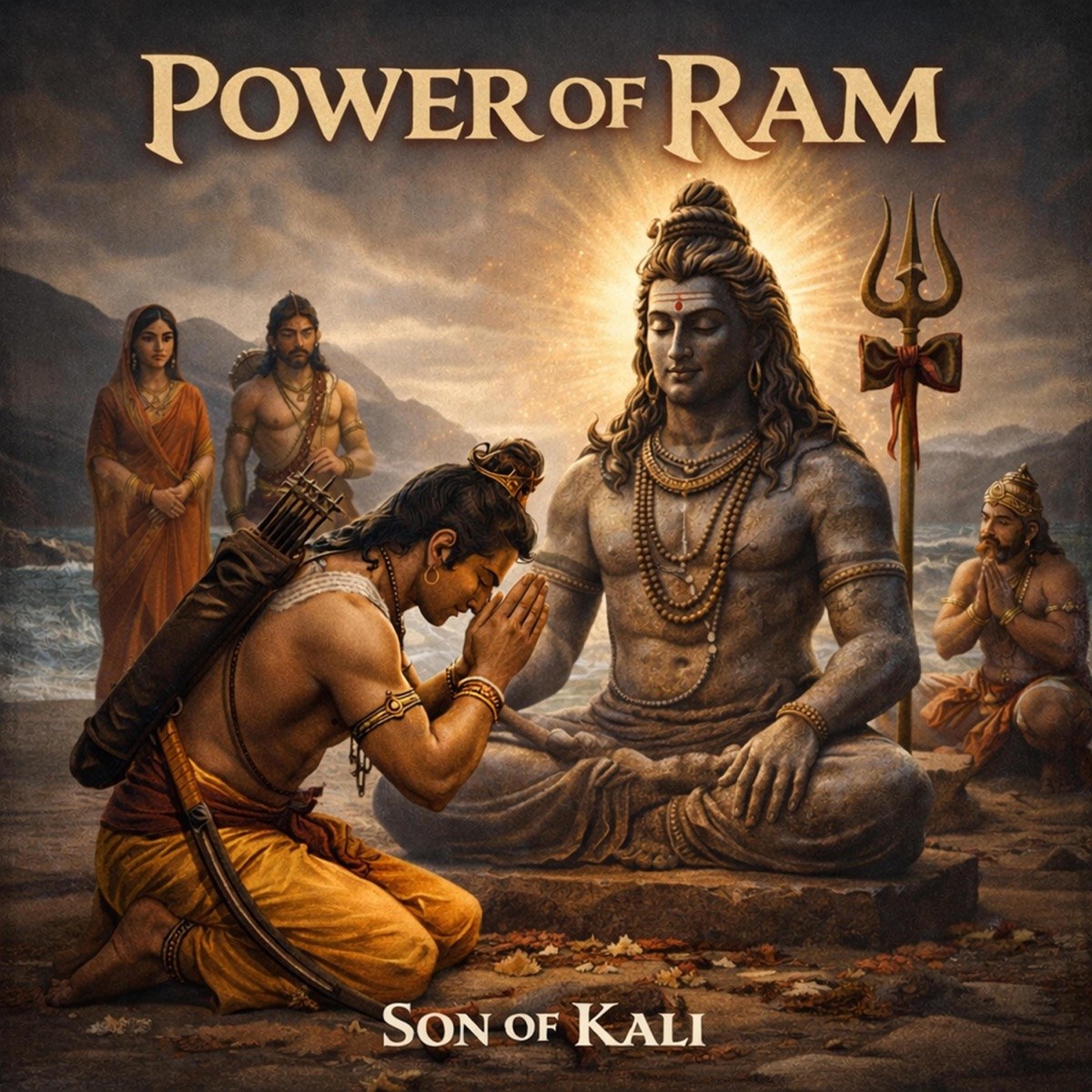
Son of Kali · Power of Ram

0:006:50
Deity
Rama
Type
Stotram
Verses
17
Language
Sanskrit

Sri Raghava Stotram Lyrics with Meaning

Each line shows an easy way to say it, with its English meaning. Turn on the Sanskrit, the exact pronunciation or the word-by-word meaning whenever you want to go deeper.

Verse 1

इन्द्रनीलाचलश्याममिन्दीवरदृगुज्ज्वलम् ।

Indranilachalashyamamindivaradrigujjvalam

indranīlācalaśyāmamindīvaradṛgujjvalam

Dark as a sapphire mountain, radiant with eyes like blue lotuses,

    इन्द्रादिदैवतैः सेव्यमीडे राघवनन्दनम् ॥ १ ॥

    Indradidaivataih Sevyamide Raghavanandanam

    indrādidaivataiḥ sevyamīḍe rāghavanandanam

    served by Indra and the gods — I praise Raghava, the joy of the Raghus.

      Verse 2

      पालिताखिलदेवौघं पद्मगर्भं सनातनम् ।

      Palitakhiladevaugham Padmagarbham Sanatanam

      pālitākhiladevaughaṃ padmagarbhaṃ sanātanam

      Protector of all the hosts of gods, lotus-centred, eternal,

        पीनवक्षःस्थलं वन्दे पूर्णं राघवनन्दनम् ॥ २ ॥

        Pinavakshahsthalam Vande Purnam Raghavanandanam

        pīnavakṣaḥsthalaṃ vande pūrṇaṃ rāghavanandanam

        broad-chested and complete — I bow to the joy of the Raghus.

          Verse 3

          दशग्रीवरिपुं भद्रं दावतुल्यं सुरद्विषाम् ।

          Dashagrivaripum Bhadram Davatulyam Suradvisham

          daśagrīvaripuṃ bhadraṃ dāvatulyaṃ suradviṣām

          The foe of ten-headed Ravana, auspicious, a forest fire to the enemies of the gods,

            दण्डकामुनिमुख्यानां दत्ताभयमुपास्महे ॥ ३ ॥

            Dandakamunimukhyanam Dattabhayamupasmahe

            daṇḍakāmunimukhyānāṃ dattābhayamupāsmahe

            who gave fearlessness to the chief sages of the Dandaka forest — him we worship.

              Verse 4

              कस्तूरीतिलकाभासं कर्पूरनिकराकृतिम् ।

              Kasturitilakabhasam Karpuranikarakritim

              kastūrītilakābhāsaṃ karpūranikarākṛtim

              Shining with a musk tilaka, white and fragrant as heaped camphor,

                कातरीकृतदैत्यौघं कलये रघुनन्दनम् ॥ ४ ॥

                Katarikritadaityaugham Kalaye Raghunandanam

                kātarīkṛtadaityaughaṃ kalaye raghunandanam

                who struck terror into the hordes of demons — I meditate on the joy of the Raghus.

                  Verse 5

                  खरदूषणहन्तारं खरवीर्यभुजोज्ज्वलम् ।

                  Kharadushanahantaram Kharaviryabhujojjvalam

                  kharadūṣaṇahantāraṃ kharavīryabhujojjvalam

                  Slayer of Khara and Dushana, his arms blazing with fierce strength,

                    खरकोदण्डहस्तं च खस्वरूपमुपास्महे ॥ ५ ॥

                    Kharakodandahastam Cha Khasvarupamupasmahe

                    kharakodaṇḍahastaṃ ca khasvarūpamupāsmahe

                    the fierce bow in his hand, whose nature is boundless as the sky — him we worship.

                      Verse 6

                      गजविक्रान्तगमनं गजार्तिहरतेजसम् ।

                      Gajavikrantagamanam Gajartiharatejasam

                      gajavikrāntagamanaṃ gajārtiharatejasam

                      Walking with an elephant’s stride, his splendour ending the elephant’s distress,

                        गम्भीरसत्त्वमैक्ष्वाकं गच्छामि शरणं सदा ॥ ६ ॥

                        Gambhirasattvamaikshvakam Gacchami Sharanam Sada

                        gambhīrasattvamaikṣvākaṃ gacchāmi śaraṇaṃ sadā

                        of deep goodness, the son of Ikshvaku — I always go to him for refuge.

                          Verse 7

                          घनराजिलसद्देहं घनपीताम्बरोज्ज्वलम् ।

                          Ghanarajilasaddeham Ghanapitambarojjvalam

                          ghanarājilasaddehaṃ ghanapītāmbarojjvalam

                          His body shining like a bank of clouds, bright in a deep-yellow robe,

                            घूत्कारद्रुतरक्षौघं प्रपद्ये रघुनन्दनम् ॥ ७ ॥

                            Ghutkaradrutarakshaugham Prapadye Raghunandanam

                            ghūtkāradrutarakṣaughaṃ prapadye raghunandanam

                            at whose battle-roar the demon hordes flee — I surrender to the joy of the Raghus.

                              Verse 8

                              चलपीताम्बराभासं चलत्किङ्किणिभूषितम् ।

                              Chalapitambarabhasam Chalatkinkinibhushitam

                              calapītāmbarābhāsaṃ calatkiṅkiṇibhūṣitam

                              Glowing in a flowing yellow robe, adorned with tinkling bells,

                                चन्द्रबिम्बमुखं वन्दे चतुरं रघुनन्दनम् ॥ ८ ॥

                                Chandrabimbamukham Vande Chaturam Raghunandanam

                                candrabimbamukhaṃ vande caturaṃ raghunandanam

                                with a face like the full moon — I bow to the wise joy of the Raghus.

                                  Verse 9

                                  सुस्मिताञ्चितवक्त्राब्जं सुनूपुरपदद्वयम् ।

                                  Susmitanchitavaktrabjam Sunupurapadadvayam

                                  susmitāñcitavaktrābjaṃ sunūpurapadadvayam

                                  His lotus face lit by a gentle smile, his two feet adorned with fine anklets,

                                    सुदीर्घबाहुयुगलं सुनाभिं राघवं भजे ॥ ९ ॥

                                    Sudirghabahuyugalam Sunabhim Raghavam Bhaje

                                    sudīrghabāhuyugalaṃ sunābhiṃ rāghavaṃ bhaje

                                    his two arms long, his navel beautiful — I worship Raghava.

                                      Verse 10

                                      हसिताञ्चितनेत्राब्जं हताखिलसुरद्विषम् ।

                                      Hasitanchitanetrabjam Hatakhilasuradvisham

                                      hasitāñcitanetrābjaṃ hatākhilasuradviṣam

                                      His lotus eyes bright with laughter, the slayer of all the enemies of the gods,

                                        हरिं रविकुलोद्भूतं हाटकालङ्कृतं भजे ॥ १० ॥

                                        Harim Ravikulodbhutam Hatakalankritam Bhaje

                                        hariṃ ravikulodbhūtaṃ hāṭakālaṅkṛtaṃ bhaje

                                        Hari, born of the Sun’s line, adorned with gold — him I worship.

                                          Verse 11

                                          रविकोटिनिभं शान्तं राघवाणामलङ्कृतिम् ।

                                          Ravikotinibham Shantam Raghavanamalankritim

                                          ravikoṭinibhaṃ śāntaṃ rāghavāṇāmalaṅkṛtim

                                          Bright as ten million suns, peaceful, the ornament of the Raghavas,

                                            रक्षोगणयुगान्ताग्निं रामचन्द्रमुपास्महे ॥ ११ ॥

                                            Rakshoganayugantagnim Ramachandramupasmahe

                                            rakṣogaṇayugāntāgniṃ rāmacandramupāsmahe

                                            the fire at the end of an age for the demon hordes — Ramachandra we worship.

                                              Verse 12

                                              लक्ष्मीसमाश्रितोरस्कं लावण्यमधुराकृतिम् ।

                                              Lakshmisamashritoraskam Lavanyamadhurakritim

                                              lakṣmīsamāśritoraskaṃ lāvaṇyamadhurākṛtim

                                              On whose chest Lakshmi rests, sweet and lovely in form,

                                                लसदिन्दीवरश्यामं लक्ष्मणाग्रजमाश्रये ॥ १२ ॥

                                                Lasadindivarashyamam Lakshmanagrajamashraye

                                                lasadindīvaraśyāmaṃ lakṣmaṇāgrajamāśraye

                                                dark as a shining blue lotus — I take refuge in Lakshmana’s elder brother.

                                                  Verse 13

                                                  वालिप्रमथनाकारं वालिसूनुसहायिनम् ।

                                                  Valipramathanakaram Valisunusahayinam

                                                  vālipramathanākāraṃ vālisūnusahāyinam

                                                  Who struck down Vali, and helped Vali’s son,

                                                    वरपीताम्बराभासं वन्दे राघवभूषणम् ॥ १३ ॥

                                                    Varapitambarabhasam Vande Raghavabhushanam

                                                    varapītāmbarābhāsaṃ vande rāghavabhūṣaṇam

                                                    shining in a fine yellow robe — I bow to the jewel of the Raghavas.

                                                      Verse 14

                                                      शमिताखिलपापौघं शान्त्यादिगुणवारिधिम् ।

                                                      Shamitakhilapapaugham Shantyadigunavaridhim

                                                      śamitākhilapāpaughaṃ śāntyādiguṇavāridhim

                                                      Who ends the whole flood of sin, an ocean of peace and every virtue,

                                                        शतपत्रदृशं वन्दे शुभं दशरथात्मजम् ॥ १४ ॥

                                                        Shatapatradrisham Vande Shubham Dasharathatmajam

                                                        śatapatradṛśaṃ vande śubhaṃ daśarathātmajam

                                                        with eyes like hundred-petalled lotuses — I bow to the auspicious son of Dasharatha.

                                                          Verse 15

                                                          कुन्दकुड्मलदन्ताभं कुङ्कुमाङ्कितवक्षसम् ।

                                                          Kundakudmaladantabham Kunkumankitavakshasam

                                                          kundakuḍmaladantābhaṃ kuṅkumāṅkitavakṣasam

                                                          With teeth like jasmine buds, his chest marked with kumkum,

                                                            कुसुम्भवस्त्रसंवीतं पुत्रं राघवमाश्रये ॥ १५ ॥

                                                            Kusumbhavastrasamvitam Putram Raghavamashraye

                                                            kusumbhavastrasaṃvītaṃ putraṃ rāghavamāśraye

                                                            wrapped in saffron-red cloth — I take refuge in Raghava, the son.

                                                              Verse 16

                                                              मल्लिकामालतीजातिमाधवीपुष्पशोभितम् ।

                                                              Mallikamalatijatimadhavipushpashobhitam

                                                              mallikāmālatījātimādhavīpuṣpaśobhitam

                                                              Adorned with jasmine, malati, jati and madhavi flowers,

                                                                महनीयमहं वन्दे महतां कीर्तिवर्धनम् ॥ १६ ॥

                                                                Mahaniyamaham Vande Mahatam Kirtivardhanam

                                                                mahanīyamahaṃ vande mahatāṃ kīrtivardhanam

                                                                worthy of honour — I bow to him who increases the fame of the great.

                                                                  Verse 17 — The fruit of the hymn

                                                                  इदं यो राघवस्तोत्रं नरः पठति भक्तिमान् ।

                                                                  Idam Yo Raghavastotram Narah Pathati Bhaktiman

                                                                  idaṃ yo rāghavastotraṃ naraḥ paṭhati bhaktimān

                                                                  Whoever reads this hymn to Raghava with devotion

                                                                    मुक्तः संसृतिबन्धाद्धि स याति परमं पदम् ॥ १७ ॥

                                                                    Muktah Samsritibandhaddhi Sa Yati Paramam Padam

                                                                    muktaḥ saṃsṛtibandhāddhi sa yāti paramaṃ padam

                                                                    is freed from the bonds of worldly life and reaches the highest state.

                                                                      About Sri Raghava Stotram

                                                                      The Sri Raghava Stotram is a short devotional hymn to Rama as Raghava — the descendant of King Raghu. It is preserved in the Stotrarnava, a large collection of traditional Sanskrit hymns.

                                                                      Its charm lies in its form. Most of the verses begin with successive letters of the Sanskrit alphabet — i, pa, da, ka, kha, ga, gha, cha… — so the poem moves through the sounds of the language while it moves over Rama’s form: his sapphire-dark body, lotus eyes, broad chest, golden robes, tinkling ornaments and moon-like face, and his deeds against Ravana, Khara and Vali.

                                                                      Each verse ends with an act of devotion — I praise, I worship, I take refuge in — so the hymn works equally well as a meditation on Rama’s form and as a prayer.

                                                                      The Stories Inside the Hymn

                                                                      Raghava, of the line of Raghu

                                                                      Rama is called Raghava, Raghunandana and Raghupati because he was born into the solar dynasty of King Raghu, a ruler so generous that he gave away all his wealth in a great sacrifice.

                                                                      The Ramayana traces the dynasty back through Raghu and Ikshvaku to the Sun himself — which is why the hymn calls Rama “born of the Sun’s line” (ravikulodbhuta) and “as bright as ten million suns.”

                                                                      How to Chant Sri Raghava Stotram

                                                                      When to chant

                                                                      • ✦Ram Navami
                                                                      • ✦Daily morning worship
                                                                      • ✦Thursdays and Saturdays

                                                                      How many times

                                                                      Once, slowly.

                                                                      1. 1

                                                                        Sit before an image of Rama, Sita, Lakshmana and Hanuman.

                                                                      2. 2

                                                                        Picture each detail of Rama’s form as the verses describe it.

                                                                      3. 3

                                                                        End with “Sri Rama Jaya Rama Jaya Jaya Rama.”

                                                                      Pronunciation Guide

                                                                      The sounds that trip people up most in this hymn, and how to say them.

                                                                      rāghava

                                                                      raa-gha-va — the long “aa”, then an aspirated “gh”.

                                                                      raghunandanam

                                                                      ra-ghu-nun-da-num — “joy of the Raghus.”

                                                                      upāsmahe

                                                                      u-paas-ma-hay — “we worship.”

                                                                      Power of Ram by Son of Kali

                                                                      The music

                                                                      Power of Ram

                                                                      by Son of Kali

                                                                      More for Rama

                                                                      Frequently Asked Questions

                                                                      What is the Sri Raghava Stotram?

                                                                      A 17-verse Sanskrit hymn praising Lord Rama’s form and deeds, preserved in the Stotrarnava collection.

                                                                      What does Raghava mean?

                                                                      “Descendant of Raghu” — Rama’s royal ancestor in the solar dynasty.

                                                                      What is special about its verses?

                                                                      Most verses begin with successive letters of the Sanskrit alphabet, so the hymn is an alphabetical garland of praise.

                                                                      What does the hymn promise?

                                                                      Its last verse says whoever reads it with devotion is freed from the bonds of worldly life and reaches the highest state.

                                                                      Text: Public-domain Sanskrit hymn, checked against the sanskritdocuments.org edition (from the Stotrarnava). Easy reading and English translation written for the Jaguar Medicine Tribe Mantra Library.

                                                                      Music: Recordings by Son of Kali, produced with AI-assisted vocals and instrumentation.

                                                                      Note: Benefits described here are traditional beliefs, shared for understanding — not medical or guaranteed outcomes.