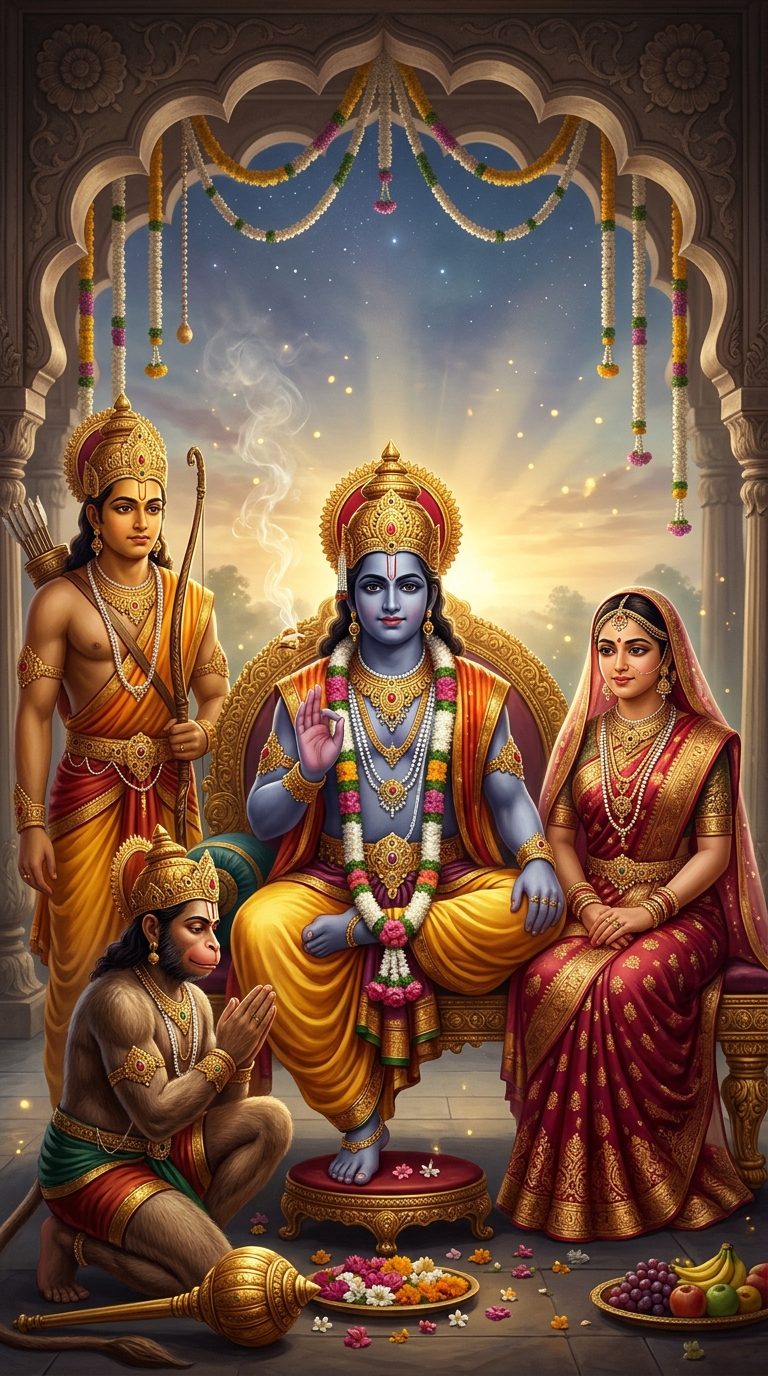
Lord Rama seated in the hero’s posture on a jewelled throne with Sita on his left, Lakshmana on his right and Hanuman at his feet, at dawn

Rama · Stotram

Rama Anusmruti Stotram

Lyrics · Meaning · Audio

A dawn meditation on Rama, spoken by Brahma — first a vivid picture of Rama seated on his jewelled throne with Sita and Lakshmana, then sixteen holy names to recite, with the promise that Rama and Sita will appear in the heart of whoever remembers him this way.

Spoken by Brahma, preserved in the Stotrarnava collection

Listen

Rama Anusmruti Stotram

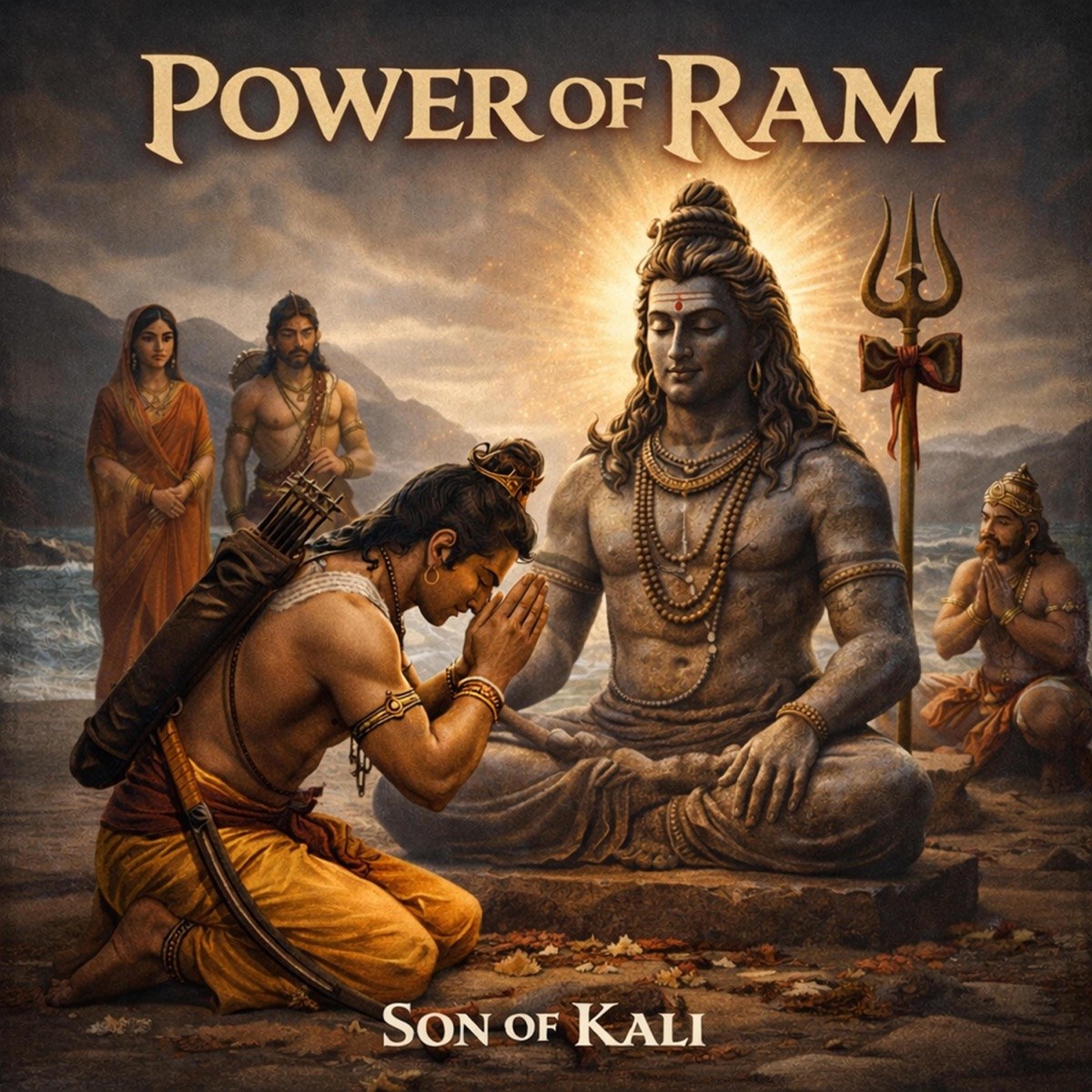
Son of Kali · Power of Ram

0:006:25
Deity
Rama
Type
Stotram
Verses
16
Language
Sanskrit

Rama Anusmruti Stotram Lyrics with Meaning

Each line shows an easy way to say it, with its English meaning. Turn on the Sanskrit, the exact pronunciation or the word-by-word meaning whenever you want to go deeper.

Dhyana — Verse 1

वन्दे रामं जगद्वन्द्यं सुन्दरास्यं शुचिस्मितम् ।

Vande Ramam Jagadvandyam Sundarasyam Shuchismitam

vande rāmaṃ jagadvandyaṃ sundarāsyaṃ śucismitam

I bow to Rama, honoured by the world, with a beautiful face and a pure smile,

    कन्दर्पकोटिलावण्यं कामितार्थप्रदायकम् ॥ १ ॥

    Kandarpakotilavanyam Kamitarthapradayakam

    kandarpakoṭilāvaṇyaṃ kāmitārthapradāyakam

    lovelier than ten million Kamadevas, the giver of every wish.

      Verse 2

      भास्वत्किरीटकटककटिसूत्रोपशोभितम् ।

      Bhasvatkiritakatakakatisutropashobhitam

      bhāsvatkirīṭakaṭakakaṭisūtropaśobhitam

      Adorned with a shining crown, bracelets and a jewelled girdle,

        विशाललोचनं भ्राजत्तरुणारुणकुण्डलम् ॥ २ ॥

        Vishalalochanam Bhrajattarunarunakundalam

        viśālalocanaṃ bhrājattaruṇāruṇakuṇḍalam

        with wide eyes and glowing earrings red as the rising sun;

          Verse 3

          श्रीवत्सकौस्तुभलसद्वक्षसं वनमालिनम् ।

          Shrivatsakaustubhalasadvakshasam Vanamalinam

          śrīvatsakaustubhalasadvakṣasaṃ vanamālinam

          his chest shining with the Shrivatsa mark and the Kaustubha jewel, wearing a forest garland,

            मुक्ताहारसुशोभाढ्यं मुद्रिकारत्नभासुरम् ॥ ३ ॥

            Muktaharasushobhadhyam Mudrikaratnabhasuram

            muktāhārasuśobhāḍhyaṃ mudrikāratnabhāsuram

            beautiful with a pearl necklace, bright with jewelled rings;

              Verse 4

              सर्वाङ्गसुन्दरं हृद्यं द्विभुजं रघुनन्दनम् ।

              Sarvangasundaram Hridyam Dvibhujam Raghunandanam

              sarvāṅgasundaraṃ hṛdyaṃ dvibhujaṃ raghunandanam

              lovely in every limb, dear to the heart, two-armed, the joy of the Raghus,

                नीलजीमूतसङ्काशं नीलालकवृताननम् ॥ ४ ॥

                Nilajimutasankasham Nilalakavritananam

                nīlajīmūtasaṅkāśaṃ nīlālakavṛtānanam

                dark as a rain cloud, his face framed by dark curling hair;

                  Verse 5

                  ज्ञानमुद्रालसद्वक्षोबाहुं ज्ञानमयं हरिम् ।

                  Jnanamudralasadvakshobahum Jnanamayam Harim

                  jñānamudrālasadvakṣobāhuṃ jñānamayaṃ harim

                  his hand at his chest in the gesture of wisdom, Hari, made of knowledge,

                    वामजानूपरिन्यस्तवामहस्ताम्बुजं प्रभुम् ॥ ५ ॥

                    Vamajanuparinyastavamahastambujam Prabhum

                    vāmajānūparinyastavāmahastāmbujaṃ prabhum

                    the Lord, his left lotus hand resting on his left knee;

                      Verse 6

                      वीरासने समासीनं विद्युत्पुञ्जनिभाम्बरम् ।

                      Virasane Samasinam Vidyutpunjanibhambaram

                      vīrāsane samāsīnaṃ vidyutpuñjanibhāmbaram

                      seated in the hero’s posture, his robe like a mass of lightning,

                        कोटिसूर्यप्रतीकाशं कोमलाङ्गसमुज्ज्वलम् ॥ ६ ॥

                        Kotisuryapratikasham Komalangasamujjvalam

                        koṭisūryapratīkāśaṃ komalāṅgasamujjvalam

                        bright as ten million suns, radiant with tender limbs;

                          Verse 7

                          जानकीलक्ष्मणाभ्यां च वामदक्षिणशोभितम् ।

                          Janakilakshmanabhyam Cha Vamadakshinashobhitam

                          jānakīlakṣmaṇābhyāṃ ca vāmadakṣiṇaśobhitam

                          graced by Janaki on his left and Lakshmana on his right,

                            हनुमद्रविमुख्यादिकपिमुख्यैश्च सेवितम् ॥ ७ ॥

                            Hanumadravimukhyadikapimukhyaishcha Sevitam

                            hanumadravimukhyādikapimukhyaiśca sevitam

                            served by Hanuman, Sugriva and the chiefs of the monkeys;

                              Verse 8

                              दिव्यरत्नसमायुक्तसिंहासनगतं प्रभुम् ।

                              Divyaratnasamayuktasimhasanagatam Prabhum

                              divyaratnasamāyuktasiṃhāsanagataṃ prabhum

                              the Lord seated on a throne set with divine jewels —

                                प्रत्यहं प्रातरुत्थाय ध्यात्वैवं राघवं हृदि ॥ ८ ॥

                                Pratyaham Pratarutthaya Dhyatvaivam Raghavam Hridi

                                pratyahaṃ prātarutthāya dhyātvaivaṃ rāghavaṃ hṛdi

                                each day, rising at dawn and meditating on Raghava like this in the heart,

                                  The sixteen names — Verse 9

                                  एभिः षोडशभिर्नामपदैः स्तुत्वा नमेद्धरिम् ।

                                  Ebhih Shodashabhirnamapadaih Stutva Nameddharim

                                  ebhiḥ ṣoḍaśabhirnāmapadaiḥ stutvā nameddharim

                                  one should praise Hari with these sixteen names and bow to him:

                                    ॐ नमो रामाय शुद्धाय बुद्धाय परमात्मने ॥ ९ ॥

                                    Om Namo Ramaya Shuddhaya Buddhaya Paramatmane

                                    oṃ namo rāmāya śuddhāya buddhāya paramātmane

                                    Om, salutations to Rama, the pure, the awakened, the supreme Self;

                                      Verse 10

                                      विशुद्धज्ञानदेहाय रघुनाथाय ते नमः ।

                                      Vishuddhajnanadehaya Raghunathaya Te Namah

                                      viśuddhajñānadehāya raghunāthāya te namaḥ

                                      to the Lord of the Raghus, whose body is pure knowledge, salutations to you;

                                        नमो रावणहन्त्रे ते नमो वालिविनाशिने ॥ १० ॥

                                        Namo Ravanahantre Te Namo Valivinashine

                                        namo rāvaṇahantre te namo vālivināśine

                                        salutations to you, slayer of Ravana; salutations to the destroyer of Vali;

                                          Verse 11

                                          नमो वैकुण्ठनाथाय नमो विष्णुस्वरूपिणे ।

                                          Namo Vaikunthanathaya Namo Vishnusvarupine

                                          namo vaikuṇṭhanāthāya namo viṣṇusvarūpiṇe

                                          salutations to the Lord of Vaikuntha, to him whose form is Vishnu,

                                            नमो यज्ञस्वरूपाय यज्ञभोक्त्रे नमो नमः ॥ ११ ॥

                                            Namo Yajnasvarupaya Yajnabhoktre Namo Namah

                                            namo yajñasvarūpāya yajñabhoktre namo namaḥ

                                            salutations to him whose form is sacrifice, the enjoyer of sacrifice, salutations again and again;

                                              Verse 12

                                              योगिध्येयाय योगाय परमानन्दरूपिणे ।

                                              Yogidhyeyaya Yogaya Paramanandarupine

                                              yogidhyeyāya yogāya paramānandarūpiṇe

                                              to the one on whom yogis meditate, to yoga itself, whose form is supreme bliss,

                                                शङ्करप्रियमित्राय जानकीजानये नमः ॥ १२ ॥

                                                Shankarapriyamitraya Janakijanaye Namah

                                                śaṅkarapriyamitrāya jānakījānaye namaḥ

                                                to Shankara’s dear friend, the beloved of Janaki — salutations.

                                                  The fruit of remembrance — Verse 13

                                                  य एवं प्रातरुत्थाय भक्तिश्रद्धासमन्वितः ।

                                                  Ya Evam Pratarutthaya Bhaktishraddhasamanvitah

                                                  ya evaṃ prātarutthāya bhaktiśraddhāsamanvitaḥ

                                                  Whoever, rising at dawn this way with devotion and faith,

                                                    षोडशैतानि नामानि रामचन्द्रस्य नित्यशः ॥ १३ ॥

                                                    Shodashaitani Namani Ramachandrasya Nityashah

                                                    ṣoḍaśaitāni nāmāni rāmacandrasya nityaśaḥ

                                                    recites these sixteen names of Ramachandra every day —

                                                      Verse 14

                                                      पठेद्विद्वान् स्मरन् रामं स एव स्याद्रघूत्तमः ।

                                                      Pathedvidvan Smaran Ramam Sa Eva Syadraghuttamah

                                                      paṭhedvidvān smaran rāmaṃ sa eva syādraghūttamaḥ

                                                      that wise one, remembering Rama, becomes the best of the Raghus himself;

                                                        श्रीरामे भक्तिरचला भवत्येव हि सर्वदा ॥ १४ ॥

                                                        Shrirame Bhaktirachala Bhavatyeva Hi Sarvada

                                                        śrīrāme bhaktiracalā bhavatyeva hi sarvadā

                                                        unshakeable devotion to Sri Rama surely arises in him for ever.

                                                          Verse 15

                                                          समये समनुप्राप्ते राघवः सीतया सह ।

                                                          Samaye Samanuprapte Raghavah Sitaya Saha

                                                          samaye samanuprāpte rāghavaḥ sītayā saha

                                                          When the time is ripe, Raghava together with Sita

                                                            हृदि सन्दृश्यते तस्य साक्षात् सौमित्रिणा सह ॥ १५ ॥

                                                            Hridi Sandrishyate Tasya Sakshat Saumitrina Saha

                                                            hṛdi sandṛśyate tasya sākṣāt saumitriṇā saha

                                                            is seen directly in that person’s heart, with Lakshmana too.

                                                              Verse 16

                                                              नित्यं चापररात्रेषु रामस्यैतां समाहितः ।

                                                              Nityam Chapararatreshu Ramasyaitam Samahitah

                                                              nityaṃ cāpararātreṣu rāmasyaitāṃ samāhitaḥ

                                                              And whoever, with a collected mind, in the last hours of each night,

                                                                मुच्यतेऽनुस्मृतिं जप्त्वा मृत्युदारिद्र्यपातकैः ॥ १६ ॥

                                                                Muchyatenusmritim Japtva Mrityudaridryapatakaih

                                                                mucyate'nusmṛtiṃ japtvā mṛtyudāridryapātakaiḥ

                                                                repeats this remembrance of Rama is freed from death, poverty and sin.

                                                                  About Rama Anusmruti Stotram

                                                                  Anusmriti means “remembering again and again.” This short hymn, spoken by the creator Brahma, is a method for remembering Rama: first build his image clearly in the mind, then honour him with sixteen sacred names.

                                                                  Verses 1–8 are a dhyana, a guided visualisation — Rama’s smiling face, crown and earrings, the Kaustubha jewel and forest garland on his chest, his right hand in the gesture of wisdom, seated in the hero’s posture on a jewelled throne with Sita on his left, Lakshmana on his right and Hanuman and the monkey chiefs serving him.

                                                                  Verses 9–12 give the sixteen names (“Salutations to Rama, the pure, the awakened, the supreme Self…”), and the closing verses say that whoever rises at dawn and recites them will gain unshakeable devotion — and, in time, see Rama and Sita in their own heart.

                                                                  The Stories Inside the Hymn

                                                                  The hero’s posture and the gesture of wisdom

                                                                  Rama is usually pictured standing with his bow. Here he is pictured seated in virasana, the hero’s posture, with his right hand in jnana mudra, the gesture of wisdom (thumb and forefinger touching) held at his chest — the way a teacher sits.

                                                                  It is the image of Rama as the Self, the teacher of liberating knowledge, which is why the names that follow call him “pure, awakened, the supreme Self, whose body is pure knowledge.”

                                                                  How to Chant Rama Anusmruti Stotram

                                                                  When to chant

                                                                  • ✦At dawn, as the hymn asks
                                                                  • ✦In the last part of the night
                                                                  • ✦Ram Navami

                                                                  How many times

                                                                  Once daily; the sixteen names can be repeated more.

                                                                  1. 1

                                                                    Sit quietly before sunrise.

                                                                  2. 2

                                                                    Read verses 1–8 slowly, building the image of Rama on his throne in your mind.

                                                                  3. 3

                                                                    Recite the sixteen names in verses 9–12 with a bow.

                                                                  4. 4

                                                                    Rest for a moment with Rama and Sita in the heart.

                                                                  Pronunciation Guide

                                                                  The sounds that trip people up most in this hymn, and how to say them.

                                                                  anusmṛti

                                                                  a-noo-smri-tee — “remembering again and again.”

                                                                  jagadvandyam

                                                                  ja-gud-vun-dyum — “honoured by the world.”

                                                                  ṣoḍaśa

                                                                  sho-da-sha — “sixteen.”

                                                                  Power of Ram by Son of Kali

                                                                  The music

                                                                  Power of Ram

                                                                  by Son of Kali

                                                                  More for Rama

                                                                  Frequently Asked Questions

                                                                  What does Anusmruti mean?

                                                                  “Remembering again and again.” The hymn is a method for keeping Rama constantly in mind.

                                                                  Who speaks this hymn?

                                                                  Brahma, the creator, according to its closing line.

                                                                  What are the sixteen names?

                                                                  They are given in verses 9–12: Rama the pure, the awakened, the supreme Self, whose body is pure knowledge, lord of the Raghus, slayer of Ravana, destroyer of Vali, lord of Vaikuntha, Vishnu’s own form, the form of sacrifice, the enjoyer of sacrifice, the one yogis meditate on, yoga itself, whose form is supreme bliss, Shiva’s dear friend, and the husband of Janaki.

                                                                  When should it be recited?

                                                                  The hymn recommends rising at dawn, or the last part of the night, and reciting it with devotion every day.

                                                                  Text: Public-domain Sanskrit hymn, checked against the sanskritdocuments.org edition (from the Stotrarnava). Easy reading and English translation written for the Jaguar Medicine Tribe Mantra Library.

                                                                  Music: Recordings by Son of Kali, produced with AI-assisted vocals and instrumentation.

                                                                  Note: Benefits described here are traditional beliefs, shared for understanding — not medical or guaranteed outcomes.