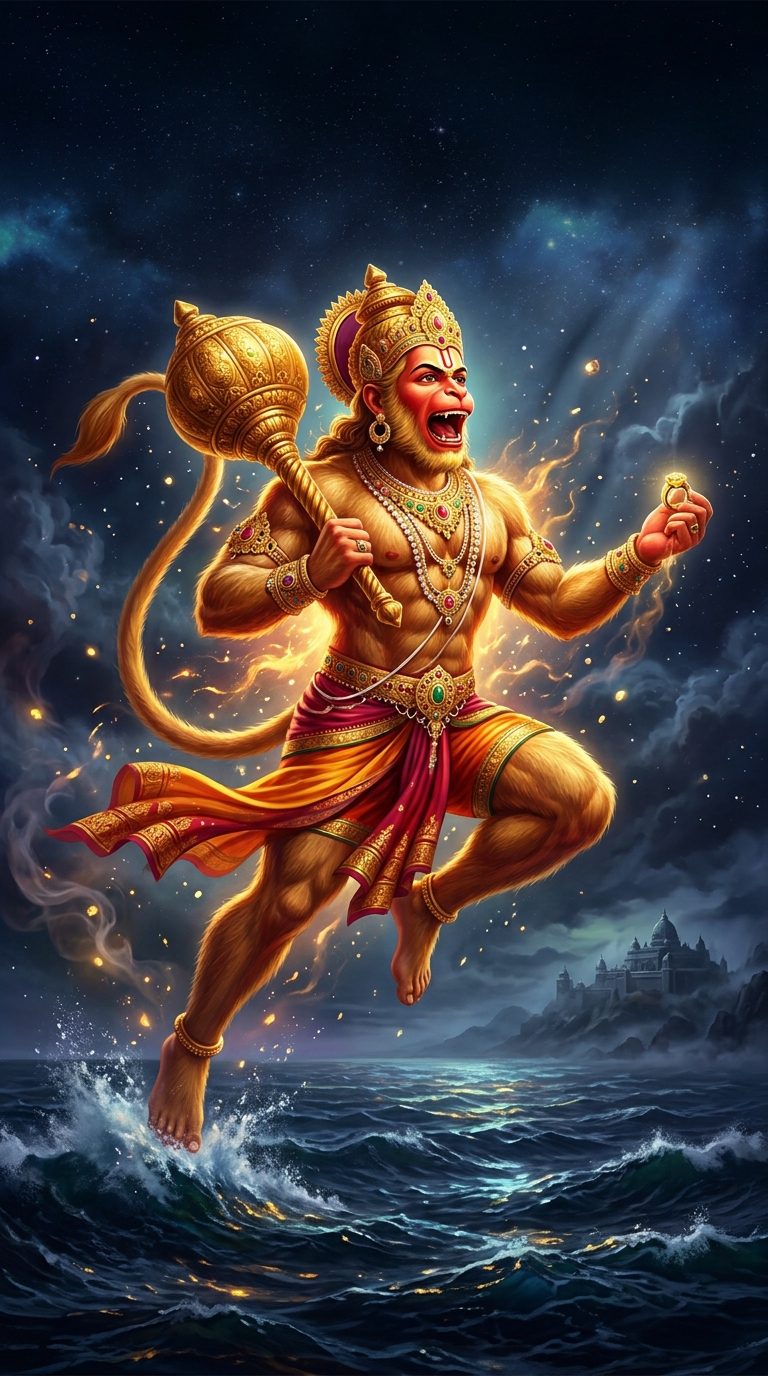
Hanuman, red and radiant with a face like the rising sun, roaring as he lifts a mountain, with glowing seed syllables around him

Hanuman · Stotram

Sri Ramaduta Anjaneya Stotram

Lyrics · Meaning · Audio

A thunderous five-verse hymn to Hanuman built on seed syllables — Ram, Kham, Im, Sam, Ham — each sounded three times at the start of every line, ending each verse “I bow to Rama’s messenger, whose fame fills every direction.”

Traditional seed-syllable hymn (bijakshara stotram)

Listen

Sri Ramaduta Anjaneya Stotram

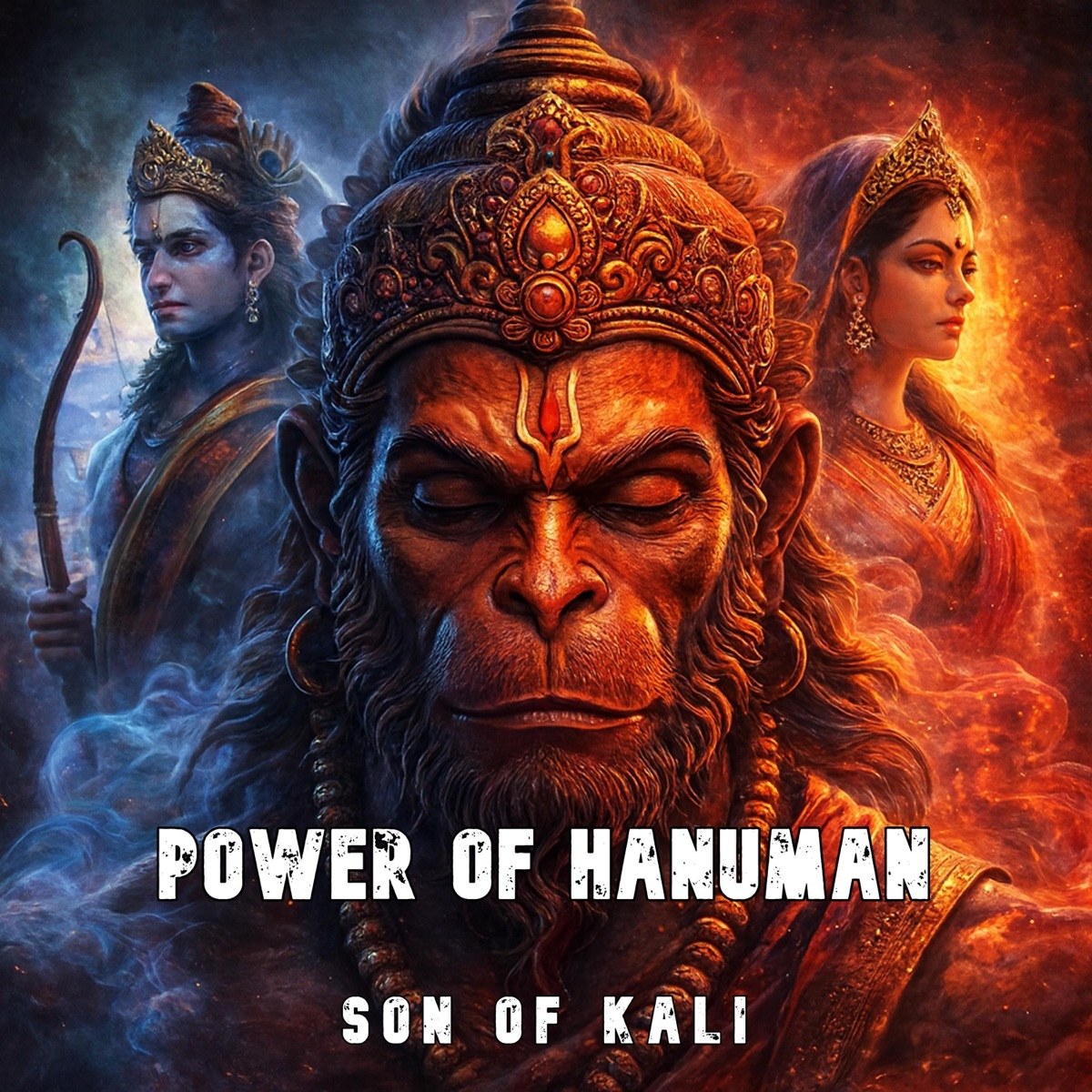
Son of Kali · Power of Hanuman

0:005:18
Deity
Hanuman
Type
Stotram
Verses
5
Language
Sanskrit

Sri Ramaduta Anjaneya Stotram Lyrics with Meaning

Each line shows an easy way to say it, with its English meaning. Turn on the Sanskrit, the exact pronunciation or the word-by-word meaning whenever you want to go deeper.

Verse 1 — Ram

रं रं रं रक्तवर्णं दिनकरवदनं तीक्ष्णदंष्ट्राकरालं

Ram Ram Ram Raktavarnam Dinakaravadanam Tikshnadamshtrakaralam

raṃ raṃ raṃ raktavarṇaṃ dinakaravadanaṃ tīkṣṇadaṃṣṭrākarālaṃ

Ram Ram Ram — red in colour, his face like the sun, fearsome with sharp fangs;

    रं रं रं रम्यतेजं गिरिचलनकरं कीर्तिपञ्चादिवक्त्रम् ।

    Ram Ram Ram Ramyatejam Girichalanakaram Kirtipanchadivaktram

    raṃ raṃ raṃ ramyatejaṃ giricalanakaraṃ kīrtipañcādivaktram

    Ram Ram Ram — of lovely splendour, mover of mountains, famed among the five-faced ones;

      रं रं रं राजयोगं सकलशुभनिथिं सप्तभेतालभेद्यं

      Ram Ram Ram Rajayogam Sakalashubhanithim Saptabhetalabhedyam

      raṃ raṃ raṃ rājayogaṃ sakalaśubhanithiṃ saptabhetālabhedyaṃ

      Ram Ram Ram — master of royal yoga, treasury of all good, who breaks the seven vetalas;

        रं रं रं राक्षसान्तं सकलदिशयशं रामदूतं नमामि ॥ १ ॥

        Ram Ram Ram Rakshasantam Sakaladishayasham Ramadutam Namami

        raṃ raṃ raṃ rākṣasāntaṃ sakaladiśayaśaṃ rāmadūtaṃ namāmi

        Ram Ram Ram — end of the rakshasas, famed in every direction — I bow to Rama’s messenger.

          Verse 2 — Kham

          खं खं खं खड्गहस्तं विषज्वरहरणं वेदवेदाङ्गदीपं

          Kham Kham Kham Khadgahastam Vishajvaraharanam Vedavedangadipam

          khaṃ khaṃ khaṃ khaḍgahastaṃ viṣajvaraharaṇaṃ vedavedāṅgadīpaṃ

          Kham Kham Kham — sword in hand, remover of poison and fever, lamp of the Vedas and their limbs;

            खं खं खं खड्गरूपं त्रिभुवननिलयं देवतासुप्रकाश ।

            Kham Kham Kham Khadgarupam Tribhuvananilayam Devatasuprakasha

            khaṃ khaṃ khaṃ khaḍgarūpaṃ tribhuvananilayaṃ devatāsuprakāśa

            Kham Kham Kham — the sword itself, dwelling in the three worlds, shining among the gods;

              खं खं खं कल्पवृक्षं मणिमयमकुटं मायमायास्वरूपं

              Kham Kham Kham Kalpavriksham Manimayamakutam Mayamayasvarupam

              khaṃ khaṃ khaṃ kalpavṛkṣaṃ maṇimayamakuṭaṃ māyamāyāsvarūpaṃ

              Kham Kham Kham — the wish-fulfilling tree, with a jewelled crown, the very nature of Maya;

                खं खं खं कालचक्रं सकलदिशयशं रामदूतं नमामि ॥ २ ॥

                Kham Kham Kham Kalachakram Sakaladishayasham Ramadutam Namami

                khaṃ khaṃ khaṃ kālacakraṃ sakaladiśayaśaṃ rāmadūtaṃ namāmi

                Kham Kham Kham — the wheel of time, famed in every direction — I bow to Rama’s messenger.

                  Verse 3 — Im

                  इं इं इं इन्द्रवन्द्यं जलनिधिकलनं सौम्यसाम्राज्यलाभं

                  Im Im Im Indravandyam Jalanidhikalanam Saumyasamrajyalabham

                  iṃ iṃ iṃ indravandyaṃ jalanidhikalanaṃ saumyasāmrājyalābhaṃ

                  Im Im Im — honoured by Indra, who leapt the ocean, giver of gentle sovereignty;

                    इं इं इं सिद्धयोगं नतजनसदयं आर्यपूजार्चिताङ्गम् ।

                    Im Im Im Siddhayogam Natajanasadayam Aryapujarchitangam

                    iṃ iṃ iṃ siddhayogaṃ natajanasadayaṃ āryapūjārcitāṅgam

                    Im Im Im — perfect in yoga, kind to those who bow, his limbs worshipped by the noble;

                      इं इं इं सिंहनादं अमृतकरतलं आदि अन्त्यप्रकाशं

                      Im Im Im Simhanadam Amritakaratalam Adi Antyaprakasham

                      iṃ iṃ iṃ siṃhanādaṃ amṛtakaratalaṃ ādi antyaprakāśaṃ

                      Im Im Im — roaring like a lion, nectar in his palm, the light of beginning and end;

                        इं इं इं चित्स्वरूपं सकलदिशयशं रामदूतं नमामि ॥ ३ ॥

                        Im Im Im Chitsvarupam Sakaladishayasham Ramadutam Namami

                        iṃ iṃ iṃ citsvarūpaṃ sakaladiśayaśaṃ rāmadūtaṃ namāmi

                        Im Im Im — whose nature is consciousness, famed in every direction — I bow to Rama’s messenger.

                          Verse 4 — Sam

                          सं सं सं साक्षिरूपं विकसितवदनं पिङ्गालाक्षं सुरक्षं

                          Sam Sam Sam Sakshirupam Vikasitavadanam Pingalaksham Suraksham

                          saṃ saṃ saṃ sākṣirūpaṃ vikasitavadanaṃ piṅgālākṣaṃ surakṣaṃ

                          Sam Sam Sam — the witness, his face blossoming, tawny-eyed, the great protector;

                            सं सं सं सत्यगीतं सकल मुनिस्तुतं शास्त्रसम्पत्करीयम् ।

                            Sam Sam Sam Satyagitam Sakala Munistutam Shastrasampatkariyam

                            saṃ saṃ saṃ satyagītaṃ sakala munistutaṃ śāstrasampatkarīyam

                            Sam Sam Sam — sung in truth, praised by all the sages, bringer of the wealth of scripture;

                              सं सं सं सामवेदं निपुणसुललितं नित्यतत्त्वं स्वरूपं

                              Sam Sam Sam Samavedam Nipunasulalitam Nityatattvam Svarupam

                              saṃ saṃ saṃ sāmavedaṃ nipuṇasulalitaṃ nityatattvaṃ svarūpaṃ

                              Sam Sam Sam — the Sama Veda, skilful and graceful, the eternal truth in person;

                                सं सं सं सावधानं सकलदिशयशं रामदूतं नमामि ॥ ४ ॥

                                Sam Sam Sam Savadhanam Sakaladishayasham Ramadutam Namami

                                saṃ saṃ saṃ sāvadhānaṃ sakaladiśayaśaṃ rāmadūtaṃ namāmi

                                Sam Sam Sam — ever watchful, famed in every direction — I bow to Rama’s messenger.

                                  Verse 5 — Ham

                                  हं हं हं हंसरूपं स्फुटविकटमुखं सूक्ष्मसूक्ष्मावतारं

                                  Ham Ham Ham Hamsarupam Sphutavikatamukham Sukshmasukshmavataram

                                  haṃ haṃ haṃ haṃsarūpaṃ sphuṭavikaṭamukhaṃ sūkṣmasūkṣmāvatāraṃ

                                  Ham Ham Ham — the swan of the spirit, his face vivid and fierce, the subtlest of incarnations;

                                    हं हं हं अन्तरात्मं रविशशिनयनं रम्यगम्भीरभीमम् ।

                                    Ham Ham Ham Antaratmam Ravishashinayanam Ramyagambhirabhimam

                                    haṃ haṃ haṃ antarātmaṃ raviśaśinayanaṃ ramyagambhīrabhīmam

                                    Ham Ham Ham — the inner Self, his eyes the sun and moon, lovely, deep and awesome;

                                      हं हं हं अट्टहासं सुरवरनिलयं ऊर्ध्वरोमं करालं

                                      Ham Ham Ham Attahasam Suravaranilayam Urdhvaromam Karalam

                                      haṃ haṃ haṃ aṭṭahāsaṃ suravaranilayaṃ ūrdhvaromaṃ karālaṃ

                                      Ham Ham Ham — laughing aloud, home of the best of gods, his hair on end, fearsome;

                                        हं हं हं हंसहंसं सकलदिशयशं रामदूतं नमामि ॥ ५ ॥

                                        Ham Ham Ham Hamsahamsam Sakaladishayasham Ramadutam Namami

                                        haṃ haṃ haṃ haṃsahaṃsaṃ sakaladiśayaśaṃ rāmadūtaṃ namāmi

                                        Ham Ham Ham — the swan of swans, famed in every direction — I bow to Rama’s messenger.

                                          About Sri Ramaduta Anjaneya Stotram

                                          This is a bijakshara stotram — a hymn built on seed syllables. Each of its five verses takes one sacred syllable and sounds it three times at the start of every line: Ram (fire and Rama’s name), Kham (space), Im (energy), Sam and Ham. The repetition makes it one of the most powerful-sounding Hanuman hymns, ideal for chanting aloud.

                                          Between the syllables it paints Hanuman in many forms: red-bodied with a face like the sun and fearsome fangs, the mover of mountains, sword in hand, curing poison and fever, the wish-fulfilling tree, honoured by Indra, the leaper of the ocean, roaring like a lion, the witness within, the swan of the spirit whose eyes are the sun and moon.

                                          Every verse ends with the same line — “rāmadūtaṃ namāmi” — “I bow to Rama’s messenger.” The Sanskrit is folk-traditional rather than classical, and the meanings here follow its spirit.

                                          The Stories Inside the Hymn

                                          Rama’s messenger

                                          Ramaduta — “Rama’s messenger” — is one of Hanuman’s most loved titles. It was Hanuman who leapt the ocean to Lanka, found Sita in the ashoka grove, gave her Rama’s ring and brought back her jewel as proof.

                                          “I am the messenger of Rama,” he announces in the Ramayana — and devotees take the title as a model: to serve the divine wholeheartedly, with strength and humility together.

                                          How to Chant Sri Ramaduta Anjaneya Stotram

                                          When to chant

                                          • ✦Tuesdays and Saturdays
                                          • ✦Hanuman Jayanti
                                          • ✦When courage or protection is needed

                                          How many times

                                          Once, three times, or eleven times.

                                          1. 1

                                            Sit before an image of Hanuman and offer a red flower or sindoor.

                                          2. 2

                                            Sound each seed syllable firmly from the belly.

                                          3. 3

                                            Let the refrain “Ramadutam namami” be a full bow of the heart.

                                          Pronunciation Guide

                                          The sounds that trip people up most in this hymn, and how to say them.

                                          raṃ raṃ raṃ

                                          rum rum rum — a short “u” sound closing into a hum.

                                          rāmadūtaṃ

                                          raa-ma-doo-tum — “Rama’s messenger.”

                                          namāmi

                                          na-maa-mi — “I bow.”

                                          Power of Hanuman by Son of Kali

                                          The music

                                          Power of Hanuman

                                          by Son of Kali

                                          More for Hanuman

                                          Frequently Asked Questions

                                          What is the Ramaduta Anjaneya Stotram?

                                          A five-verse hymn to Hanuman built on the seed syllables Ram, Kham, Im, Sam and Ham, each verse ending “I bow to Rama’s messenger.”

                                          What does Ramaduta mean?

                                          “Rama’s messenger” — Hanuman, who carried Rama’s ring to Sita in Lanka.

                                          Why are syllables repeated three times?

                                          Each seed syllable carries a power; sounding it three times at the start of every line is a traditional way to awaken it.

                                          When is it chanted?

                                          Especially on Tuesdays and Saturdays, Hanuman’s days, and whenever strength or protection is needed.

                                          Text: Traditional Sanskrit hymn, checked against the sanskritdocuments.org edition (Anjaneya Stotram 2). Easy reading and English translation written for the Jaguar Medicine Tribe Mantra Library.

                                          Music: Recordings by Son of Kali, produced with AI-assisted vocals and instrumentation.

                                          Note: Benefits described here are traditional beliefs, shared for understanding — not medical or guaranteed outcomes.