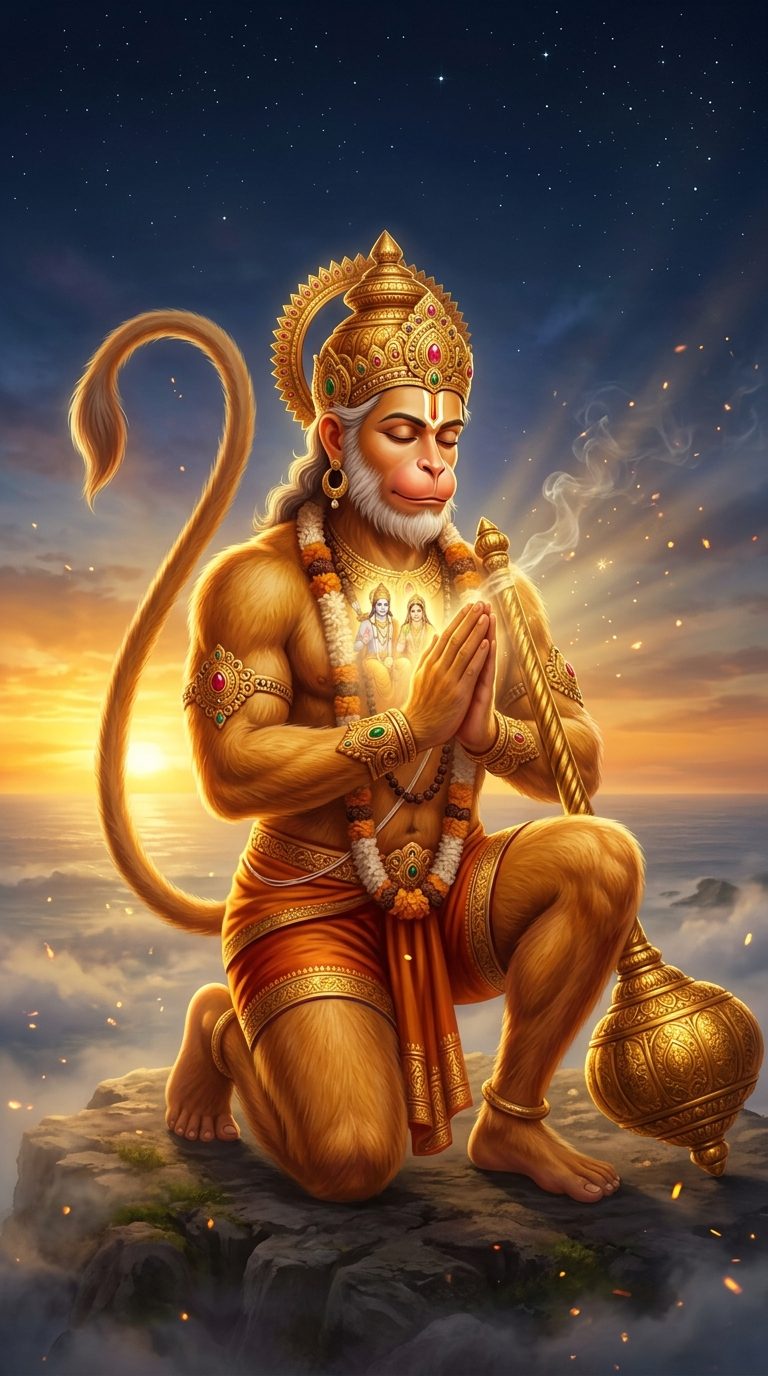
Lord Hanuman flying at tremendous speed across the ocean towards Lanka, golden trails of wind streaming behind him
HanumanStotram

Manojavam Maruta Tulya Vegam

Lyrics · Meaning · Audio

Four of the best-loved Hanuman shlokas — “swift as the mind, fast as the wind, master of the senses, wisest of the wise — I take refuge in Rama’s messenger” — chanted together as a short Hanuman stotram.

Traditional Hanuman shlokas

Listen

Manojavam Maruta Tulya Vegam

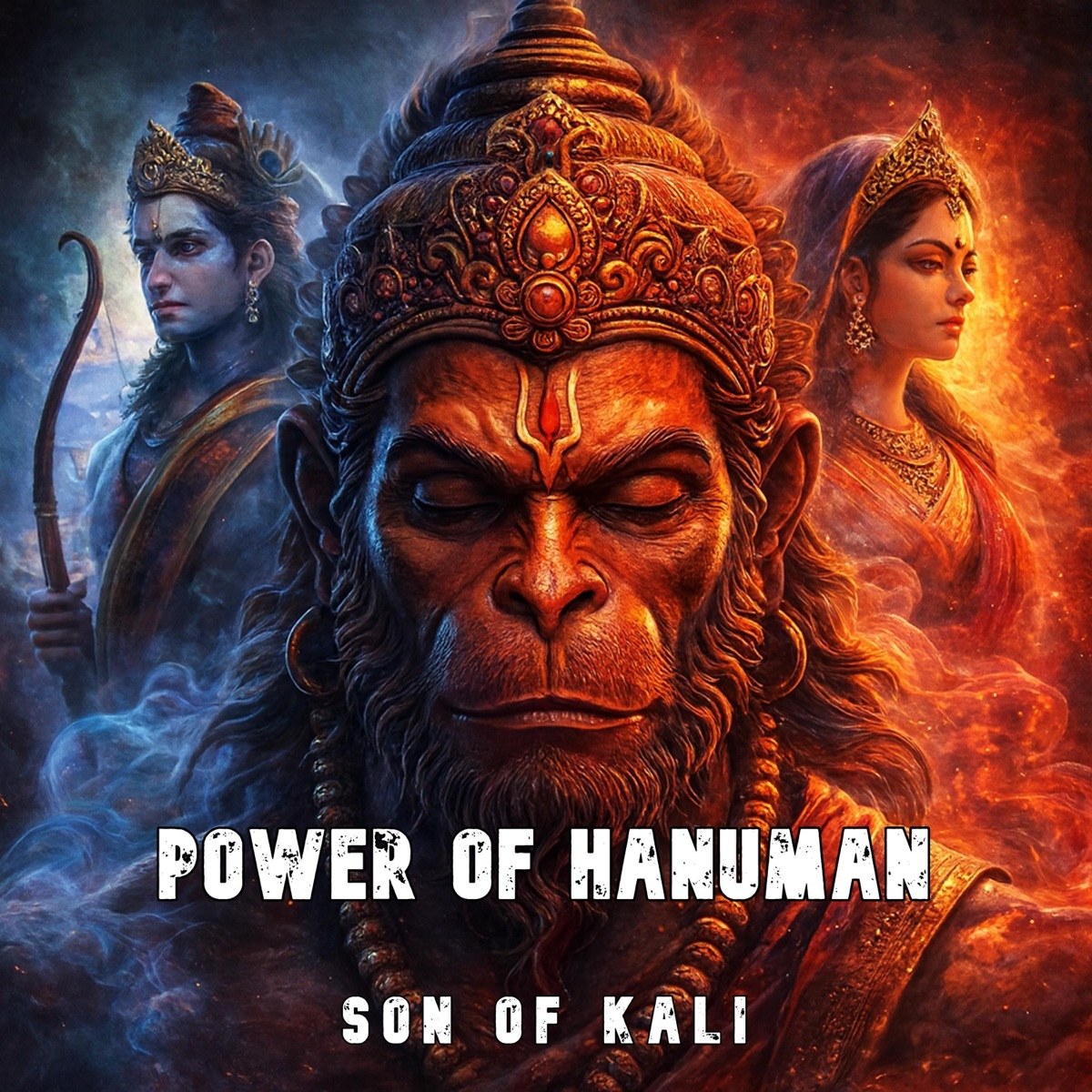
Son of Kali · Power of Hanuman

0:007:05
Deity
Hanuman
Type
Stotram
Verses
4
Language
Sanskrit

Manojavam Maruta Tulya Vegam Lyrics with Meaning

Each line shows an easy way to say it, with its English meaning. Turn on the Sanskrit, the exact pronunciation or the word-by-word meaning whenever you want to go deeper.

Manojavam

मनोजवं मारुततुल्यवेगं जितेन्द्रियं बुद्धिमतां वरिष्ठम् ।

Manojavam Maruta Tulya Vegam Jitendriyam Buddhimatam Varishtham

manojavaṃ mārutatulyavegaṃ jitendriyaṃ buddhimatāṃ variṣṭham

Swift as the mind, as fast as the wind, master of the senses, foremost of the wise,

    वातात्मजं वानरयूथमुख्यं श्रीरामदूतं शरणं प्रपद्ये ॥

    Vatatmajam Vanarayutha Mukhyam Shri Ramadutam Sharanam Prapadye

    vātātmajaṃ vānarayūthamukhyaṃ śrīrāmadūtaṃ śaraṇaṃ prapadye

    son of the Wind, chief of the vanara armies — I take refuge in the messenger of Shri Rama.

      Atulita Baladhamam

      अतुलितबलधामं हेमशैलाभदेहं दनुजवनकृशानुं ज्ञानिनामग्रगण्यम् ।

      Atulita Baladhamam Hemashailabha Deham Danujavana Krishanum Jnaninam Agraganyam

      atulitabaladhāmaṃ hemaśailābhadehaṃ danujavanakṛśānuṃ jñānināmagragaṇyam

      The home of matchless strength, his body shining like a golden mountain, a fire to the forest of demons, first among the wise,

        सकलगुणनिधानं वानराणामधीशं रघुपतिप्रियभक्तं वातजातं नमामि ॥

        Sakala Guna Nidhanam Vanaranam Adhisham Raghupati Priya Bhaktam Vatajatam Namami

        sakalaguṇanidhānaṃ vānarāṇāmadhīśaṃ raghupatipriyabhaktaṃ vātajātaṃ namāmi

        treasury of every virtue, lord of the vanaras, beloved devotee of Rama — I bow to the son of the Wind.

          Goshpadikrita

          गोष्पदीकृतवारीशं मशकीकृतराक्षसम् ।

          Goshpadikrita Varisham Mashakikrita Rakshasam

          goṣpadīkṛtavārīśaṃ maśakīkṛtarākṣasam

          To him the ocean was like a cow’s hoof-print and the demons like mosquitoes;

            रामायणमहामालारत्नं वन्देऽनिलात्मजम् ॥

            Ramayana Mahamala Ratnam Vande Anilatmajam

            rāmāyaṇamahāmālāratnaṃ vande'nilātmajam

            I salute the son of the Wind, the jewel in the great garland of the Ramayana.

              Yatra Yatra

              यत्र यत्र रघुनाथकीर्तनं तत्र तत्र कृतमस्तकाञ्जलिम् ।

              Yatra Yatra Raghunatha Kirtanam Tatra Tatra Kritamastakanjalim

              yatra yatra raghunāthakīrtanaṃ tatra tatra kṛtamastakāñjalim

              Wherever Rama’s glory is sung, there he is, palms joined above his head,

                बाष्पवारिपरिपूर्णलोचनं मारुतिं नमत राक्षसान्तकम् ॥

                Bashpavari Paripurna Lochanam Marutim Namata Rakshasantakam

                bāṣpavāriparipūrṇalocanaṃ mārutiṃ namata rākṣasāntakam

                his eyes full of tears — bow to Maruti, the destroyer of demons.

                  About Manojavam Maruta Tulya Vegam

                  These four verses are the heart of most short “Hanuman Stotram” recitations and are often chanted before or after the Hanuman Chalisa.

                  The first, Manojavam, is a prayer of refuge: Hanuman is swift as thought and fast as the wind, has mastered his senses, is the wisest of the wise, the son of the Wind, chief of the vanaras — and above all Rama’s messenger. The second, Atulita Baladhamam, appears at the opening of Tulsidas’s Sundara Kanda.

                  The third praises how small great things became for him — the ocean like a cow’s hoof-print, demons like mosquitoes — and the fourth describes how, wherever Rama’s name is sung, Hanuman is there with folded hands and tear-filled eyes.

                  The Stories Inside the Hymn

                  Wherever Rama is sung

                  Tradition holds that Hanuman is chiranjeevi — one of the immortals — and remains on earth as long as Rama’s story is told.

                  So at every Ramayana recitation, devotees leave an empty seat or place a cloth for him, trusting that he is present, listening, with joined palms.

                  How to Chant Manojavam Maruta Tulya Vegam

                  When to chant

                  • ✦Tuesdays and Saturdays
                  • ✦Before the Hanuman Chalisa
                  • ✦Before travel or a demanding task
                  • ✦Whenever you need courage and focus

                  How many times

                  Once or three times.

                  1. 1

                    Stand or sit before Hanuman with joined palms.

                  2. 2

                    Chant Manojavam as a prayer of refuge.

                  3. 3

                    Continue with the other three verses.

                  4. 4

                    Finish with “Jai Shri Ram, Jai Hanuman.”

                  Pronunciation Guide

                  The sounds that trip people up most in this hymn, and how to say them.

                  manojavaṃ

                  ma-no-ja-vum — “swift as the mind.”

                  mārutatulyavegaṃ

                  maa-ru-ta-tul-ya-vay-gum.

                  goṣpadīkṛta

                  gosh-pa-dee-kri-ta.

                  Power of Hanuman by Son of Kali

                  The music

                  Power of Hanuman

                  by Son of Kali

                  More for Hanuman

                  Frequently Asked Questions

                  What does Manojavam Maruta Tulya Vegam mean?

                  “Swift as the mind, as fast as the wind” — the opening of a prayer of refuge in Hanuman, Rama’s messenger.

                  Where is Atulita Baladhamam from?

                  It is the invocation verse at the start of the Sundara Kanda of Tulsidas’s Ramcharitmanas.

                  When should I chant these shlokas?

                  Tuesdays and Saturdays, before the Hanuman Chalisa, or before any task that needs courage and speed.

                  Text: Traditional public-domain Sanskrit shlokas. Easy reading, transliteration and English translation written for the Jaguar Medicine Tribe Mantra Library.

                  Music: Recordings by Son of Kali, produced with AI-assisted vocals and instrumentation.

                  Note: Benefits described here are traditional beliefs, shared for understanding — not medical or guaranteed outcomes.