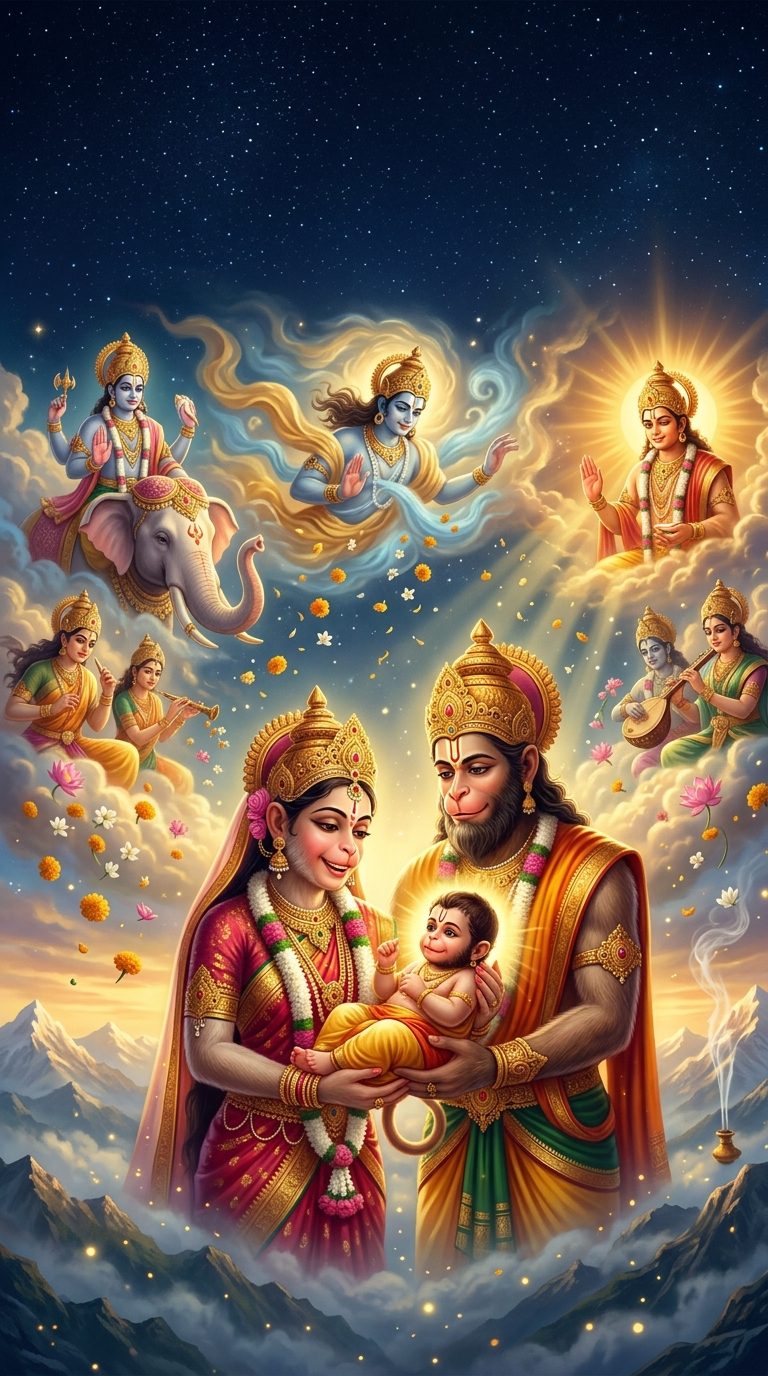
A mangalam is a song of blessing sung at the end of worship — a way of wishing all auspiciousness to the deity and, through the deity, to the world. This mangalashtakam to Hanuman comes from the Parashara Samhita, a text devoted to Hanuman’s life and worship.
It opens with his birth, which this tradition places on a Saturday, the tenth day of the dark half of the month of Vaishakha, under the star Purvabhadra. Then it praises him as full of compassion, fond of fruit and sweet cakes, adorned with jewels, golden-coloured and dressed in yellow, saviour of Lakshmana, remover of Sita’s grief, dweller in the banana groves and on Mount Gandhamadana, the five-faced one who slew Kalanemi.
Some details come from South Indian tradition, such as Hanuman’s consort Suvarchala and his four-armed form riding a camel. The hymn closes by telling how Nilamegha, freed from his troubles by praising Hanuman, circled him and bowed five times.