The Mantra
ॐ श्रीं महालक्ष्म्यै नमः
Om Shreem Mahalakshmyai Namaha
oṃ śrīṃ mahālakṣmyai namaḥ
Om — Shreem — I bow to the great goddess Lakshmi.
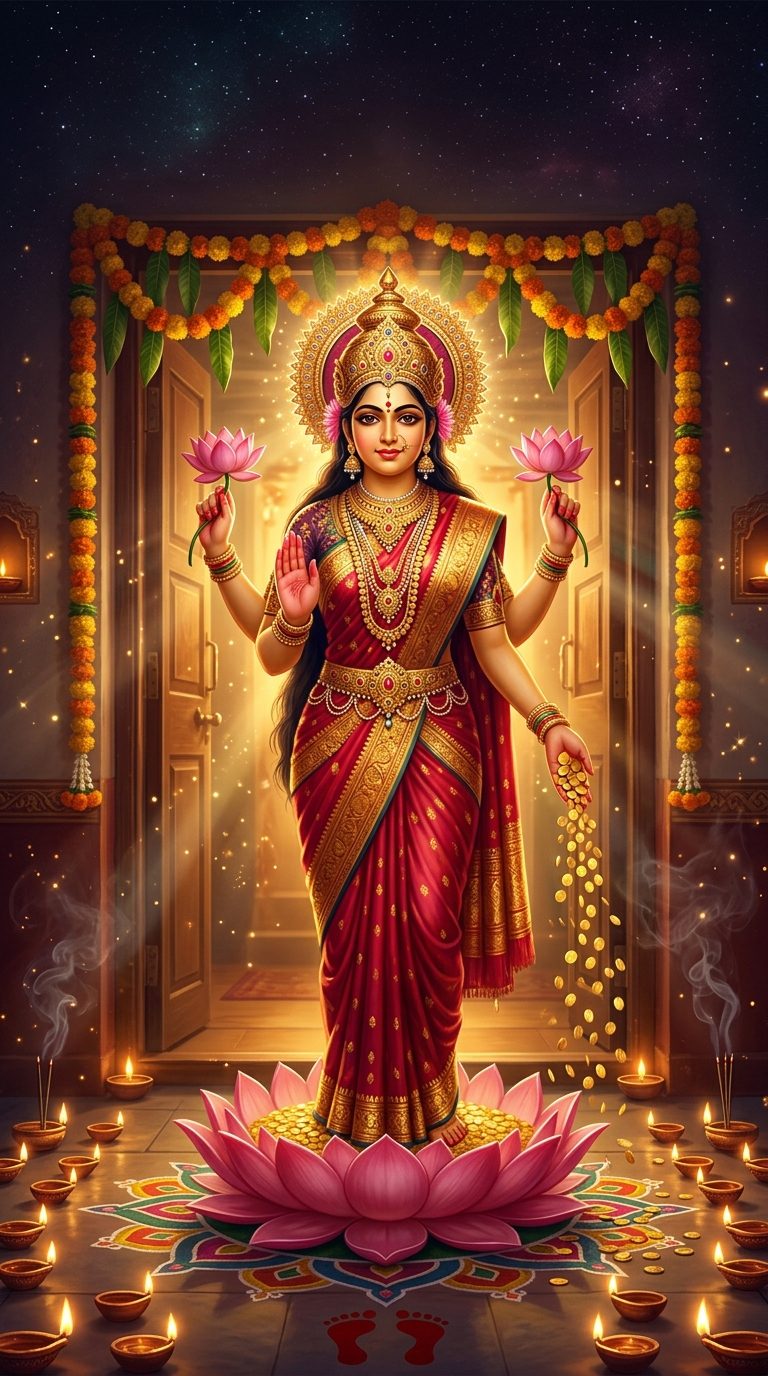
Lyrics · Meaning · Audio
Lakshmi’s simple seed mantra — “Om, Shreem, I bow to the great Lakshmi” — chanted to welcome abundance, beauty and grace into life and home.
Traditional Lakshmi mantra built on the seed syllable Shreem
Listen
Om Shreem Mahalakshmyai Namah
Son of Kali · Mantras for Prosperity
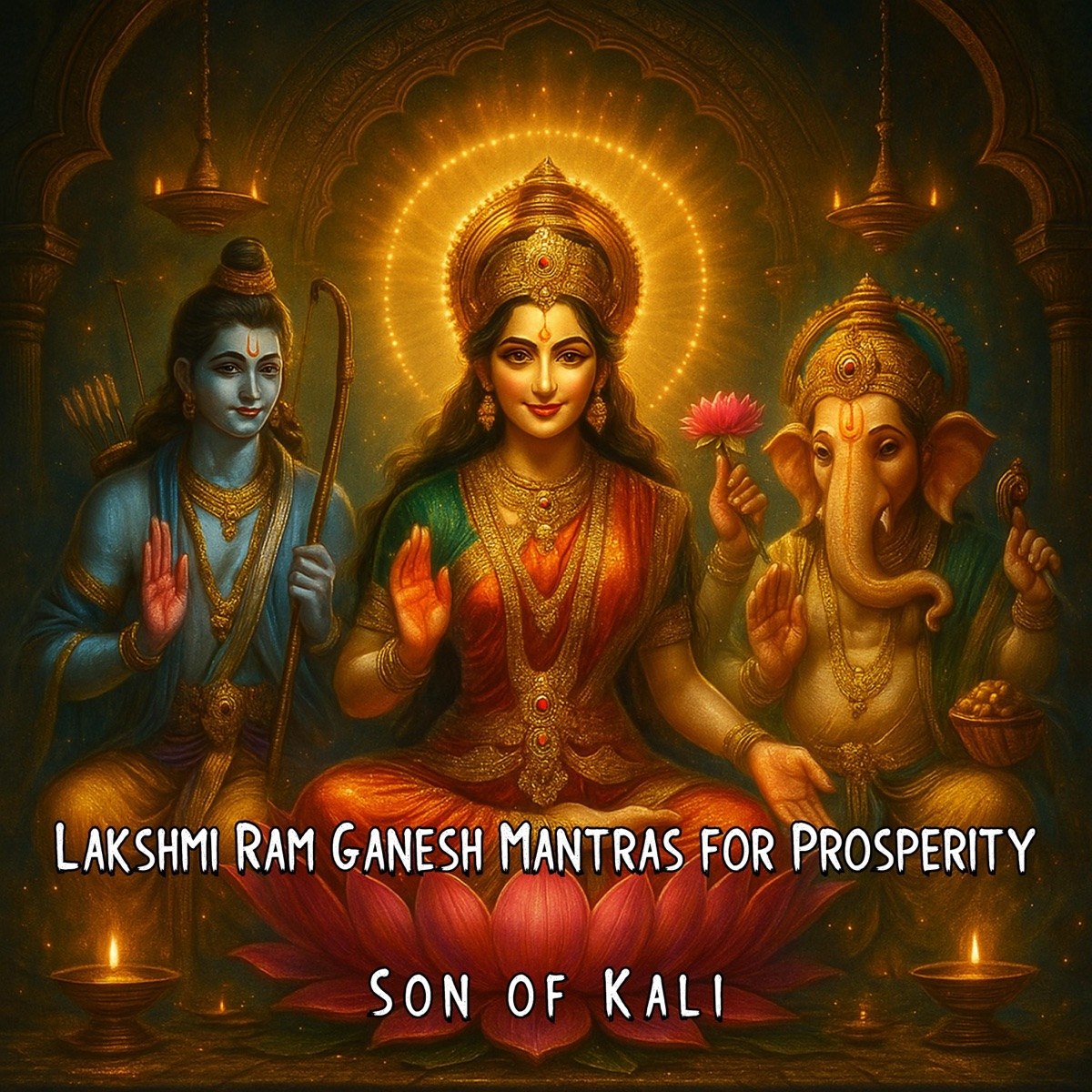
Each line shows an easy way to say it, with its English meaning. Turn on the Sanskrit, the exact pronunciation or the word-by-word meaning whenever you want to go deeper.
ॐ श्रीं महालक्ष्म्यै नमः
Om Shreem Mahalakshmyai Namaha
oṃ śrīṃ mahālakṣmyai namaḥ
Om — Shreem — I bow to the great goddess Lakshmi.
Om Shreem Mahalakshmyai Namah is the most popular everyday mantra of Lakshmi, the goddess of abundance, beauty and good fortune. Its heart is śrīṃ (Shreem), Lakshmi’s bīja or seed sound — a single syllable believed to carry her whole presence.
Shri is one of Lakshmi’s oldest names, and it means much more than money: radiance, grace, beauty, harmony, auspiciousness. That is why this mantra is chanted not only for wealth, but for a life that is rich in every sense — loving relationships, health, creativity and a peaceful home.
The mantra is short and easy to learn, which makes it ideal for daily japa on a mala, especially on Fridays and during Diwali.
In the Mahabharata, Lakshmi explains where she lives: in homes that are clean and bright, among people who are truthful, hardworking, generous and kind, and where women are honoured. She leaves places of laziness, anger, dishonesty and quarrels.
So chanting her mantra traditionally goes together with lighting a lamp, keeping the home clean and living with gratitude — making a place where abundance wants to stay.
Bija mantras are single-syllable sounds said to be the “seed” form of a deity. Shreem is Lakshmi’s: shr- for her radiance, -ee for fulfilment and the nasal hum -m for the infinite.
Many people simply chant “Shreem” on its own as a meditation, feeling its bright, expansive vibration in the heart.
When to chant
How many times
108 times on a mala is traditional. Many people keep a daily practice of 108 for 40 days.
Clean the space and light a lamp or candle.
Sit facing an image of Lakshmi or simply the flame.
Listen once to the recording to catch the rhythm.
Chant slowly, letting “Shreem” resonate in your chest.
Finish by naming three things you are grateful for.
The sounds that trip people up most in this hymn, and how to say them.
śrīṃ
“shreem” — “sh” plus a rolled “r”, a long “ee”, closing into a nasal hum.
mahālakṣmyai
ma-haa-luk-shmyai — kṣ as “ksh”, ending like “eye”.
namaḥ
na-ma-ha, with a light breath at the end.
What does Om Shreem Mahalakshmyai Namah mean?
“Om, Shreem, I bow to the great Lakshmi.” Om is the primal sound, Shreem is Lakshmi’s seed syllable, Mahalakshmyai means “to the great Lakshmi,” and namah means “I bow.”
What is the meaning of Shreem?
Shreem is Lakshmi’s bija (seed) mantra. Shri means radiance, beauty, grace and prosperity, and the seed sound is believed to carry that energy.
What are the benefits of this mantra?
Traditionally it is chanted to invite abundance, prosperity, beauty and harmony into life and the home. It is a prayer and a practice of gratitude, not a guarantee of financial results.
When should I chant it?
Fridays, full moons, Diwali and Dhanteras are especially traditional, as is dusk after lighting a lamp.
How many times should I chant it?
108 times on a mala is the classic count. A daily practice for 40 days is a common vow.