The Mantra
ॐ गं गणपतये नमः
Om Gam Ganapataye Namaha
oṃ gaṃ gaṇapataye namaḥ
Om — Gam — I bow to Ganapati, the lord of all beings.
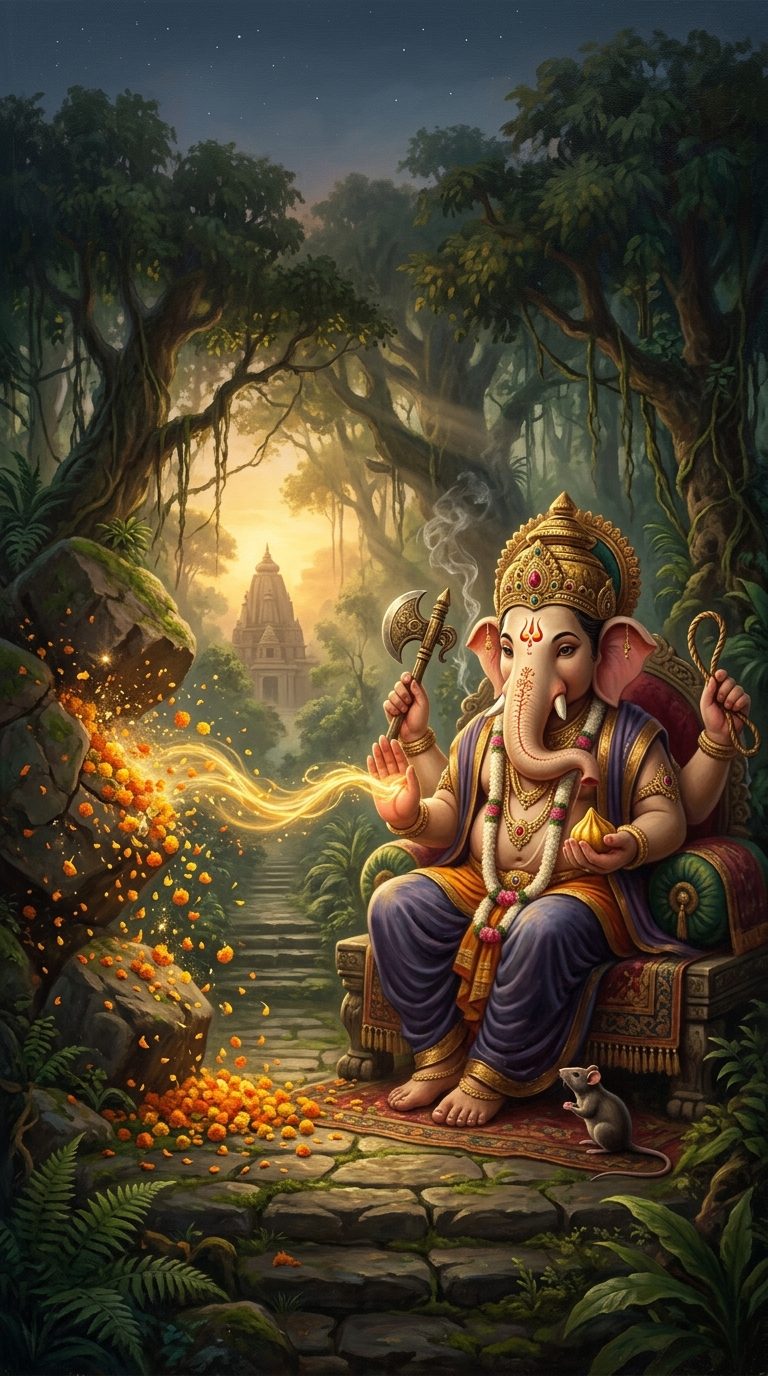
Lyrics · Meaning · Audio
Ganesha’s seed mantra — “Om, Gam, I bow to the lord of all beings” — chanted at the start of anything new to clear the way of obstacles.
Ganesha’s seed mantra, rooted in the Ganapati Atharvashirsha
Listen
Om Gam Ganapataye Namah
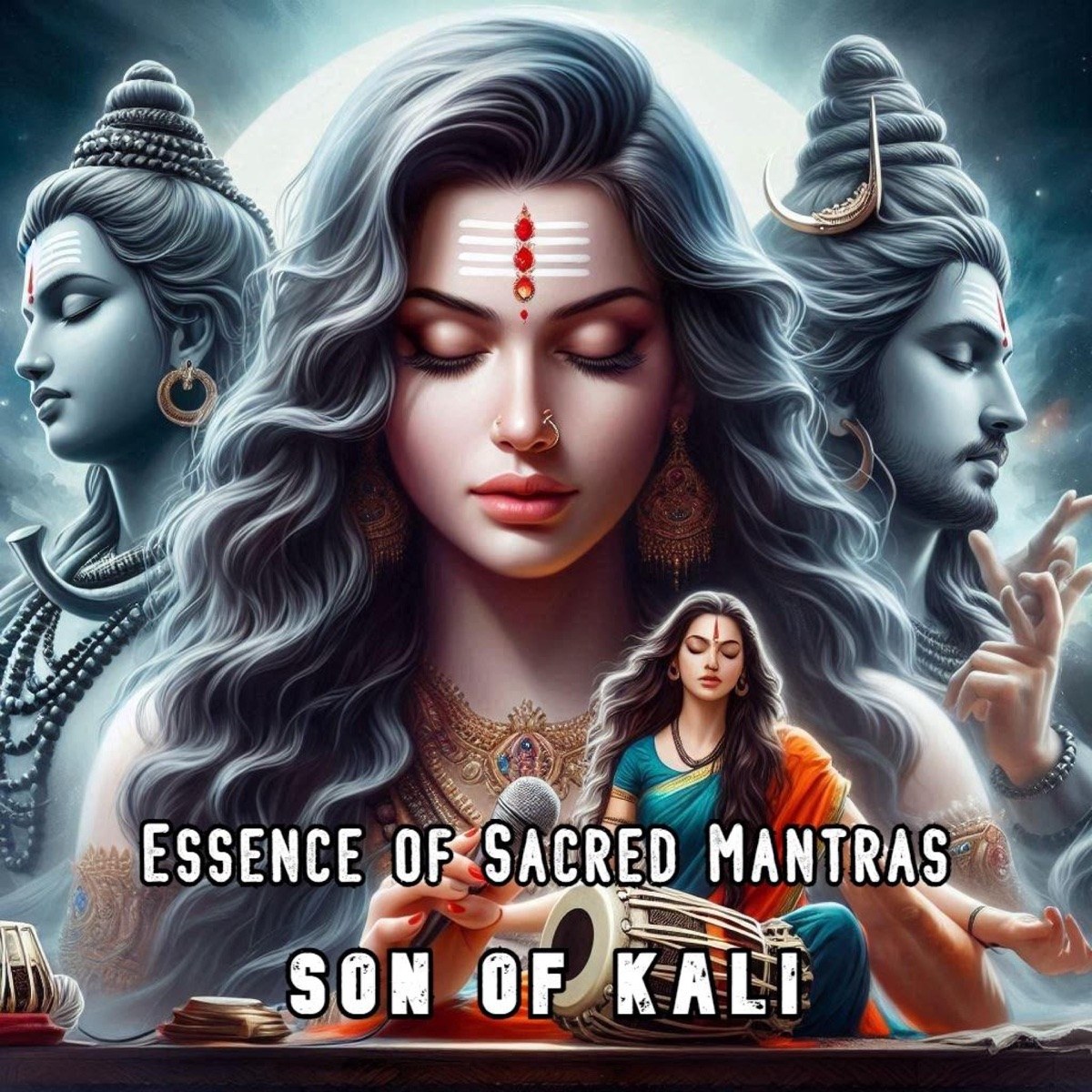
Son of Kali · Essence of Sacred Mantras
Each line shows an easy way to say it, with its English meaning. Turn on the Sanskrit, the exact pronunciation or the word-by-word meaning whenever you want to go deeper.
ॐ गं गणपतये नमः
Om Gam Ganapataye Namaha
oṃ gaṃ gaṇapataye namaḥ
Om — Gam — I bow to Ganapati, the lord of all beings.
Om Gam Ganapataye Namah is the best-known mantra of Ganesha, the elephant-headed lord of beginnings and remover of obstacles. Its heart is the single syllable gaṃ, Ganesha’s bīja or “seed” sound — a sound believed to hold the whole power of the deity the way a seed holds a whole tree.
The seed syllable comes from the Ganapati Atharvashirsha, an Upanishad-style hymn to Ganesha that spells out how the sound is formed from the letter ga and the nasal hum ṃ. The rest of the mantra is a simple salutation: Ganapati means “lord (pati) of the gaṇas” — the hosts of beings, and in a deeper sense every category and quality in the universe.
Because Ganesha is honoured first before every prayer, journey, wedding or new venture, this mantra is chanted at beginnings of every kind: a new job, a new home, a new day, the first page of a book. It is short, easy to learn and one of the most popular mantras for daily japa.
Parvati shaped a boy from clay and turmeric paste, breathed life into him and set him to guard her door while she bathed. When Shiva returned home, the boy — not knowing who he was — refused to let him in. In the fight that followed, Shiva cut off the child’s head.
Seeing Parvati’s grief, Shiva sent his attendants to bring the head of the first living creature they found. They returned with an elephant’s head, and Shiva placed it on the boy and brought him back to life, making him leader of all his gaṇas — Ganapati.
Ganesha and his brother Kartikeya were once challenged to race around the whole world. Kartikeya leapt onto his peacock and flew off. Ganesha, round-bellied with only a mouse to ride, simply walked around his parents, Shiva and Parvati, and said: “You are my whole world.”
He was declared the winner — and the gods decreed that Ganesha would be worshipped before any other, at the start of every undertaking.
When to chant
How many times
108 times on a mala is the classic practice. 11 or 21 repetitions before a task are also traditional.
Sit facing an image of Ganesha, or simply close your eyes.
Listen once to the recording to hear the rhythm.
Chant slowly, letting the syllable gaṃ resonate as a hum in your chest and throat.
Picture the obstacle in front of you softening and dissolving with each repetition.
Finish by offering the work you are about to begin to Ganesha.
The sounds that trip people up most in this hymn, and how to say them.
gaṃ
A short “ga” closing into a humming nasal: “gum”, felt in the throat.
gaṇapataye
The ṇ is said with the tongue curled back: ga-na-pa-ta-yey.
namaḥ
Ends with a soft breath, often heard as “na-ma-ha”.
What does Om Gam Ganapataye Namah mean?
“Om, Gam, I bow to Ganapati, the lord of all beings.” Om is the primal sound, Gam is Ganesha’s seed syllable, Ganapataye means “to the lord of the hosts,” and namah means “I bow.”
What is the seed sound Gam?
Gam is Ganesha’s bija (seed) mantra, described in the Ganapati Atharvashirsha. A bija is a single sound believed to carry the essence and power of a deity.
What are the benefits of chanting Om Gam Ganapataye Namah?
Traditionally it is chanted to remove obstacles, bring success to new beginnings and sharpen wisdom and focus. Many people simply find it a grounding way to start the day.
When should I chant this Ganesha mantra?
Before any new beginning, at the start of the day, and especially on Wednesdays, Chaturthi and during Ganesh Chaturthi.
How many times should I chant it?
108 times is the traditional count for japa. Chanting it 11 or 21 times before starting a task is also common.