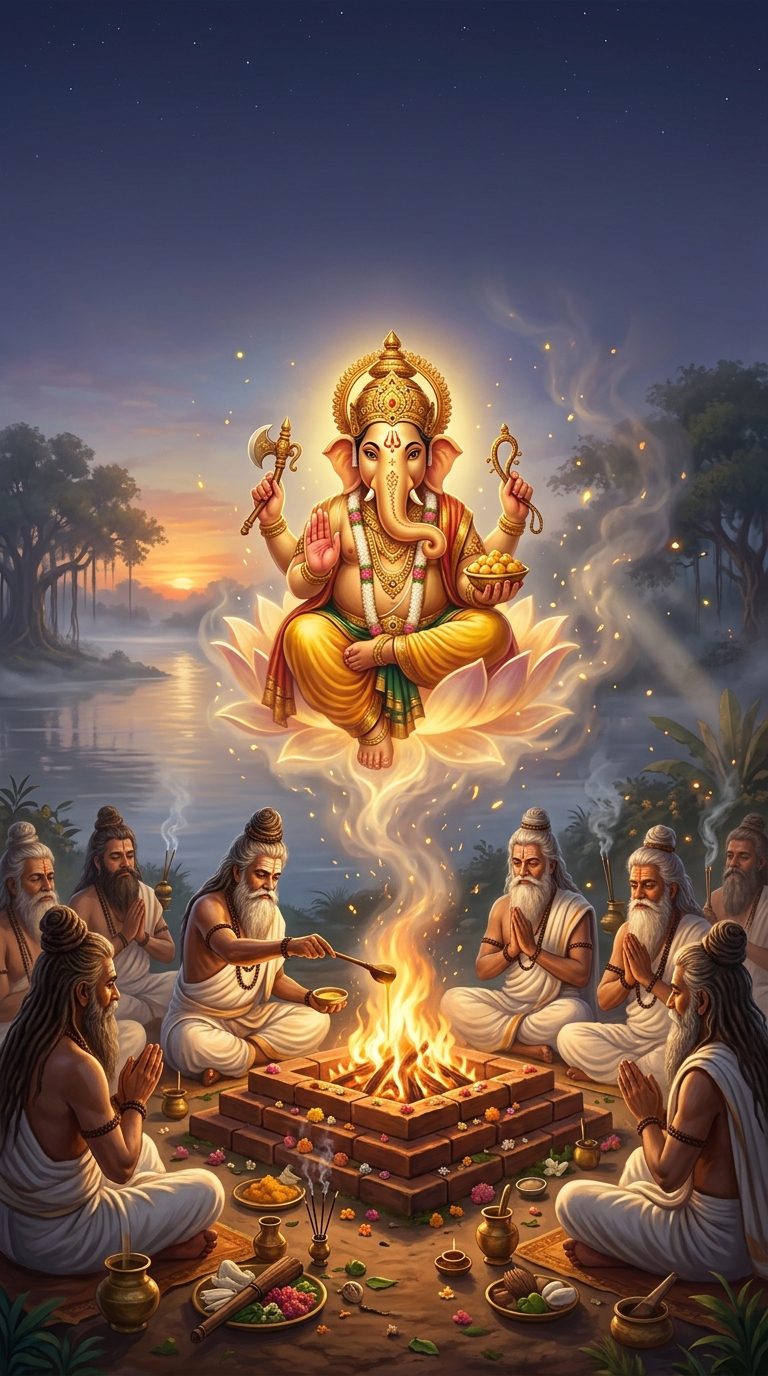
Rishis chanting around a Vedic fire altar at dawn as a golden Ganesha emerges from the flames on a lotus, blessing them
GaneshaMantra

Gananam Tva Ganapatim

Lyrics · Meaning · Audio

The ancient Rig Veda verse that opens almost every Hindu ritual — an invitation to the Lord of all hosts, wisest of the wise, to hear our prayer and take his seat among us.

Rig Veda 2.23.1, seen by the sage Gritsamada

Listen

Gananam Tva Ganapatim

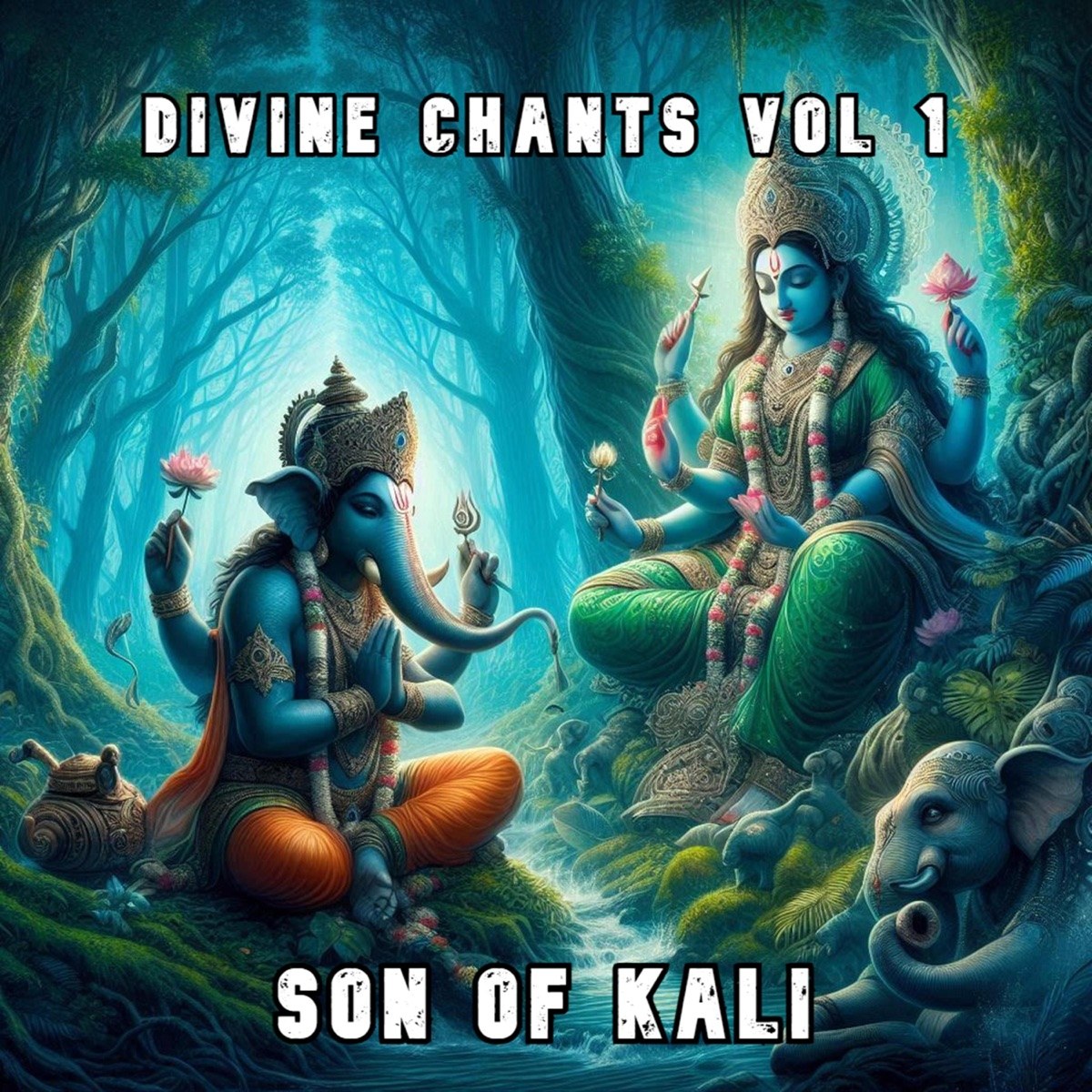
Son of Kali · Divine Chants, Vol. 1

0:007:53
Deity
Ganesha
Type
Mantra
Verses
1
Language
Sanskrit

Gananam Tva Ganapatim Lyrics with Meaning

Each line shows an easy way to say it, with its English meaning. Turn on the Sanskrit, the exact pronunciation or the word-by-word meaning whenever you want to go deeper.

The Mantra

ॐ गणानां त्वा गणपतिं हवामहे

Om Gananam Tva Ganapatim Havamahe

oṃ gaṇānāṃ tvā gaṇapatiṃ havāmahe

Om — we call on you, lord of all the hosts,

    कविं कवीनामुपमश्रवस्तमम् ।

    Kavim Kavinam Upamashravastamam

    kaviṃ kavīnāmupamaśravastamam

    the seer among seers, the most renowned of all,

      ज्येष्ठराजं ब्रह्मणां ब्रह्मणस्पत

      Jyeshtha Rajam Brahmanam Brahmanaspata

      jyeṣṭharājaṃ brahmaṇāṃ brahmaṇaspata

      the eldest king of sacred prayers — O lord of sacred speech,

        आ नः शृण्वन्नूतिभिः सीद सादनम् ॥

        A Nah Shrinvann Utibhih Sida Sadanam

        ā naḥ śṛṇvannūtibhiḥ sīda sādanam

        hear us, come with your protections, and take your seat among us.

          About Gananam Tva Ganapatim

          Gananam Tva Ganapatim is one of the oldest prayers still chanted every day. It is the first verse of hymn 23 in the second book of the Rig Veda, seen by the sage Gritsamada. For thousands of years priests have chanted it at the start of rituals, weddings and house-blessings, to invite the divine presence before anything else begins.

          In the Rig Veda the hymn is addressed to Brahmanaspati, the lord of sacred speech and prayer. Over time, the opening words gaṇānāṃ gaṇapati — “lord of the hosts” — came to be understood as Ganesha, who is honoured first at every beginning. Today it is chanted as Ganesha’s great Vedic invocation.

          The verse is a warm invitation rather than a demand: “We call you… listen to us with your protections, and come sit in this place.” It treats the divine as an honoured guest invited into the home.

          The Stories Inside the Hymn

          The seer Gritsamada

          Book 2 of the Rig Veda is traditionally credited to the family of Gritsamada. In later stories he becomes a devoted worshipper of Ganesha, said to have received this mantra in deep meditation.

          Whether as a Vedic hymn to the lord of prayer or as an invocation of Ganesha, the verse has been passed down mouth to ear, generation after generation, with almost no change for over three thousand years.

          The guest who comes first

          Hindu ritual follows the rhythm of welcoming an honoured guest: invite them, offer a seat, wash their feet, offer food and flowers. This verse is the invitation itself — “come and sit in your seat.”

          Because Ganesha removes obstacles, he is always invited first, so that everything that follows can unfold smoothly.

          How to Chant Gananam Tva Ganapatim

          When to chant

          • ✦At the start of any puja, ritual or ceremony
          • ✦Before beginning study, a new project or a journey
          • ✦On Wednesdays and Ganesh Chaturthi
          • ✦As a morning invocation

          How many times

          Usually chanted once or three times at the start of worship.

          1. 1

            Sit facing an image of Ganesha or a lit lamp.

          2. 2

            Listen to the recording — Vedic chants have a gentle rise and fall in pitch.

          3. 3

            Chant slowly, line by line, using the easy reading.

          4. 4

            Picture Ganesha arriving and taking his seat before you.

          5. 5

            Continue with your prayer, puja or work.

          Pronunciation Guide

          The sounds that trip people up most in this hymn, and how to say them.

          gaṇānāṃ

          ṇ with the tongue curled back, long “aa”: ga-naa-naam.

          havāmahe

          ha-vaa-ma-hey — “we call.”

          jyeṣṭharājaṃ

          jyay-shtha-raa-jum, ṣ as “sh”.

          śṛṇvann

          shrin-vun — “listening.”

          Divine Chants, Vol. 1 by Son of Kali

          The music

          Divine Chants, Vol. 1

          by Son of Kali

          More for Ganesha

          Frequently Asked Questions

          What does Gananam Tva Ganapatim mean?

          “We call you, lord of the hosts, poet of poets, most famous of all, eldest king of prayers, O lord of sacred speech — hear us with your protections and sit in your seat.”

          Where does this mantra come from?

          It is Rig Veda 2.23.1, credited to the sage Gritsamada. It is one of the oldest Hindu prayers still in daily use.

          Is it a Ganesha mantra?

          In the Rig Veda it is addressed to Brahmanaspati, the lord of prayer. Later tradition identified this “lord of the hosts” with Ganesha, and it is now chanted as Ganesha’s main Vedic invocation.

          When is it chanted?

          At the beginning of pujas, rituals, weddings and house-blessings, and before any new beginning.

          Text: Rig Veda 2.23.1 — public domain. Easy reading, transliteration and English translation written for the Jaguar Medicine Tribe Mantra Library.

          Music: Recordings by Son of Kali, produced with AI-assisted vocals and instrumentation.

          Note: Benefits described here are traditional beliefs, shared for understanding — not medical or guaranteed outcomes.