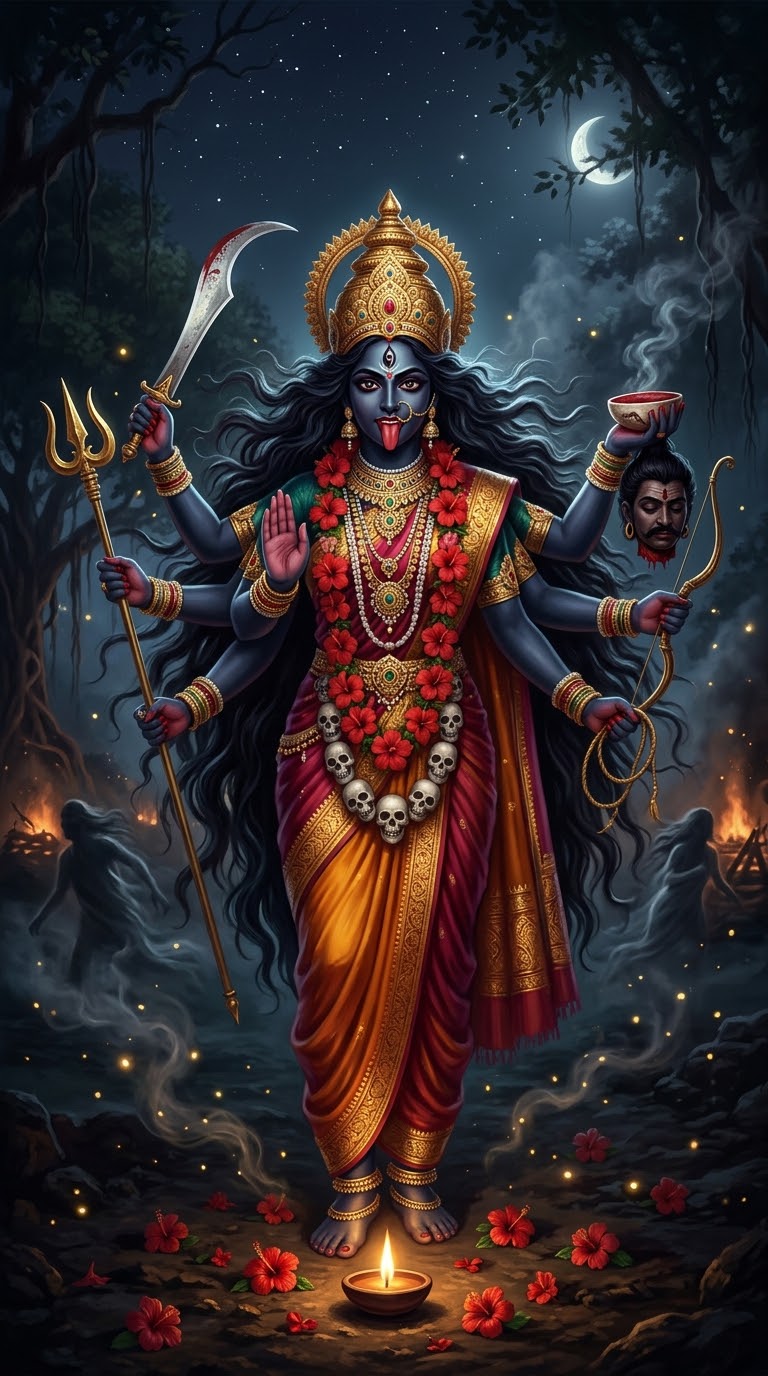
Guhyakali, the hidden Kali, standing in a moonlit cremation ground with her tongue extended, a gentle lamp of peace glowing at her feet

Kali · Stotram

Kali Shanti Stotram

Lyrics · Meaning · Audio

A tantric hymn of peace to Guhyakali, the hidden Kali. It opens with the well-loved verse “Kali Kali Mahakali”, calls on her to drive away every hostile force, and ends with a long blessing for health, peace, learning and long life.

Traditional (Kaula tantric tradition)

Listen

Kali Shanti Stotram

Son of Kali · Power of Kali

0:006:28
Deity
Kali
Type
Stotram
Verses
30
Language
Sanskrit

Kali Shanti Stotram Lyrics with Meaning

Each line shows an easy way to say it, with its English meaning. Turn on the Sanskrit, the exact pronunciation or the word-by-word meaning whenever you want to go deeper.

Verse 1

काली काली महाकालि कालिके पापहारिणि ।

Kali Kali Mahakali Kalike Papaharini

kālī kālī mahākāli kālike pāpahāriṇi

Kali, Kali, great Kali, Kalika, remover of sin,

    धर्ममोक्षप्रदे देवि गुह्यकालि नमोऽस्तु ते ॥ १ ॥

    Dharmamokshaprade Devi Guhyakali Namostu Te

    dharmamokṣaprade devi guhyakāli namo'stu te

    Goddess who grants righteousness and liberation: hidden Kali, I bow to you.

      Verse 2

      सङ्ग्रामे विजयं देहि धनं देहि सदा गृहे ।

      Sangrame Vijayam Dehi Dhanam Dehi Sada Grihe

      saṅgrāme vijayaṃ dehi dhanaṃ dehi sadā gṛhe

      Give me victory in battle; give my home wealth always;

        धर्मकामार्थसम्पत्तिं देहि कालि नमोऽस्तु ते ॥ २ ॥

        Dharmakamarthasampattim Dehi Kali Namostu Te

        dharmakāmārthasampattiṃ dehi kāli namo'stu te

        give me the riches of righteousness, love and prosperity. Kali, I bow to you.

          Verse 3

          उल्कामुखि ललज्जिह्वे घोररावे भगप्रिये ।

          Ulkamukhi Lalajjihve Ghorarave Bhagapriye

          ulkāmukhi lalajjihve ghorarāve bhagapriye

          Meteor-faced one with lolling tongue, terrible of roar, lover of the power of creation,

            श्मशानवासिनि प्रेते शवमांसप्रियेऽनघे ॥ ३ ॥

            Shmashanavasini Prete Shavamamsapriyenaghe

            śmaśānavāsini prete śavamāṃsapriye'naghe

            dweller in the cremation ground, companion of the departed, fond of the flesh of corpses, yet sinless,

              Verse 4

              अरण्य चारिणि शिवे कुलद्रव्यमयीश्वरि ।

              Aranya Charini Shive Kuladravyamayishvari

              araṇya cāriṇi śive kuladravyamayīśvari

              wanderer of the forests, auspicious one, Queen made of the sacred offerings of the Kula rite:

                प्रसन्ना भव देवेशि भक्तस्य मम कालिके ॥ ४ ॥

                Prasanna Bhava Deveshi Bhaktasya Mama Kalike

                prasannā bhava deveśi bhaktasya mama kālike

                be gracious, Queen of the gods, to me your devotee, O Kalika.

                  Verse 5

                  शुभानि सन्तु कौलानां नश्यन्तु द्वेषकारकाः ।

                  Shubhani Santu Kaulanam Nashyantu Dveshakarakah

                  śubhāni santu kaulānāṃ naśyantu dveṣakārakāḥ

                  May good come to the followers of the Kula path; may those who sow hatred be undone;

                    निन्दाकरा क्षयं यान्तु ये च हास्यं प्रकुर्वते ॥ ५ ॥

                    Nindakara Kshayam Yantu Ye Cha Hasyam Prakurvate

                    nindākarā kṣayaṃ yāntu ye ca hāsyaṃ prakurvate

                    may slanderers come to ruin, and those who mock.

                      Verse 6

                      ये द्विषन्ति जुगुप्सन्ते ये निन्दन्ति हसन्ति ये ।

                      Ye Dvishanti Jugupsante Ye Nindanti Hasanti Ye

                      ye dviṣanti jugupsante ye nindanti hasanti ye

                      Those who hate, who show disgust, who slander and who laugh,

                        येऽसूयन्ते च शङ्कन्ते मिथ्येति प्रवदन्ति ये ॥ ६ ॥

                        Yesuyante Cha Shankante Mithyeti Pravadanti Ye

                        ye'sūyante ca śaṅkante mithyeti pravadanti ye

                        who are envious, who doubt, who say it is all a lie:

                          Verse 7

                          ते डाकिनीमुखे यान्तु सदारसुतबान्धवाः ।

                          Te Dakinimukhe Yantu Sadarasutabandhavah

                          te ḍākinīmukhe yāntu sadārasutabāndhavāḥ

                          may they go into the mouths of the Dakinis, with their wives, sons and kin;

                            पिबत्वं शोणितं तस्य चामुण्डा मांसमत्तु च ॥ ७ ॥

                            Pibatvam Shonitam Tasya Chamunda Mamsamattu Cha

                            pibatvaṃ śoṇitaṃ tasya cāmuṇḍā māṃsamattu ca

                            may Chamunda drink their blood and eat their flesh;

                              Verse 8

                              अस्थीनि चर्वयन्त्वस्य योगिनीभैरवीगणाः ।

                              Asthini Charvayantvasya Yoginibhairaviganah

                              asthīni carvayantvasya yoginībhairavīgaṇāḥ

                              may the hosts of Yoginis and Bhairavis chew their bones.

                                या निन्दागमतन्त्रादौ या शक्तिषु कुलेषु या ॥ ८ ॥

                                Ya Nindagamatantradau Ya Shaktishu Kuleshu Ya

                                yā nindāgamatantrādau yā śaktiṣu kuleṣu yā

                                Whatever scorn there is of the Agamas and Tantras, of the Shaktis and the Kula lineages,

                                  Verse 9

                                  कुलमार्गेषु या निन्दा सा निन्दा तव कालिके ।

                                  Kulamargeshu Ya Ninda Sa Ninda Tava Kalike

                                  kulamārgeṣu yā nindā sā nindā tava kālike

                                  whatever scorn there is of the Kula paths, that scorn is scorn of you, Kalika.

                                    त्वन्निन्दाकारिणां शास्त्री त्वमेव परमेश्वरि ॥ ९ ॥

                                    Tvannindakarinam Shastri Tvameva Parameshvari

                                    tvannindākāriṇāṃ śāstrī tvameva parameśvari

                                    You alone, Supreme Queen, bring to account those who scorn you.

                                      Verse 10

                                      न वेदं न तपो दानं नोपवासादिकं व्रतम् ।

                                      Na Vedam Na Tapo Danam Nopavasadikam Vratam

                                      na vedaṃ na tapo dānaṃ nopavāsādikaṃ vratam

                                      Not the Veda, not austerity or charity, not fasting or any other vow,

                                        चान्द्रायणादि कृच्छ्रं च न किञ्चिन्मानयाम्यहम् ॥ १० ॥

                                        Chandrayanadi Krichchhram Cha Na Kinchinmanayamyaham

                                        cāndrāyaṇādi kṛcchraṃ ca na kiñcinmānayāmyaham

                                        not the hard penances like the lunar fast: none of these do I hold to.

                                          Verse 11

                                          किन्तु त्वच्चरणाम्भोज सेवां जाने शिवाज्ञया ।

                                          Kintu Tvachcharanambhoja Sevam Jane Shivajnaya

                                          kintu tvaccaraṇāmbhoja sevāṃ jāne śivājñayā

                                          But by Shiva’s command I know service at your lotus feet;

                                            त्वदर्चां कुर्वतो देवि निन्दापि सफला मम ॥ ११ ॥

                                            Tvadarcham Kurvato Devi Nindapi Saphala Mama

                                            tvadarcāṃ kurvato devi nindāpi saphalā mama

                                            Goddess, while I worship you, even the scorn I suffer bears fruit.

                                              Verse 12

                                              राज्यं तस्य प्रतिष्ठा च लक्ष्मीस्तस्य सदा स्थिरा ।

                                              Rajyam Tasya Pratishtha Cha Lakshmistasya Sada Sthira

                                              rājyaṃ tasya pratiṣṭhā ca lakṣmīstasya sadā sthirā

                                              Rule and standing are his, and his fortune stays firm forever;

                                                तस्य प्रभुत्वं सामर्थ्यं यस्य त्वं मस्तकोपरि ॥ १२ ॥

                                                Tasya Prabhutvam Samarthyam Yasya Tvam Mastakopari

                                                tasya prabhutvaṃ sāmarthyaṃ yasya tvaṃ mastakopari

                                                his are power and ability: the one above whose head you stand.

                                                  Verse 13

                                                  धन्योऽहं कृतकृत्योऽहं सफलं जीवितं मम ।

                                                  Dhanyoham Kritakrityoham Saphalam Jivitam Mama

                                                  dhanyo'haṃ kṛtakṛtyo'haṃ saphalaṃ jīvitaṃ mama

                                                  I am blessed, I have done all that needs doing, my life has borne fruit:

                                                    यस्य त्वच्चरणद्वन्द्वे मनो निविशते सदा ॥ १३ ॥

                                                    Yasya Tvachcharanadvandve Mano Nivishate Sada

                                                    yasya tvaccaraṇadvandve mano niviśate sadā

                                                    I, whose mind rests always at your two feet.

                                                      Verse 14

                                                      दैत्याः विनाशमायान्तु क्षयं यान्तु च दानवाः ।

                                                      Daityah Vinashamayantu Kshayam Yantu Cha Danavah

                                                      daityāḥ vināśamāyāntu kṣayaṃ yāntu ca dānavāḥ

                                                      May the Daityas meet destruction; may the Danavas come to ruin;

                                                        नश्यन्तु प्रेतकूष्माण्डा राक्षसा असुरास्तथा ॥ १४ ॥

                                                        Nashyantu Pretakushmanda Rakshasa Asurastatha

                                                        naśyantu pretakūṣmāṇḍā rākṣasā asurāstathā

                                                        may ghosts and Kushmanda spirits perish, and Rakshasas and Asuras as well.

                                                          Verse 15

                                                          पिशाचभूतवेताला क्षेत्रपाला विनायकाः ।

                                                          Pishachabhutavetala Kshetrapala Vinayakah

                                                          piśācabhūtavetālā kṣetrapālā vināyakāḥ

                                                          Pishachas, Bhutas and Vetalas, the field-guardians and the spirits of obstruction,

                                                            गुह्यकाः घोणकाश्चैव विलीयन्तां सहस्रधा ॥ १५ ॥

                                                            Guhyakah Ghonakashchaiva Viliyantam Sahasradha

                                                            guhyakāḥ ghoṇakāścaiva vilīyantāṃ sahasradhā

                                                            the Guhyakas and the Ghonakas: may they melt away a thousandfold.

                                                              Verse 16

                                                              भारुण्डा जम्भकाः स्कान्दाः प्रमथाः पितरस्तथा ।

                                                              Bharunda Jambhakah Skandah Pramathah Pitarastatha

                                                              bhāruṇḍā jambhakāḥ skāndāḥ pramathāḥ pitarastathā

                                                              The Bharunda birds, the Jambhakas, the spirits of Skanda, the Pramathas and the restless ancestors,

                                                                योगिन्यो मातरश्चापि डाकिन्यः पूतनास्तथा ॥ १६ ॥

                                                                Yoginyo Matarashchapi Dakinyah Putanastatha

                                                                yoginyo mātaraścāpi ḍākinyaḥ pūtanāstathā

                                                                the Yoginis and the Mothers, the Dakinis and the Putanas,

                                                                  Verse 17

                                                                  भस्मीभवन्तु सपदि त्वत्प्रसादात् सुरेश्वरि ।

                                                                  Bhasmibhavantu Sapadi Tvatprasadat Sureshvari

                                                                  bhasmībhavantu sapadi tvatprasādāt sureśvari

                                                                  by your grace, Queen of the gods, may all who are hostile turn to ash at once.

                                                                    दिवाचरा रात्रिचरा ये च सन्ध्याचरा अपि ॥ १७ ॥

                                                                    Divachara Ratrichara Ye Cha Sandhyachara Api

                                                                    divācarā rātricarā ye ca sandhyācarā api

                                                                    Those who roam by day, those who roam by night, and those who roam at twilight,

                                                                      Verse 18

                                                                      शाखाचरा वनचराः कन्दराशैलचारिणः ।

                                                                      Shakhachara Vanacharah Kandarashailacharinah

                                                                      śākhācarā vanacarāḥ kandarāśailacāriṇaḥ

                                                                      those that move in the branches and the forests, in caves and on the mountains,

                                                                        द्वेष्टारो ये जलचरा गुहाबिलचरा अपि ॥ १८ ॥

                                                                        Dveshtaro Ye Jalachara Guhabilachara Api

                                                                        dveṣṭāro ye jalacarā guhābilacarā api

                                                                        the hostile ones that live in water, in hollows and in burrows:

                                                                          Verse 19

                                                                          स्मरणादेव ते सर्वे खण्डखण्डा भवन्तु ते ।

                                                                          Smaranadeva Te Sarve Khandakhanda Bhavantu Te

                                                                          smaraṇādeva te sarve khaṇḍakhaṇḍā bhavantu te

                                                                          at the mere thought of you, may they all be broken into pieces.

                                                                            सर्पा नागा यातुधाना दस्युमायाविनस्तथा ॥ १९ ॥

                                                                            Sarpa Naga Yatudhana Dasyumayavinastatha

                                                                            sarpā nāgā yātudhānā dasyumāyāvinastathā

                                                                            Snakes and serpent-beings, sorcerers, robbers and deceivers,

                                                                              Verse 20

                                                                              हिंसका विद्विषो निन्दाकरा ये कुलदूषकाः ।

                                                                              Himsaka Vidvisho Nindakara Ye Kuladushakah

                                                                              hiṃsakā vidviṣo nindākarā ye kuladūṣakāḥ

                                                                              the violent, the hostile, slanderers and those who defile the lineage,

                                                                                मारणोच्चाटनोन्मूल द्वेष मोहन कारकाः ॥ २० ॥

                                                                                Maranochchatanonmula Dvesha Mohana Karakah

                                                                                māraṇoccāṭanonmūla dveṣa mohana kārakāḥ

                                                                                those who cast spells to kill, to drive away, to uproot, to sow hatred and to bewitch,

                                                                                  Verse 21

                                                                                  कृत्याभिचारकर्तारः कौलविश्वासघातकाः ।

                                                                                  Krityabhicharakartarah Kaulavishvasaghatakah

                                                                                  kṛtyābhicārakartāraḥ kaulaviśvāsaghātakāḥ

                                                                                  those who practise black magic, those who betray the trust of the Kula,

                                                                                    त्वत्प्रसादाज्जगद्धात्रि निधनं यान्तु तेऽखिलाः ॥ २१ ॥

                                                                                    Tvatprasadajjagaddhatri Nidhanam Yantu Tekhilah

                                                                                    tvatprasādājjagaddhātri nidhanaṃ yāntu te'khilāḥ

                                                                                    by your grace, Mother who holds up the world, may they all come to their end.

                                                                                      Verse 22

                                                                                      नवग्रहाः सतिथयो नक्षत्राणि च राशयः ।

                                                                                      Navagrahah Satithayo Nakshatrani Cha Rashayah

                                                                                      navagrahāḥ satithayo nakṣatrāṇi ca rāśayaḥ

                                                                                      The nine planets with the lunar days, the lunar mansions and the signs of the zodiac,

                                                                                        सङ्क्रान्तयोऽब्दा मासाश्च ऋतवो द्वे तथायने ॥ २२ ॥

                                                                                        Sankrantayobda Masashcha Ritavo Dve Tathayane

                                                                                        saṅkrāntayo'bdā māsāśca ṛtavo dve tathāyane

                                                                                        the sun’s passages, the years and months, the seasons and the two halves of the year,

                                                                                          Verse 23

                                                                                          कलाकाष्ठामुहूर्ताश्च पक्षाहोरात्रयस्तथा ।

                                                                                          Kalakashthamuhurtashcha Pakshahoratrayastatha

                                                                                          kalākāṣṭhāmuhūrtāśca pakṣāhorātrayastathā

                                                                                          the moments, instants and hours, the fortnights, days and nights,

                                                                                            मन्वन्तराणि कल्पाश्च युगानि युगसन्धयः ॥ २३ ॥

                                                                                            Manvantarani Kalpashcha Yugani Yugasandhayah

                                                                                            manvantarāṇi kalpāśca yugāni yugasandhayaḥ

                                                                                            the ages of the Manus, the kalpas, the yugas and the dawns between them,

                                                                                              Verse 24

                                                                                              देवलोकाः लोकपालाः पितरो वह्नयस्तथा ।

                                                                                              Devalokah Lokapalah Pitaro Vahnayastatha

                                                                                              devalokāḥ lokapālāḥ pitaro vahnayastathā

                                                                                              the worlds of the gods, the guardians of the directions, the ancestors and the sacred fires,

                                                                                                अध्वरा निधयो वेदाः पुराणागमसंहिताः ॥ २४ ॥

                                                                                                Adhvara Nidhayo Vedah Puranagamasamhitah

                                                                                                adhvarā nidhayo vedāḥ purāṇāgamasaṃhitāḥ

                                                                                                the rites of sacrifice, the treasures, the Vedas, the Puranas, the Agamas and the Samhitas:

                                                                                                  Verse 25

                                                                                                  एते मया कीर्तिता ये ये चान्ये नानुकीर्तिताः ।

                                                                                                  Ete Maya Kirtita Ye Ye Chanye Nanukirtitah

                                                                                                  ete mayā kīrtitā ye ye cānye nānukīrtitāḥ

                                                                                                  all these I have named, and all the others I have not named,

                                                                                                    आज्ञया गुह्यकाल्यास्ते मम कुर्वन्तु मङ्गलम् ॥ २५ ॥

                                                                                                    Ajnaya Guhyakalyaste Mama Kurvantu Mangalam

                                                                                                    ājñayā guhyakālyāste mama kurvantu maṅgalam

                                                                                                    at the command of the hidden Kali, may they bring me blessing.

                                                                                                      Verse 26

                                                                                                      भवन्तु सर्वदा सौम्याः सर्वकालं सुखावहाः ।

                                                                                                      Bhavantu Sarvada Saumyah Sarvakalam Sukhavahah

                                                                                                      bhavantu sarvadā saumyāḥ sarvakālaṃ sukhāvahāḥ

                                                                                                      May they always be gentle, bringing happiness at every time.

                                                                                                        आरोग्यं सर्वदा मेऽस्तु युद्धे चैवापराजयः ॥ २६ ॥

                                                                                                        Arogyam Sarvada Mestu Yuddhe Chaivaparajayah

                                                                                                        ārogyaṃ sarvadā me'stu yuddhe caivāparājayaḥ

                                                                                                        May I always have good health, and never be defeated in a fight.

                                                                                                          Verse 27

                                                                                                          दुःखहानिः सदैवास्तां विघ्ननाशः पदे पदे ।

                                                                                                          Duhkhahanih Sadaivastam Vighnanashah Pade Pade

                                                                                                          duḥkhahāniḥ sadaivāstāṃ vighnanāśaḥ pade pade

                                                                                                          May sorrow always fall away, and obstacles vanish at every step.

                                                                                                            अकालमृत्यु दारिद्र्यं बन्धनं नृपतेर्भयम् ॥ २७ ॥

                                                                                                            Akalamrityu Daridryam Bandhanam Nripaterbhayam

                                                                                                            akālamṛtyu dāridryaṃ bandhanaṃ nṛpaterbhayam

                                                                                                            Untimely death and poverty, imprisonment and fear of the ruler:

                                                                                                              Verse 28

                                                                                                              गुह्यकाल्याः प्रसादेन न कदापि भवेन्मम ।

                                                                                                              Guhyakalyah Prasadena Na Kadapi Bhavenmama

                                                                                                              guhyakālyāḥ prasādena na kadāpi bhavenmama

                                                                                                              by the grace of the hidden Kali, may these never come to me.

                                                                                                                सन्त्विन्द्रियाणि सुस्थानि शान्तिः कुशलमस्तु मे ॥ २८ ॥

                                                                                                                Santvindriyani Susthani Shantih Kushalamastu Me

                                                                                                                santvindriyāṇi susthāni śāntiḥ kuśalamastu me

                                                                                                                May my senses be sound; may I have peace and well-being.

                                                                                                                  Verse 29

                                                                                                                  वाञ्छाप्तिर्मनसः सौख्यं कल्याणं सुप्रजास्तथा ।

                                                                                                                  Vanchhaptirmanasah Saukhyam Kalyanam Suprajastatha

                                                                                                                  vāñchāptirmanasaḥ saukhyaṃ kalyāṇaṃ suprajāstathā

                                                                                                                  May my wishes be fulfilled and my mind be happy; may I have blessings and good children,

                                                                                                                    बलं वित्तं यशः कान्तिवृद्धिर्विद्या महोदयः ॥ २९ ॥

                                                                                                                    Balam Vittam Yashah Kantivriddhirvidya Mahodayah

                                                                                                                    balaṃ vittaṃ yaśaḥ kāntivṛddhirvidyā mahodayaḥ

                                                                                                                    strength, wealth and fame, growing radiance, learning and great success;

                                                                                                                      Verse 30 — The blessings of the hymn

                                                                                                                      दीर्घायुरप्रधृष्यत्वं वीर्यं सामर्थ्यमेव च ।

                                                                                                                      Dirghayurapradhrishyatvam Viryam Samarthyameva Cha

                                                                                                                      dīrghāyurapradhṛṣyatvaṃ vīryaṃ sāmarthyameva ca

                                                                                                                      long life, invincibility, vigour and capability;

                                                                                                                        विनाशो द्वेषकर्तॄणां कौलिकानां महोन्नतिः ।

                                                                                                                        Vinasho Dveshakartrinam Kaulikanam Mahonnatih

                                                                                                                        vināśo dveṣakartṝṇāṃ kaulikānāṃ mahonnatiḥ

                                                                                                                        the undoing of those who hate, and the great rise of the Kaula devotees:

                                                                                                                          जायतां शान्तिपाठेन कुलवर्त्म धृतात्मनाम् ॥ ३० ॥

                                                                                                                          Jayatam Shantipathena Kulavartma Dhritatmanam

                                                                                                                          jāyatāṃ śāntipāṭhena kulavartma dhṛtātmanām

                                                                                                                          may all this arise, through reciting this hymn of peace, for those whose hearts hold to the Kula path.

                                                                                                                            About Kali Shanti Stotram

                                                                                                                            This is a shanti stotra, a “hymn of peace”, from the Kaula tradition of Kali worship. Its first verse, “Kali Kali Mahakali, Kalike Papaharini”, is chanted on its own all over India as a short prayer to Kali.

                                                                                                                            The hymn has three movements. First it praises Kali and asks for victory, wealth and righteousness. Then, in fierce tantric images, it asks her to destroy everything hostile: slanderers, demons, ghosts, black magic and those who betray the path. Last, it calls on the planets, the stars, time itself, the gods and the scriptures to bring the reciter peace, health and success.

                                                                                                                            The violent verses belong to an old protective genre. Read inwardly, they ask the Goddess to clear away every force, outer or inner, that stands against the seeker. The hymn ends where its title points: in peace, health and steady well-being.

                                                                                                                            How to Chant Kali Shanti Stotram

                                                                                                                            When to chant

                                                                                                                            • ✦Tuesdays, Saturdays and new moon nights
                                                                                                                            • ✦Kali Puja
                                                                                                                            • ✦Times of conflict, fear or ill will

                                                                                                                            How many times

                                                                                                                            Once in full; the first verse alone may be repeated 11 or 108 times.

                                                                                                                            1. 1

                                                                                                                              Light a lamp before an image of Kali.

                                                                                                                            2. 2

                                                                                                                              Chant the first verse slowly as an opening mantra.

                                                                                                                            3. 3

                                                                                                                              Recite the rest steadily, and end by resting in the blessings of the last verses.

                                                                                                                            Pronunciation Guide

                                                                                                                            The sounds that trip people up most in this hymn, and how to say them.

                                                                                                                            pāpahāriṇi

                                                                                                                            paa-pa-haa-ri-ni: “remover of sin”.

                                                                                                                            guhyakāli

                                                                                                                            gu-hya-kaa-li: “hidden Kali”.

                                                                                                                            kaula

                                                                                                                            kow-la: a follower of the Kula path of Kali worship.

                                                                                                                            Power of Kali by Son of Kali

                                                                                                                            The music

                                                                                                                            Power of Kali

                                                                                                                            by Son of Kali

                                                                                                                            More for Kali

                                                                                                                            Frequently Asked Questions

                                                                                                                            What does “Kali Kali Mahakali Kalike Papaharini” mean?

                                                                                                                            “Kali, Kali, great Kali, Kalika, remover of sin.” The verse goes on: “Goddess who grants righteousness and liberation, hidden Kali, I bow to you.”

                                                                                                                            Why is it called a hymn of peace?

                                                                                                                            Shanti means peace. The hymn asks Kali to remove everything hostile so that the reciter can live in peace, health and well-being, which is what its last verses describe.

                                                                                                                            Who is Guhyakali?

                                                                                                                            “The hidden Kali”, a form of Kali worshipped in the Kaula and Nepali tantric traditions, to whom this hymn is addressed.

                                                                                                                            Why are some verses so fierce?

                                                                                                                            They belong to an old protective genre that asks the Goddess to destroy hostile forces. Many read them as a prayer to clear away inner enemies too, such as fear, hatred and delusion.

                                                                                                                            Text: Traditional Sanskrit hymn (public domain), following the text as sung on the recording. Easy reading and English translation written for the Jaguar Medicine Tribe Mantra Library.

                                                                                                                            Music: Recordings by Son of Kali, produced with AI-assisted vocals and instrumentation.

                                                                                                                            Note: Benefits described here are traditional beliefs, shared for understanding — not medical or guaranteed outcomes.