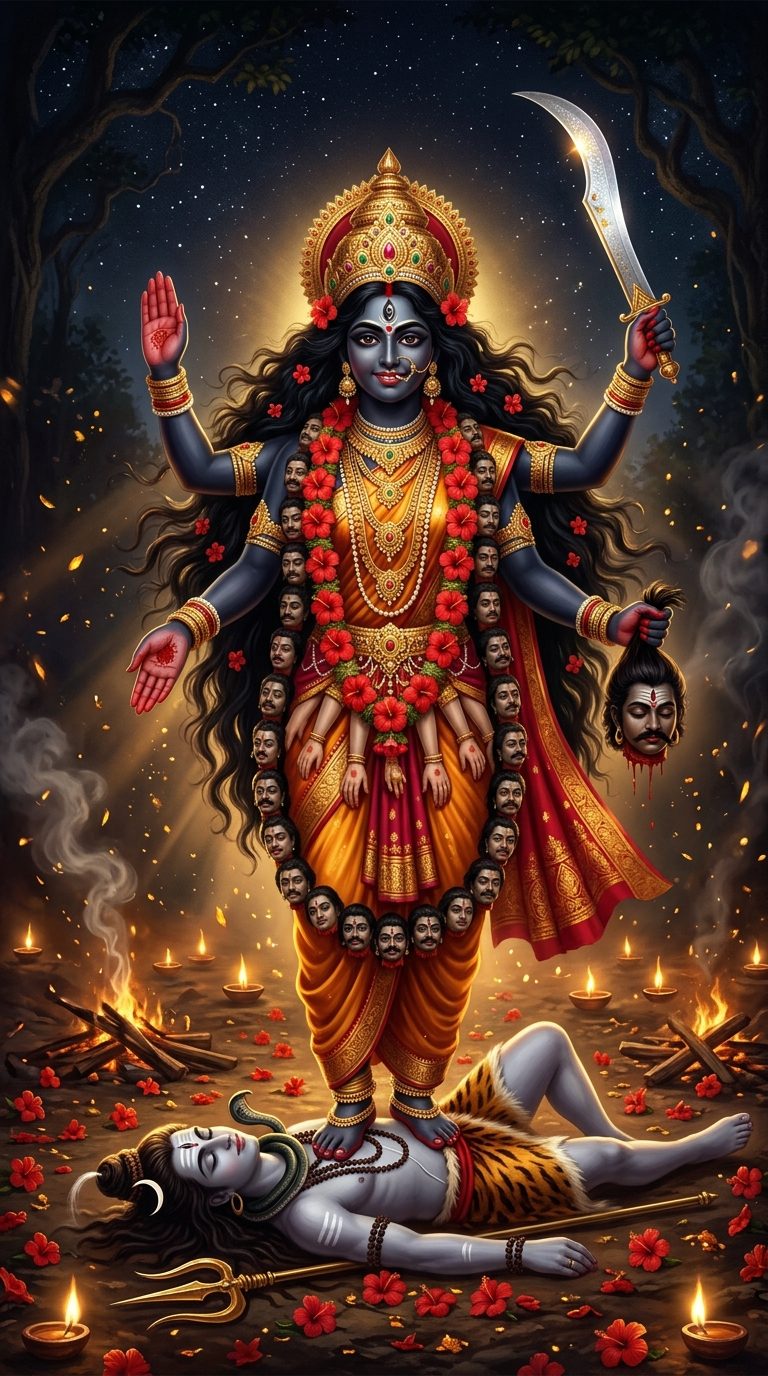
Dakshina Kali, dark and radiant, with flowing hair and a garland of heads, standing on Shiva, one hand raised in blessing and one granting boons

Kali · Stotram

Dakshina Kalika Stotram

Lyrics · Meaning · Audio

A fierce and tender hymn to Dakshina Kali, the slender, wild-haired Great Chandi beloved of Shiva — describing her terrifying form on Shiva’s body, then turning to ask her for learning, eloquence, victory, long life and, at the end of this body, liberation.

Traditional Shakta hymn, gathered from verses in several tantric texts

Listen

Dakshina Kalika Stotram

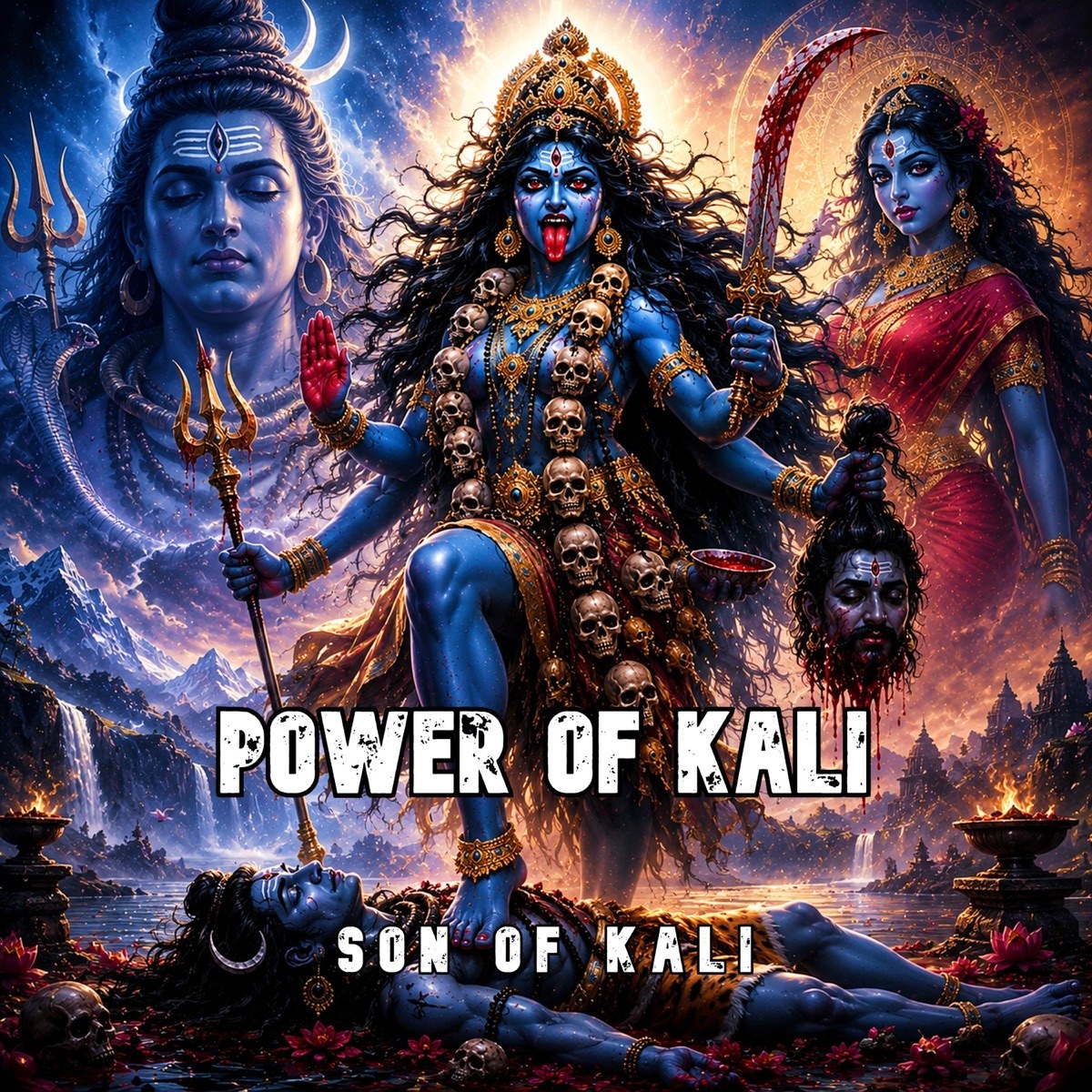
Son of Kali · Power of Kali

0:005:30
Deity
Kali
Type
Stotram
Verses
26
Language
Sanskrit

Dakshina Kalika Stotram Lyrics with Meaning

Each line shows an easy way to say it, with its English meaning. Turn on the Sanskrit, the exact pronunciation or the word-by-word meaning whenever you want to go deeper.

Verse 1

ॐ कृशोदरि महाचण्डि मुक्तकेशि बलिप्रिये ।

Om Krishodari Mahachandi Muktakeshi Balipriye

oṃ kṛśodari mahācaṇḍi muktakeśi balipriye

Om, O slender-waisted one, great Chandi, with flowing hair, fond of offerings,

    कुलाचारप्रसन्नास्ये नमस्ते शङ्करप्रिये ॥ १ ॥

    Kulacharaprasannasye Namaste Shankarapriye

    kulācāraprasannāsye namaste śaṅkarapriye

    whose face is pleased by the Kula path — salutations to you, beloved of Shankara.

      Verse 2

      घोरदंष्ट्रे कोटराक्षि गीतिशब्दप्रसाधिनि ।

      Ghoradamshtre Kotarakshi Gitishabdaprasadhini

      ghoradaṃṣṭre koṭarākṣi gītiśabdaprasādhini

      With fearsome teeth and deep-set eyes, adorned by the sound of song,

        घुरघोरारवास्फारे नमस्ते चित्तवासिनि ॥ २ ॥

        Ghuraghoraravasphare Namaste Chittavasini

        ghuraghorāravāsphāre namaste cittavāsini

        filling the air with terrible roars — salutations to you who dwell in the mind.

          Verse 3

          बन्धूकपुष्पसङ्काशे त्रिपुरे भयनाशिनि ।

          Bandhukapushpasankashe Tripure Bhayanashini

          bandhūkapuṣpasaṅkāśe tripure bhayanāśini

          Red as the bandhuka flower, Tripura, destroyer of fear,

            भाग्योदयसमुत्पन्ने नमस्ते वरवर्णिनि ॥ ३ ॥

            Bhagyodayasamutpanne Namaste Varavarnini

            bhāgyodayasamutpanne namaste varavarṇini

            born at the dawning of good fortune — salutations to you, fairest one.

              Verse 4

              जय देवि जगद्धात्रि त्रिपुराद्ये त्रिदेवते ।

              Jaya Devi Jagaddhatri Tripuradye Tridevate

              jaya devi jagaddhātri tripurādye tridevate

              Victory, Goddess, nurse of the world, first of the three cities, the three gods in one;

                भक्तेभ्यो वरदे देवि महिषघ्नि नमोऽस्तुते ॥ ४ ॥

                Bhaktebhyo Varade Devi Mahishaghni Namostute

                bhaktebhyo varade devi mahiṣaghni namo'stute

                giver of boons to devotees, Goddess, slayer of Mahisha — salutations to you.

                  Verse 5

                  घोरविघ्नविनाशाय कुलाचारसमृद्धये ।

                  Ghoravighnavinashaya Kulacharasamriddhaye

                  ghoravighnavināśāya kulācārasamṛddhaye

                  For the destruction of terrible obstacles and the flourishing of the Kula path,

                    नमामि वरदे देवि मुण्डमालाविभूषणे ॥ ५ ॥

                    Namami Varade Devi Mundamalavibhushane

                    namāmi varade devi muṇḍamālāvibhūṣaṇe

                    I bow to you, boon-giving Goddess, adorned with a garland of heads.

                      Verse 6

                      रक्तधारासमाकीर्णे कलकाञ्चीविभूषिते ।

                      Raktadharasamakirne Kalakanchivibhushite

                      raktadhārāsamākīrṇe kalakāñcīvibhūṣite

                      Covered in streams of blood, adorned with a jingling girdle,

                        सर्वविघ्नहरे कालि नमस्ते भैरवप्रिये ॥ ६ ॥

                        Sarvavighnahare Kali Namaste Bhairavapriye

                        sarvavighnahare kāli namaste bhairavapriye

                        remover of all obstacles, O Kali — salutations to you, beloved of Bhairava.

                          Verse 7

                          नमस्ते दक्षिणामूर्त्ते कालि त्रिपुरभैरवि ।

                          Namaste Dakshinamurtte Kali Tripurabhairavi

                          namaste dakṣiṇāmūrtte kāli tripurabhairavi

                          Salutations to you, Dakshina, Kali, Tripura Bhairavi,

                            भिन्नाञ्जनचयप्रख्ये प्रवीणशवसंस्थिते ॥ ७ ॥

                            Bhinnanjanachayaprakhye Pravinashavasamsthite

                            bhinnāñjanacayaprakhye pravīṇaśavasaṃsthite

                            dark as a heap of crushed collyrium, seated on a corpse —

                              Verse 8

                              गलच्छोणितधाराभिः स्मेराननसरोरुहे ।

                              Galacchonitadharabhih Smerananasaroruhe

                              galacchoṇitadhārābhiḥ smerānanasaroruhe

                              your lotus face smiling amid streams of trickling blood,

                                पीनोन्नतकुचद्वन्द्वे नमस्ते घोरदक्षिणे ॥ ८ ॥

                                Pinonnatakuchadvandve Namaste Ghoradakshine

                                pīnonnatakucadvandve namaste ghoradakṣiṇe

                                full-breasted mother — salutations to you, fierce Dakshina.

                                  Verse 9

                                  आरक्तमुखशान्ताभिर्नेत्रालिभिर्विराजिते ।

                                  Araktamukhashantabhirnetralibhirvirajite

                                  āraktamukhaśāntābhirnetrālibhirvirājite

                                  Shining with rows of eyes, reddish and peaceful,

                                    शवद्वयकृतोत्तंसे नमस्ते मदविह्वले ॥ ९ ॥

                                    Shavadvayakritottamse Namaste Madavihvale

                                    śavadvayakṛtottaṃse namaste madavihvale

                                    wearing two corpses as earrings — salutations to you, drunk with ecstasy.

                                      Verse 10

                                      पञ्चाशन्मुण्डघटितमालालोहितलोहिते ।

                                      Panchashanmundaghatitamalalohitalohite

                                      pañcāśanmuṇḍaghaṭitamālālohitalohite

                                      Crimson with the garland strung of fifty heads,

                                        नानामणिविशोभाढ्ये नमस्ते ब्रह्मसेविते ॥ १० ॥

                                        Nanamanivishobhadhye Namaste Brahmasevite

                                        nānāmaṇiviśobhāḍhye namaste brahmasevite

                                        resplendent with many jewels — salutations to you, served by Brahma.

                                          Verse 11

                                          शवास्थिकृतकेयूरे शङ्खकङ्कणमण्डिते ।

                                          Shavasthikritakeyure Shankhakankanamandite

                                          śavāsthikṛtakeyūre śaṅkhakaṅkaṇamaṇḍite

                                          With armlets made of corpses’ bones, adorned with conch-shell bangles,

                                            शववक्षःसमारूढे नमस्ते विष्णुपूजिते ॥ ११ ॥

                                            Shavavakshahsamarudhe Namaste Vishnupujite

                                            śavavakṣaḥsamārūḍhe namaste viṣṇupūjite

                                            mounted on a corpse’s chest — salutations to you, worshipped by Vishnu.

                                              Verse 12

                                              शवमांसकृतग्रासे साट्टहासे मुहुर्मुहुः ।

                                              Shavamamsakritagrase Sattahase Muhurmuhuh

                                              śavamāṃsakṛtagrāse sāṭṭahāse muhurmuhuḥ

                                              Feeding on corpse flesh, laughing loudly again and again,

                                                मुखशीघ्रस्मितामोदे नमस्ते शिववन्दिते ॥ १२ ॥

                                                Mukhashighrasmitamode Namaste Shivavandite

                                                mukhaśīghrasmitāmode namaste śivavandite

                                                delighting in quick smiles — salutations to you, revered by Shiva.

                                                  Verse 13

                                                  खड्गमुण्डधरे वामे सव्येऽभयवरप्रदे ।

                                                  Khadgamundadhare Vame Savyebhayavaraprade

                                                  khaḍgamuṇḍadhare vāme savye'bhayavaraprade

                                                  Holding a sword and head in your left hands, granting fearlessness and boons with your right,

                                                    दन्तुरे च महारौद्रे नमस्ते चण्डनायिके ॥ १३ ॥

                                                    Danture Cha Maharaudre Namaste Chandanayike

                                                    danture ca mahāraudre namaste caṇḍanāyike

                                                    with great teeth, most terrible — salutations to you, fierce leader.

                                                      Verse 14

                                                      त्वं गतिः परमा देवि त्वं माता परमेश्वरि ।

                                                      Tvam Gatih Parama Devi Tvam Mata Parameshvari

                                                      tvaṃ gatiḥ paramā devi tvaṃ mātā parameśvari

                                                      You are the highest refuge, Goddess; you are the Mother, supreme Lady;

                                                        त्राहि मां करुणासार्द्रे नमस्ते चण्डनायिके ॥ १४ ॥

                                                        Trahi Mam Karunasardre Namaste Chandanayike

                                                        trāhi māṃ karuṇāsārdre namaste caṇḍanāyike

                                                        save me, you who are moist with compassion — salutations to you, fierce leader.

                                                          Verse 15 — Prayers

                                                          नमस्ते कालिके देवि नमस्ते भक्तवत्सले ।

                                                          Namaste Kalike Devi Namaste Bhaktavatsale

                                                          namaste kālike devi namaste bhaktavatsale

                                                          Salutations to you, Goddess Kalika; salutations to you who love your devotees;

                                                            मूर्खतां हर मे देवि प्रतिभाजयदायिनि ॥ १५ ॥

                                                            Murkhatam Hara Me Devi Pratibhajayadayini

                                                            mūrkhatāṃ hara me devi pratibhājayadāyini

                                                            take away my foolishness, Goddess, giver of genius and victory.

                                                              Verse 16

                                                              गद्यपद्यमयीं वाणीं तर्कव्याकरणादिकम् ।

                                                              Gadyapadyamayim Vanim Tarkavyakaranadikam

                                                              gadyapadyamayīṃ vāṇīṃ tarkavyākaraṇādikam

                                                              Speech in prose and verse, logic, grammar and the rest —

                                                                अनधीतागतां विद्यां देहि दक्षिणकालिके ॥ १६ ॥

                                                                Anadhitagatam Vidyam Dehi Dakshinakalike

                                                                anadhītāgatāṃ vidyāṃ dehi dakṣiṇakālike

                                                                give me learning that comes without study, O Dakshina Kalika.

                                                                  Verse 17

                                                                  जयं देहि सभामध्ये धनं देहि धनागमे ।

                                                                  Jayam Dehi Sabhamadhye Dhanam Dehi Dhanagame

                                                                  jayaṃ dehi sabhāmadhye dhanaṃ dehi dhanāgame

                                                                  Give me victory in the assembly, wealth when wealth is due,

                                                                    देहि मे चिरजीवित्वं कालिके रक्ष दक्षिणे ॥ १७ ॥

                                                                    Dehi Me Chirajivitvam Kalike Raksha Dakshine

                                                                    dehi me cirajīvitvaṃ kālike rakṣa dakṣiṇe

                                                                    give me long life; Kalika, protect me, O Dakshina.

                                                                      Verse 18

                                                                      राज्यं देहि यशो देहि पुत्रान् दारान् धनं तथा ।

                                                                      Rajyam Dehi Yasho Dehi Putran Daran Dhanam Tatha

                                                                      rājyaṃ dehi yaśo dehi putrān dārān dhanaṃ tathā

                                                                      Give me sovereignty, give me fame, children, spouse and wealth too;

                                                                        देहान्ते देहि मे मुक्तिं जगन्मातः प्रसीद मे ॥ १८ ॥

                                                                        Dehante Dehi Me Muktim Jaganmatah Prasida Me

                                                                        dehānte dehi me muktiṃ jaganmātaḥ prasīda me

                                                                        at the end of this body give me liberation — Mother of the world, be gracious to me.

                                                                          Verse 19 — Her many names

                                                                          ॐ मङ्गला भैरवी दुर्गा कालिका त्रिदशेश्वरी ।

                                                                          Om Mangala Bhairavi Durga Kalika Tridasheshvari

                                                                          oṃ maṅgalā bhairavī durgā kālikā tridaśeśvarī

                                                                          Om — Mangala, Bhairavi, Durga, Kalika, queen of the gods,

                                                                            उमा हैमवती कन्या कल्याणी भैरवेश्वरी ॥ १९ ॥

                                                                            Uma Haimavati Kanya Kalyani Bhairaveshvari

                                                                            umā haimavatī kanyā kalyāṇī bhairaveśvarī

                                                                            Uma, daughter of Himavat, the maiden, Kalyani, queen of Bhairava;

                                                                              Verse 20

                                                                              काली ब्राह्मी च माहेशी कौमारी वैष्णवी तथा ।

                                                                              Kali Brahmi Cha Maheshi Kaumari Vaishnavi Tatha

                                                                              kālī brāhmī ca māheśī kaumārī vaiṣṇavī tathā

                                                                              Kali, Brahmi, Maheshi, Kaumari and Vaishnavi too,

                                                                                वाराही वासवी चण्डी त्वां जगुर्मुनयः सदा ॥ २० ॥

                                                                                Varahi Vasavi Chandi Tvam Jagurmunayah Sada

                                                                                vārāhī vāsavī caṇḍī tvāṃ jagurmunayaḥ sadā

                                                                                Varahi, Vasavi, Chandi — so the sages have always sung of you.

                                                                                  Verse 21

                                                                                  उग्रतारेति तारेति शिवेत्येकजटेति च ।

                                                                                  Ugratareti Tareti Shivetyekajateti Cha

                                                                                  ugratāreti tāreti śivetyekajaṭeti ca

                                                                                  As Ugratara, Tara, Shiva and Ekajata,

                                                                                    लोकोत्तरेति कालीति गीयसे कृतिभिः सदा ॥ २१ ॥

                                                                                    Lokottareti Kaliti Giyase Kritibhih Sada

                                                                                    lokottareti kālīti gīyase kṛtibhiḥ sadā

                                                                                    as the one beyond the world and as Kali, you are always sung by the wise.

                                                                                      Verse 22

                                                                                      यथा काली तथा तारा तथा छिन्ना च कुल्लुका ।

                                                                                      Yatha Kali Tatha Tara Tatha Chhhinna Cha Kulluka

                                                                                      yathā kālī tathā tārā tathā chinnā ca kullukā

                                                                                      As Kali, so Tara, so Chhinnamasta and Kulluka —

                                                                                        एकमूर्त्तिश्चतुर्भेदा देवि त्वं कालिका पुरा ॥ २२ ॥

                                                                                        Ekamurttishchaturbheda Devi Tvam Kalika Pura

                                                                                        ekamūrttiścaturbhedā devi tvaṃ kālikā purā

                                                                                        one form in four aspects; Goddess, you were Kalika from the beginning.

                                                                                          Verse 23

                                                                                          एकद्वित्रिविधा देवी कोटिधानन्तरूपिणी ।

                                                                                          Ekadvitrividha Devi Kotidhanantarupini

                                                                                          ekadvitrividhā devī koṭidhānantarūpiṇī

                                                                                          The Goddess is one, two and threefold, of endless forms in millions;

                                                                                            अङ्गाङ्गिकैर्नामभेदैः कालिकेति प्रगीयते ॥ २३ ॥

                                                                                            Angangikairnamabhedaih Kaliketi Pragiyate

                                                                                            aṅgāṅgikairnāmabhedaiḥ kāliketi pragīyate

                                                                                            through the names of her parts and her whole, she is sung as Kalika.

                                                                                              Verse 24

                                                                                              शम्भुः पञ्चमुखेनैव गुणान् वक्तुं न ते क्षमः ।

                                                                                              Shambhuh Panchamukhenaiva Gunan Vaktum Na Te Kshamah

                                                                                              śambhuḥ pañcamukhenaiva guṇān vaktuṃ na te kṣamaḥ

                                                                                              Even Shambhu with his five mouths cannot tell your virtues;

                                                                                                चापल्यैर्यत्कृतं स्तोत्रं क्षमस्व वरदा भव ॥ २४ ॥

                                                                                                Chapalyairyatkritam Stotram Kshamasva Varada Bhava

                                                                                                cāpalyairyatkṛtaṃ stotraṃ kṣamasva varadā bhava

                                                                                                forgive this hymn made in restlessness, and be the giver of boons.

                                                                                                  Verse 25

                                                                                                  प्राणान् रक्ष यशो रक्ष पुत्रान् दारान् धनं तथा ।

                                                                                                  Pranan Raksha Yasho Raksha Putran Daran Dhanam Tatha

                                                                                                  prāṇān rakṣa yaśo rakṣa putrān dārān dhanaṃ tathā

                                                                                                  Protect my life, protect my good name, my children, spouse and wealth;

                                                                                                    सर्वकाले सर्वदेशे पाहि दक्षिणकालिके ॥ २५ ॥

                                                                                                    Sarvakale Sarvadeshe Pahi Dakshinakalike

                                                                                                    sarvakāle sarvadeśe pāhi dakṣiṇakālike

                                                                                                    at all times and in every place, protect me, O Dakshina Kalika.

                                                                                                      Verse 26 — The fruit of the hymn

                                                                                                      यः सम्पूज्य पठेत् स्तोत्रं दिवा वा रात्रिसन्ध्ययोः ।

                                                                                                      Yah Sampujya Pathet Stotram Diva Va Ratrisandhyayoh

                                                                                                      yaḥ sampūjya paṭhet stotraṃ divā vā rātrisandhyayoḥ

                                                                                                      Whoever worships and reads this hymn by day, or at the junctions of night,

                                                                                                        धनं धान्यं तथा पुत्रं लभते नात्र संशयः ॥ २६ ॥

                                                                                                        Dhanam Dhanyam Tatha Putram Labhate Natra Samshayah

                                                                                                        dhanaṃ dhānyaṃ tathā putraṃ labhate nātra saṃśayaḥ

                                                                                                        gains wealth, grain and children — of this there is no doubt.

                                                                                                          About Dakshina Kalika Stotram

                                                                                                          Dakshina Kali is the most widely worshipped form of Kali, especially in Bengal: dark as collyrium, four-armed, her left hands holding a sword and a severed head, her right hands granting fearlessness and boons, standing on the still body of Shiva. “Dakshina” means both “the southern, right-hand one” and “the generous one who gives the reward”.

                                                                                                          This hymn praises that form detail by detail — her loosened hair, fearsome teeth, the garland of fifty heads (the fifty letters of the Sanskrit alphabet), the ornaments of bone, her smile amid the blood — and calls her by the names of the great goddesses: Bhairavi, Durga, Uma, Brahmi, Vaishnavi, Chamundi, Tara, Chhinnamasta.

                                                                                                          Then the tone changes. The devotee asks her, as a mother, to remove their foolishness and give them prose and poetry, logic and grammar “without study”, victory in the assembly, wealth, long life, family — and liberation at death. The sanskritdocuments.org edition notes that many of its verses are shared with other Kali hymns; it is a compiled hymn rather than a single ancient text.
                                                                                                          The Stories Inside the Hymn

                                                                                                          Why does Kali stand on Shiva?

                                                                                                          In the familiar image Kali stands upon Shiva, who lies still beneath her. One reading is that Shiva is pure consciousness — unmoving, the ground — and Kali is Shakti, the power that moves and acts. Without Shakti, Shiva is shava, a corpse; with her, he is Shiva, the auspicious.

                                                                                                          The hymn calls her “seated on a corpse” and “mounted on the chest of a corpse” — the dance of power upon the still ground of being.

                                                                                                          How to Chant Dakshina Kalika Stotram

                                                                                                          When to chant

                                                                                                          • ✦Kali Puja (Diwali new moon)
                                                                                                          • ✦Amavasya, the new moon night
                                                                                                          • ✦Tuesdays and Saturdays
                                                                                                          • ✦At dawn, dusk or night, as the hymn says

                                                                                                          How many times

                                                                                                          Once, after worship.

                                                                                                          1. 1

                                                                                                            Light a lamp before an image of Kali and offer red hibiscus if you have it.

                                                                                                          2. 2

                                                                                                            Chant the hymn steadily, picturing each detail of her form.

                                                                                                          3. 3

                                                                                                            In verses 15–18, ask sincerely for what you need.

                                                                                                          4. 4

                                                                                                            Close with “Om Krim Kalikayai Namah.”

                                                                                                          Pronunciation Guide

                                                                                                          The sounds that trip people up most in this hymn, and how to say them.

                                                                                                          dakṣiṇa

                                                                                                          duk-shi-na — the retroflex “n”.

                                                                                                          kṛśodari

                                                                                                          kri-sho-da-ri — “slender-waisted one.”

                                                                                                          caṇḍanāyike

                                                                                                          chun-da-naa-yi-kay — “O fierce leader.”

                                                                                                          Power of Kali by Son of Kali

                                                                                                          The music

                                                                                                          Power of Kali

                                                                                                          by Son of Kali

                                                                                                          More for Kali

                                                                                                          Frequently Asked Questions

                                                                                                          Who is Dakshina Kali?

                                                                                                          The most widely worshipped form of Kali: dark, four-armed, holding a sword and a severed head and granting fearlessness and boons, standing on Shiva.

                                                                                                          What does this stotram ask for?

                                                                                                          After praising her form, it asks for the removal of foolishness, learning and eloquence, victory, wealth, long life and family, and finally liberation.

                                                                                                          When should it be recited?

                                                                                                          The hymn says by day, or at the junctions of night; many recite it at Kali Puja, on new-moon nights, and on Tuesdays and Saturdays.

                                                                                                          Is this an ancient text?

                                                                                                          Its verses are traditional, but the sanskritdocuments.org edition notes they are gathered from several Kali texts, so it is best seen as a traditional compiled hymn.

                                                                                                          Text: Traditional Sanskrit hymn, checked against the sanskritdocuments.org edition. Easy reading and English translation written for the Jaguar Medicine Tribe Mantra Library.

                                                                                                          Music: Recordings by Son of Kali, produced with AI-assisted vocals and instrumentation.

                                                                                                          Note: Benefits described here are traditional beliefs, shared for understanding — not medical or guaranteed outcomes.