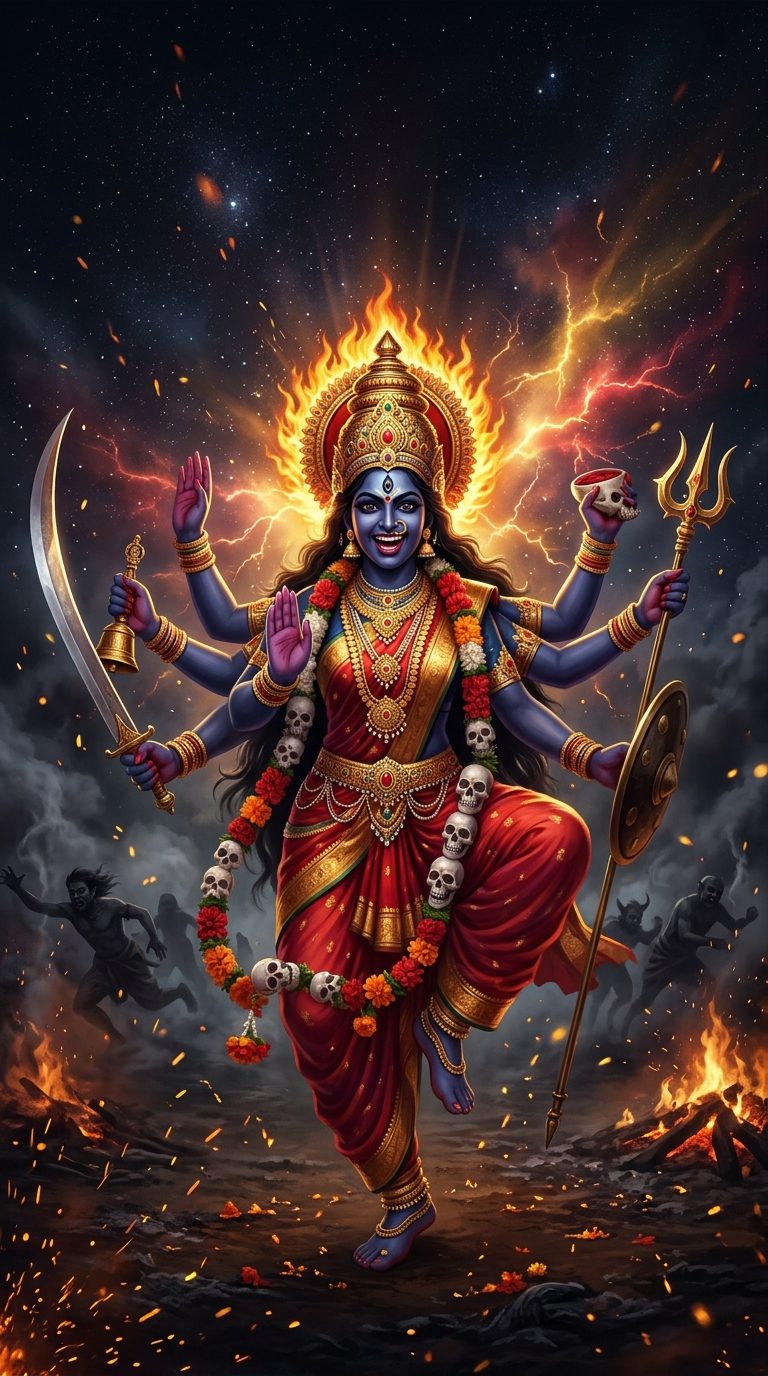
Bhadrakali, fierce and radiant, dancing on the cremation ground with a garland of heads, her laughter shaking the cosmos

Kali · Ashtakam

Sri Bhadrakali Ashtakam

Lyrics · Meaning · Audio

Eight majestic verses that retell Bhadrakali’s great battles — against Madhu and Kaitabha, Mahisha, Chanda and Munda, Raktabija, Shumbha and Nishumbha, and the demon Daruka — each ending with the prayer: “May Bhadrakali, giver of good fortune, swiftly quell the host of our enemies.”

Traditional

Listen

Sri Bhadrakali Ashtakam

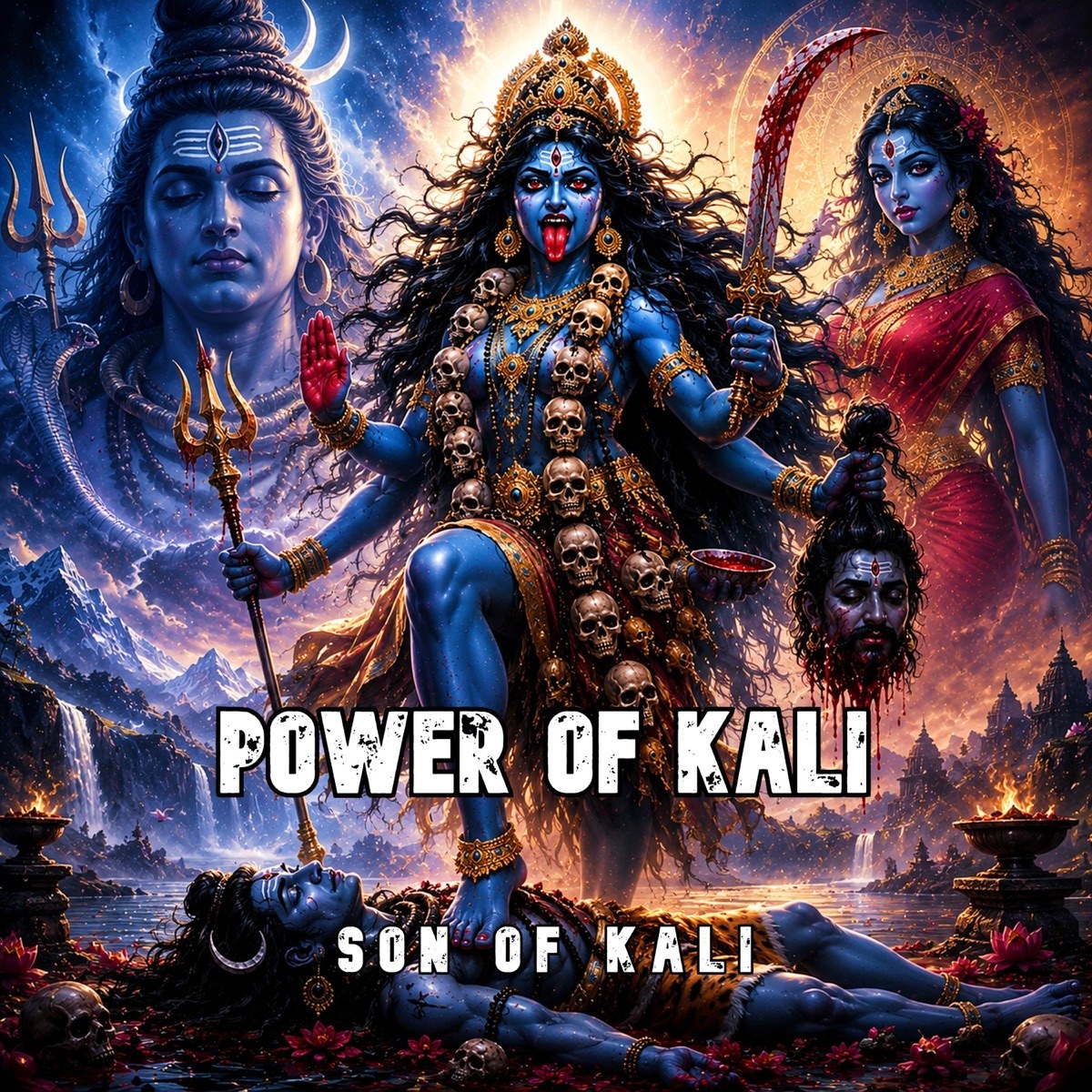
Son of Kali · Power of Kali

0:006:43
Deity
Kali
Type
Ashtakam
Verses
9
Language
Sanskrit

Sri Bhadrakali Ashtakam Lyrics with Meaning

Each line shows an easy way to say it, with its English meaning. Turn on the Sanskrit, the exact pronunciation or the word-by-word meaning whenever you want to go deeper.

Verse 1 — The dance of dissolution

घोरे संसारवह्नौ प्रलयमुपगते या हि कृत्वा श्मशाने

Ghore Samsaravahnau Pralayamupagate Ya Hi Kritva Shmashane

ghore saṃsāravahnau pralayamupagate yā hi kṛtvā śmaśāne

When the world has gone to dissolution in the terrible fire of samsara, she who, in the cremation ground,

    नृत्यत्यन्यूनशक्तिर्जगदिदमखिलं मुण्डमालाभिरामा ।

    Nrityatyanyunashaktirjagadidamakhilam Mundamalabhirama

    nṛtyatyanyūnaśaktirjagadidamakhilaṃ muṇḍamālābhirāmā

    dances with undiminished power, beautiful with her garland of skulls,

      भिद्यद्ब्रह्माण्डभाण्डं पटुतरनिनदैरट्टहासैरुदारैः

      Bhidyadbrahmandabhandam Patutaraninadairattahasairudaraih

      bhidyadbrahmāṇḍabhāṇḍaṃ paṭutaraninadairaṭṭahāsairudāraiḥ

      splitting the egg of the universe with her piercing cries and great peals of laughter —

        सास्माकं वैरिवर्गं शमयतु तरसा भद्रदा भद्रकाली ॥ १ ॥

        Sasmakam Vairivargam Shamayatu Tarasa Bhadrada Bhadrakali

        sāsmākaṃ vairivargaṃ śamayatu tarasā bhadradā bhadrakālī

        may she, Bhadrakali, giver of good fortune, swiftly quell the host of our enemies.

          Verse 2 — Madhu and Kaitabha

          मग्ने लोकेऽम्बुराशौ नलिनभवनुता विष्णुना कारयित्वा

          Magne Lokemburashau Nalinabhavanuta Vishnuna Karayitva

          magne loke'mburāśau nalinabhavanutā viṣṇunā kārayitvā

          When the world was sunk in the ocean, she, praised by lotus-born Brahma, had Vishnu

            चक्रोत्कृत्तोरुकण्ठं मधुमपि भयदं कैटभं चातिभीमम् ।

            Chakrotkrittorukantham Madhumapi Bhayadam Kaitabham Chatibhimam

            cakrotkṛttorukaṇṭhaṃ madhumapi bhayadaṃ kaiṭabhaṃ cātibhīmam

            sever with his discus the thighs and throats of Madhu and the terrible Kaitabha,

              पद्मोत्पत्तेः प्रभूतं भयमुत रिपुतोयाहरत्सानुकम्पा

              Padmotpatteh Prabhutam Bhayamuta Riputoyaharatsanukampa

              padmotpatteḥ prabhūtaṃ bhayamuta riputoyāharatsānukampā

              and in her compassion removed the great fear of the lotus-born from his foes —

                सास्माकं वैरिवर्गं शमयतु तरसा भद्रदा भद्रकाली ॥ २ ॥

                Sasmakam Vairivargam Shamayatu Tarasa Bhadrada Bhadrakali

                sāsmākaṃ vairivargaṃ śamayatu tarasā bhadradā bhadrakālī

                may she, Bhadrakali, giver of good fortune, swiftly quell the host of our enemies.

                  Verse 3 — Mahisha

                  विश्वत्राणं विधातुं महिषमथ राणे याऽसुरं भीमरूपं

                  Vishvatranam Vidhatum Mahishamatha Rane Yasuram Bhimarupam

                  viśvatrāṇaṃ vidhātuṃ mahiṣamatha rāṇe yā'suraṃ bhīmarūpaṃ

                  To save the universe, she struck the terrible demon Mahisha in battle,

                    शूलेनाहत्य वक्षस्यमरपतिनुता पातयन्ती च भूमौ ।

                    Shulenahatya Vakshasyamarapatinuta Patayanti Cha Bhumau

                    śūlenāhatya vakṣasyamarapatinutā pātayantī ca bhūmau

                    piercing his chest with her trident, praised by the king of the gods, and threw him to the ground,

                      तस्यासृग्वाहिनीभिर्जलनिधिमखिलं शोणिताभं च चक्रे

                      Tasyasrigvahinibhirjalanidhimakhilam Shonitabham Cha Chakre

                      tasyāsṛgvāhinībhirjalanidhimakhilaṃ śoṇitābhaṃ ca cakre

                      and turned the whole ocean red with the rivers of his blood —

                        सास्माकं वैरिवर्गं शमयतु तरसा भद्रदा भद्रकाली ॥ ३ ॥

                        Sasmakam Vairivargam Shamayatu Tarasa Bhadrada Bhadrakali

                        sāsmākaṃ vairivargaṃ śamayatu tarasā bhadradā bhadrakālī

                        may she, Bhadrakali, giver of good fortune, swiftly quell the host of our enemies.

                          Verse 4 — Chanda and Munda

                          या देवी चण्डमुण्डौ त्रिभुवननलिनीवारणौ देवशत्रू

                          Ya Devi Chandamundau Tribhuvananalinivaranau Devashatru

                          yā devī caṇḍamuṇḍau tribhuvananalinīvāraṇau devaśatrū

                          The Goddess who, seeing Chanda and Munda — enemies of the gods, elephants trampling the lotus pond of the three worlds —

                            दृष्ट्वा युद्धोत्सवे तौ द्रुततरमभियातासिना कृत्तकण्ठौ ।

                            Drishtva Yuddhotsave Tau Drutataramabhiyatasina Krittakanthau

                            dṛṣṭvā yuddhotsave tau drutataramabhiyātāsinā kṛttakaṇṭhau

                            rushed at them in the festival of battle and cut their throats with her sword,

                              कृत्वा तद्रक्तपानोद्भवमदमुदिता साट्टहासातिभीमा

                              Kritva Tadraktapanodbhavamadamudita Sattahasatibhima

                              kṛtvā tadraktapānodbhavamadamuditā sāṭṭahāsātibhīmā

                              then, drunk with joy from drinking their blood, laughed most terribly —

                                सास्माकं वैरिवर्गं शमयतु तरसा भद्रदा भद्रकाली ॥ ४ ॥

                                Sasmakam Vairivargam Shamayatu Tarasa Bhadrada Bhadrakali

                                sāsmākaṃ vairivargaṃ śamayatu tarasā bhadradā bhadrakālī

                                may she, Bhadrakali, giver of good fortune, swiftly quell the host of our enemies.

                                  Verse 5 — Raktabija

                                  सद्यस्तं रक्तबीजं समरभुवि नता घोररूपानसङ्ख्यान्

                                  Sadyastam Raktabijam Samarabhuvi Nata Ghorarupanasankhyan

                                  sadyastaṃ raktabījaṃ samarabhuvi natā ghorarūpānasaṅkhyān

                                  At once, on the battlefield, Raktabija and the countless fearsome forms

                                    राक्तोद्भूतैरसङ्ख्यैर्गजतुरगरथैस्सार्थमन्यांश्च दैत्यान् ।

                                    Raktodbhutairasankhyairgajaturagarathaissarthamanyamshcha Daityan

                                    rāktodbhūtairasaṅkhyairgajaturagarathaissārthamanyāṃśca daityān

                                    born from his blood, with their elephants, horses and chariots, and the other demons,

                                      वक्त्रे निक्षिप्य दष्ट्वा गुरुतरदशनैरापपौ शोणितौघं

                                      Vaktre Nikshipya Dashtva Gurutaradashanairapapau Shonitaugham

                                      vaktre nikṣipya daṣṭvā gurutaradaśanairāpapau śoṇitaughaṃ

                                      she threw into her mouth, crushed with her great teeth, and drank the flood of blood —

                                        सास्माकं वैरिवर्गं शमयतु तरसा भद्रदा भद्रकाली ॥ ५ ॥

                                        Sasmakam Vairivargam Shamayatu Tarasa Bhadrada Bhadrakali

                                        sāsmākaṃ vairivargaṃ śamayatu tarasā bhadradā bhadrakālī

                                        may she, Bhadrakali, giver of good fortune, swiftly quell the host of our enemies.

                                          Verse 6 — Shumbha and Nishumbha

                                          स्थानाद्भ्रष्टैश्च देवैस्तुहिनगिरितटे सङ्गतैस्संस्तुता या

                                          Sthanadbhrashtaishcha Devaistuhinagiritate Sangataissamstuta Ya

                                          sthānādbhraṣṭaiśca devaistuhinagiritaṭe saṅgataissaṃstutā yā

                                          Praised by the gods who, driven from their places, gathered on the slopes of the Himalaya,

                                            सङ्ख्याहीनैस्समेतं त्रिदशरिपुगणैस्स्यन्दनेभाश्वयुक्तैः ।

                                            Sankhyahinaissametam Tridasharipuganaissyandanebhashvayuktaih

                                            saṅkhyāhīnaissametaṃ tridaśaripugaṇaissyandanebhāśvayuktaiḥ

                                            she, with the countless hosts of the gods’ enemies, their chariots, elephants and horses,

                                              युद्धे शुम्भं निशुम्भं त्रिभुवनविपदं नाशयन्ती च जघ्ने

                                              Yuddhe Shumbham Nishumbham Tribhuvanavipadam Nashayanti Cha Jaghne

                                              yuddhe śumbhaṃ niśumbhaṃ tribhuvanavipadaṃ nāśayantī ca jaghne

                                              struck down Shumbha and Nishumbha in battle, the calamity of the three worlds —

                                                सास्माकं वैरिवर्गं शमयतु तरसा भद्रदा भद्रकाली ॥ ६ ॥

                                                Sasmakam Vairivargam Shamayatu Tarasa Bhadrada Bhadrakali

                                                sāsmākaṃ vairivargaṃ śamayatu tarasā bhadradā bhadrakālī

                                                may she, Bhadrakali, giver of good fortune, swiftly quell the host of our enemies.

                                                  Verse 7 — Daruka

                                                  शम्भोर्नेत्रानले या जननमपि जगत्त्राणहेतोरयासीत्

                                                  Shambhornetranale Ya Jananamapi Jagattranahetorayasit

                                                  śambhornetrānale yā jananamapi jagattrāṇahetorayāsīt

                                                  She who was born from the fire of Shambhu’s eye to protect the world,

                                                    भूयस्तीक्ष्णातिधाराविदलितदनुजा दारुकं चापि हत्वा ।

                                                    Bhuyastikshnatidharavidalitadanuja Darukam Chapi Hatva

                                                    bhūyastīkṣṇātidhārāvidalitadanujā dārukaṃ cāpi hatvā

                                                    who again tore the demons apart with her very sharp blade and killed Daruka too,

                                                      तस्यासृक्पानतुष्टा मुहुरपि कृतवत्यट्टहासं कठोरं

                                                      Tasyasrikpanatushta Muhurapi Kritavatyattahasam Kathoram

                                                      tasyāsṛkpānatuṣṭā muhurapi kṛtavatyaṭṭahāsaṃ kaṭhoraṃ

                                                      and, pleased by drinking his blood, laughed harshly again and again —

                                                        सास्माकं वैरिवर्गं शमयतु तरसा भद्रदा भद्रकाली ॥ ७ ॥

                                                        Sasmakam Vairivargam Shamayatu Tarasa Bhadrada Bhadrakali

                                                        sāsmākaṃ vairivargaṃ śamayatu tarasā bhadradā bhadrakālī

                                                        may she, Bhadrakali, giver of good fortune, swiftly quell the host of our enemies.

                                                          Verse 8 — Her many forms

                                                          या देवी कालरात्री तुहिनगिरसुता लोकमाता धरित्री

                                                          Ya Devi Kalaratri Tuhinagirasuta Lokamata Dharitri

                                                          yā devī kālarātrī tuhinagirasutā lokamātā dharitrī

                                                          The Goddess who is the night of time, daughter of the snowy mountain, mother of the world, the earth,

                                                            वणी निद्रा च मायामनसिजदयिता घोररूपातिसौम्या ।

                                                            Vani Nidra Cha Mayamanasijadayita Ghorarupatisaumya

                                                            vaṇī nidrā ca māyāmanasijadayitā ghorarūpātisaumyā

                                                            speech, sleep and illusion, beloved of the mind-born god, both terrible and most gentle,

                                                              चामुण्डा खड्गहस्ता रिपुहननपरा शोणितास्वादकामा

                                                              Chamunda Khadgahasta Ripuhananapara Shonitasvadakama

                                                              cāmuṇḍā khaḍgahastā ripuhananaparā śoṇitāsvādakāmā

                                                              Chamunda, sword in hand, intent on killing enemies, eager to taste their blood —

                                                                सा हन्याद्विश्ववन्द्या मम रिपुनिवहा भद्रदा भद्रकाली ॥ ८ ॥

                                                                Sa Hanyadvishvavandya Mama Ripunivaha Bhadrada Bhadrakali

                                                                sā hanyādviśvavandyā mama ripunivahā bhadradā bhadrakālī

                                                                may she, honoured by the universe, Bhadrakali, giver of good fortune, destroy the hosts of my enemies.

                                                                  The fruit of the hymn

                                                                  भद्रकाल्यष्टकं जप्यं शत्रुसंक्षयकाङ्क्षिणा ।

                                                                  Bhadrakalyashtakam Japyam Shatrusamkshayakankshina

                                                                  bhadrakālyaṣṭakaṃ japyaṃ śatrusaṃkṣayakāṅkṣiṇā

                                                                  This Bhadrakali Ashtakam should be recited by one who wishes for the destruction of enemies;

                                                                    स्वर्गापवर्गदं पुण्यं दुष्टग्रहनिवारणम् ॥ ९ ॥

                                                                    Svargapavargadam Punyam Dushtagrahanivaranam

                                                                    svargāpavargadaṃ puṇyaṃ duṣṭagrahanivāraṇam

                                                                    it is holy, it grants heaven and liberation, and wards off harmful planetary influences.
                                                                      About Sri Bhadrakali Ashtakam

                                                                      Bhadrakali — “Kali who is auspicious” — is especially loved in Kerala, where she is the fierce mother born from Shiva’s third eye to destroy the demon Daruka. Her name holds the paradox of Kali: terrifying to what harms, protective and gentle to those who come to her.

                                                                      Each verse of this ashtakam tells one of her victories, drawn from the Devi Mahatmya and Kerala tradition: dancing at the dissolution of the universe; making Vishnu kill Madhu and Kaitabha; spearing Mahisha; beheading Chanda and Munda; drinking the blood of Raktabija; slaying Shumbha and Nishumbha; and, born from Shiva’s eye, killing Daruka.

                                                                      Every verse ends with the same refrain, asking her to quell “the host of our enemies” — understood both as outer dangers and as the inner enemies of desire, anger, greed, delusion, pride and envy. The verses are in the long sragdhara metre and are best chanted slowly.

                                                                      The Stories Inside the Hymn

                                                                      Bhadrakali and Daruka

                                                                      In Kerala’s tradition, the demon Daruka won a boon that no man could kill him and began tormenting the worlds. Shiva opened his third eye, and from its fire Bhadrakali was born.

                                                                      She fought and killed Daruka, and was so fierce with victory that Shiva lay down in her path to calm her — the story behind many of Kerala’s Bhadrakali temples and festivals, and behind verse 7 of this hymn.

                                                                      How to Chant Sri Bhadrakali Ashtakam

                                                                      When to chant

                                                                      • ✦Tuesdays and Fridays
                                                                      • ✦Navaratri
                                                                      • ✦Times of conflict or fear

                                                                      How many times

                                                                      Once, or nine times during Navaratri.

                                                                      1. 1

                                                                        Light a lamp before an image of Kali or Durga.

                                                                      2. 2

                                                                        Chant each long verse slowly, letting the refrain land.

                                                                      3. 3

                                                                        As you repeat “quell the host of our enemies”, name the inner enemy you most want her to remove.

                                                                      Pronunciation Guide

                                                                      The sounds that trip people up most in this hymn, and how to say them.

                                                                      bhadrakālī

                                                                      bhud-ra-kaa-lee — “auspicious Kali.”

                                                                      vairivargaṃ

                                                                      vai-ri-var-gum — “the host of enemies.”

                                                                      śamayatu

                                                                      sha-ma-ya-tu — “may she calm, quell.”

                                                                      Power of Kali by Son of Kali

                                                                      The music

                                                                      Power of Kali

                                                                      by Son of Kali

                                                                      More for Kali

                                                                      You May Also Like

                                                                      Frequently Asked Questions

                                                                      Who is Bhadrakali?

                                                                      “Auspicious Kali” — a fierce, protective form of the Goddess, especially worshipped in Kerala, where she is born from Shiva’s third eye to destroy the demon Daruka.

                                                                      What is the refrain of the Bhadrakali Ashtakam?

                                                                      “May Bhadrakali, giver of good fortune, swiftly quell the host of our enemies” — ending verses 1–7.

                                                                      Which battles does it describe?

                                                                      The dissolution of the universe, Madhu and Kaitabha, Mahisha, Chanda and Munda, Raktabija, Shumbha and Nishumbha, and Daruka.

                                                                      What does it promise?

                                                                      The closing verse says it should be recited by those who wish to overcome enemies, and that it grants heaven and liberation and wards off harmful planetary influences.
                                                                      Text: Traditional Sanskrit hymn, checked against the sanskritdocuments.org edition. Easy reading and English translation written for the Jaguar Medicine Tribe Mantra Library.

                                                                      Music: Recordings by Son of Kali, produced with AI-assisted vocals and instrumentation.

                                                                      Note: Benefits described here are traditional beliefs, shared for understanding — not medical or guaranteed outcomes.