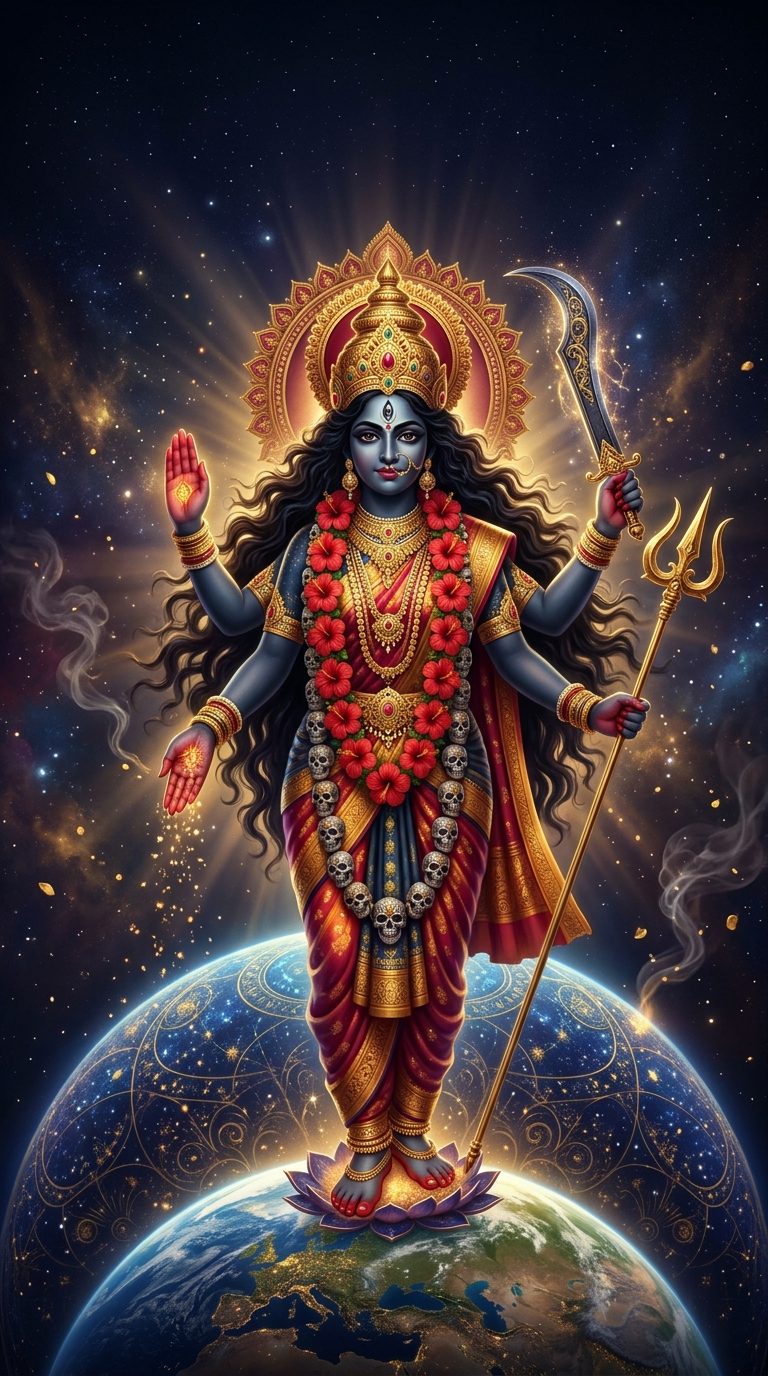
Goddess Kali standing as a guardian over the whole world, a protective dome of deep blue and gold light around the earth
KaliKavacham

Dakshina Kali Kavacham

Lyrics · Meaning · Audio

The armour of Dakshina Kali, revealed by the Goddess herself to Bhairava — Kali guards the front, Kapalini the back, and her many forms protect every part of the body, “above, below and in all directions.”

From the Kalikula Sarvasva (also said to be from the Bhairavi Tantra); the Goddess speaks to Bhairava

Listen

Dakshina Kali Kavacham

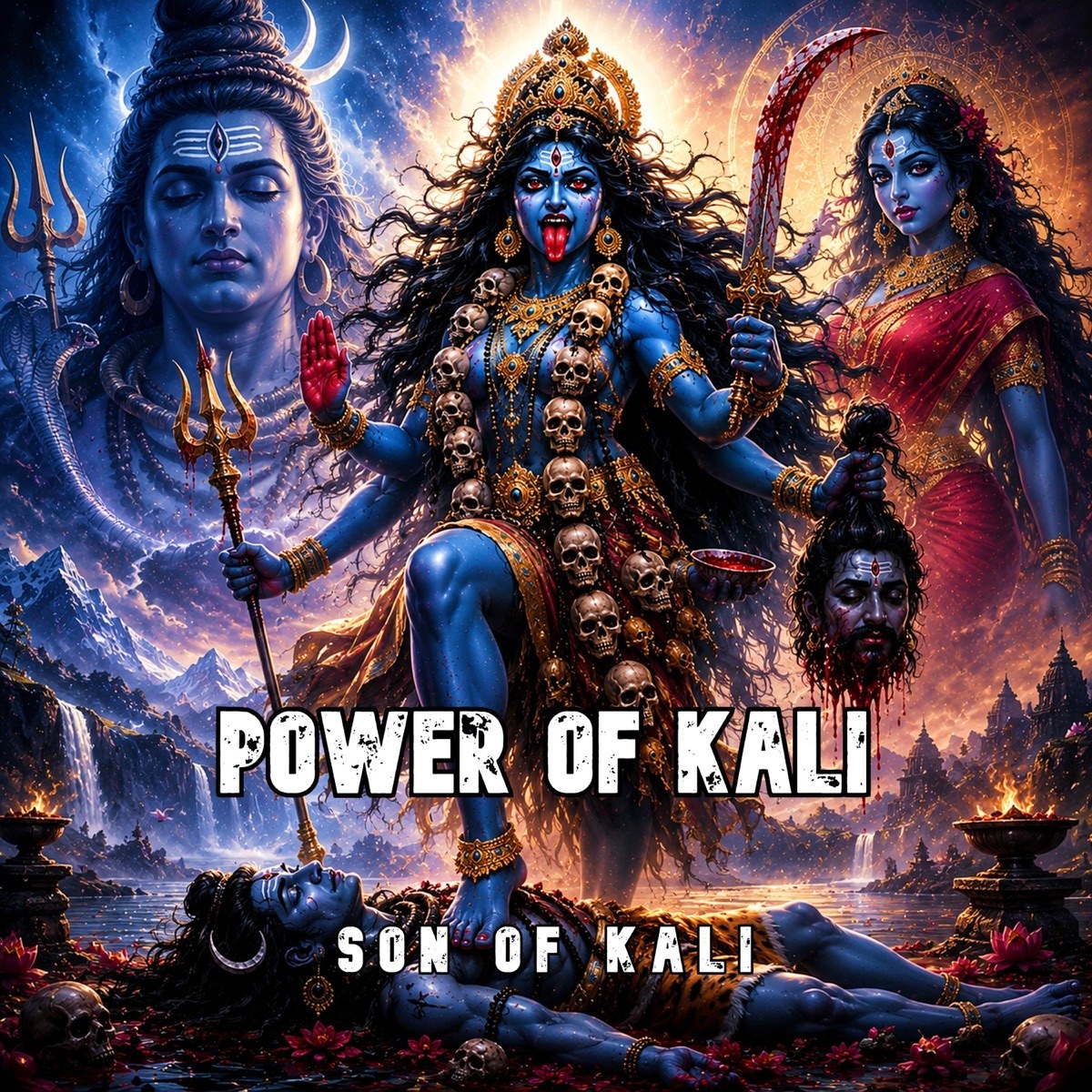
Son of Kali · Power of Kali

0:006:27
Deity
Kali
Type
Kavacham
Verses
15
Language
Sanskrit

Dakshina Kali Kavacham Lyrics with Meaning

Each line shows an easy way to say it, with its English meaning. Turn on the Sanskrit, the exact pronunciation or the word-by-word meaning whenever you want to go deeper.

Verse 1 — Bhairava asks

कालिका या महाविद्या कथिता भुवि दुर्लभा ।

Kalika Ya Mahavidya Kathita Bhuvi Durlabha

kālikā yā mahāvidyā kathitā bhuvi durlabhā

Kalika, the great wisdom, has been described — rare to find on earth;

    तथापि हृदये शल्यमस्ति देवि कृपां कुरु ॥ १ ॥

    Tathapi Hridaye Shalyamasti Devi Kripam Kuru

    tathāpi hṛdaye śalyamasti devi kṛpāṃ kuru

    yet there is still a thorn in my heart, O Goddess; please be kind.

      Verse 2

      कवचन्तु महादेवि कथयस्वानुकम्पया ।

      Kavachantu Mahadevi Kathayasvanukampaya

      kavacantu mahādevi kathayasvānukampayā

      Tell me her armour, great Goddess, out of compassion;

        यदि नो कथ्यते मातर्व्विमुञ्चामि तदा तनुम् ॥ २ ॥

        Yadi No Kathyate Matarvvimunchami Tada Tanum

        yadi no kathyate mātarvvimuñcāmi tadā tanum

        if it is not told to me, Mother, I will give up this body.

          Verse 3 — The Goddess answers

          शङ्कापि जायते वत्स तव स्नेहात् प्रकाशितम् ।

          Shankapi Jayate Vatsa Tava Snehat Prakashitam

          śaṅkāpi jāyate vatsa tava snehāt prakāśitam

          I hesitate, my child, but out of love for you I reveal it;

            न वक्तव्यं न द्रष्टव्यमतिगुह्यतरं महत् ॥ ३ ॥

            Na Vaktavyam Na Drashtavyamatiguhyataram Mahat

            na vaktavyaṃ na draṣṭavyamatiguhyataraṃ mahat

            it is not to be spoken of or shown; it is great and most secret.

              Verse 4

              कालिका जगतां माता शोकदुःखविनाशिनी ।

              Kalika Jagatam Mata Shokaduhkhavinashini

              kālikā jagatāṃ mātā śokaduḥkhavināśinī

              Kalika is the mother of the worlds, destroyer of grief and sorrow,

                विशेषतः कलियुगे महापातकहारिणी ॥ ४ ॥

                Visheshatah Kaliyuge Mahapatakaharini

                viśeṣataḥ kaliyuge mahāpātakahāriṇī

                and especially in the Kali age, remover of great sins.

                  Verse 5 — The armour

                  काली मे पुरतः पातु पृष्ठतश्च कपालिनी ।

                  Kali Me Puratah Patu Prishthatashcha Kapalini

                  kālī me purataḥ pātu pṛṣṭhataśca kapālinī

                  May Kali protect me in front, and Kapalini behind;

                    कुल्ला मे दक्षिणे पातु कुरुकुल्ला तथोत्तरे ॥ ५ ॥

                    Kulla Me Dakshine Patu Kurukulla Tathottare

                    kullā me dakṣiṇe pātu kurukullā tathottare

                    may Kulla protect me on the right, and Kurukulla on the left.

                      Verse 6

                      विरोधिनी शिरः पातु विप्रचित्ता तु चक्षुषी ।

                      Virodhini Shirah Patu Viprachitta Tu Chakshushi

                      virodhinī śiraḥ pātu vipracittā tu cakṣuṣī

                      May Virodhini protect my head, and Viprachitta my eyes;

                        उग्रा मे नासिकां पातु कर्णौ चोग्रप्रभा मता ॥ ६ ॥

                        Ugra Me Nasikam Patu Karnau Chograprabha Mata

                        ugrā me nāsikāṃ pātu karṇau cograprabhā matā

                        may Ugra protect my nose, and Ugraprabha my ears;

                          Verse 7

                          वदनं पातु मे दीप्ता नीला च चिबुकं सदा ।

                          Vadanam Patu Me Dipta Nila Cha Chibukam Sada

                          vadanaṃ pātu me dīptā nīlā ca cibukaṃ sadā

                          may Dipta protect my face and Nila my chin always;

                            घना ग्रीवां सदा पातु बलाका बाहुयुग्मकम् ॥ ७ ॥

                            Ghana Grivam Sada Patu Balaka Bahuyugmakam

                            ghanā grīvāṃ sadā pātu balākā bāhuyugmakam

                            may Ghana always protect my neck, and Balaka my two arms;

                              Verse 8

                              मात्रा पातु करद्वन्द्वं वक्षोमुद्रा सदावतु ।

                              Matra Patu Karadvandvam Vakshomudra Sadavatu

                              mātrā pātu karadvandvaṃ vakṣomudrā sadāvatu

                              may Matra protect my hands, and Mudra my chest always;

                                मिता पातु स्तनद्वन्द्वं योनिमण्डलदेवता ॥ ८ ॥

                                Mita Patu Stanadvandvam Yonimandaladevata

                                mitā pātu stanadvandvaṃ yonimaṇḍaladevatā

                                may Mita protect my breasts, and the goddess of the sacred circle my lower body;

                                  Verse 9

                                  ब्राह्मी मे जठरं पातु नाभिं नारायणी तथा ।

                                  Brahmi Me Jatharam Patu Nabhim Narayani Tatha

                                  brāhmī me jaṭharaṃ pātu nābhiṃ nārāyaṇī tathā

                                  may Brahmi protect my belly and Narayani my navel;

                                    ऊरु माहेश्वरी नित्यं चामुण्डा पातु लिङ्गकम् ॥ ९ ॥

                                    Uru Maheshvari Nityam Chamunda Patu Lingakam

                                    ūru māheśvarī nityaṃ cāmuṇḍā pātu liṅgakam

                                    Maheshvari my thighs always, and Chamunda my private parts;

                                      Verse 10

                                      कौमारी च कटीं पातु तथैव जानुयुग्मकम् ।

                                      Kaumari Cha Katim Patu Tathaiva Januyugmakam

                                      kaumārī ca kaṭīṃ pātu tathaiva jānuyugmakam

                                      may Kaumari protect my waist and also my knees;

                                        अपराजिता च पादौ मे वाराही पातु चाङ्गुलीन् ॥ १० ॥

                                        Aparajita Cha Padau Me Varahi Patu Changulin

                                        aparājitā ca pādau me vārāhī pātu cāṅgulīn

                                        Aparajita my feet, and Varahi my toes.

                                          Verse 11

                                          सन्धिस्थानं नारसिंही पत्रस्था देवतावतु ।

                                          Sandhisthanam Narasimhi Patrastha Devatavatu

                                          sandhisthānaṃ nārasiṃhī patrasthā devatāvatu

                                          May Narasimhi protect my joints, and the goddess of the leaf my whole body.

                                            रक्षाहीनन्तु यत्स्थानं वर्जितं कवचेन तु ॥ ११ ॥

                                            Rakshahinantu Yatsthanam Varjitam Kavachena Tu

                                            rakṣāhīnantu yatsthānaṃ varjitaṃ kavacena tu

                                            Whatever place is left unprotected, not covered by this armour,

                                              Verse 12

                                              तत्सर्वं रक्ष मे देवि कालिके घोरदक्षिणे ।

                                              Tatsarvam Raksha Me Devi Kalike Ghoradakshine

                                              tatsarvaṃ rakṣa me devi kālike ghoradakṣiṇe

                                              protect all of it for me, O Goddess Kalika, terrible and gracious;

                                                ऊर्द्धमधस्तथा दिक्षु पातु देवी स्वयं वपुः ॥ १२ ॥

                                                Urddhamadhastatha Dikshu Patu Devi Svayam Vapuh

                                                ūrddhamadhastathā dikṣu pātu devī svayaṃ vapuḥ

                                                above, below and in every direction, may the Goddess herself protect my body.

                                                  Verse 13

                                                  हिंस्रेभ्यः सर्वदा पातु साधकञ्च जलाधिकात् ।

                                                  Himsrebhyah Sarvada Patu Sadhakancha Jaladhikat

                                                  hiṃsrebhyaḥ sarvadā pātu sādhakañca jalādhikāt

                                                  May she always protect the seeker from wild beasts and from the dangers of water;

                                                    दक्षिणाकालिका देवी व्यपकत्वे सदावतु ॥ १३ ॥

                                                    Dakshinakalika Devi Vyapakatve Sadavatu

                                                    dakṣiṇākālikā devī vyapakatve sadāvatu

                                                    may Goddess Dakshina Kalika, who pervades all, always protect me.

                                                      Verse 14 — The fruits

                                                      इदं कवचमज्ञात्वा यो जपेद्देवदक्षिणाम् ।

                                                      Idam Kavachamajnatva Yo Japeddevadakshinam

                                                      idaṃ kavacamajñātvā yo japeddevadakṣiṇām

                                                      Whoever repeats the mantra of the Goddess without knowing this armour

                                                        न पूजाफलमाप्नोति विघ्नस्तस्य पदे पदे ॥ १४ ॥

                                                        Na Pujaphalamapnoti Vighnastasya Pade Pade

                                                        na pūjāphalamāpnoti vighnastasya pade pade

                                                        does not gain the fruit of worship and meets obstacles at every step.

                                                          Verse 15

                                                          कवचेनावृतो नित्यं यत्र तत्रैव गच्छति ।

                                                          Kavachenavrito Nityam Yatra Tatraiva Gacchati

                                                          kavacenāvṛto nityaṃ yatra tatraiva gacchati

                                                          Covered always by this armour, wherever one goes,

                                                            तत्र तत्राभयं तस्य न क्षोभं विद्यते क्वचित् ॥ १५ ॥

                                                            Tatra Tatrabhayam Tasya Na Kshobham Vidyate Kvachit

                                                            tatra tatrābhayaṃ tasya na kṣobhaṃ vidyate kvacit

                                                            there one is fearless and is never disturbed.

                                                              About Dakshina Kali Kavacham

                                                              Dakṣiṇa Kālī is Kali in her gracious, boon-giving form — the most widely worshipped image of Kali, standing with her right foot forward on Shiva. Her kavacham is a short protective hymn found in the Kalikula Sarvasva, a Kali tantra.

                                                              It opens as a dialogue. Bhairava says that although he has heard of Kali’s great wisdom, there is still a thorn in his heart — he begs to hear her armour. The Goddess reveals it out of affection, calling Kali “mother of the worlds, destroyer of grief and sorrow, and especially in the Kali age, remover of great sins.”

                                                              Then the armour: Kali in front, Kapalini behind, Kulla on the right, Kurukulla on the left, and goddesses such as Ugra, Dipta, Nila, Ghana, Brahmi, Narayani, Maheshvari, Chamunda, Kaumari, Aparajita, Varahi and Narasimhi on each part of the body. The last verses say that the armour must accompany Kali’s worship, and that the wearer is fearless wherever they go.
                                                              The Stories Inside the Hymn

                                                              Why “Dakshina”?

                                                              Dakṣiṇa means “right” and also “generous, skilful.” In the familiar image, Dakshina Kali steps forward with her right foot, her right hands granting fearlessness and blessings.

                                                              Another tradition says the name comes from the dakṣiṇā — the gift — that she gives: liberation itself.

                                                              How to Chant Dakshina Kali Kavacham

                                                              When to chant

                                                              • ✦Kali Puja and new-moon nights
                                                              • ✦Tuesdays and Saturdays
                                                              • ✦Before Kali worship or japa of her mantra
                                                              • ✦When you feel in danger

                                                              How many times

                                                              Once.

                                                              1. 1

                                                                Light a lamp before Kali and offer a red flower.

                                                              2. 2

                                                                Chant the opening dialogue to set the intention.

                                                              3. 3

                                                                As each goddess is named, picture her guarding that place on your body.

                                                              4. 4

                                                                Close with the Kali Gayatri or a moment of silence.

                                                              Pronunciation Guide

                                                              The sounds that trip people up most in this hymn, and how to say them.

                                                              dakṣiṇa

                                                              duk-shi-na.

                                                              kurukullā

                                                              ku-ru-kul-laa.

                                                              pātu

                                                              paa-tu — “may she protect.”

                                                              Power of Kali by Son of Kali

                                                              The music

                                                              Power of Kali

                                                              by Son of Kali

                                                              More for Kali

                                                              Frequently Asked Questions

                                                              What is the Dakshina Kali Kavacham?

                                                              A protective hymn from the Kalikula Sarvasva in which forms of Kali are invoked to guard every direction and every part of the body.

                                                              Who is Dakshina Kali?

                                                              The gracious, boon-giving form of Kali, the most commonly worshipped image of her, especially in Bengal.

                                                              Why does the hymn say not to reveal it?

                                                              Tantric texts often ask that their teachings be kept from those without sincerity. In practice the kavacham is widely chanted by devotees with respect.

                                                              Text: Traditional public-domain Sanskrit hymn, checked against the sanskritdocuments.org edition. Easy reading and English translation written for the Jaguar Medicine Tribe Mantra Library.

                                                              Music: Recordings by Son of Kali, produced with AI-assisted vocals and instrumentation.

                                                              Note: Benefits described here are traditional beliefs, shared for understanding — not medical or guaranteed outcomes.