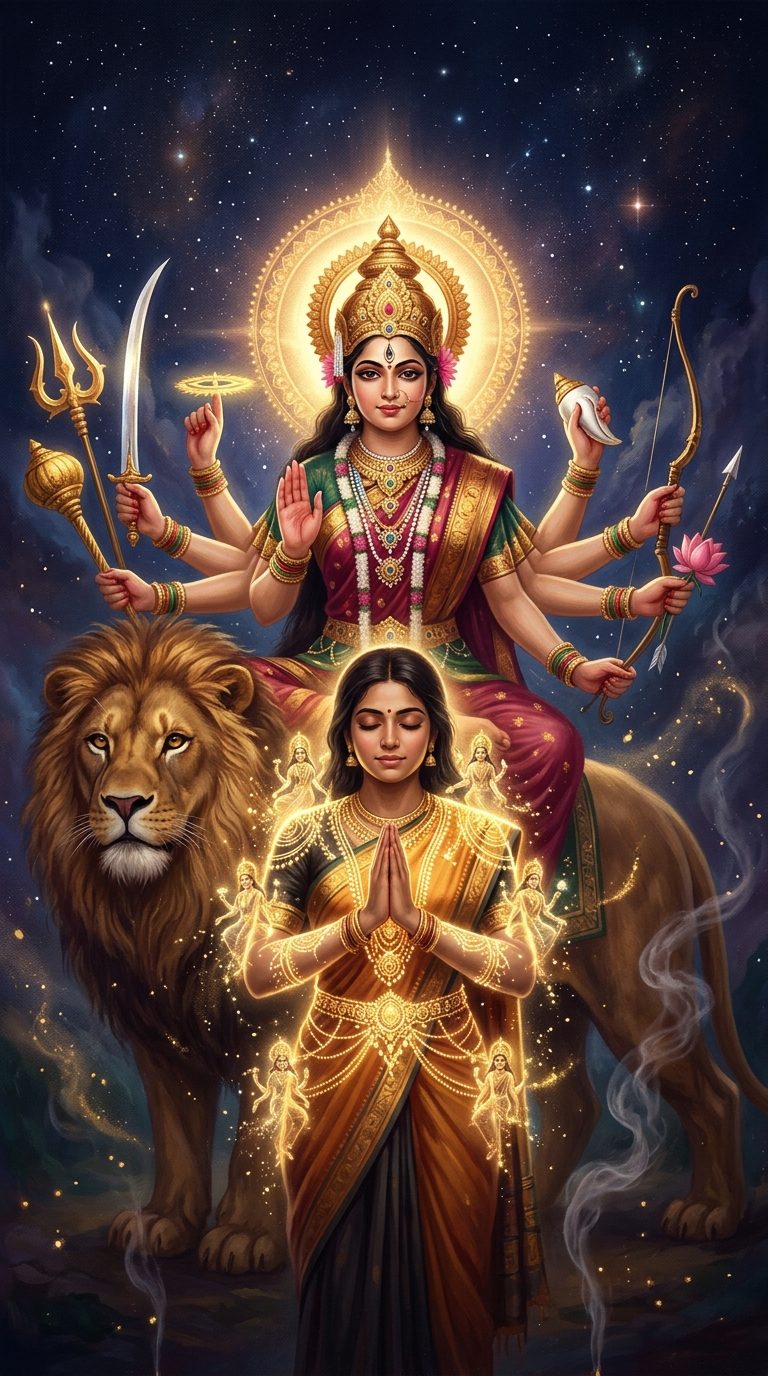
A devotee standing within a radiant suit of golden light, each part of the body guarded by a small glowing goddess, Durga towering behind on her lion
DurgaKavacham

Devi Kavacham

Lyrics · Meaning · Audio

The “armour of the Goddess” — Brahma’s secret teaching in which a different form of the Goddess is placed to guard every direction and every part of the body, from the crown of the head to the toes, then the breath, the senses and the family.

Recited before the Durga Saptashati; Brahma speaks to the sage Markandeya

Listen

Devi Kavacham

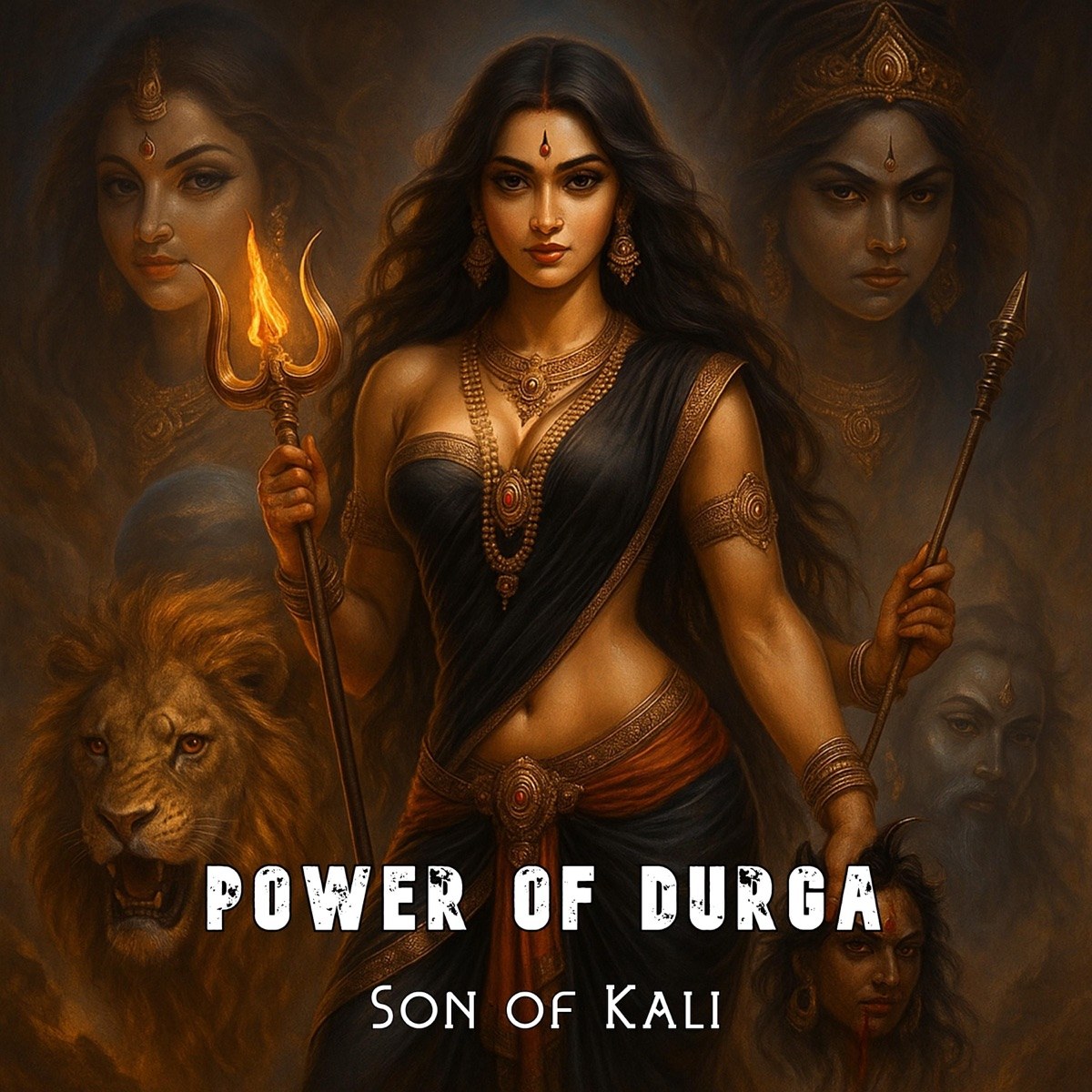
Son of Kali · Power of Durga

0:006:53
Deity
Durga
Type
Kavacham
Verses
56
Language
Sanskrit

Devi Kavacham Lyrics with Meaning

Each line shows an easy way to say it, with its English meaning. Turn on the Sanskrit, the exact pronunciation or the word-by-word meaning whenever you want to go deeper.

Verse 1 — Markandeya asks

ॐ यद्।ह्गुह्यं परमं लोके सर्वरक्षाकरं नृणाम्।ह् ।

Om Yadhguhyam Paramam Loke Sarvarakshakaram Nrinamh

oṃ yadhguhyaṃ paramaṃ loke sarvarakṣākaraṃ nṛṇāmh

Markandeya said: Om — that which is most secret in the world, giving every protection to people,

    यन्न कस्यचिदाख्यातं तन्मे ब्रूहि पितामह ॥ १ ॥

    Yanna Kasyachidakhyatam Tanme Bruhi Pitamaha

    yanna kasyacidākhyātaṃ tanme brūhi pitāmaha

    which has never been told to anyone — tell it to me, O Grandfather Brahma.

      Verse 2 — Brahma answers

      अस्ति गुह्यतमं विप्र सर्वभूतोपकारकम्।ह् ।

      Asti Guhyatamam Vipra Sarvabhutopakarakamh

      asti guhyatamaṃ vipra sarvabhūtopakārakamh

      Brahma said: There is a most secret thing, O sage, that helps all beings —

        देव्यास्तु कवचं पुण्यं तच्छृणुष्व महामुने ॥ २ ॥

        Devyastu Kavacham Punyam Tacchrinushva Mahamune

        devyāstu kavacaṃ puṇyaṃ tacchṛṇuṣva mahāmune

        the holy armour of the Goddess; listen to it, O great sage.

          Verse 3 — The nine Durgas

          प्रथमं शैलपुत्री च द्वितीयं ब्रह्मचारिणी ।

          Prathamam Shailaputri Cha Dvitiyam Brahmacharini

          prathamaṃ śailaputrī ca dvitīyaṃ brahmacāriṇī

          The first is Shailaputri, the second Brahmacharini,

            तृतीयं चन्द्रघण्टेति कूष्माण्डेति चतुर्थकम्।ह् ॥ ३ ॥

            Tritiyam Chandraghanteti Kushmandeti Chaturthakamh

            tṛtīyaṃ candraghaṇṭeti kūṣmāṇḍeti caturthakamh

            the third Chandraghanta, the fourth Kushmanda;

              Verse 4

              पञ्चमं स्कन्दमातेति षष्ठं कात्यायनीति च ।

              Panchamam Skandamateti Shashtham Katyayaniti Cha

              pañcamaṃ skandamāteti ṣaṣṭhaṃ kātyāyanīti ca

              the fifth Skandamata, the sixth Katyayani,

                सप्तमं कालरात्रीति महागौरीति चाष्टमम्।ह् ॥ ४ ॥

                Saptamam Kalaratriti Mahagauriti Chashtamamh

                saptamaṃ kālarātrīti mahāgaurīti cāṣṭamamh

                the seventh Kalaratri, the eighth Mahagauri;

                  Verse 5

                  नवमं सिद्धिदात्री च नवदुर्गाः प्रकीर्तिताः ।

                  Navamam Siddhidatri Cha Navadurgah Prakirtitah

                  navamaṃ siddhidātrī ca navadurgāḥ prakīrtitāḥ

                  the ninth Siddhidatri — these are proclaimed the nine Durgas,

                    उक्तान्येतानि नामानि ब्रह्मणैव महात्मना ॥ ५ ॥

                    Uktanyetani Namani Brahmanaiva Mahatmana

                    uktānyetāni nāmāni brahmaṇaiva mahātmanā

                    and these names were spoken by great-souled Brahma himself.

                      Verse 6

                      अग्निना दह्यमानस्तु शत्रुमध्ये गतो रणे ।

                      Agnina Dahyamanastu Shatrumadhye Gato Rane

                      agninā dahyamānastu śatrumadhye gato raṇe

                      One burned by fire, or caught among enemies in battle,

                        विषमे दुर्गमे चैव भयार्त्ताः शरणं गताः ॥ ६ ॥

                        Vishame Durgame Chaiva Bhayarttah Sharanam Gatah

                        viṣame durgame caiva bhayārttāḥ śaraṇaṃ gatāḥ

                        in hardship and in impassable places — those stricken with fear who take refuge in her —

                          Verse 7

                          न तेषां जायते किंचिदशुभं रणसंकटे ।

                          Na Tesham Jayate Kimchidashubham Ranasamkate

                          na teṣāṃ jāyate kiṃcidaśubhaṃ raṇasaṃkaṭe

                          no misfortune at all befalls them in the danger of battle;

                            नापदं तस्य पश्यामि शोकदुःखभयं न हि ॥ ७ ॥

                            Napadam Tasya Pashyami Shokaduhkhabhayam Na Hi

                            nāpadaṃ tasya paśyāmi śokaduḥkhabhayaṃ na hi

                            I see no calamity for them, no grief, sorrow or fear.

                              Verse 8

                              यैस्तु भक्त्या स्मृता नूनं तेषां वृद्धिः प्रजायते ।

                              Yaistu Bhaktya Smrita Nunam Tesham Vriddhih Prajayate

                              yaistu bhaktyā smṛtā nūnaṃ teṣāṃ vṛddhiḥ prajāyate

                              Those who remember you with devotion surely flourish;

                                ये त्वां स्मरन्ति देवेशि रक्षसे तान्न संशयः ॥ ८ ॥

                                Ye Tvam Smaranti Deveshi Rakshase Tanna Samshayah

                                ye tvāṃ smaranti deveśi rakṣase tānna saṃśayaḥ

                                O Queen of the gods, you protect all who remember you — there is no doubt.

                                  Verse 9 — The Mothers

                                  प्रेतसंस्था तु चामुण्डा वाराही महिषासना ।

                                  Pretasamstha Tu Chamunda Varahi Mahishasana

                                  pretasaṃsthā tu cāmuṇḍā vārāhī mahiṣāsanā

                                  Chamunda rides upon a corpse, Varahi upon a buffalo,

                                    ऐन्द्री गजसमारूढा वैष्णवी गरुडासना ॥ ९ ॥

                                    Aindri Gajasamarudha Vaishnavi Garudasana

                                    aindrī gajasamārūḍhā vaiṣṇavī garuḍāsanā

                                    Aindri is mounted on an elephant, Vaishnavi on Garuda,

                                      Verse 10

                                      माहेश्वरी वृषारूढा कौमारी शिखिवाहना ।

                                      Maheshvari Vrisharudha Kaumari Shikhivahana

                                      māheśvarī vṛṣārūḍhā kaumārī śikhivāhanā

                                      Maheshvari rides a bull, Kaumari a peacock;

                                        लक्ष्मीः पद्मासना देवी पद्महस्ता हरिप्रिया ॥ १० ॥

                                        Lakshmih Padmasana Devi Padmahasta Haripriya

                                        lakṣmīḥ padmāsanā devī padmahastā haripriyā

                                        Goddess Lakshmi, beloved of Vishnu, sits on a lotus with a lotus in her hand;

                                          Verse 11

                                          श्वेतरूपधरा देवी ईश्वरी वृषवाहना ।

                                          Shvetarupadhara Devi Ishvari Vrishavahana

                                          śvetarūpadharā devī īśvarī vṛṣavāhanā

                                          Goddess Ishvari, in white, rides a bull;

                                            ब्राह्मी हंससमारूढा सर्वाभरणभूषिता ॥ ११ ॥

                                            Brahmi Hamsasamarudha Sarvabharanabhushita

                                            brāhmī haṃsasamārūḍhā sarvābharaṇabhūṣitā

                                            Brahmi rides a swan, adorned with every ornament.

                                              Verse 12

                                              इत्येता मातरः सर्वाः सर्वयोगसमन्विताः ।

                                              Ityeta Matarah Sarvah Sarvayogasamanvitah

                                              ityetā mātaraḥ sarvāḥ sarvayogasamanvitāḥ

                                              All these Mothers are filled with every yogic power,

                                                नानाभरणशोभाढ्या नानारत्नोपशोभिताः ॥ १२ ॥

                                                Nanabharanashobhadhya Nanaratnopashobhitah

                                                nānābharaṇaśobhāḍhyā nānāratnopaśobhitāḥ

                                                splendid with many ornaments and shining with many jewels.

                                                  Verse 13

                                                  दृश्यन्ते रथमारूढा देव्यः क्रोधसमाकुलाः ।

                                                  Drishyante Rathamarudha Devyah Krodhasamakulah

                                                  dṛśyante rathamārūḍhā devyaḥ krodhasamākulāḥ

                                                  The goddesses are seen riding in chariots, full of righteous anger,

                                                    शङ्खं चक्रं गदां शक्तिं हलं च मुसलायुधम्।ह् ॥ १३ ॥

                                                    Shankham Chakram Gadam Shaktim Halam Cha Musalayudhamh

                                                    śaṅkhaṃ cakraṃ gadāṃ śaktiṃ halaṃ ca musalāyudhamh

                                                    holding conch, discus, mace, spear, plough and pestle,

                                                      Verse 14

                                                      खेटकं तोमरं चैव परशुं पाशमेव च ।

                                                      Khetakam Tomaram Chaiva Parashum Pashameva Cha

                                                      kheṭakaṃ tomaraṃ caiva paraśuṃ pāśameva ca

                                                      shield, lance, axe and noose,

                                                        कुन्तायुधं त्रिशूलं च शार्ङ्गमायुधमुत्तमम्।ह् ॥ १४ ॥

                                                        Kuntayudham Trishulam Cha Sharngamayudhamuttamamh

                                                        kuntāyudhaṃ triśūlaṃ ca śārṅgamāyudhamuttamamh

                                                        javelin, trident and the finest bow, Sharnga.

                                                          Verse 15

                                                          दैत्यानां देहनाशाय भक्तानामभयाय च ।

                                                          Daityanam Dehanashaya Bhaktanamabhayaya Cha

                                                          daityānāṃ dehanāśāya bhaktānāmabhayāya ca

                                                          To destroy the bodies of demons and give fearlessness to devotees,

                                                            धारयन्त्यायुधानीत्थं देवानां च हिताय वै ॥ १५ ॥

                                                            Dharayantyayudhanittham Devanam Cha Hitaya Vai

                                                            dhārayantyāyudhānītthaṃ devānāṃ ca hitāya vai

                                                            they carry these weapons for the good of the gods.

                                                              Verse 16 — The armour begins

                                                              नमस्तेऽस्तु महारौद्रे महाघोरपराक्रमे ।

                                                              Namastestu Maharaudre Mahaghoraparakrame

                                                              namaste'stu mahāraudre mahāghoraparākrame

                                                              Salutations to you, O terrible one, of tremendous valour,

                                                                महाबले महोत्साहे महाभयविनाशिनि ॥ १६ ॥

                                                                Mahabale Mahotsahe Mahabhayavinashini

                                                                mahābale mahotsāhe mahābhayavināśini

                                                                of great strength and great energy, destroyer of great fear.

                                                                  Verse 17

                                                                  त्राहि मां देवि दुष्प्रेक्ष्ये शत्रूणां भयवर्द्धिनि ।

                                                                  Trahi Mam Devi Dushprekshye Shatrunam Bhayavarddhini

                                                                  trāhi māṃ devi duṣprekṣye śatrūṇāṃ bhayavarddhini

                                                                  Protect me, O Goddess too fierce to look upon, who increases the fear of enemies. May Aindri protect me in the east,

                                                                    प्राच्यां रक्षतु मामैन्द्री आग्नेय्यामग्निदेवता ॥ १७ ॥

                                                                    Prachyam Rakshatu Mamaindri Agneyyamagnidevata

                                                                    prācyāṃ rakṣatu māmaindrī āgneyyāmagnidevatā

                                                                    and the god of fire in the south-east;

                                                                      Verse 18

                                                                      दक्षिणेऽवतु वाराही नैरृत्यां खड्गधारिणी ।

                                                                      Dakshinevatu Varahi Nairrityam Khadgadharini

                                                                      dakṣiṇe'vatu vārāhī nairṛtyāṃ khaḍgadhāriṇī

                                                                      Varahi in the south, the sword-bearer in the south-west,

                                                                        प्रतीच्यां वारुणी रक्षेद्वायव्यां मृगवाहिनी ॥ १८ ॥

                                                                        Pratichyam Varuni Rakshedvayavyam Mrigavahini

                                                                        pratīcyāṃ vāruṇī rakṣedvāyavyāṃ mṛgavāhinī

                                                                        Varuni in the west, and she who rides the deer in the north-west;

                                                                          Verse 19

                                                                          उदीच्यां पातु कौमारी ऐशान्यां शूलधारिणी ।

                                                                          Udichyam Patu Kaumari Aishanyam Shuladharini

                                                                          udīcyāṃ pātu kaumārī aiśānyāṃ śūladhāriṇī

                                                                          Kaumari in the north, the trident-bearer in the north-east,

                                                                            ऊर्ध्वं ब्रह्माणि मे रक्षेदधस्ताद्वैष्णवी तथा ॥ १९ ॥

                                                                            Urdhvam Brahmani Me Rakshedadhastadvaishnavi Tatha

                                                                            ūrdhvaṃ brahmāṇi me rakṣedadhastādvaiṣṇavī tathā

                                                                            Brahmani above me, and Vaishnavi below.

                                                                              Verse 20

                                                                              एवं दश दिशो रक्षेच्चामुण्डा शववाहना ।

                                                                              Evam Dasha Disho Rakshechchamunda Shavavahana

                                                                              evaṃ daśa diśo rakṣeccāmuṇḍā śavavāhanā

                                                                              So may Chamunda, riding a corpse, protect the ten directions.

                                                                                जया मे चाग्रतः पातु विजया पातु पृष्ठतः ॥ २० ॥

                                                                                Jaya Me Chagratah Patu Vijaya Patu Prishthatah

                                                                                jayā me cāgrataḥ pātu vijayā pātu pṛṣṭhataḥ

                                                                                May Jaya protect me in front and Vijaya behind,

                                                                                  About Devi Kavacham

                                                                                  A kavaca is armour. The Devi Kavacham is the first of the three hymns traditionally recited before the Durga Saptashati (followed by the Argala and Kilaka). The sage Markandeya asks Brahma for the most secret protection known to the world, and Brahma reveals this.

                                                                                  It begins with the nine Durgas (the same verses as the Navadurga Stotram), then describes the seven Mother goddesses on their vehicles, armed with every weapon. Then the armour is put on: Aindri guards the east, Agni the south-east, Varahi the south, and so on through all ten directions; then Uma the crown, Maladhari the forehead, Trinetra the space between the brows, Saraswati the tongue, Chandika the throat — all the way down to the toes, the skin, the blood, the breath, the mind and the three qualities.

                                                                                  The closing verses promise fearlessness, victory, a full life free of untimely death, protection from every kind of harm, and finally the highest abode by the grace of Mahamaya. Because the text is long, the page shows the opening verses first — press “Show the full text” for the rest.
                                                                                  The Stories Inside the Hymn

                                                                                  A goddess for every part of you

                                                                                  The kavacham works like nyāsa, the practice of placing sacred sounds on the body. As each verse is recited, the reciter imagines a particular goddess standing guard at that place.

                                                                                  By the end, the whole person — body, breath, mind, family, path and home — is wrapped in the Goddess.

                                                                                  How to Chant Devi Kavacham

                                                                                  When to chant

                                                                                  • ✦Before reading the Durga Saptashati
                                                                                  • ✦Every day of Navaratri
                                                                                  • ✦Morning, noon and evening, as the hymn recommends
                                                                                  • ✦Before travel or in times of danger

                                                                                  How many times

                                                                                  Once.

                                                                                  1. 1

                                                                                    Sit facing an image of Durga and light a lamp.

                                                                                  2. 2

                                                                                    Recite the opening dialogue and the nine Durgas.

                                                                                  3. 3

                                                                                    As each part of the body is named, gently bring your attention there and picture its guardian goddess.

                                                                                  4. 4

                                                                                    Continue with the Argala Stotram, or rest in silence.

                                                                                  Pronunciation Guide

                                                                                  The sounds that trip people up most in this hymn, and how to say them.

                                                                                  kavacam

                                                                                  ka-va-chum — “armour.”

                                                                                  rakṣatu

                                                                                  ruk-sha-tu — “may she protect.”

                                                                                  cāmuṇḍā

                                                                                  chaa-moon-daa.

                                                                                  Power of Durga by Son of Kali

                                                                                  The music

                                                                                  Power of Durga

                                                                                  by Son of Kali

                                                                                  More for Durga

                                                                                  Frequently Asked Questions

                                                                                  What is the Devi Kavacham?

                                                                                  The “armour of the Goddess,” a protective hymn in which forms of Durga are invoked to guard every direction and every part of the body. It is recited before the Durga Saptashati.

                                                                                  Is it the same as the Durga Kavach?

                                                                                  Yes — Devi Kavacham, Durga Kavach and Chandi Kavach are names for the same hymn.

                                                                                  What are its benefits?

                                                                                  The hymn promises fearlessness, victory, protection from illness, poison, harmful spirits and untimely death, honour and long life, and finally the highest abode.

                                                                                  Why does the page load the text in two parts?

                                                                                  The full kavacham is long, so the first verses load with the page and the rest appear when you press “Show the full text.” This keeps the page fast.

                                                                                  Text: Traditional public-domain Sanskrit hymn, checked against the sanskritdocuments.org edition. Easy reading and English translation written for the Jaguar Medicine Tribe Mantra Library.

                                                                                  Music: Recordings by Son of Kali, produced with AI-assisted vocals and instrumentation.

                                                                                  Note: Benefits described here are traditional beliefs, shared for understanding — not medical or guaranteed outcomes.