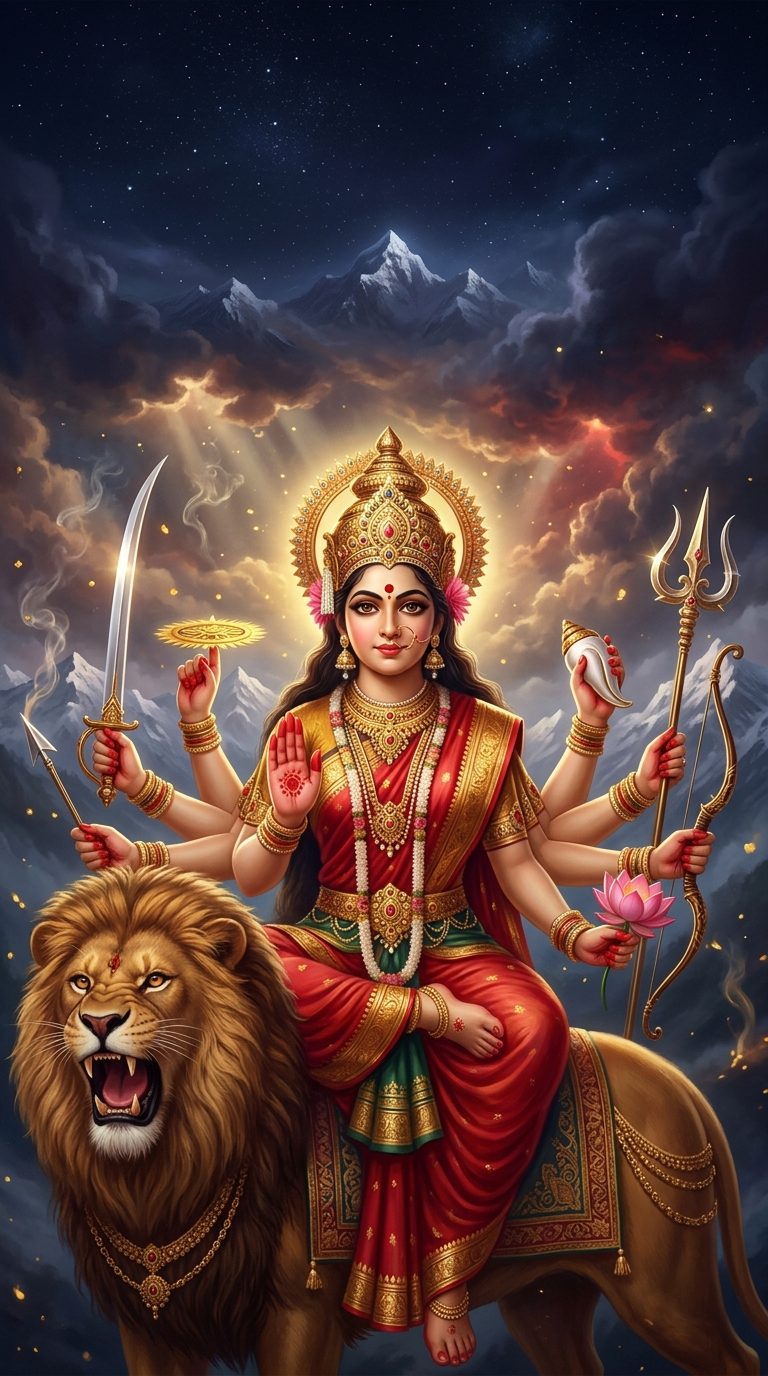
The famous verses that name the nine forms of Durga in order — from Shailaputri to Siddhidatri — followed by the promise that no harm comes to those who remember her.
From the Devi Kavacham (Markandeya Purana tradition)
Listen
Navadurga Stotram
Son of Kali · Sacred Navaratri Chants
0:007:00
Deity
Durga
Type
Stotram
Verses
6
Language
Sanskrit
NavadurgaStotramLyricswithMeaning
Each line shows an easy way to say it, with its English meaning. Turn on the Sanskrit, the exact pronunciation or the word-by-word meaning whenever you want to go deeper.
Verse 1
प्रथमं शैलपुत्री च द्वितीयं ब्रह्मचारिणी ।
Prathamam Shailaputri Cha Dvitiyam Brahmacharini
prathamaṃ śailaputrī ca dvitīyaṃ brahmacāriṇī
The first is Shailaputri, the second Brahmacharini,
तृतीयं चन्द्रघण्टेति कूष्माण्डेति चतुर्थकम् ॥
Tritiyam Chandraghanteti Kushmandeti Chaturthakam
tṛtīyaṃ candraghaṇṭeti kūṣmāṇḍeti caturthakam
the third is called Chandraghanta, the fourth Kushmanda;
Verse 2
पञ्चमं स्कन्दमातेति षष्ठं कात्यायनीति च ।
Panchamam Skandamateti Shashtham Katyayaniti Cha
pañcamaṃ skandamāteti ṣaṣṭhaṃ kātyāyanīti ca
the fifth is Skandamata, the sixth Katyayani,
सप्तमं कालरात्रीति महागौरीति चाष्टमम् ॥
Saptamam Kalaratriti Mahagauriti Chashtamam
saptamaṃ kālarātrīti mahāgaurīti cāṣṭamam
the seventh Kalaratri, and the eighth Mahagauri;
Verse 3
नवमं सिद्धिदात्री च नवदुर्गाः प्रकीर्तिताः ।
Navamam Siddhidatri Cha Navadurgah Prakirtitah
navamaṃ siddhidātrī ca navadurgāḥ prakīrtitāḥ
the ninth is Siddhidatri — these are proclaimed the nine Durgas.
उक्तान्येतानि नामानि ब्रह्मणैव महात्मना ॥
Uktanyetani Namani Brahmanaiva Mahatmana
uktānyetāni nāmāni brahmaṇaiva mahātmanā
These names were spoken by the great-souled Brahma himself.
Verse 4 — Protection
अग्निना दह्यमानस्तु शत्रुमध्ये गतो रणे ।
Agnina Dahyamanastu Shatrumadhye Gato Rane
agninā dahyamānastu śatrumadhye gato raṇe
One who is being burned by fire, or caught among enemies in battle,
विषमे दुर्गमे चैव भयार्ताः शरणं गताः ॥
Vishame Durgame Chaiva Bhayartah Sharanam Gatah
viṣame durgame caiva bhayārtāḥ śaraṇaṃ gatāḥ
in a hard and impassable place — those stricken with fear who take refuge in her —
Verse 5
न तेषां जायते किञ्चिदशुभं रणसङ्कटे ।
Na Tesham Jayate Kinchid Ashubham Ranasankate
na teṣāṃ jāyate kiñcidaśubhaṃ raṇasaṅkaṭe
no misfortune at all befalls them in the crisis of battle;
नापदं तस्य पश्यामि शोकदुःखभयं न हि ॥
Napadam Tasya Pashyami Shoka Duhkha Bhayam Na Hi
nāpadaṃ tasya paśyāmi śokaduḥkhabhayaṃ na hi
I see no calamity for such a one — no grief, no sorrow, no fear.
Those by whom you are remembered with devotion surely flourish;
ये त्वां स्मरन्ति देवेशि रक्षसे तान्न संशयः ॥
Ye Tvam Smaranti Deveshi Rakshase Tanna Samshayah
ye tvāṃ smaranti deveśi rakṣase tānna saṃśayaḥ
O Queen of the gods, you protect all who remember you — of this there is no doubt.
✦ ✦ ✦
AboutNavadurgaStotram
These verses come from the Devi Kavacham, the “armour of the Goddess,” which is traditionally recited before the Durga Saptashati. Brahma reveals to the sage Markandeya the nine forms of Durga — the Navadurga — in the order they are worshipped across the nine nights of Navaratri.
The first three verses are simply the list: Shailaputri, Brahmacharini, Chandraghanta, Kushmanda, Skandamata, Katyayani, Kalaratri, Mahagauri and Siddhidatri. Learning them by heart is the easiest way to remember the whole festival.
The verses that follow are a promise of protection: whoever takes refuge in the Goddess in fire, battle, danger or fear meets no misfortune. Each of the nine goddesses also has her own page in this library.
✦ ✦ ✦
TheStoriesInsidetheHymn
OneGoddess,ninefaces
The nine forms trace the life of Parvati: the mountain’s daughter, the young ascetic, the radiant bride, the creator of the cosmos, the mother, the warrior, the dark destroyer, the purified one and finally the giver of perfection.
Navaratri walks through all of them, one night at a time, so that by the tenth day — Vijayadashami — the devotee has met the whole Goddess.
✦ ✦ ✦
HowtoChantNavadurgaStotram
When to chant
✦Every day of Navaratri, before the day’s goddess mantra
✦Before reading the Durga Saptashati
✦Fridays and Ashtami days
✦When you feel afraid or unprotected
How many times
Once or three times.
1
Light a lamp before an image of Durga.
2
Chant the three naming verses slowly, picturing each goddess in turn.
3
Chant the protection verses as a prayer for yourself and your family.
4
Follow with the mantra of that day’s goddess.
✦ ✦ ✦
PronunciationGuide
The sounds that trip people up most in this hymn, and how to say them.