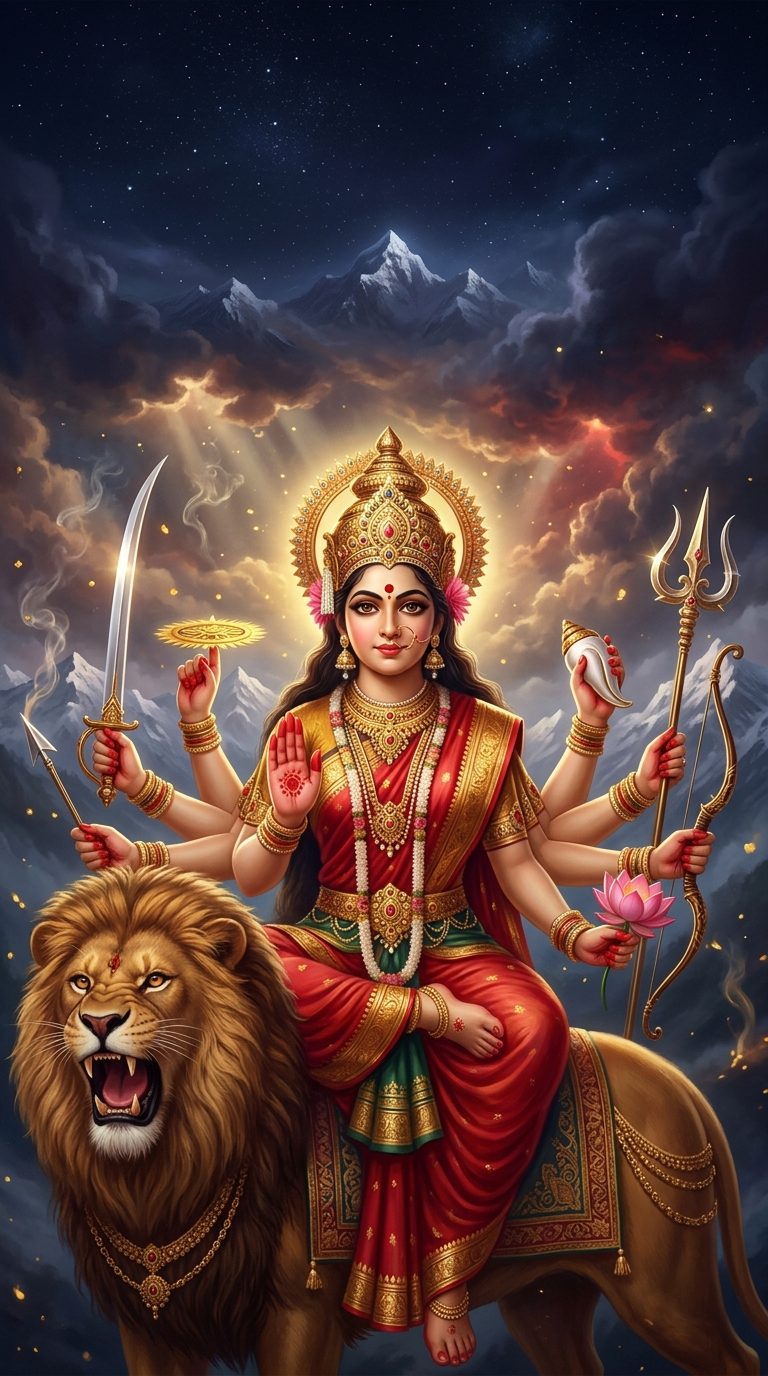
Goddess Chamunda-Durga seated within a blazing golden yantra, glowing seed-shapes of light spiralling around her like keys
DurgaStotram

Siddha Kunjika Stotram

Lyrics · Meaning · Audio

The “key” (kunjika) to the Durga Saptashati: a short, intense hymn of seed-syllables in which Shiva tells Parvati that reciting it alone gives the fruit of the entire Chandi Path.

Attributed to the Rudrayamala Tantra, as told by Shiva to Parvati

Listen

Siddha Kunjika Stotram

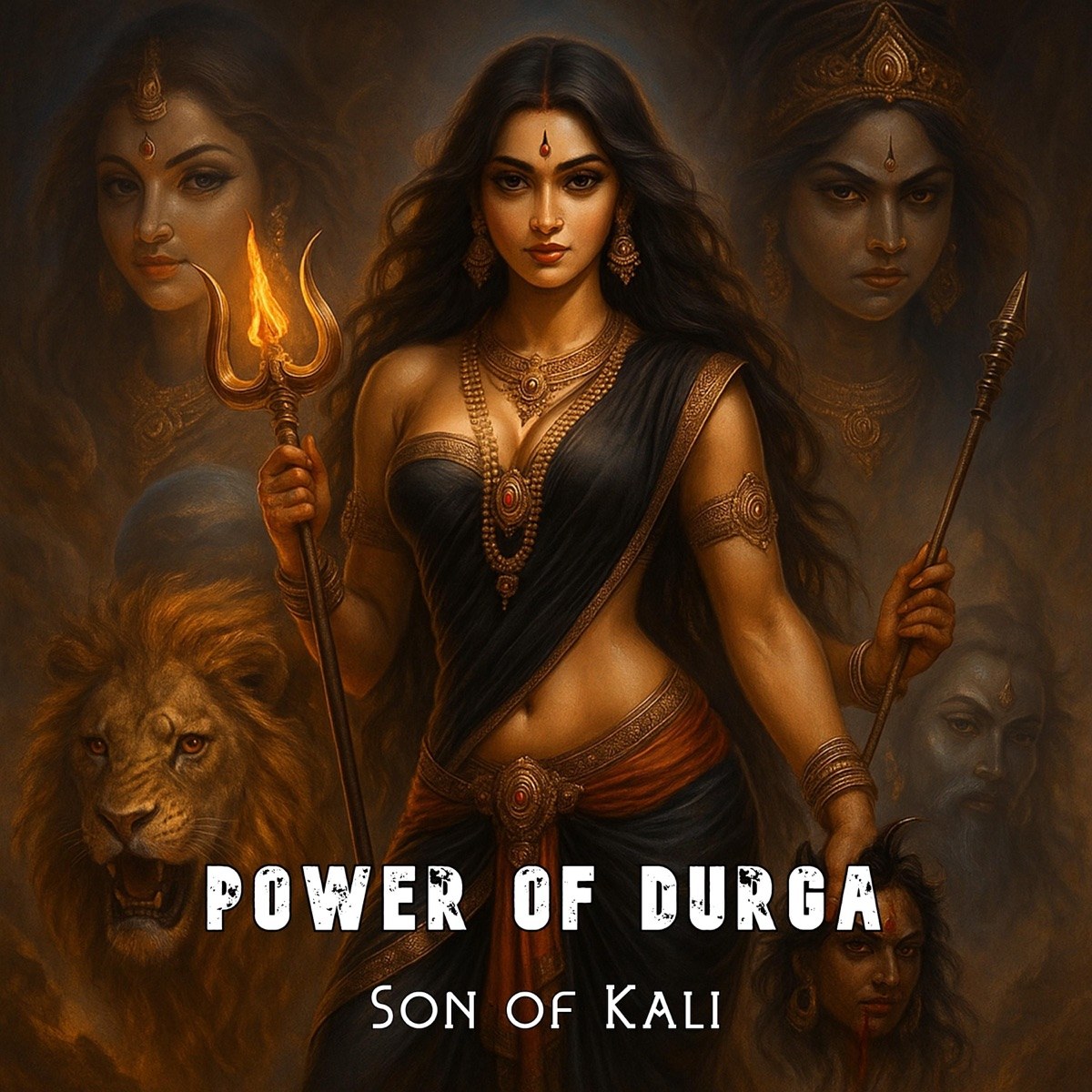
Son of Kali · Power of Durga

0:004:51
Deity
Durga
Type
Stotram
Verses
7
Language
Sanskrit

Siddha Kunjika Stotram Lyrics with Meaning

Each line shows an easy way to say it, with its English meaning. Turn on the Sanskrit, the exact pronunciation or the word-by-word meaning whenever you want to go deeper.

Shiva speaks

शृणु देवि प्रवक्ष्यामि कुञ्जिकास्तोत्रमुत्तमम् ।

Shrinu Devi Pravakshyami Kunjika Stotram Uttamam

śṛṇu devi pravakṣyāmi kuñjikāstotramuttamam

Listen, O Goddess: I will tell you the supreme Kunjika hymn,

    येन मन्त्रप्रभावेण चण्डीजापः शुभो भवेत् ॥ १ ॥

    Yena Mantra Prabhavena Chandi Japah Shubho Bhavet

    yena mantraprabhāveṇa caṇḍījāpaḥ śubho bhavet

    by whose mantra-power the recitation of the Chandi becomes fruitful.

      न कवचं नार्गलास्तोत्रं कीलकं न रहस्यकम् ।

      Na Kavacham Nargala Stotram Kilakam Na Rahasyakam

      na kavacaṃ nārgalāstotraṃ kīlakaṃ na rahasyakam

      No Kavacha, no Argala hymn, no Kilaka, no secret rites,

        न सूक्तं नापि ध्यानं च न न्यासो न च वार्चनम् ॥ २ ॥

        Na Suktam Napi Dhyanam Cha Na Nyaso Na Cha Varchanam

        na sūktaṃ nāpi dhyānaṃ ca na nyāso na ca vārcanam

        no Vedic hymn, no meditation, no nyasa and no worship is needed:

          कुञ्जिकापाठमात्रेण दुर्गापाठफलं लभेत् ।

          Kunjika Patha Matrena Durga Patha Phalam Labhet

          kuñjikāpāṭhamātreṇa durgāpāṭhaphalaṃ labhet

          by reciting the Kunjika alone, one gains the fruit of reciting the whole Durga text.

            अति गुह्यतरं देवि देवानामपि दुर्लभम् ॥ ३ ॥

            Ati Guhyataram Devi Devanamapi Durlabham

            ati guhyataraṃ devi devānāmapi durlabham

            It is most secret, O Goddess, hard to obtain even for the gods.

              गोपनीयं प्रयत्नेन स्वयोनिरिव पार्वति ।

              Gopaniyam Prayatnena Svayoniriva Parvati

              gopanīyaṃ prayatnena svayoniriva pārvati

              It should be guarded with care, O Parvati, as closely as one’s most private self.

                मारणं मोहनं वश्यं स्तम्भनोच्चाटनादिकम् ।

                Maranam Mohanam Vashyam Stambhanocchatanadikam

                māraṇaṃ mohanaṃ vaśyaṃ stambhanoccāṭanādikam

                The tantric powers — to overcome, to enchant, to win over, to halt and to drive away —

                  पाठमात्रेण संसिद्ध्येत् कुञ्जिकास्तोत्रमुत्तमम् ॥ ४ ॥

                  Pathamatrena Samsiddhyet Kunjika Stotram Uttamam

                  pāṭhamātreṇa saṃsiddhyet kuñjikāstotramuttamam

                  are perfected by simply reciting this supreme Kunjika hymn.

                    The mantra

                    ॐ ऐं ह्रीं क्लीं चामुण्डायै विच्चे ॥

                    Om Aim Hreem Kleem Chamundaye Vichche

                    oṃ aiṃ hrīṃ klīṃ cāmuṇḍāyai vicce

                    Om — wisdom, power and love — to Chamunda, may she free us.

                      ॐ ग्लौं हुं क्लीं जूं सः ज्वालय ज्वालय ज्वल ज्वल प्रज्वल प्रज्वल

                      Om Glaum Hum Kleem Joom Sah Jvalaya Jvalaya Jvala Jvala Prajvala Prajvala

                      oṃ glauṃ huṃ klīṃ jūṃ saḥ jvālaya jvālaya jvala jvala prajvala prajvala

                      Om — seed sounds of power — set it ablaze, set it ablaze, burn, burn, blaze forth, blaze forth!

                        ऐं ह्रीं क्लीं चामुण्डायै विच्चे ज्वल हं सं लं क्षं फट् स्वाहा ॥

                        Aim Hreem Kleem Chamundaye Vichche Jvala Ham Sam Lam Ksham Phat Svaha

                        aiṃ hrīṃ klīṃ cāmuṇḍāyai vicce jvala haṃ saṃ laṃ kṣaṃ phaṭ svāhā

                        Aim Hreem Kleem, to Chamunda, liberate us — blaze! — ham sam lam ksham, phat, svaha.

                          Hymn — Verses 1–2

                          नमस्ते रुद्ररूपिण्यै नमस्ते मधुमर्दिनि ।

                          Namaste Rudra Rupinyai Namaste Madhu Mardini

                          namaste rudrarūpiṇyai namaste madhumardini

                          Salutations to you in the form of Rudra; salutations, slayer of Madhu;

                            नमः कैटभहारिण्यै नमस्ते महिषार्दिनि ॥ १ ॥

                            Namah Kaitabha Harinyai Namaste Mahishardini

                            namaḥ kaiṭabhahāriṇyai namaste mahiṣārdini

                            salutations, destroyer of Kaitabha; salutations, slayer of Mahisha.

                              नमस्ते शुम्भहन्त्र्यै च निशुम्भासुरघातिनि ।

                              Namaste Shumbha Hantryai Cha Nishumbhasura Ghatini

                              namaste śumbhahantryai ca niśumbhāsuraghātini

                              Salutations to the slayer of Shumbha and destroyer of the demon Nishumbha —

                                जाग्रतं हि महादेवि जपं सिद्धं कुरुष्व मे ॥ २ ॥

                                Jagratam Hi Mahadevi Japam Siddham Kurushva Me

                                jāgrataṃ hi mahādevi japaṃ siddhaṃ kuruṣva me

                                O great Goddess, awaken my japa and make it fruitful.

                                  Verses 3–4 — the seeds explained

                                  ऐङ्कारी सृष्टिरूपायै ह्रीङ्कारी प्रतिपालिका ।

                                  Aimkari Srishti Rupayai Hreemkari Pratipalika

                                  aiṅkārī sṛṣṭirūpāyai hrīṅkārī pratipālikā

                                  As the sound Aim you are creation; as Hreem you are the sustainer;

                                    क्लीङ्कारी कामरूपिण्यै बीजरूपे नमोऽस्तु ते ॥ ३ ॥

                                    Kleemkari Kama Rupinyai Bija Rupe Namostu Te

                                    klīṅkārī kāmarūpiṇyai bījarūpe namo'stu te

                                    as Kleem you are desire itself — O you whose form is the seed, salutations to you.

                                      चामुण्डा चण्डघाती च यैकारी वरदायिनी ।

                                      Chamunda Chanda Ghati Cha Yaikari Varadayini

                                      cāmuṇḍā caṇḍaghātī ca yaikārī varadāyinī

                                      You are Chamunda, slayer of Chanda; as the sound “yai” you grant boons;

                                        विच्चे चाभयदा नित्यं नमस्ते मन्त्ररूपिणि ॥ ४ ॥

                                        Vichche Chabhayada Nityam Namaste Mantra Rupini

                                        vicce cābhayadā nityaṃ namaste mantrarūpiṇi

                                        as “vichche” you always give fearlessness — salutations, O you whose form is mantra.

                                          Verses 5–6

                                          धां धीं धूं धूर्जटेः पत्नी वां वीं वूं वागधीश्वरी ।

                                          Dham Dheem Dhoom Dhurjateh Patni Vam Veem Voom Vagadhishvari

                                          dhāṃ dhīṃ dhūṃ dhūrjaṭeḥ patnī vāṃ vīṃ vūṃ vāgadhīśvarī

                                          Dham dheem dhoom — wife of Shiva; vam veem voom — queen of speech;

                                            क्रां क्रीं क्रूं कालिका देवि शां शीं शूं मे शुभं कुरु ॥ ५ ॥

                                            Kram Kreem Kroom Kalika Devi Sham Sheem Shoom Me Shubham Kuru

                                            krāṃ krīṃ krūṃ kālikā devi śāṃ śīṃ śūṃ me śubhaṃ kuru

                                            kram kreem kroom — Goddess Kalika; sham sheem shoom — bring me good fortune.

                                              हुं हुं हुङ्काररूपिण्यै जं जं जं जम्भनादिनी ।

                                              Hum Hum Humkara Rupinyai Jam Jam Jam Jambhanadini

                                              huṃ huṃ huṅkārarūpiṇyai jaṃ jaṃ jaṃ jambhanādinī

                                              Hum hum — you whose form is the sound Hum; jam jam jam — you whose roar crushes;

                                                भ्रां भ्रीं भ्रूं भैरवी भद्रे भवान्यै ते नमो नमः ॥ ६ ॥

                                                Bhram Bhreem Bhroom Bhairavi Bhadre Bhavanyai Te Namo Namah

                                                bhrāṃ bhrīṃ bhrūṃ bhairavī bhadre bhavānyai te namo namaḥ

                                                bhram bhreem bhroom — Bhairavi, gracious one, Bhavani, salutations to you again and again.

                                                  Verses 7–8

                                                  अं कं चं टं तं पं यं शं वीं दुं ऐं वीं हं क्षं

                                                  Am Kam Cham Tam Tam Pam Yam Sham Veem Doom Aim Veem Ham Ksham

                                                  aṃ kaṃ caṃ ṭaṃ taṃ paṃ yaṃ śaṃ vīṃ duṃ aiṃ vīṃ haṃ kṣaṃ

                                                  Am kam cham tam tam pam yam sham — the seeds of every letter of the alphabet — veem doom aim veem ham ksham,

                                                    धिजाग्रं धिजाग्रं त्रोटय त्रोटय दीप्तं कुरु कुरु स्वाहा ॥ ७ ॥

                                                    Dhijagram Dhijagram Trotaya Trotaya Diptam Kuru Kuru Svaha

                                                    dhijāgraṃ dhijāgraṃ troṭaya troṭaya dīptaṃ kuru kuru svāhā

                                                    awaken, awaken; break through, break through; make it shine, make it shine — svaha!

                                                      पां पीं पूं पार्वती पूर्णा खां खीं खूं खेचरी तथा ।

                                                      Pam Peem Poom Parvati Purna Kham Kheem Khoom Khechari Tatha

                                                      pāṃ pīṃ pūṃ pārvatī pūrṇā khāṃ khīṃ khūṃ khecarī tathā

                                                      Pam peem poom — Parvati, the complete; kham kheem khoom — she who moves through the sky;

                                                        सां सीं सूं सप्तशती देव्या मन्त्रसिद्धिं कुरुष्व मे ॥ ८ ॥

                                                        Sam Seem Soom Saptashati Devya Mantra Siddhim Kurushva Me

                                                        sāṃ sīṃ sūṃ saptaśatī devyā mantrasiddhiṃ kuruṣva me

                                                        sam seem soom — grant me success in the mantra of the Goddess’s Saptashati.

                                                          Closing

                                                          इदं तु कुञ्जिकास्तोत्रं मन्त्रजागर्तिहेतवे ।

                                                          Idam Tu Kunjika Stotram Mantra Jagarti Hetave

                                                          idaṃ tu kuñjikāstotraṃ mantrajāgartihetave

                                                          This Kunjika hymn exists to awaken the mantra.

                                                            अभक्ते नैव दातव्यं गोपितं रक्ष पार्वति ॥

                                                            Abhakte Naiva Datavyam Gopitam Raksha Parvati

                                                            abhakte naiva dātavyaṃ gopitaṃ rakṣa pārvati

                                                            Do not give it to one without devotion; keep it protected, O Parvati.

                                                              यस्तु कुञ्जिकया देवि हीनां सप्तशतीं पठेत् ।

                                                              Yastu Kunjikaya Devi Hinam Saptashatim Pathet

                                                              yastu kuñjikayā devi hīnāṃ saptaśatīṃ paṭhet

                                                              O Goddess, one who reads the Saptashati without the Kunjika —

                                                                न तस्य जायते सिद्धिररण्ये रोदनं यथा ॥

                                                                Na Tasya Jayate Siddhir Aranye Rodanam Yatha

                                                                na tasya jāyate siddhiraraṇye rodanaṃ yathā

                                                                gains no success; it is like crying in the wilderness.
                                                                  About Siddha Kunjika Stotram

                                                                  Kuñjikā means “a little key.” Tradition says the Durga Saptashati is a locked treasure, and this hymn is the key that opens it. Shiva tells Parvati that whoever recites the Kunjika needs no armour-hymn, no Argala, no Kilaka, no meditation or ritual — the Kunjika alone gives the fruit of reciting the whole Saptashati.

                                                                  Unlike most hymns, it is built largely of bīja mantras — seed syllables such as aiṃ, hrīṃ, klīṃ — which are not words with dictionary meanings but sound-forms of the Goddess’s power. Verses 3 and 4 explain three of them: aiṃ is the Goddess as creation, hrīṃ as sustaining, klīṃ as desire and attraction.

                                                                  Because the seed syllables have no literal translation, the English on this page gives their traditional sense rather than a word-for-word meaning. The heart of the hymn is the Navarna mantra, Om Aim Hreem Kleem Chamundaye Vichche, which has its own page.

                                                                  The Stories Inside the Hymn

                                                                  A secret given in love

                                                                  The hymn is framed as a conversation in which Shiva shares a closely guarded teaching with Parvati, telling her it is “difficult even for the gods to obtain” and asking her to keep it hidden.

                                                                  Its closing verse gives the reason for its fame: reading the Saptashati without the Kunjika is “like crying in the wilderness” — sincere, but unheard.

                                                                  How to Chant Siddha Kunjika Stotram

                                                                  When to chant

                                                                  • ✦Before reading the Durga Saptashati
                                                                  • ✦During Navaratri, especially Ashtami and Navami
                                                                  • ✦Tuesdays and Fridays
                                                                  • ✦In times of great difficulty

                                                                  How many times

                                                                  Once, or three times; some devotees do 11 or 21 recitations during Navaratri.

                                                                  1. 1

                                                                    Sit before an image or yantra of Durga and light a lamp.

                                                                  2. 2

                                                                    Chant with full attention — the seed syllables carry the power, so say each one clearly.

                                                                  3. 3

                                                                    Follow the recording closely to learn the rhythm of the bija sections.

                                                                  4. 4

                                                                    Close with a bow and the Navarna mantra.

                                                                  Pronunciation Guide

                                                                  The sounds that trip people up most in this hymn, and how to say them.

                                                                  aiṃ hrīṃ klīṃ

                                                                  aim, hreem, kleem — each ending in a soft humming m.

                                                                  vicce

                                                                  vich-chay.

                                                                  kuñjikā

                                                                  koon-ji-kaa.

                                                                  phaṭ

                                                                  phut — a short, sharp sound.

                                                                  Power of Durga by Son of Kali

                                                                  The music

                                                                  Power of Durga

                                                                  by Son of Kali

                                                                  More for Durga

                                                                  Frequently Asked Questions

                                                                  What is the Siddha Kunjika Stotram?

                                                                  A short tantric hymn to Durga made largely of seed mantras, said to be the “key” that unlocks the power of the Durga Saptashati.

                                                                  What are the benefits of the Siddha Kunjika Stotram?

                                                                  Shiva says in the hymn that reciting it alone gives the fruit of the whole Saptashati. It is chanted for protection, removing obstacles and success in sincere efforts.

                                                                  Can anyone chant it?

                                                                  The text asks that it be kept from those without devotion. In practice it is widely chanted by devotees; approach it with sincerity and respect.

                                                                  Why is there no word-by-word meaning for the seed syllables?

                                                                  Bija mantras like aim, hreem and kleem are sound-forms of divine power rather than words. The page gives their traditional sense instead.

                                                                  Text: Traditional public-domain Sanskrit text (Rudrayamala tradition). Easy reading, transliteration and English translation written for the Jaguar Medicine Tribe Mantra Library.

                                                                  Music: Recordings by Son of Kali, produced with AI-assisted vocals and instrumentation.

                                                                  Note: Benefits described here are traditional beliefs, shared for understanding — not medical or guaranteed outcomes.