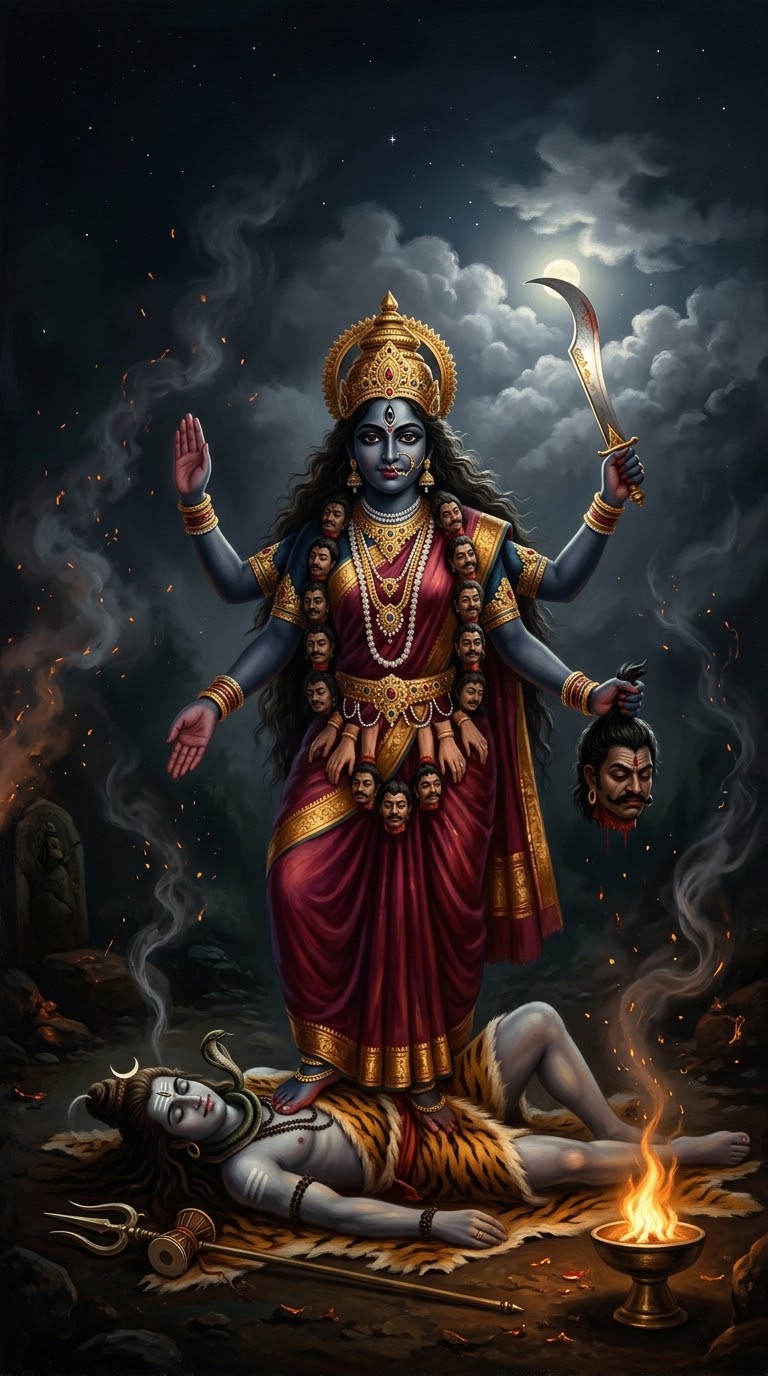
Dakshina Kali, dark as a rain cloud, standing on Shiva in the cremation ground, a girdle of arms at her hips and a garland of heads at her throat

Kali · Stotram

Sri Kali Karpura Stotram (Karpuradi Stotram)

Lyrics · Meaning · Audio

One of the great tantric hymns to Dakshina Kali. Its verses hide her mantra in code, letter by letter, and describe her form and her worship. This page gives the verses sung on the recording, from the opening and the close of the hymn.

Traditional, ascribed to Mahakala (Shiva)

Listen

Sri Kali Karpura Stotram (Karpuradi Stotram)

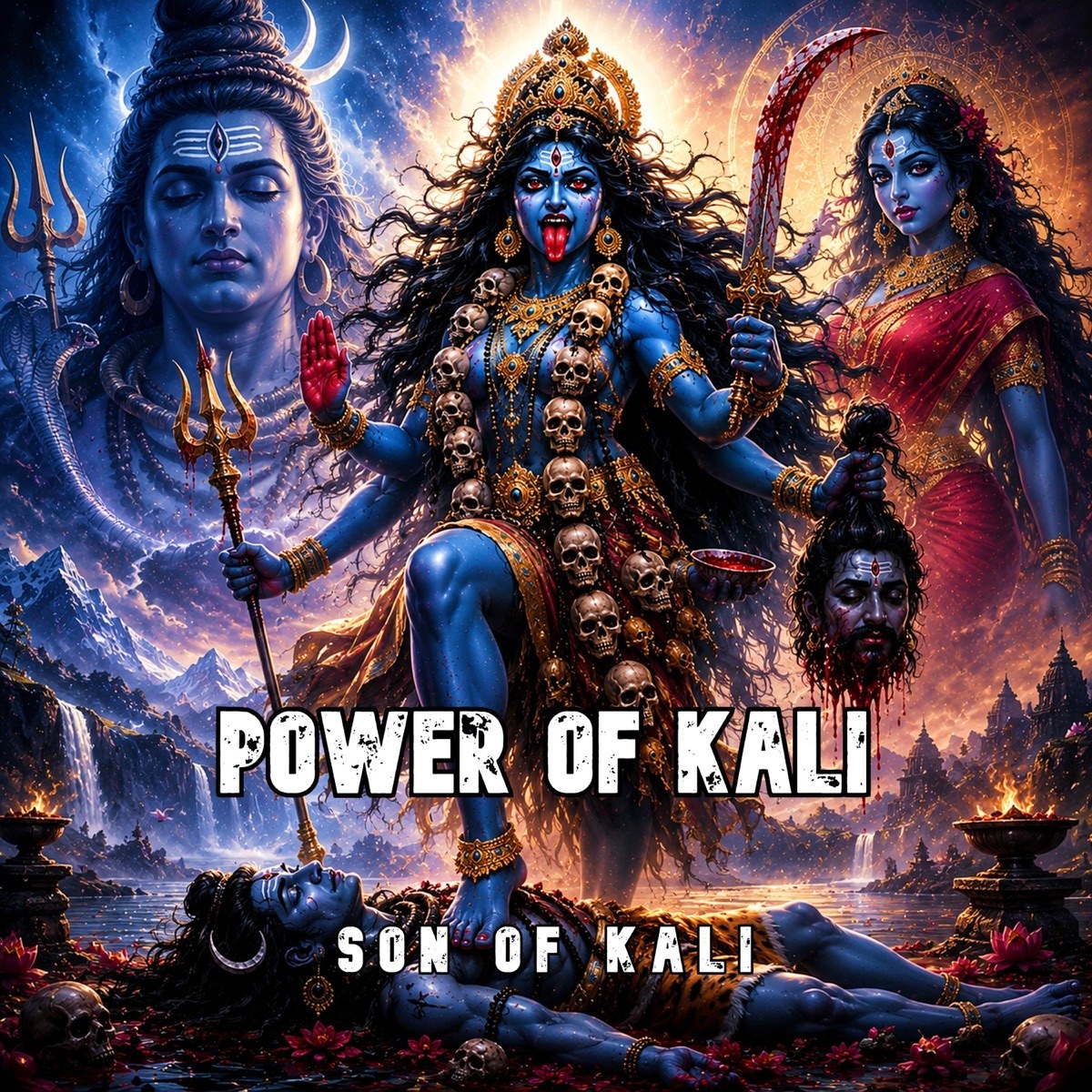
Son of Kali · Power of Kali

0:005:38
Deity
Kali
Type
Stotram
Verses
10
Language
Sanskrit

Sri Kali Karpura Stotram (Karpuradi Stotram) Lyrics with Meaning

Each line shows an easy way to say it, with its English meaning. Turn on the Sanskrit, the exact pronunciation or the word-by-word meaning whenever you want to go deeper.

Verse 1 — The seed syllable Krim

कर्पूरं मध्यमान्त्य स्वरपररहितं सेन्दुवामाक्षियुक्तं

Karpuram Madhyamantya Svarapararahitam Senduvamakshiyuktam

karpūraṃ madhyamāntya svarapararahitaṃ senduvāmākṣiyuktaṃ

Take the word karpura, drop its middle and its last letters and the vowels that follow them, add the moon-dot and the “left eye”:

    बीजं ते मातरेतत्त्रिपुरहरवधु त्रिःकृतं ये जपन्ति ।

    Bijam Te Mataretattripuraharavadhu Trihkritam Ye Japanti

    bījaṃ te mātaretattripuraharavadhu triḥkṛtaṃ ye japanti

    this is your seed syllable, Krim, Mother, wife of Shiva. Those who chant it three times

      तेषां गद्यानि पद्यानि च मुखकुहरादुल्लसन्त्येव वाचः

      Tesham Gadyani Padyani Cha Mukhakuharadullasantyeva Vachah

      teṣāṃ gadyāni padyāni ca mukhakuharādullasantyeva vācaḥ

      find words pouring freely from their mouths, in prose and in verse,

        स्वच्छन्दं ध्वान्तधाराधररुचिरुचिरे सर्वसिद्धिं गतानाम् ॥ १ ॥

        Svachchhandam Dhvantadharadhararuchiruchire Sarvasiddhim Gatanam

        svacchandaṃ dhvāntadhārādhararucirucire sarvasiddhiṃ gatānām

        for they have gained every power, O you who are lovely with the colour of a dark rain cloud.

          Verse 2 — The seed syllable Hum

          ईशानः सेन्दुवामश्रवणपरिगतो बीजमन्यन्महेशि

          Ishanah Senduvamashravanaparigato Bijamanyanmaheshi

          īśānaḥ senduvāmaśravaṇaparigato bījamanyanmaheśi

          Great Queen, Ishana joined with the moon-dot and the “left ear” is your other seed syllable, Hum.

            द्वन्द्वं ते मन्दचेता यदि जपति जनो वारमेकं कदाचित् ।

            Dvandvam Te Mandacheta Yadi Japati Jano Varamekam Kadachit

            dvandvaṃ te mandacetā yadi japati jano vāramekaṃ kadācit

            If even a dull-minded person chants it twice, even once in a lifetime,

              जित्वा वाचामधीशं धनदमपि चिरं मोहयन्नम्बुजाक्षि

              Jitva Vachamadhisham Dhanadamapi Chiram Mohayannambujakshi

              jitvā vācāmadhīśaṃ dhanadamapi ciraṃ mohayannambujākṣi

              he outdoes the lord of speech and even Kubera, the lord of wealth, and long enchants, O lotus-eyed one,

                वृन्दं चन्द्रार्धचूडे प्रभवति स महाघोरबाणावतंसे ॥ २ ॥

                Vrindam Chandrardhachude Prabhavati Sa Mahaghorabanavatamse

                vṛndaṃ candrārdhacūḍe prabhavati sa mahāghorabāṇāvataṃse

                whole crowds, O you crowned with the half-moon, whose ear-ornaments are fearsome arrows.

                  Verse 3 — The seed syllable Hrim

                  ईशो वैश्वानरस्थः शशधरविलसद्वामनेत्रेण युक्तो

                  Isho Vaishvanarasthah Shashadharavilasadvamanetrena Yukto

                  īśo vaiśvānarasthaḥ śaśadharavilasadvāmanetreṇa yukto

                  Isha set upon Vaishvanara, the fire, joined with the moon and the shining “left eye”,

                    बीजं ते द्वन्द्वमन्यद्विगलितचिकुरे कालिके ये जपन्ति ।

                    Bijam Te Dvandvamanyadvigalitachikure Kalike Ye Japanti

                    bījaṃ te dvandvamanyadvigalitacikure kālike ye japanti

                    is your other seed syllable, Hrim. O Kalika with loosened hair, those who chant it twice

                      द्वेष्टारं घ्नन्ति ते च त्रिभुवनमपि ते वश्यभावं नयन्ति

                      Dveshtaram Ghnanti Te Cha Tribhuvanamapi Te Vashyabhavam Nayanti

                      dveṣṭāraṃ ghnanti te ca tribhuvanamapi te vaśyabhāvaṃ nayanti

                      destroy those who hate them, and bring even the three worlds under their sway,

                        सृक्कद्वन्द्वास्रधाराद्वयधरवदने दक्षिणे कालिकेति ॥ ३ ॥

                        Srikkadvandvasradharadvayadharavadane Dakshine Kaliketi

                        sṛkkadvandvāsradhārādvayadharavadane dakṣiṇe kāliketi

                        O Dakshina Kalika, from the two corners of whose mouth two streams of blood flow.

                          Verse 4 — Her form

                          ऊर्ध्वे वामे कृपाणं करकमलतले छिन्नमुण्डं तथोऽधः

                          Urdhve Vame Kripanam Karakamalatale Chhinnamundam Tathodhah

                          ūrdhve vāme kṛpāṇaṃ karakamalatale chinnamuṇḍaṃ tatho'dhaḥ

                          In your upper left lotus hand you hold a sword, and below it a severed head;

                            सव्येऽभीतिं वरं च त्रिजगदघहरे दक्षिणे कालिके च ।

                            Savyebhitim Varam Cha Trijagadaghahare Dakshine Kalike Cha

                            savye'bhītiṃ varaṃ ca trijagadaghahare dakṣiṇe kālike ca

                            on the right, fearlessness and blessing, O Dakshina Kalika, remover of the three worlds’ sins.

                              जप्त्वैतन्नाम ये वा तव विमलतनुं भावयन्त्येतदम्ब

                              Japtvaitannama Ye Va Tava Vimalatanum Bhavayantyetadamba

                              japtvaitannāma ye vā tava vimalatanuṃ bhāvayantyetadamba

                              Those who chant this name of yours, or meditate on this pure form, Mother,

                                तेषामष्टौ करस्थाः प्रकटितरदने सिद्धयस्त्र्यम्बकस्य ॥ ४ ॥

                                Teshamashtau Karasthah Prakatitaradane Siddhayastryambakasya

                                teṣāmaṣṭau karasthāḥ prakaṭitaradane siddhayastryambakasya

                                hold in their hands the eight powers of three-eyed Shiva, O you whose teeth are bared.

                                  Verse 5 — The great mantra

                                  वर्गाद्यं वह्निसंस्थं विधुरतिवलितं तत्त्रयं कूर्चयुग्मं

                                  Vargadyam Vahnisamstham Vidhurativalitam Tattrayam Kurchayugmam

                                  vargādyaṃ vahnisaṃsthaṃ vidhurativalitaṃ tattrayaṃ kūrcayugmaṃ

                                  The first letter of the first group, set on fire and joined with Rati and the moon, three times; then the pair of kurcha seeds,

                                    लज्जाद्वन्द्वं च पश्चात् स्मितमुखि तदधष्ठद्वयं योजयित्वा ।

                                    Lajjadvandvam Cha Pashchat Smitamukhi Tadadhashthadvayam Yojayitva

                                    lajjādvandvaṃ ca paścāt smitamukhi tadadhaṣṭhadvayaṃ yojayitvā

                                    then the pair of lajja seeds, and after them, smiling one, the two tha letters, all joined together:

                                      मातर्ये त्वां जपन्ति स्मरहरमहिले भावयन्तः स्वरूपं

                                      Matarye Tvam Japanti Smaraharamahile Bhavayantah Svarupam

                                      mātarye tvāṃ japanti smaraharamahile bhāvayantaḥ svarūpaṃ

                                      Mother, wife of Shiva who burned up desire, those who chant you so, meditating on your own form,

                                        ते लक्ष्मीलास्यलीलाकमलदलदृशः कामरूपा भवन्ति ॥ ५ ॥

                                        Te Lakshmilasyalilakamaladaladrishah Kamarupa Bhavanti

                                        te lakṣmīlāsyalīlākamaladaladṛśaḥ kāmarūpā bhavanti

                                        become as handsome as the god of love, with lotus-petal eyes where Lakshmi dances in play.

                                          Verse 6 — The secret seeds

                                          प्रत्येकं वा द्वयं वा त्रयमपि च परं बीजमत्यन्तगुह्यं

                                          Pratyekam Va Dvayam Va Trayamapi Cha Param Bijamatyantaguhyam

                                          pratyekaṃ vā dvayaṃ vā trayamapi ca paraṃ bījamatyantaguhyaṃ

                                          Whether one, two or all three of these supreme and most secret seed syllables

                                            त्वन्नाम्ना योजयित्वा सकलमपि सदा भावयन्तो जपन्ति ।

                                            Tvannamna Yojayitva Sakalamapi Sada Bhavayanto Japanti

                                            tvannāmnā yojayitvā sakalamapi sadā bhāvayanto japanti

                                            are joined with your name, or the whole mantra, those who always chant them in meditation

                                              तेषां नेत्रारविन्दे विहरति कमला वक्त्रशुभ्रांशुबिम्बे

                                              Tesham Netraravinde Viharati Kamala Vaktrashubhramshubimbe

                                              teṣāṃ netrāravinde viharati kamalā vaktraśubhrāṃśubimbe

                                              have Lakshmi playing in their lotus eyes, and in the moon of their faces

                                                वाग्देवी देवि मुण्डस्रगतिशयलसत्कण्ठ पीनस्तनाढ्ये ॥ ६ ॥

                                                Vagdevi Devi Mundasragatishayalasatkantha Pinastanadhye

                                                vāgdevī devi muṇḍasragatiśayalasatkaṇṭha pīnastanāḍhye

                                                the Goddess of Speech, O Goddess whose throat gleams with a garland of heads and whose breasts are full.

                                                  Verse 7 — Meditation on Kali and Mahakala

                                                  गतासूनां बाहुप्रकरकृतकाञ्चीपरिलस-

                                                  Gatasunam Bahuprakarakritakanchiparilasa

                                                  gatāsūnāṃ bāhuprakarakṛtakāñcīparilasa

                                                  Your hips shine with a girdle made of the arms of the dead;

                                                    न्नितम्बां दिग्वस्त्रां त्रिभुवनविधात्रीं त्रिनयनाम् ।

                                                    Nnitambam Digvastram Tribhuvanavidhatrim Trinayanam

                                                    nnitambāṃ digvastrāṃ tribhuvanavidhātrīṃ trinayanām

                                                    you are clothed in space, maker of the three worlds, three-eyed,

                                                      श्मशानस्थे तल्पे शवहृदि महाकालसुरत-

                                                      Shmashanasthe Talpe Shavahridi Mahakalasurata

                                                      śmaśānasthe talpe śavahṛdi mahākālasurata

                                                      on a couch in the cremation ground, upon the corpse-still heart of Mahakala, absorbed in union with him.

                                                        प्रसक्तां त्वां ध्यायन् जननि जडचेता अपि कविः ॥ ७ ॥

                                                        Prasaktam Tvam Dhyayan Janani Jadacheta Api Kavih

                                                        prasaktāṃ tvāṃ dhyāyan janani jaḍacetā api kaviḥ

                                                        Meditating on you so, Mother, even a dull-minded person becomes a poet.

                                                          Verse 20 — The practice

                                                          वशी लक्षं मन्त्रं प्रजपति हविष्याशनरतो

                                                          Vashi Laksham Mantram Prajapati Havishyashanarato

                                                          vaśī lakṣaṃ mantraṃ prajapati haviṣyāśanarato

                                                          The self-controlled one who chants the mantra a hundred thousand times, eating only pure offering-food,

                                                            दिवा मातर्युष्मच्चरणयुगलध्याननिपुणः ।

                                                            Diva Mataryushmachcharanayugaladhyananipunah

                                                            divā mātaryuṣmaccaraṇayugaladhyānanipuṇaḥ

                                                            by day, Mother, skilled in meditating on your two feet,

                                                              परं नक्तं नग्नो निधुवनविनोदेन च मनुं

                                                              Param Naktam Nagno Nidhuvanavinodena Cha Manum

                                                              paraṃ naktaṃ nagno nidhuvanavinodena ca manuṃ

                                                              and then by night, unclothed, in the rite of union, chants the mantra

                                                                जपेल्लक्षं सम्यक् स्मरहरसमानः क्षितितले ॥ २० ॥

                                                                Japellaksham Samyak Smaraharasamanah Kshititale

                                                                japellakṣaṃ samyak smaraharasamānaḥ kṣititale

                                                                a hundred thousand times rightly, becomes equal on earth to Shiva, the destroyer of desire.

                                                                  Verse 21 — The fruit of the hymn

                                                                  इदं स्तोत्रं मातस्तव मनुसमुद्धारणजनुः

                                                                  Idam Stotram Matastava Manusamuddharanajanuh

                                                                  idaṃ stotraṃ mātastava manusamuddhāraṇajanuḥ

                                                                  Mother, this hymn of yours, born to reveal your mantra,

                                                                    स्वरूपाख्यं पादाम्बुजयुगलपूजाविधियुतम् ।

                                                                    Svarupakhyam Padambujayugalapujavidhiyutam

                                                                    svarūpākhyaṃ pādāmbujayugalapūjāvidhiyutam

                                                                    describes your form and holds the rite of worship of your lotus feet.

                                                                      निशार्धे वा पूजासमयमधि वा यस्तु पठति

                                                                      Nishardhe Va Pujasamayamadhi Va Yastu Pathati

                                                                      niśārdhe vā pūjāsamayamadhi vā yastu paṭhati

                                                                      Whoever reads it at midnight, or at the time of worship,

                                                                        प्रलापस्तस्यापि प्रसरति कवित्वामृतरसः ॥ २१ ॥

                                                                        Pralapastasyapi Prasarati Kavitvamritarasah

                                                                        pralāpastasyāpi prasarati kavitvāmṛtarasaḥ

                                                                        finds even his idle talk flowing as the nectar of poetry.

                                                                          Verse 22 — The fruit of the hymn

                                                                          कुरङ्गाक्षीबृन्दं तमनुसरति प्रेमतरलं

                                                                          Kurangakshibrindam Tamanusarati Premataralam

                                                                          kuraṅgākṣībṛndaṃ tamanusarati premataralaṃ

                                                                          Crowds of doe-eyed women follow him, trembling with love;

                                                                            वशस्तस्य क्षोणीपतिरपि कुबेरप्रतिनिधिः ।

                                                                            Vashastasya Kshonipatirapi Kuberapratinidhih

                                                                            vaśastasya kṣoṇīpatirapi kuberapratinidhiḥ

                                                                            even a king as rich as Kubera comes under his sway;

                                                                              रिपुः कारागारं कलयति च तं केलिकलया

                                                                              Ripuh Karagaram Kalayati Cha Tam Kelikalaya

                                                                              ripuḥ kārāgāraṃ kalayati ca taṃ kelikalayā

                                                                              his enemy goes to prison as if in play;

                                                                                चिरं जीवन्मुक्तः स भवति च भक्तः प्रतिजनुः ॥ २२ ॥

                                                                                Chiram Jivanmuktah Sa Bhavati Cha Bhaktah Pratijanuh

                                                                                ciraṃ jīvanmuktaḥ sa bhavati ca bhaktaḥ pratijanuḥ

                                                                                and that devotee lives long, liberated while alive, birth after birth.

                                                                                  About Sri Kali Karpura Stotram (Karpuradi Stotram)

                                                                                  The Karpuradi Stotra takes its name from its first word, karpūra, “camphor”. It is a classic of the Kaula tradition of Dakshina Kali, traditionally ascribed to Mahakala, Shiva himself, and has 22 verses in long, rich metres.

                                                                                  Its opening verses hide Kali’s mantra in a code of letters: each verse tells you how to build a seed syllable (Krim, Hum, Hrim) by taking letters away from a word or joining sounds to “the moon”, “the fire” or “the left eye”. Verse 5 assembles the full twenty-two-syllable mantra of Dakshina Kali. Then come meditations on her form and a promise for each practice: eloquence, poetry, power over enemies, beauty and liberation.

                                                                                  The hymn openly describes left-hand tantric practice, including meditation on Kali in union with Mahakala and night-time worship. These verses were written for initiates, and the mantra itself is traditionally received from a teacher. Here they are offered for understanding, as the recording sings them.

                                                                                  How to Chant Sri Kali Karpura Stotram (Karpuradi Stotram)

                                                                                  When to chant

                                                                                  • ✦New moon nights
                                                                                  • ✦Kali Puja (Diwali night)
                                                                                  • ✦Midnight, as the hymn itself suggests

                                                                                  How many times

                                                                                  Once, as a reading of the hymn.

                                                                                  1. 1

                                                                                    Light a lamp before an image of Dakshina Kali.

                                                                                  2. 2

                                                                                    Read the verses as poetry and meditation, without trying to build the coded mantra yourself.

                                                                                  3. 3

                                                                                    If you want to practise the mantra, seek initiation from a teacher of the tradition.

                                                                                  Pronunciation Guide

                                                                                  The sounds that trip people up most in this hymn, and how to say them.

                                                                                  karpūram

                                                                                  kar-poo-ram: “camphor”, the hymn’s first word.

                                                                                  dakṣiṇe kālike

                                                                                  dak-shi-nay kaa-li-kay: “O Dakshina Kalika”.

                                                                                  krīṃ

                                                                                  kreem: Kali’s chief seed syllable.

                                                                                  Power of Kali by Son of Kali

                                                                                  The music

                                                                                  Power of Kali

                                                                                  by Son of Kali

                                                                                  More for Kali

                                                                                  Frequently Asked Questions

                                                                                  Why is it called the Karpuradi Stotra?

                                                                                  Because it begins with the word karpūra, “camphor”. Karpūrādi means “the hymn beginning with camphor”.

                                                                                  What is the code in the first verses?

                                                                                  Each verse describes how to build one of Kali’s seed syllables from letters: Krim in verse 1, Hum in verse 2 and Hrim in verse 3. Verse 5 joins them into her full mantra.

                                                                                  Why does this page skip verses 8 to 19?

                                                                                  The page follows the recording, which sings verses 1 to 7 and the closing verses 20 to 22.

                                                                                  Is it safe to chant without initiation?

                                                                                  Reading or listening to the hymn as a prayer is a common devotion. The coded mantra and the practices it describes are traditionally taken up only with a teacher.

                                                                                  Text: Traditional Sanskrit hymn (public domain), following the text as sung on the recording. Easy reading and English translation written for the Jaguar Medicine Tribe Mantra Library.

                                                                                  Music: Recordings by Son of Kali, produced with AI-assisted vocals and instrumentation.

                                                                                  Note: Benefits described here are traditional beliefs, shared for understanding — not medical or guaranteed outcomes.