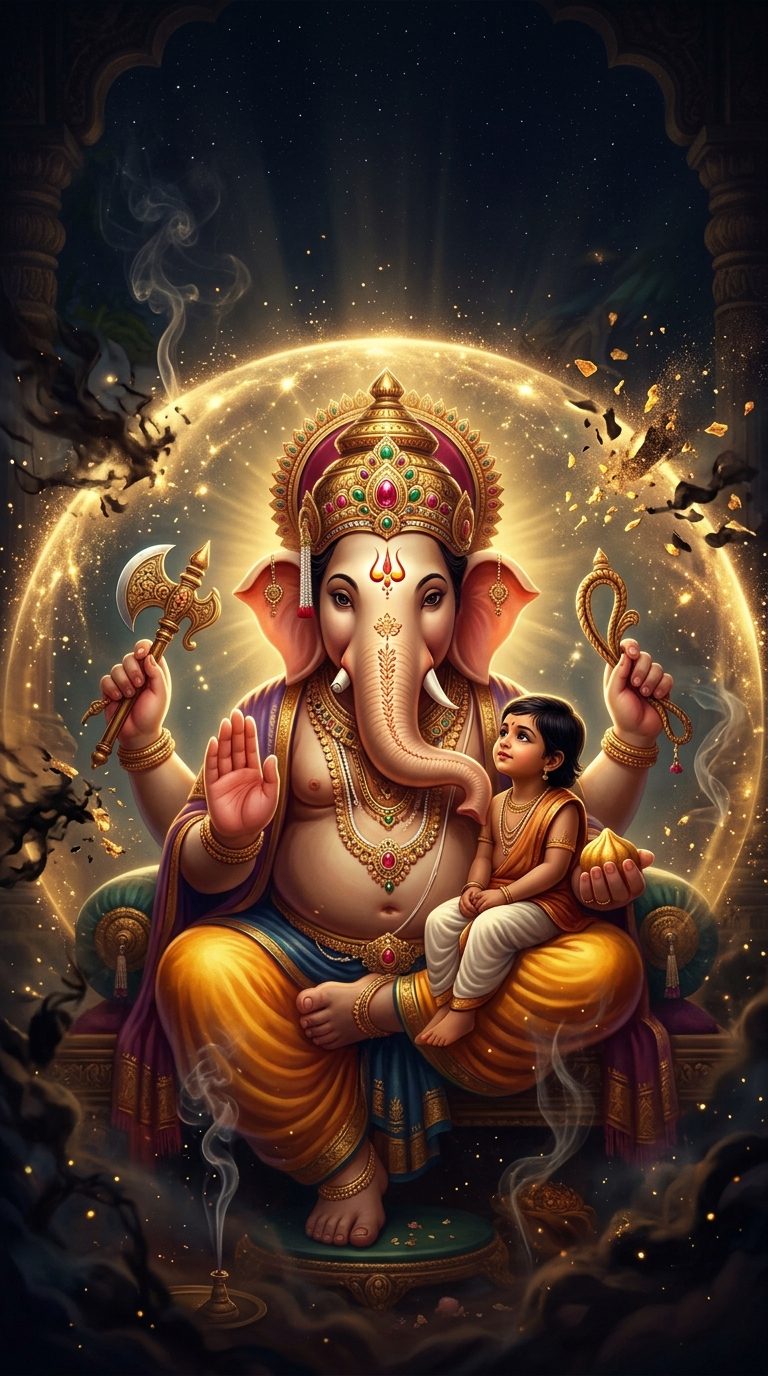
The protective armour of Ganesha, given by a sage when Parvati worried about her mischievous little son — a different name of Ganesha guarding each part of the body and each direction, day and night.
From the Ganesha Purana (Krida Khanda, chapter 85); taught by the sage Kashyapa
Listen
Ganesha Kavacham
Son of Kali · Power of Ganesha
0:004:32
Deity
Ganesha
Type
Kavacham
Verses
26
Language
Sanskrit
GaneshaKavachamLyricswithMeaning
Each line shows an easy way to say it, with its English meaning. Turn on the Sanskrit, the exact pronunciation or the word-by-word meaning whenever you want to go deeper.
Verse 1 — Gauri said
एषोऽतिचपलो दैत्यान्बाल्येऽपि नाशयत्यहो ।
Eshotichapalo Daityanbalyepi Nashayatyaho
eṣo'ticapalo daityānbālye'pi nāśayatyaho
“Oh, this restless child destroys demons even in his childhood;
अग्रे किं कर्म कर्तेति न जाने मुनिसत्तम ॥ १ ॥
Agre Kim Karma Karteti Na Jane Munisattama
agre kiṃ karma karteti na jāne munisattama
I do not know what he will do next, O best of sages.
Verse 2
दैत्या नानाविधा दुष्टाः साधुदेवद्रुहः खलाः ।
Daitya Nanavidha Dushtah Sadhudevadruhah Khalah
daityā nānāvidhā duṣṭāḥ sādhudevadruhaḥ khalāḥ
Demons of many kinds are wicked, hostile to the good and the gods,
अतोऽस्य कण्ठे किञ्चित्त्वं रक्षार्थं बद्धमर्हसि ॥ २ ॥
Dharadhara my sides, the auspicious remover of obstacles my back,
लिङ्गं गुह्यं सदा पातु वक्रतुण्डो महाबलः ॥ ९ ॥
Lingam Guhyam Sada Patu Vakratundo Mahabalah
liṅgaṃ guhyaṃ sadā pātu vakratuṇḍo mahābalaḥ
and mighty Vakratunda always my private parts;
Verse 10
गणक्रीडो जानुसङ्घे ऊरु मङ्गलमूर्तिमान् ।
Ganakrido Janusanghe Uru Mangalamurtiman
gaṇakrīḍo jānusaṅghe ūru maṅgalamūrtimān
Ganakrida my knees and shins, the embodiment of blessing my thighs,
एकदन्तो महाबुद्धिः पादौ गुल्फौ सदाऽवतु ॥ १० ॥
Ekadanto Mahabuddhih Padau Gulphau Sadavatu
ekadanto mahābuddhiḥ pādau gulphau sadā'vatu
and Ekadanta of great wisdom always my feet and ankles;
Verse 11
क्षिप्रप्रसादनो बाहू पाणी आशाप्रपूरकः ।
Kshipraprasadano Bahu Pani Ashaprapurakah
kṣipraprasādano bāhū pāṇī āśāprapūrakaḥ
Kshipraprasadana my arms, Ashaprapuraka my hands,
अङ्गुलीश्च नखान्पातु पद्महस्तोऽरिनाशनः ॥ ११ ॥
Angulishcha Nakhanpatu Padmahastorinashanah
aṅgulīśca nakhānpātu padmahasto'rināśanaḥ
and the lotus-handed destroyer of foes my fingers and nails;
Verse 12
सर्वाङ्गानि मयूरेशो विश्वव्यापी सदाऽवतु ।
Sarvangani Mayuresho Vishvavyapi Sadavatu
sarvāṅgāni mayūreśo viśvavyāpī sadā'vatu
may Mayuresha, pervading the universe, always protect all my limbs,
अनुक्तमपि यत्स्थानं धूम्रकेतुः सदाऽवतु ॥ १२ ॥
Anuktamapi Yatsthanam Dhumraketuh Sadavatu
anuktamapi yatsthānaṃ dhūmraketuḥ sadā'vatu
and Dhumraketu any place not mentioned.
Verse 13 — The directions
आमोदस्त्वग्रतः पातु प्रमोदः पृष्ठतोऽवतु ।
Amodastvagratah Patu Pramodah Prishthatovatu
āmodastvagrataḥ pātu pramodaḥ pṛṣṭhato'vatu
Amoda protect me in front, Pramoda behind;
प्राच्यां रक्षतु बुद्धीश आग्नेयां सिद्धिदायकः ॥ १३ ॥
Prachyam Rakshatu Buddhisha Agneyam Siddhidayakah
prācyāṃ rakṣatu buddhīśa āgneyāṃ siddhidāyakaḥ
Buddhisha in the east, Siddhidayaka in the south-east;
Verse 14
दक्षिणास्यामुमापुत्रो नैरृत्यां तु गणेश्वरः ।
Dakshinasyamumaputro Nairrityam Tu Ganeshvarah
dakṣiṇāsyāmumāputro nairṛtyāṃ tu gaṇeśvaraḥ
the son of Uma in the south, Ganeshvara in the south-west,
प्रतीच्यां विघ्नहर्ताऽव्याद्वायव्यां गजकर्णकः ॥ १४ ॥
Pratichyam Vighnahartavyadvayavyam Gajakarnakah
pratīcyāṃ vighnahartā'vyādvāyavyāṃ gajakarṇakaḥ
the remover of obstacles in the west, Gajakarnaka in the north-west;
Verse 15
कौबेर्यां निधिपः पायादीशान्यामीशनन्दनः ।
Kauberyam Nidhipah Payadishanyamishanandanah
kauberyāṃ nidhipaḥ pāyādīśānyāmīśanandanaḥ
the lord of treasures in the north, the son of Shiva in the north-east;
दिवाऽव्यादेकदन्तस्तु रात्रौ सन्ध्यासु विघ्नहृत् ॥ १५ ॥
Divavyadekadantastu Ratrau Sandhyasu Vighnahrit
divā'vyādekadantastu rātrau sandhyāsu vighnahṛt
Ekadanta by day, and the remover of obstacles by night and at twilight.
Verse 16
राक्षसासुरवेतालग्रहभूतपिशाचतः ।
Rakshasasuravetalagrahabhutapishachatah
rākṣasāsuravetālagrahabhūtapiśācataḥ
From rakshasas, demons, vetalas, planetary forces, ghosts and goblins
पाशाङ्कुशधरः पातु रजःसत्त्वतमः स्मृतिः ॥ १६ ॥
Pashankushadharah Patu Rajahsattvatamah Smritih
pāśāṅkuśadharaḥ pātu rajaḥsattvatamaḥ smṛtiḥ
may the bearer of noose and goad protect me — and my memory, in rajas, sattva and tamas;
Verse 17
ज्ञानं धर्मं च लक्ष्मीं च लज्जां कीर्ति तथा कुलम् ।
Jnanam Dharmam Cha Lakshmim Cha Lajjam Kirti Tatha Kulam
jñānaṃ dharmaṃ ca lakṣmīṃ ca lajjāṃ kīrti tathā kulam
my knowledge, dharma, fortune, modesty, fame and family,
वपुर्धनं च धान्यं च गृहान्दारान्सुतान्सखीन् ॥ १७ ॥
Vapurdhanam Cha Dhanyam Cha Grihandaransutansakhin
vapurdhanaṃ ca dhānyaṃ ca gṛhāndārānsutānsakhīn
my body, wealth and grain, my homes, spouse, children and friends —
Verse 18
सर्वायुधधरः पौत्रान् मयूरेशोऽवतात्सदा ।
Sarvayudhadharah Pautran Mayureshovatatsada
sarvāyudhadharaḥ pautrān mayūreśo'vatātsadā
may Mayuresha, holding every weapon, always protect my grandchildren;
कपिलोऽजादिकं पातु गजाश्वान्विकटोऽवतु ॥ १८ ॥
Kapilojadikam Patu Gajashvanvikatovatu
kapilo'jādikaṃ pātu gajāśvānvikaṭo'vatu
may Kapila protect my goats and cattle, and Vikata my elephants and horses.
Verse 19 — Its uses
भूर्जपत्रे लिखित्वेदं यः कण्ठे धारयेत्सुधीः ।
Bhurjapatre Likhitvedam Yah Kanthe Dharayetsudhih
bhūrjapatre likhitvedaṃ yaḥ kaṇṭhe dhārayetsudhīḥ
Whoever, wise, writes this on birch bark and wears it at the throat
न भयं जायते तस्य यक्षरक्षःपिशाचतः ॥ १८ ॥
Na Bhayam Jayate Tasya Yaksharakshahpishachatah
na bhayaṃ jāyate tasya yakṣarakṣaḥpiśācataḥ
will have no fear of yakshas, rakshasas or goblins.
Verse 20
त्रिसन्ध्यं जपते यस्तु वज्रसारतनुर्भवेत् ।
Trisandhyam Japate Yastu Vajrasaratanurbhavet
trisandhyaṃ japate yastu vajrasāratanurbhavet
Whoever repeats it at the three junctions of the day becomes strong as a diamond;
यात्राकाले पठेद्यस्तु निर्विघ्नेन फलं लभेत् ॥ २० ॥
Yatrakale Pathedyastu Nirvighnena Phalam Labhet
yātrākāle paṭhedyastu nirvighnena phalaṃ labhet
whoever recites it when setting out gains the fruit without obstacle.
Verse 21
युद्धकाले पठेद्यस्तु विजयं चाप्नुयाद्द्रुतम् ।
Yuddhakale Pathedyastu Vijayam Chapnuyaddrutam
yuddhakāle paṭhedyastu vijayaṃ cāpnuyāddrutam
Whoever recites it at the time of battle quickly wins victory;
मारणोच्चाटकाकर्षस्तम्भमोहनकर्मणि ॥ २१ ॥
Maranochchatakakarshastambhamohanakarmani
māraṇoccāṭakākarṣastambhamohanakarmaṇi
and for rites of overcoming, banishing, attracting, halting and enchanting,
Verse 22
सप्तवारं जपेदेतद्दिनानामेकविंशतिम् ।
Saptavaram Japedetaddinanamekavimshatim
saptavāraṃ japedetaddinānāmekaviṃśatim
whoever repeats it seven times a day for twenty-one days
तत्तत्फलवाप्नोति साधको नात्रसंशयः ॥ २२ ॥
Tattatphalavapnoti Sadhako Natrasamshayah
tattatphalavāpnoti sādhako nātrasaṃśayaḥ
gains the corresponding result — of that there is no doubt.
Verse 23
एकविंशतिवारं च पठेत्तावद्दिनानि यः ।
Ekavimshativaram Cha Pathettavaddinani Yah
ekaviṃśativāraṃ ca paṭhettāvaddināni yaḥ
Whoever recites it twenty-one times a day for as many days
कारागृहगतं सद्योराज्ञा वध्यं च मोचयेत् ॥ २३ ॥
Karagrihagatam Sadyorajna Vadhyam Cha Mochayet
kārāgṛhagataṃ sadyorājñā vadhyaṃ ca mocayet
will at once free one in prison, even one condemned by the king.
Verse 24
राजदर्शनवेलायां पठेदेतत्त्रिवारतः ।
Rajadarshanavelayam Pathedetattrivaratah
rājadarśanavelāyāṃ paṭhedetattrivārataḥ
Whoever recites it three times before meeting a king
स राजसं वशं नीत्वा प्रकृतीश्च सभां जयेत् ॥ २४ ॥
Sa Rajasam Vasham Nitva Prakritishcha Sabham Jayet
sa rājasaṃ vaśaṃ nītvā prakṛtīśca sabhāṃ jayet
wins the king over and prevails in the assembly.
Verse 25
इदं गणेशकवचं कश्यपेन समीरितम् ।
Idam Ganeshakavacham Kashyapena Samiritam
idaṃ gaṇeśakavacaṃ kaśyapena samīritam
This armour of Ganesha was taught by Kashyapa
मुद्गलाय च ते नाथ माण्डव्याय महर्षये ॥ २५ ॥
Mudgalaya Cha Te Natha Mandavyaya Maharshaye
mudgalāya ca te nātha māṇḍavyāya maharṣaye
to Mudgala, O lady, and to the great sage Mandavya;
Verse 26
मह्यं स प्राह कृपया कवचं सर्वसिद्धिदम् ।
Mahyam Sa Praha Kripaya Kavacham Sarvasiddhidam
mahyaṃ sa prāha kṛpayā kavacaṃ sarvasiddhidam
and out of kindness he told me this armour that grants every success.
न देयं भक्तिहीनाय देयं श्रद्धावते शुभम् ॥ २६ ॥
Na Deyam Bhaktihinaya Deyam Shraddhavate Shubham
na deyaṃ bhaktihīnāya deyaṃ śraddhāvate śubham
It is not to be given to one without devotion; give this auspicious armour to one with faith.
✦ ✦ ✦
AboutGaneshaKavacham
This kavacham comes from the Ganesha Purana. It begins with a mother’s worry: Gauri (Parvati) tells the sage that her son is so restless that he destroys demons even as a child — what will he do next? Demons of many kinds wish him harm, so please tie something protective around his neck.
The sage answers with this armour. It opens with a meditation on Ganesha’s form in each of the four ages, then places a different name of Ganesha on each part of the body — Vinayaka on the crown, Kashyapa on the forehead, Bhalachandra on the eyes, Vighnaha on the teeth — and in every direction, by day, by night and at twilight.
The closing verses describe its uses: written on birch bark and worn at the throat, recited before travel, battle or meeting a king, it brings protection and success. It was taught by Kashyapa to Mudgala and Mandavya, and should be given only to those with faith.
✦ ✦ ✦
TheStoriesInsidetheHymn
Amother’sprotection
It is touching that this armour begins with Parvati — the mother of the universe — worrying about her own child, just as any mother would.
Devotees often chant it for their children, hanging a written copy near a child’s bed.
✦ ✦ ✦
HowtoChantGaneshaKavacham
When to chant
✦Wednesdays and Ganesh Chaturthi
✦Before travel
✦For the protection of children
✦Morning, noon and evening, as the hymn suggests
How many times
Once; seven times a day for 21 days for special intentions, as the hymn describes.
1
Sit before Ganesha and offer durva grass.
2
Recite the meditation verse picturing Ganesha’s form.
3
As each part of the body is named, bring your attention there.
4
Close with Om Gam Ganapataye Namah.
✦ ✦ ✦
PronunciationGuide
The sounds that trip people up most in this hymn, and how to say them.