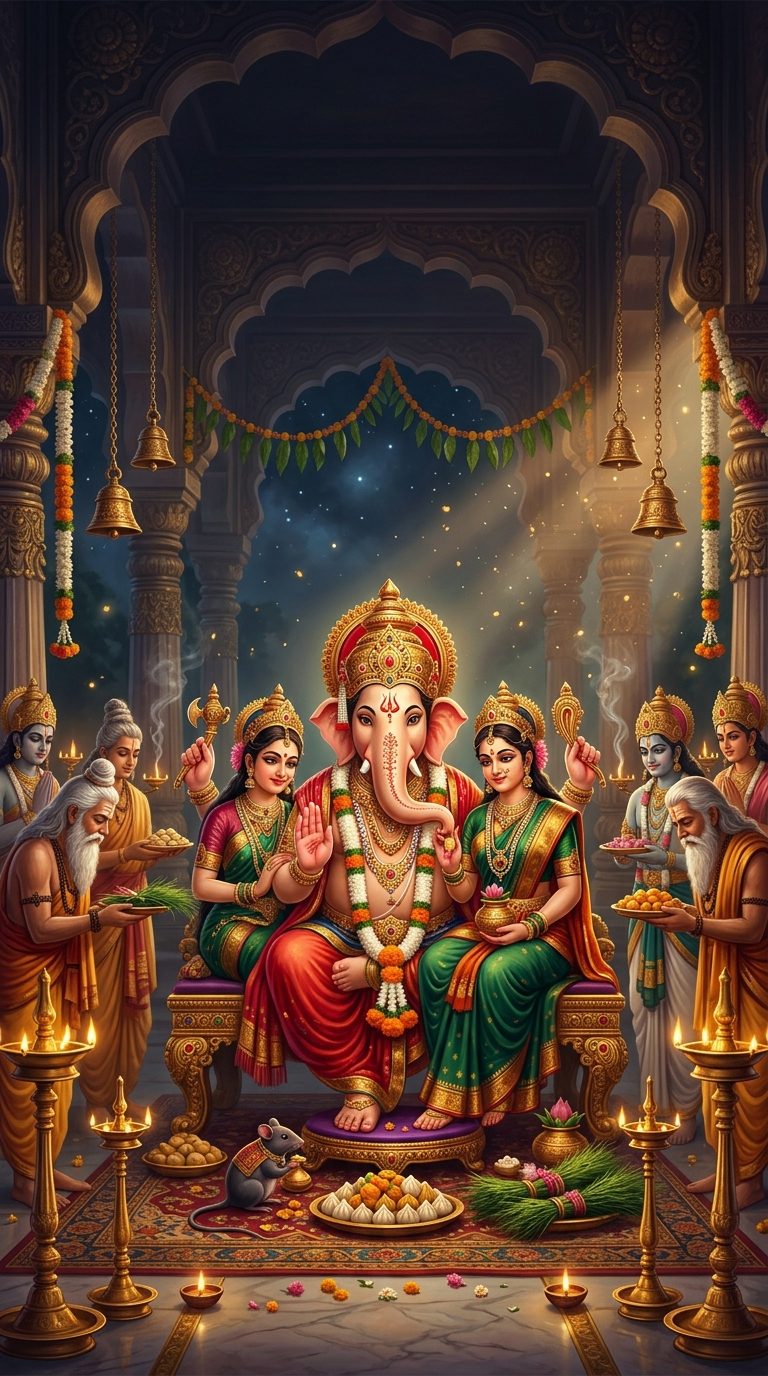
Lord Ganesha seated with Riddhi and Siddhi in a jewelled temple hall, sages and gods offering durva grass and modakas
GaneshaAshtakam

Ganesha Ashtakam

Lyrics · Meaning · Audio

The gods’ hymn to Ganesha as the source of everything — “from whom came infinite beings… from whom the sun, fire, earth and sky… always we bow to that Ganesha and worship him” — with Ganesha’s own promise of what it brings.

From the Ganesha Purana (Upasana Khanda, chapter 91)

Listen

Ganesha Ashtakam

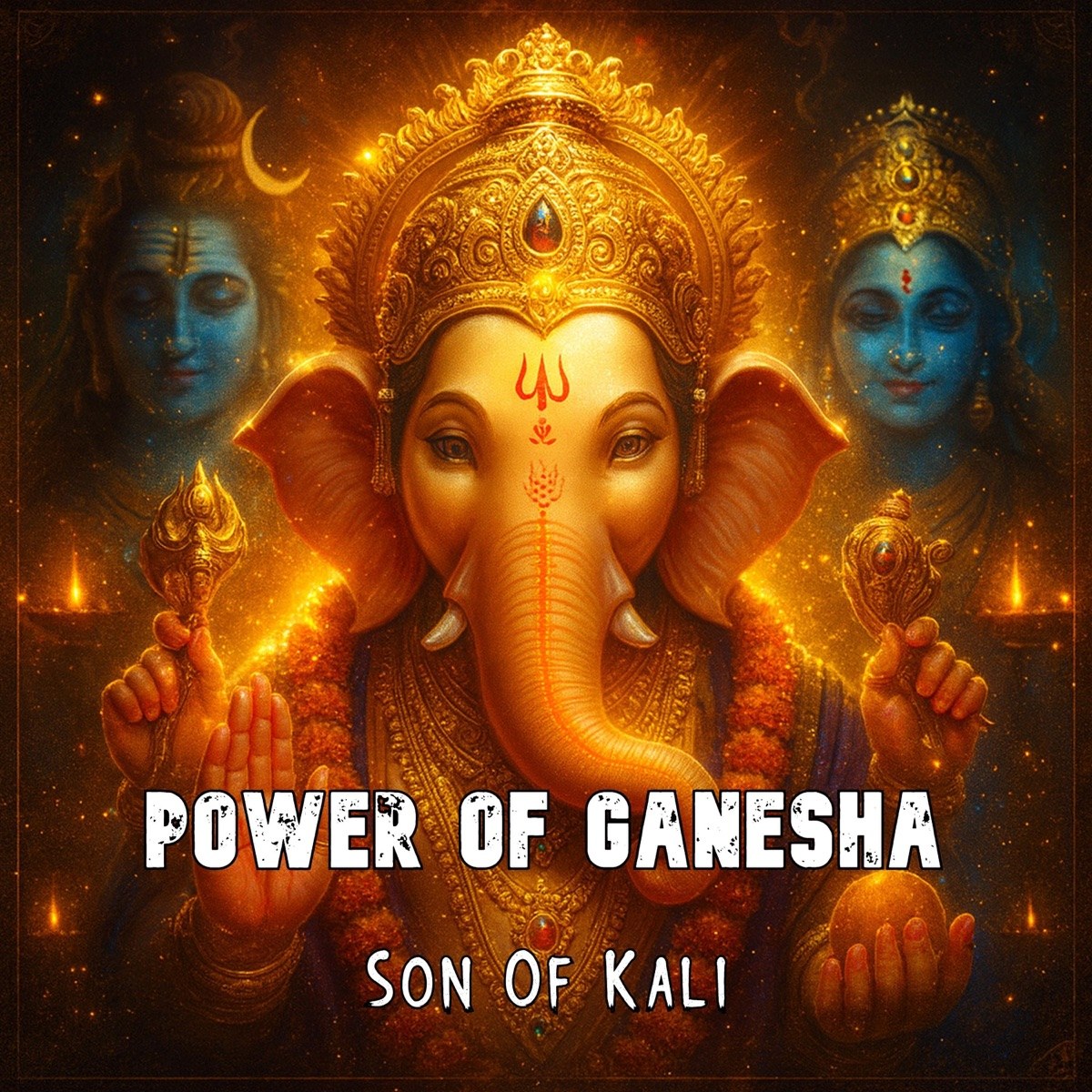
Son of Kali · Power of Ganesha

0:007:25
Deity
Ganesha
Type
Ashtakam
Verses
9
Language
Sanskrit

Ganesha Ashtakam Lyrics with Meaning

Each line shows an easy way to say it, with its English meaning. Turn on the Sanskrit, the exact pronunciation or the word-by-word meaning whenever you want to go deeper.

Verse 1

यतोऽनन्तशक्तेरनन्ताश्च जीवा

Yatonantashakteranantashcha Jiva

yato'nantaśakteranantāśca jīvā

From whom, of infinite power, come infinite beings;

    यतो निर्गुणादप्रमेया गुणास्ते ।

    Yato Nirgunadaprameya Gunaste

    yato nirguṇādaprameyā guṇāste

    from whom, beyond qualities, come the countless qualities;

      यतो भाति सर्वं त्रिधा भेदभिन्नं

      Yato Bhati Sarvam Tridha Bhedabhinnam

      yato bhāti sarvaṃ tridhā bhedabhinnaṃ

      from whom all things shine forth, divided threefold —

        सदा तं गणेशं नमामो भजामः ॥ १ ॥

        Sada Tam Ganesham Namamo Bhajamah

        sadā taṃ gaṇeśaṃ namāmo bhajāmaḥ

        always we bow to that Ganesha and worship him.

          Verse 2

          यतश्चाविरासीज्जगत्सर्वमेत-

          Yatashchavirasijjagatsarvameta-

          yataścāvirāsījjagatsarvameta-

          From whom this whole world appeared,

            त्तथाब्जासनो विश्वगो विश्वगोप्ता ।

            Ttathabjasano Vishvago Vishvagopta

            ttathābjāsano viśvago viśvagoptā

            and Brahma on the lotus, and all-pervading Vishnu, protector of all,

              तथेन्द्रादयो देवसङ्घा मनुष्याः

              Tathendradayo Devasangha Manushyah

              tathendrādayo devasaṅghā manuṣyāḥ

              and Indra and the hosts of gods, and human beings —

                सदा तं गणेशं नमामो भजामः ॥ २ ॥

                Sada Tam Ganesham Namamo Bhajamah

                sadā taṃ gaṇeśaṃ namāmo bhajāmaḥ

                always we bow to that Ganesha and worship him.

                  Verse 3

                  यतो वह्निभानू भवो भूर्जलं च

                  Yato Vahnibhanu Bhavo Bhurjalam Cha

                  yato vahnibhānū bhavo bhūrjalaṃ ca

                  From whom come fire and sun, Shiva, the earth and water,

                    यतः सागराश्चन्द्रमा व्योम वायुः ।

                    Yatah Sagarashchandrama Vyoma Vayuh

                    yataḥ sāgarāścandramā vyoma vāyuḥ

                    from whom the oceans, the moon, the sky and the wind,

                      यतः स्थावरा जङ्गमा वृक्षसङ्घा-

                      Yatah Sthavara Jangama Vrikshasangha-

                      yataḥ sthāvarā jaṅgamā vṛkṣasaṅghā-

                      from whom all things that stand and move, and every kind of tree —

                        स्तदा तं गणेशं नमामो भजामः ॥ ३ ॥

                        Stada Tam Ganesham Namamo Bhajamah

                        stadā taṃ gaṇeśaṃ namāmo bhajāmaḥ

                        always we bow to that Ganesha and worship him.

                          Verse 4

                          यतो दानवा किन्नरा यक्षसङ्घा

                          Yato Danava Kinnara Yakshasangha

                          yato dānavā kinnarā yakṣasaṅghā

                          From whom come demons, kinnaras and hosts of yakshas,

                            यतश्चारणा वारणाः श्वापदाश्च ।

                            Yatashcharana Varanah Shvapadashcha

                            yataścāraṇā vāraṇāḥ śvāpadāśca

                            from whom the bards, the elephants and the beasts of prey,

                              यतः पक्षिकीटा यतो वीरुधश्च

                              Yatah Pakshikita Yato Virudhashcha

                              yataḥ pakṣikīṭā yato vīrudhaśca

                              from whom birds and insects, from whom the creeping plants —

                                सदा तं गणेशं नमामो भजामः ॥ ४ ॥

                                Sada Tam Ganesham Namamo Bhajamah

                                sadā taṃ gaṇeśaṃ namāmo bhajāmaḥ

                                always we bow to that Ganesha and worship him.

                                  Verse 5

                                  यतो बुद्धिरज्ञाननाशो मुमुक्षोः

                                  Yato Buddhirajnananasho Mumukshoh

                                  yato buddhirajñānanāśo mumukṣoḥ

                                  From whom comes the wisdom that ends ignorance for one seeking freedom,

                                    यतः सम्पदो भक्तसन्तोषिकाः स्युः ।

                                    Yatah Sampado Bhaktasantoshikah Syuh

                                    yataḥ sampado bhaktasantoṣikāḥ syuḥ

                                    from whom the riches that delight his devotees,

                                      यतो विघ्ननाशो यतः कार्यसिद्धिः

                                      Yato Vighnanasho Yatah Karyasiddhih

                                      yato vighnanāśo yataḥ kāryasiddhiḥ

                                      from whom the end of obstacles, from whom success in every task —

                                        सदा तं गणेशं नमामो भजामः ॥ ५ ॥

                                        Sada Tam Ganesham Namamo Bhajamah

                                        sadā taṃ gaṇeśaṃ namāmo bhajāmaḥ

                                        always we bow to that Ganesha and worship him.

                                          Verse 6

                                          यतः पुत्रसम्पद्यतो वाञ्छितार्थो

                                          Yatah Putrasampadyato Vanchhhitartho

                                          yataḥ putrasampadyato vāñchitārtho

                                          From whom come children and wealth, from whom every wished-for aim,

                                            यतोऽभक्तविघ्नास्तथाऽनेकरूपाः ।

                                            Yatobhaktavighnastathanekarupah

                                            yato'bhaktavighnāstathā'nekarūpāḥ

                                            from whom the many obstacles for those without devotion,

                                              यतः शोकमोहौ यतः काम एव

                                              Yatah Shokamohau Yatah Kama Eva

                                              yataḥ śokamohau yataḥ kāma eva

                                              from whom grief and delusion, and from whom desire itself —

                                                सदा तं गणेशं नमामो भजामः ॥ ६ ॥

                                                Sada Tam Ganesham Namamo Bhajamah

                                                sadā taṃ gaṇeśaṃ namāmo bhajāmaḥ

                                                always we bow to that Ganesha and worship him.

                                                  Verse 7

                                                  यतोऽनन्तशक्तिः स शेषो बभूव

                                                  Yatonantashaktih Sa Shesho Babhuva

                                                  yato'nantaśaktiḥ sa śeṣo babhūva

                                                  From whom came Shesha, the serpent of infinite power,

                                                    धराधारणेऽनेकरूपे च शक्तः ।

                                                    Dharadharanenekarupe Cha Shaktah

                                                    dharādhāraṇe'nekarūpe ca śaktaḥ

                                                    able in many forms to hold up the earth;

                                                      यतोऽनेकधा स्वर्गलोका हि नाना

                                                      Yatonekadha Svargaloka Hi Nana

                                                      yato'nekadhā svargalokā hi nānā

                                                      from whom the many heavenly worlds in their many kinds —

                                                        सदा तं गणेशं नमामो भजामः ॥ ७ ॥

                                                        Sada Tam Ganesham Namamo Bhajamah

                                                        sadā taṃ gaṇeśaṃ namāmo bhajāmaḥ

                                                        always we bow to that Ganesha and worship him.

                                                          Verse 8

                                                          यतो वेदवाचोऽतिकुण्ठा मनोभिः

                                                          Yato Vedavachotikuntha Manobhih

                                                          yato vedavāco'tikuṇṭhā manobhiḥ

                                                          Before whom the words of the Vedas falter, along with the mind,

                                                            सदा नेति नेतीति यत्ता गृणन्ति ।

                                                            Sada Neti Netiti Yatta Grinanti

                                                            sadā neti netīti yattā gṛṇanti

                                                            so that they can only say “not this, not this” —

                                                              परब्रह्मरूपं चिदानन्दभूतं

                                                              Parabrahmarupam Chidanandabhutam

                                                              parabrahmarūpaṃ cidānandabhūtaṃ

                                                              the form of the supreme Brahman, of consciousness and bliss —

                                                                सदा तं गणेशं नमामो भजामः ॥ ८ ॥

                                                                Sada Tam Ganesham Namamo Bhajamah

                                                                sadā taṃ gaṇeśaṃ namāmo bhajāmaḥ

                                                                always we bow to that Ganesha and worship him.

                                                                  Ganesha’s promise

                                                                  पुनरूचे गणाधीशः स्तोत्रमेतत्पठेन्नरः ।

                                                                  Punaruche Ganadhishah Stotrametatpathennarah

                                                                  punarūce gaṇādhīśaḥ stotrametatpaṭhennaraḥ

                                                                  Then Ganesha, lord of the hosts, spoke again: “Whoever recites this hymn

                                                                    त्रिसन्ध्यं त्रिदिनं तस्य सर्वकार्यं भविष्यति ॥ ९ ॥

                                                                    Trisandhyam Tridinam Tasya Sarvakaryam Bhavishyati

                                                                    trisandhyaṃ tridinaṃ tasya sarvakāryaṃ bhaviṣyati

                                                                    three times a day for three days — all their work will succeed.

                                                                      यो जपेदष्टदिवसं श्लोकाष्टकमिदं शुभम् ।

                                                                      Yo Japedashtadivasam Shlokashtakamidam Shubham

                                                                      yo japedaṣṭadivasaṃ ślokāṣṭakamidaṃ śubham

                                                                      Whoever repeats these eight auspicious verses for eight days,

                                                                        अष्टवारं चतुर्थ्यां तु सोऽष्टसिद्धीरवाप्नुयात् ॥ १० ॥

                                                                        Ashtavaram Chaturthyam Tu Soshtasiddhiravapnuyat

                                                                        aṣṭavāraṃ caturthyāṃ tu so'ṣṭasiddhīravāpnuyāt

                                                                        eight times on Chaturthi, gains the eight siddhis.

                                                                          यः पठेन्मासमात्रं तु दशवारं दिने दिने ।

                                                                          Yah Pathenmasamatram Tu Dashavaram Dine Dine

                                                                          yaḥ paṭhenmāsamātraṃ tu daśavāraṃ dine dine

                                                                          Whoever recites it ten times a day for a month

                                                                            स मोचयेद्बन्धगतं राजवध्यं न संशयः ॥ ११ ॥

                                                                            Sa Mochayedbandhagatam Rajavadhyam Na Samshayah

                                                                            sa mocayedbandhagataṃ rājavadhyaṃ na saṃśayaḥ

                                                                            will free one in bondage, even one condemned by the king — there is no doubt.

                                                                              विद्याकामो लभेद्विद्यां पुत्रार्थी पुत्रमाप्नुयात् ।

                                                                              Vidyakamo Labhedvidyam Putrarthi Putramapnuyat

                                                                              vidyākāmo labhedvidyāṃ putrārthī putramāpnuyāt

                                                                              The seeker of learning gains learning, the one wishing for a child gains a child,

                                                                                वाञ्छितान् लभते सर्वमेकविंशतिवारतः ॥ १२ ॥

                                                                                Vanchhhitan Labhate Sarvamekavimshativaratah

                                                                                vāñchitān labhate sarvamekaviṃśativārataḥ

                                                                                and by twenty-one recitations one gains every wish.”
                                                                                  About Ganesha Ashtakam

                                                                                  This ashtakam comes from the Ganesha Purana, where the gods praise Ganesha not as a minor deity but as the supreme reality: the one from whom all beings, all qualities, all gods, all creatures and all worlds arise.

                                                                                  Each verse begins yataḥ — “from whom” — and lists what comes from him: infinite beings, the qualities, Brahma and Vishnu, Indra and the gods, fire, sun, earth, water, sea, moon, sky and wind, plants and animals, wisdom, prosperity, the removal of obstacles. The refrain is sadā taṃ gaṇeśaṃ namāmo bhajāmaḥ — “always we bow to that Ganesha and worship him.”

                                                                                  The last verse turns to the formless: the Vedas grow speechless before him and can only say “not this, not this.” Afterwards Ganesha himself speaks the closing verses, promising success, the eight powers, freedom from bondage, learning and children to those who recite it.

                                                                                  The Stories Inside the Hymn

                                                                                  The Ganapatya vision

                                                                                  For the Ganapatya tradition, Ganesha is not only the remover of obstacles but the Supreme Being, the source of Brahma, Vishnu and Shiva alike.

                                                                                  This hymn expresses that vision beautifully, ending with the same “neti, neti” (“not this, not this”) the Upanishads use for the highest reality.

                                                                                  How to Chant Ganesha Ashtakam

                                                                                  When to chant

                                                                                  • ✦Wednesdays and Ganesh Chaturthi
                                                                                  • ✦Sankashti Chaturthi
                                                                                  • ✦Morning, noon and evening for three days, as Ganesha promises
                                                                                  • ✦Before beginning important work

                                                                                  How many times

                                                                                  Once; the closing verses suggest three times a day for three days, or eight times on Chaturthi.

                                                                                  1. 1

                                                                                    Offer durva grass, a red flower or a modaka to Ganesha.

                                                                                  2. 2

                                                                                    Chant each verse and the refrain.

                                                                                  3. 3

                                                                                    Picture everything in the world arising from Ganesha as you chant.

                                                                                  4. 4

                                                                                    Close with Om Gam Ganapataye Namah.

                                                                                  Pronunciation Guide

                                                                                  The sounds that trip people up most in this hymn, and how to say them.

                                                                                  namāmo bhajāmaḥ

                                                                                  na-maa-mo bha-jaa-mah — “we bow, we worship.”

                                                                                  yataḥ

                                                                                  ya-tah — “from whom.”

                                                                                  aṣṭasiddhīḥ

                                                                                  usht-a-sid-dheeh — “the eight powers.”

                                                                                  Power of Ganesha by Son of Kali

                                                                                  The music

                                                                                  Power of Ganesha

                                                                                  by Son of Kali

                                                                                  More for Ganesha

                                                                                  Frequently Asked Questions

                                                                                  Where does the Ganesha Ashtakam come from?

                                                                                  The Upasana Khanda of the Ganesha Purana, chapter 91.

                                                                                  What does Sada Tam Ganesham Namamo Bhajamah mean?

                                                                                  “Always we bow to that Ganesha and worship him.”

                                                                                  What are its benefits?

                                                                                  Ganesha promises success in all work to one who recites it three times a day for three days, the eight siddhis to one who recites it eight times on Chaturthi, and learning, children and every wish to those who recite it twenty-one times.

                                                                                  Text: Traditional public-domain Sanskrit hymn from the Ganesha Purana, checked against the sanskritdocuments.org edition. Easy reading and English translation written for the Jaguar Medicine Tribe Mantra Library.

                                                                                  Music: Recordings by Son of Kali, produced with AI-assisted vocals and instrumentation.

                                                                                  Note: Benefits described here are traditional beliefs, shared for understanding — not medical or guaranteed outcomes.