The best-loved Durga aarti, sung at the close of almost every Navaratri puja — a joyful description of the Mother’s beauty, her victories over demons and the blessings she gives.
Traditional aarti, signed by Swami Shivananda in the last verse
Listen
Jai Ambe Gauri Aarti
Son of Kali · Sacred Navaratri Chants
0:007:01
Deity
Durga
Type
Aarti
Verses
13
Language
Hindi
JaiAmbeGauriAartiLyricswithMeaning
Each line shows an easy way to say it, with its English meaning. Turn on the Sanskrit, the exact pronunciation or the word-by-word meaning whenever you want to go deeper.
Refrain
जय अम्बे गौरी, मैया जय श्यामा गौरी ।
Jai Ambe Gauri, Maiya Jai Shyama Gauri
jaya ambe gaurī maiyā jaya śyāmā gaurī
Victory to you, Mother Gauri — victory, Mother, dark and radiant one!
तुमको निशदिन ध्यावत, हरि ब्रह्मा शिवरी ॥
Tumako Nishadina Dhyavata, Hari Brahma Shivari
tumako niśadina dhyāvata hari brahmā śivarī
Vishnu, Brahma and Shiva meditate on you night and day.
Verse 1
माँग सिन्दूर विराजत, टीको मृगमद को ।
Maang Sindoor Virajata, Tiko Mrigamad Ko
mā̃ga sindūra virājata ṭīko mṛgamada ko
Vermilion shines in the parting of your hair, and a mark of musk on your brow;
उज्ज्वल से दोउ नैना, चन्द्रवदन नीको ॥
Ujjvala Se Dou Naina, Chandravadan Niko
ujjvala se dou nainā candravadana nīko
your two eyes are bright, and your moon-like face is lovely.
Verse 2
कनक समान कलेवर, रक्ताम्बर राजै ।
Kanak Samaan Kalevar, Raktambar Raajai
kanaka samāna kalevara raktāmbara rājai
Your body is like gold, and red garments adorn you;
रक्तपुष्प गल माला, कण्ठन पर साजै ॥
Raktapushp Gal Mala, Kanthan Par Saajai
raktapuṣpa gala mālā kaṇṭhana para sājai
a garland of red flowers graces your neck.
Verse 3
केहरि वाहन राजत, खड्ग खप्पर धारी ।
Kehari Vahan Rajat, Khadag Khappar Dhari
kehari vāhana rājata khaḍga khappara dhārī
You shine upon your lion, holding a sword and a skull-bowl;
सुर-नर-मुनिजन सेवत, तिनके दुखहारी ॥
Sur Nar Munijan Sevat, Tinke Dukhahari
sura-nara-munijana sevata tinake dukhahārī
gods, people and sages serve you, and you take away their sorrows.
Verse 4
कानन कुण्डल शोभित, नासाग्रे मोती ।
Kanan Kundal Shobhit, Nasagre Moti
kānana kuṇḍala śobhita nāsāgre motī
Earrings glitter in your ears, a pearl at the tip of your nose;
कोटिक चन्द्र दिवाकर, सम राजत ज्योती ॥
Kotik Chandra Divakar, Sam Rajat Jyoti
koṭika candra divākara sama rājata jyotī
your light shines like millions of moons and suns.
Verse 5
शुम्भ-निशुम्भ बिदारे, महिषासुर घाती ।
Shumbh Nishumbh Bidare, Mahishasur Ghati
śumbha-niśumbha bidāre mahiṣāsura ghātī
You tore apart Shumbha and Nishumbha and slew Mahishasura;
धूम्रविलोचन नैना, निशदिन मदमाती ॥
Dhumra Vilochan Naina, Nishadin Madamati
dhūmravilocana nainā niśadina madamātī
your eyes, which destroyed Dhumralochana, are ever bright with divine joy.
Verse 6
चण्ड-मुण्ड संहारे, शोणितबीज हरे ।
Chand Mund Sanhare, Shonit Beej Hare
caṇḍa-muṇḍa saṃhāre śoṇitabīja hare
You destroyed Chanda and Munda and wiped out Raktabija;
मधु-कैटभ दोउ मारे, सुर भयहीन करे ॥
Madhu Kaitabh Dou Maare, Sur Bhayaheen Kare
madhu-kaiṭabha dou māre sura bhayahīna kare
you killed both Madhu and Kaitabha and freed the gods from fear.
Verse 7
ब्रह्माणी, रुद्राणी, तुम कमला रानी ।
Brahmani, Rudrani, Tum Kamala Rani
brahmāṇī rudrāṇī tuma kamalā rānī
You are Brahmani, Rudrani, and Queen Kamala (Lakshmi);
आगम-निगम बखानी, तुम शिव पटरानी ॥
Agam Nigam Bakhani, Tum Shiv Patrani
āgama-nigama bakhānī tuma śiva paṭarānī
the scriptures and Vedas praise you; you are the chief queen of Shiva.
The sixty-four yoginis sing your praise and Bhairava dances,
बाजत ताल मृदंगा, अरु बाजत डमरू ॥
Baajat Taal Mridanga, Aru Baajat Damaru
bājata tāla mṛdaṅgā aru bājata ḍamarū
cymbals and drums play, and the damaru resounds.
Verse 9
तुम ही जग की माता, तुम ही हो भरता ।
Tum Hi Jag Ki Mata, Tum Hi Ho Bharta
tuma hī jaga kī mātā tuma hī ho bharatā
You are the mother of the world, and you are its sustainer;
भक्तन की दुख हरता, सुख सम्पति करता ॥
Bhaktan Ki Dukh Harta, Sukh Sampati Karta
bhaktana kī dukha haratā sukha sampati karatā
you take away your devotees’ sorrows and give them happiness and wealth.
Verse 10
भुजा चार अति शोभित, वरमुद्रा धारी ।
Bhuja Chaar Ati Shobhit, Varamudra Dhari
bhujā cāra ati śobhita varamudrā dhārī
Your four arms are radiant; you show the gesture of blessing;
मनवाञ्छित फल पावत, सेवत नर नारी ॥
Manvanchhit Phal Pavat, Sevat Nar Nari
manavāñchita phala pāvata sevata nara nārī
men and women who serve you receive the fruit of their heart’s wishes.
Verse 11
कञ्चन थाल विराजत, अगर कपूर बाती ।
Kanchan Thaal Virajat, Agar Kapur Baati
kañcana thāla virājata agara kapūra bātī
On a golden plate shine incense, camphor and the lamp-wick;
श्रीमालकेतु में राजत, कोटि रतन ज्योती ॥
Shri Malaketu Mein Rajat, Koti Ratan Jyoti
śrīmālaketu meṃ rājata koṭi ratana jyotī
in the sacred lamp shines a light like millions of jewels.
Verse 12
श्री अम्बेजी की आरती, जो कोई नर गावे ।
Shri Ambeji Ki Aarti, Jo Koi Nar Gave
śrī ambejī kī āratī jo koī nara gāve
Whoever sings this aarti of the holy Mother —
कहत शिवानन्द स्वामी, सुख-सम्पति पावे ॥
Kahat Shivanand Swami, Sukh Sampati Pave
kahata śivānanda svāmī sukha-sampati pāve
says Swami Shivananda — will receive happiness and prosperity.
✦ ✦ ✦
AboutJaiAmbeGauriAarti
“Jai Ambe Gauri” is the aarti most Hindu families sing to Durga, especially during the nine nights of Navaratri. Aarti is the ritual of waving a lamp before the deity at the end of worship, while everyone sings.
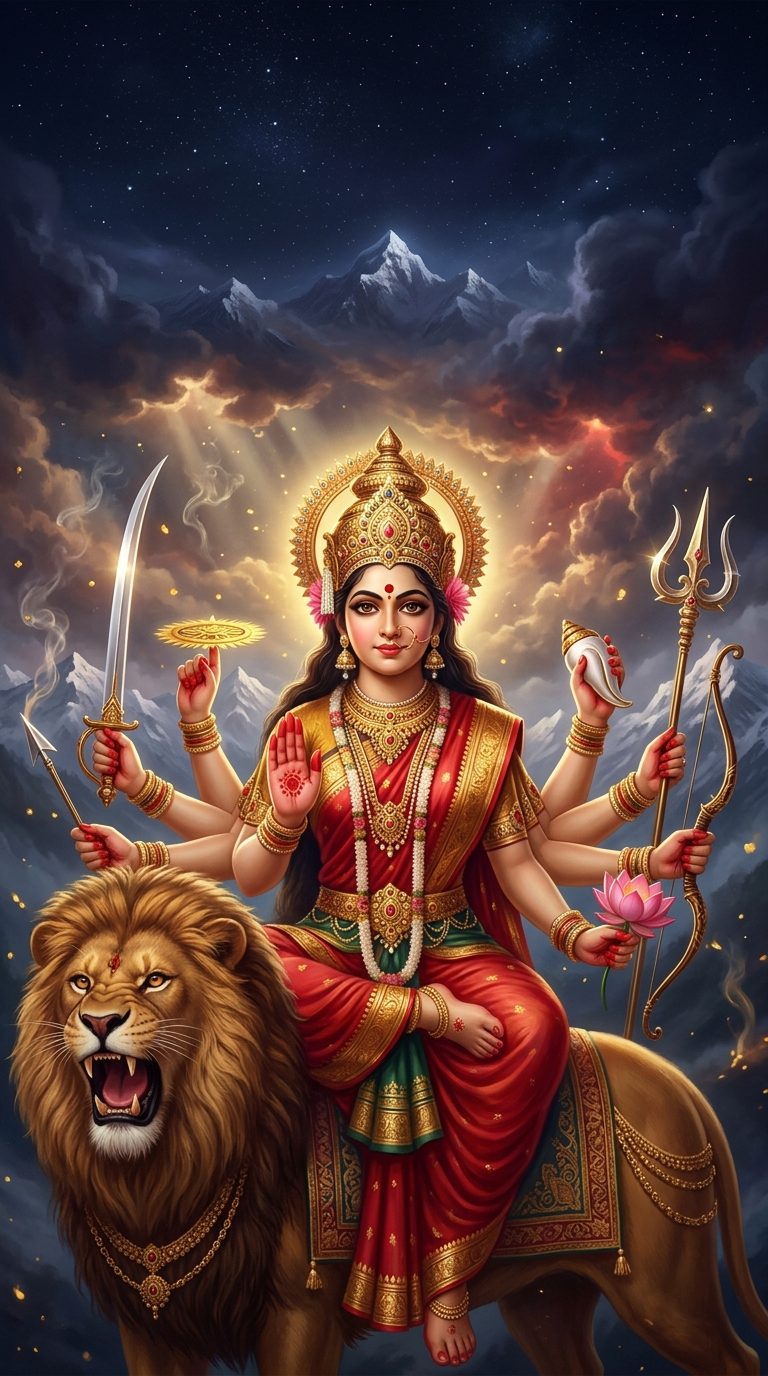
The song paints a picture of the Goddess: vermilion in her hair parting, a moon-like face, golden skin, a red sari, riding a lion with sword and skull-bowl. Then it recounts her victories over Shumbha, Nishumbha, Mahishasura, Chanda, Munda, Raktabija, Madhu and Kaitabha.
Its last verse is signed by “Swami Shivananda,” whom tradition names as the author. The lyrics are in simple Hindi; small variations between families are normal.
✦ ✦ ✦
TheStoriesInsidetheHymn
Whywewavethelamp
In aarti, the flame is circled before the deity and then each person passes their hands over it and touches their eyes and head, taking the light’s blessing into themselves.
Camphor, used in many aartis, burns away completely and leaves no trace — a symbol of the ego dissolving in the Divine.
✦ ✦ ✦
HowtoChantJaiAmbeGauriAarti
When to chant
✦At the end of every Navaratri puja
✦Evening worship on Fridays
✦Durga Puja and Durga Ashtami
✦Any time you worship the Goddess at home
How many times
Once, at the close of puja.
1
Light a ghee lamp or camphor on a plate (thali).
2
Ring a bell and wave the lamp in slow clockwise circles before the Goddess while singing.
3
Everyone joins the refrain “Om Jai Ambe Gauri.”
4
At the end, offer the flame to everyone present to receive its blessing.
✦ ✦ ✦
PronunciationGuide
The sounds that trip people up most in this hymn, and how to say them.
The final verse names Swami Shivananda, who is traditionally credited as the author.
WhenisJaiAmbeGaurisung?
At the end of Durga worship, especially every evening of Navaratri and during Durga Puja.
WhatdoesAmbeGaurimean?
Ambe means “Mother” and Gauri means “the fair, radiant one” — both names of Durga-Parvati. Shyama Gauri adds “the dark one,” honouring both her gentle and fierce forms.
Whydothelyricsdifferslightlybetweenversions?
Aartis are passed down orally in families and temples, so small differences in words are normal. This page gives a widely sung version.