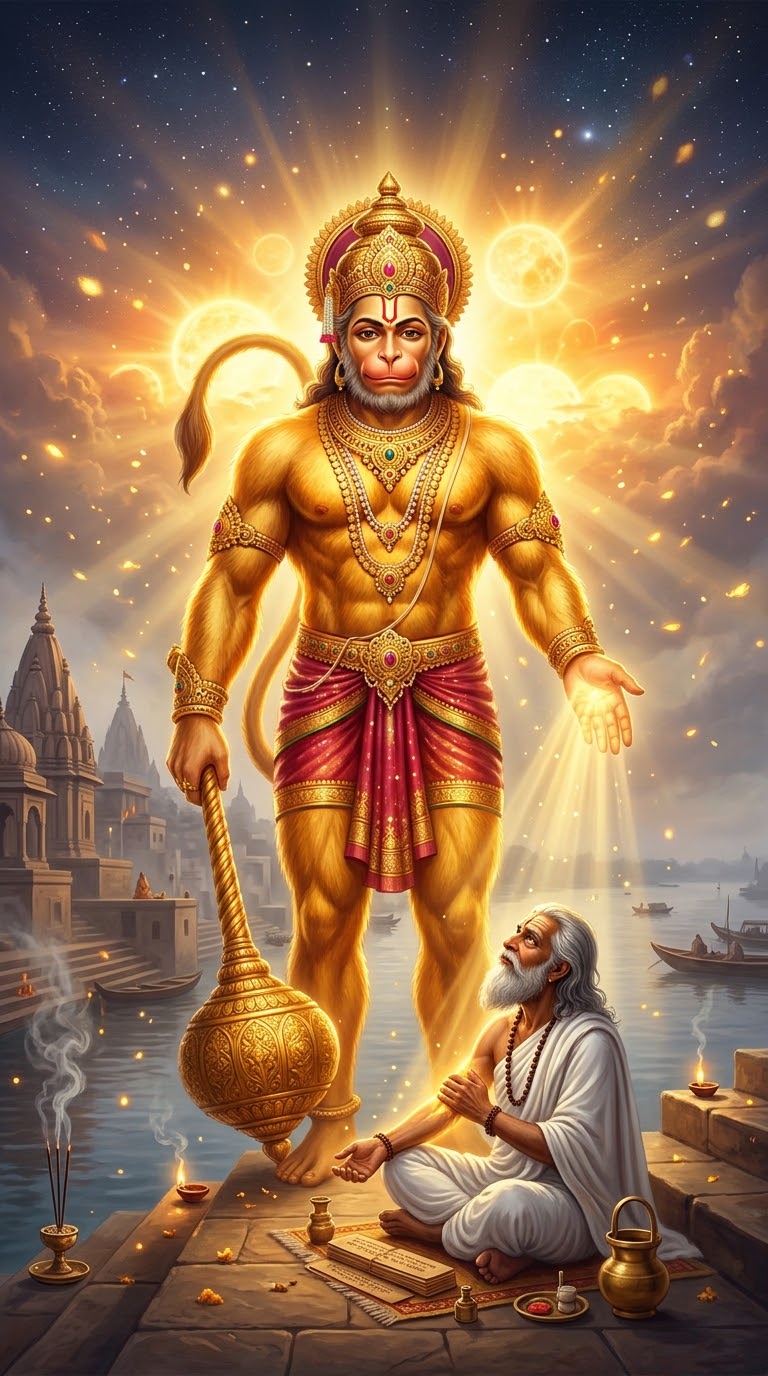
Hanuman blazing like a golden mountain against a sky of ten million suns, his arm raised in blessing over a weary old poet

Hanuman · Stuti

Hanuman Bahuk (Opening Verses)

Lyrics · Meaning · Audio

Tulsidas wrote the Hanuman Bahuk in old age, when his arm was racked with pain, and it is still recited for healing. Its opening verses, given here as sung, picture Hanuman’s blazing form and retell his great deeds: crossing the ocean, burning Lanka, carrying the mountain and roaring from Arjuna’s banner.

Goswami Tulsidas

Listen

Hanuman Bahuk (Opening Verses)

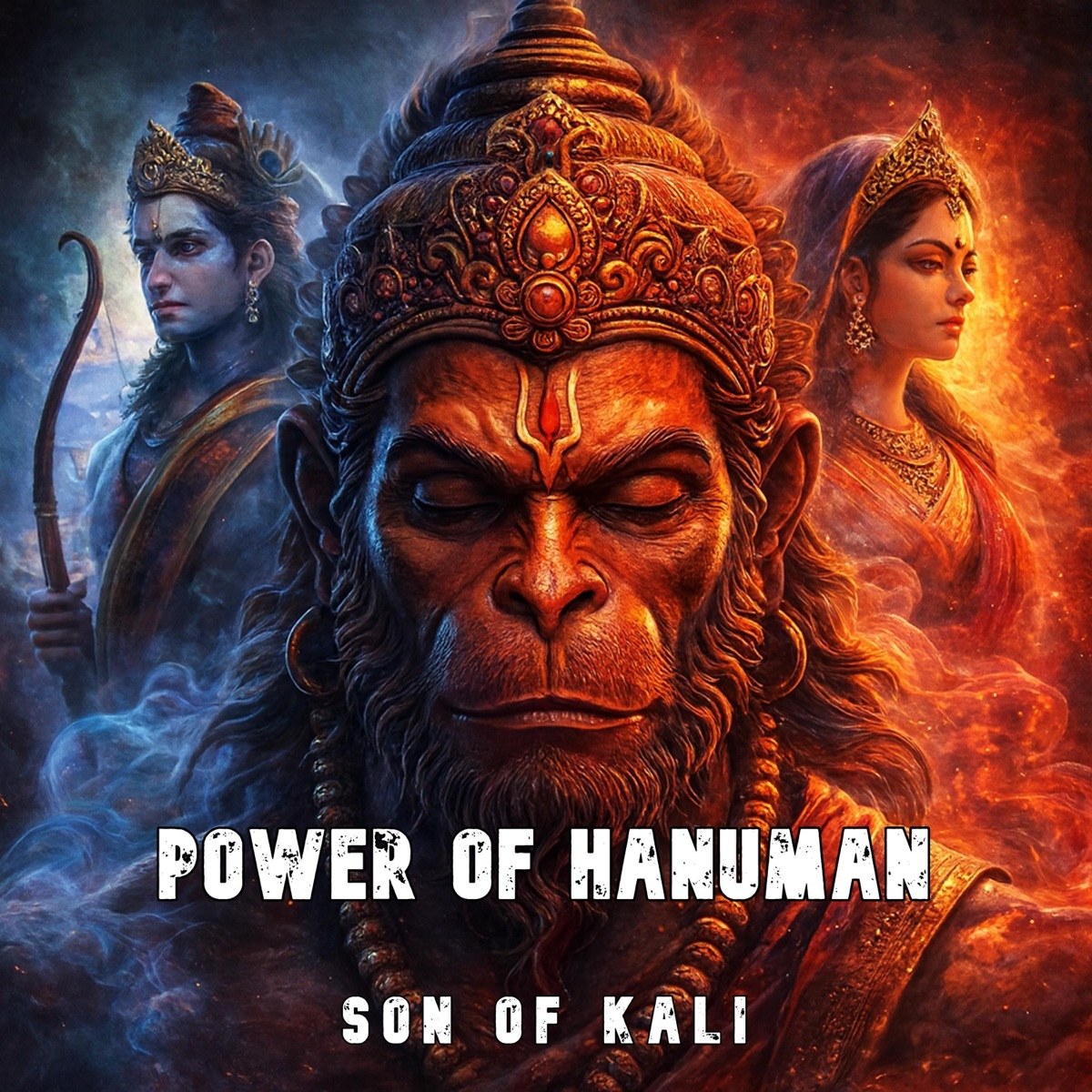
Son of Kali · Power of Hanuman

0:007:42
Deity
Hanuman
Type
Stuti
Verses
8
Language
Awadhi

Hanuman Bahuk (Opening Verses) Lyrics with Meaning

Each line shows an easy way to say it, with its English meaning. Turn on the Sanskrit, the exact pronunciation or the word-by-word meaning whenever you want to go deeper.

Verse 1 — Chhappay

सिंधु-तरन, सिय-सोच-हरन, रबि-बालबरन-तनु ।

Sindhu Tarana Siya Socha Harana Rabi Balabarana Tanu

siṃdhu-tarana, siya-soca-harana, rabi-bālabarana-tanu

He crossed the ocean and took away Sita’s sorrow; his body glows like the rising sun.

    भुज बिसाल, मूरति कराल कालहुको काल जनु ॥

    Bhuja Bisala Murati Karala Kalahuko Kala Janu

    bhuja bisāla, mūrati karāla kālahuko kāla janu

    His arms are mighty, his form so fierce he seems Death even to Death.

      गहन-दहन-निरदहन-लंक निसंक, बंक-भुव ।

      Gahana Dahana Niradahana Lanka Nisanka Banka Bhuva

      gahana-dahana-niradahana-laṃka nisaṃka, baṃka-bhuva

      Fearless, with arched brows, he burned the dense fortress of Lanka to the ground;

        जातुधान-बलवान-मान-मद-दवन पवनसुव ॥

        Jatudhana Balavana Mana Mada Davana Pavanasuva

        jātudhāna-balavāna-māna-mada-davana pavanasuva

        son of the Wind, he crushed the pride and arrogance of the mighty demons.

          कह तुलसिदास सेवत सुलभ, सेवक हित संतत निकट ।

          Kaha Tulasidasa Sevata Sulabha Sevaka Hita Santata Nikata

          kaha tulasidāsa sevata sulabha, sevaka hita saṃtata nikaṭa

          Tulsidas says: he is easy to reach through service, and always close to those who serve him.

            गुनगनत, नमत, सुमिरत, जपत, समन सकल-संकट-बिकट ॥ १ ॥

            Gunaganata Namata Sumirata Japata Samana Sakala Sankata Bikata

            gunaganata, namata, sumirata, japata, samana sakala-saṃkaṭa-bikaṭa

            Count his virtues, bow to him, remember him, chant his name: he calms every terrible crisis.

              Verse 2 — Chhappay

              स्वर्न-सैल-संकास कोटि-रबि-तरुन-तेज-घन ।

              Svarna Saila Sankasa Koti Rabi Taruna Teja Ghana

              svarna-saila-saṃkāsa koṭi-rabi-taruna-teja-ghana

              Like a golden mountain, with the dense splendour of ten million young suns,

                उर बिसाल, भुजदंड चंड नख बज्र बज्रतन ॥

                Ura Bisala Bhujadanda Chanda Nakha Bajra Bajratana

                ura bisāla, bhujadaṃḍa caṃḍa nakha bajra bajratana

                broad-chested, his arms fierce clubs, his nails thunderbolts, his body adamant;

                  पिंग नयन, भृकुटी कराल रसना दसनानन ।

                  Pinga Nayana Bhrikuti Karala Rasana Dasananana

                  piṃga nayana, bhṛkuṭī karāla rasanā dasanānana

                  tawny eyes, fearsome brows, tongue and teeth bared in his face,

                    कपिस केस, करकस लंगूर, खल-दल बल भानन ॥

                    Kapisa Kesa Karakasa Langura Khala Dala Bala Bhanana

                    kapisa kesa, karakasa laṃgūra, khala-dala bala bhānana

                    tawny hair, and a rough tail that breaks the strength of the wicked hordes.

                      कह तुलसिदास बस जासु उर मारुतसुत मूरति बिकट ।

                      Kaha Tulasidasa Basa Jasu Ura Marutasuta Murati Bikata

                      kaha tulasidāsa basa jāsu ura mārutasuta mūrati bikaṭa

                      Tulsidas says: whoever holds this fierce form of the Wind’s son in their heart,

                        संताप पाप तेहि पुरुष पहिँ सपनेहुँ नहिँ आवत निकट ॥ २ ॥

                        Santapa Papa Tehi Purusha Pahim Sapanehum Nahim Avata Nikata

                        saṃtāpa pāpa tehi puruṣa pahiṃ sapanehuṃ nahiṃ āvata nikaṭa

                        suffering and sin never come near that person, not even in dreams.

                          Verse 3 — Jhulana

                          पंचमुख-छमुख-भृगुमुख्य भट-असुर-सुर, सर्व-सरि-समर समरत्थ सूरो ।

                          Panchamukha Chhamukha Bhrigumukhya Bhata Asura Sura Sarva Sari Samara Samarattha Suro

                          paṃcamukha-chamukha-bhṛgumukhya bhaṭa-asura-sura, sarva-sari-samara samarattha sūro

                          Among five-faced Shiva, six-faced Skanda, Parashurama and every warrior, demon and god, he is the hero equal to any battle.

                            बांकुरो बीर बिरुदैत बिरुदावली, बेद बंदी बदत पैजपूरो ॥

                            Bankuro Bira Birudaita Birudavali Beda Bandi Badata Paijapuro

                            bāṃkuro bīra birudaita birudāvalī, beda baṃdī badata paijapūro

                            A dashing, famed warrior: the Vedas, like bards, sing his titles as the one who keeps his word.

                              जासु गुननाथ रघुनाथ कह, जासु बल, बिपुल-जल-भरित जग-जलधि झूरो ।

                              Jasu Gunanatha Raghunatha Kaha Jasu Bala Bipula Jala Bharita Jaga Jaladhi Jhuro

                              jāsu gunanātha raghunātha kaha, jāsu bala, bipula-jala-bharita jaga-jaladhi jhūro

                              Rama, lord of virtues, himself speaks of his virtues; by his strength the world’s vast, brimming ocean ran dry.

                                दुवन-दल-दमनको कौन तुलसीस है पवनको पूत रजपूत रूरो ॥ ३ ॥

                                Duvana Dala Damanako Kauna Tulasisa Hai Pavanako Puta Rajaputa Ruro

                                duvana-dala-damanako kauna tulasīsa hai pavanako pūta rajapūta rūro

                                Who is there to crush the enemy hosts? Tulsi’s lord, the Wind’s son, a splendid warrior.

                                  Verse 4 — Ghanakshari

                                  भानुसोँ पढन हनुमान गये भानु मन – अनुमानि सिसुकेलि कियो फेरफार सो ।

                                  Bhanusom Padhana Hanumana Gaye Bhanu Mana – Anumani Sisukeli Kiyo Pheraphara So

                                  bhānusoṃ paḍhana hanumāna gaye bhānu mana – anumāni sisukeli kiyo pheraphāra so

                                  Hanuman went to the Sun to study; the Sun, thinking it a child’s game, kept moving on his way,

                                    पाछिले पगनि गम गगन मगन-मन, क्रमको न भ्रम, कपि बालक-बिहार सो ॥

                                    Pachhile Pagani Gama Gagana Magana Mana Kramako Na Bhrama Kapi Balaka Bihara So

                                    pāchile pagani gama gagana magana-mana, kramako na bhrama, kapi bālaka-bihāra so

                                    so Hanuman walked backwards across the sky, happy at heart, never missing a step, like a monkey child at play.

                                      कौतुक बिलोकि लोकपाल हरि हर बिधि, लोचननि चकाचौंधी चित्तनि खभार सो ।

                                      Kautuka Biloki Lokapala Hari Hara Bidhi Lochanani Chakachaundhi Chittani Khabhara So

                                      kautuka biloki lokapāla hari hara bidhi, locanani cakācauṃdhī cittani khabhāra so

                                      Seeing this wonder, the guardians of the worlds, Vishnu, Shiva and Brahma, were dazzled and stirred at heart.

                                        बल कैधौँ बीररस, धीरज कै, साहस कै, तुलसी सरीर धरे सबनिको सार सो ॥ ४ ॥

                                        Bala Kaidhaum Birarasa Dhiraja Kai Sahasa Kai Tulasi Sarira Dhare Sabaniko Sara So

                                        bala kaidhauṃ bīrarasa, dhīraja kai, sāhasa kai, tulasī sarīra dhare sabaniko sāra so

                                        Is this strength, or the spirit of heroism, or patience, or courage? Tulsi says: it is the essence of them all, in bodily form.

                                          Verse 5 — Ghanakshari

                                          भारतमेँ पारथके रथकेतु कपिराज, गाज्यो सुनि कुरुराज दल हलबल भो ।

                                          Bharatamem Parathake Rathaketu Kapiraja Gajyo Suni Kururaja Dala Halabala Bho

                                          bhāratameṃ pārathake rathaketu kapirāja, gājyo suni kururāja dala halabala bho

                                          In the Mahabharata war the monkey king on Arjuna’s chariot banner roared, and at the sound the Kaurava army was thrown into panic.

                                            कह्यो द्रोन भीषम समीरसुत महाबीर, बीर-रस-बारि-निधि जाको बल जल भो ॥

                                            Kahyo Drona Bhishama Samirasuta Mahabira Bira Rasa Bari Nidhi Jako Bala Jala Bho

                                            kahyo drona bhīṣama samīrasuta mahābīra, bīra-rasa-bāri-nidhi jāko bala jala bho

                                            Drona and Bhishma said: this is the Wind’s son, the great hero, an ocean of heroism whose water is his strength.

                                              बानर सुभाय बालकेलि भूमि भानु लागि, फलँग फलाँगहूँतें घाटि नभतल भो ।

                                              Banara Subhaya Balakeli Bhumi Bhanu Lagi Phalanga Phalangahuntem Ghati Nabhatala Bho

                                              bānara subhāya bālakeli bhūmi bhānu lāgi, phalaṃga phalāṃgahūṃteṃ ghāṭi nabhatala bho

                                              Being a monkey, in childhood play he leapt from the earth for the sun, and the whole sky fell short of a single bound.

                                                नायि-नायि माथ जोरि-जोरि हाथ जोधा जोहैँ, हनुमान देखे जगजीवनको फल भो ॥ ५ ॥

                                                Nayi Nayi Matha Jori Jori Hatha Jodha Johaim Hanumana Dekhe Jagajivanako Phala Bho

                                                nāyi-nāyi mātha jori-jori hātha jodhā johaiṃ, hanumāna dekhe jagajīvanako phala bho

                                                Bowing their heads again and again, joining their hands, the warriors gazed at him: seeing Hanuman, they felt their lives fulfilled.

                                                  Verse 6 — Ghanakshari

                                                  गोपद पयोधि करि होलिका ज्योँ लायी लंक, निपट निसंक परपुर गलबल भो ।

                                                  Gopada Payodhi Kari Holika Jyom Layi Lanka Nipata Nisanka Parapura Galabala Bho

                                                  gopada payodhi kari holikā jyoṃ lāyī laṃka, nipaṭa nisaṃka parapura galabala bho

                                                  He made the ocean no bigger than a cow’s hoofprint and set Lanka ablaze like a Holi bonfire; utterly fearless, he threw the enemy city into chaos.

                                                    द्रोन-सो पहार लियो ख्याल ही उखारि कर, कंदुक-ज्योँ कपिखेल बेल कैसो फल भो ॥

                                                    Drona So Pahara Liyo Khyala Hi Ukhari Kara Kanduka Jyom Kapikhela Bela Kaiso Phala Bho

                                                    drona-so pahāra liyo khyāla hī ukhāri kara, kaṃduka-jyoṃ kapikhela bela kaiso phala bho

                                                    He pulled up a mountain like Drona as if in play; to this monkey it was a ball, like a bel fruit in his hand.

                                                      संकटसमाज असमंजस भो रामराज, काज जुग-पूगनिको करतल पल भो ।

                                                      Sankatasamaja Asamanjasa Bho Ramaraja Kaja Juga Puganiko Karatala Pala Bho

                                                      saṃkaṭasamāja asamaṃjasa bho rāmarāja, kāja juga-pūganiko karatala pala bho

                                                      When troubles gathered and King Rama was at a loss, a task of many ages became, in his hands, the work of a moment.

                                                        साहसी समत्थ तुलसीको नाह जाकी बाँह, लोकपाल पालनको फिर थिर थल भो ॥ ६ ॥

                                                        Sahasi Samattha Tulasiko Naha Jaki Bamha Lokapala Palanako Phira Thira Thala Bho

                                                        sāhasī samattha tulasīko nāha jākī bāṃha, lokapāla pālanako phira thira thala bho

                                                        Bold and able is the arm of Tulsi’s master; in it the guardians of the worlds found firm ground again.

                                                          Verse 7 — Ghanakshari

                                                          कमठकी पीठि जाके गोडनिकी गाडैँ मानो नापके भाजन भरि जलनिधि-जल भो ।

                                                          Kamathaki Pithi Jake Godaniki Gadaim Mano Napake Bhajana Bhari Jalanidhi Jala Bho

                                                          kamaṭhakī pīṭhi jāke goḍanikī gāḍaiṃ māno nāpake bhājana bhari jalanidhi-jala bho

                                                          The hollows his feet pressed into the back of the cosmic turtle became like measuring bowls filled with ocean water;

                                                            जातुधान-दावन परावनको दुर्ग भयो, महामीनबास तिमि तोमनिको थल भो ॥

                                                            Jatudhana Davana Paravanako Durga Bhayo Mahaminabasa Timi Tomaniko Thala Bho

                                                            jātudhāna-dāvana parāvanako durga bhayo, mahāmīnabāsa timi tomaniko thala bho

                                                            they became a fortress for the fleeing demons, and a home for great whales and shoals of fish.

                                                              कुंभकर्न-रावन-पयोदनाद-ईंधनको तुलसी प्रताप जाको प्रबल अनल भो ।

                                                              Kumbhakarna Ravana Payodanada Indhanako Tulasi Pratapa Jako Prabala Anala Bho

                                                              kuṃbhakarna-rāvana-payodanāda-īṃdhanako tulasī pratāpa jāko prabala anala bho

                                                              Tulsi says: for the fuel of Kumbhakarna, Ravana and Meghanada, his glory became a raging fire.

                                                                भीषम कहत मेरे अनुमान हनुमान – सारिखो त्रिकाल न त्रिलोक महाबल भो ॥ ७ ॥

                                                                Bhishama Kahata Mere Anumana Hanumana – Sarikho Trikala Na Triloka Mahabala Bho

                                                                bhīṣama kahata mere anumāna hanumāna – sārikho trikāla na triloka mahābala bho

                                                                Bhishma says: as I judge it, none as mighty as Hanuman has ever been, in the three times or the three worlds.

                                                                  Verse 8 — Ghanakshari

                                                                  दूत रामरायको, सपूत पूत पौनको, तू अंजनीको नंदन प्रताप भूरि भानु सो ।

                                                                  Duta Ramarayako Saputa Puta Paunako Tu Anjaniko Nandana Pratapa Bhuri Bhanu So

                                                                  dūta rāmarāyako, sapūta pūta paunako, tū aṃjanīko naṃdana pratāpa bhūri bhānu so

                                                                  Messenger of King Rama, worthy son of the Wind, son of Anjani: your glory is vast as the sun;

                                                                    सीय-सोच-समन, दुरित-दोष-दमन, सरन आये अवन, लखनप्रिय प्रान सो ॥

                                                                    Siya Socha Samana Durita Dosha Damana Sarana Aye Avana Lakhanapriya Prana So

                                                                    sīya-soca-samana, durita-doṣa-damana, sarana āye avana, lakhanapriya prāna so

                                                                    you calm Sita’s sorrow and crush sin and fault, you protect those who come for refuge, and you are as dear to Lakshmana as his own breath.

                                                                      दसमुख दुसह दरिद्र दरिबेको भयो, प्रकट तिलोक ओक तुलसी निधान सो ॥

                                                                      Dasamukha Dusaha Daridra Daribeko Bhayo Prakata Tiloka Oka Tulasi Nidhana So

                                                                      dasamukha dusaha daridra daribeko bhayo, prakaṭa tiloka oka tulasī nidhāna so

                                                                      You came to break the unbearable poverty that ten-headed Ravana brought on the worlds; to Tulsi you are a treasure revealed in all three worlds.

                                                                        ज्ञान-गुनवान बलवान सेवा सावधान, साहेब सुजान उर आनु हनुमान सो ॥ ८ ॥

                                                                        Jnana Gunavana Balavana Seva Savadhana Saheba Sujana Ura Anu Hanumana So

                                                                        jñāna-gunavāna balavāna sevā sāvadhāna, sāheba sujāna ura ānu hanumāna so

                                                                        Full of wisdom and virtue, mighty, ever alert in service: keep such a wise master as Hanuman in your heart.
                                                                          About Hanuman Bahuk (Opening Verses)

                                                                          Bāhu means “arm”. Tradition says that late in life Goswami Tulsidas, the poet of the Ramcharitmanas and the Hanuman Chalisa, suffered agonising pain in his arm. He composed this hymn of 44 verses to Hanuman, and the pain went away. It has been recited ever since for relief from pain and illness.

                                                                          Where the Hanuman Chalisa is simple and steady, the Bahuk is written in rich, rushing Braj and Awadhi metres such as the chhappay, jhulana and ghanakshari. Its first verses, sung on this recording, are a portrait in sound: Hanuman glows like the rising sun and a golden mountain, his arms are clubs and his nails thunderbolts, and he seems Death even to Death.

                                                                          The verses go on to tell his deeds: leaping to the Sun to study and walking backwards before it, burning Lanka like a Holi bonfire, carrying a mountain like a ball, and roaring from Arjuna’s chariot banner in the Mahabharata war so that Bhishma and Drona bowed to him. In the later verses, not sung here, Tulsidas turns to his own pain and asks Hanuman to heal it.

                                                                          The Stories Inside the Hymn

                                                                          The poet’s arm

                                                                          In his last years in Varanasi, Tulsidas was struck by a fierce pain in his arm, sometimes described as caused by an epidemic of the time. Medicines did nothing.

                                                                          He turned to Hanuman, whom he had served all his life, and poured out these verses, ending them with plain, personal appeals. The pain lifted, and the Bahuk became a prayer for the sick.

                                                                          How to Chant Hanuman Bahuk (Opening Verses)

                                                                          When to chant

                                                                          • ✦Tuesdays and Saturdays
                                                                          • ✦In times of illness or physical pain
                                                                          • ✦Hanuman Jayanti

                                                                          How many times

                                                                          Once a day for 40 days is a traditional practice for healing.

                                                                          1. 1

                                                                            Sit before an image of Hanuman with a lamp.

                                                                          2. 2

                                                                            Recite slowly; the long lines carry their own rhythm.

                                                                          3. 3

                                                                            If you are praying for healing, hold the painful place, or the person you pray for, in mind as you chant.

                                                                          Pronunciation Guide

                                                                          The sounds that trip people up most in this hymn, and how to say them.

                                                                          siṃdhu-tarana

                                                                          sin-dhu ta-ran: “crosser of the ocean”.

                                                                          pavanasuva

                                                                          pa-van-su-va: “son of the Wind”.

                                                                          tulasidāsa

                                                                          tul-si-daas: the poet, Goswami Tulsidas.

                                                                          Power of Hanuman by Son of Kali

                                                                          The music

                                                                          Power of Hanuman

                                                                          by Son of Kali

                                                                          More for Hanuman

                                                                          Frequently Asked Questions

                                                                          Who wrote the Hanuman Bahuk and why?

                                                                          Goswami Tulsidas, in old age, when he suffered severe pain in his arm. He prayed to Hanuman in these verses, and tradition says the pain was healed.

                                                                          What are the benefits of reciting it?

                                                                          It is recited above all for relief from pain and illness, and for the courage and protection of Hanuman.

                                                                          Why does this page show only 8 verses?

                                                                          The full Bahuk has 44 verses. This page gives the opening verses, which are the ones sung on the recording.

                                                                          How is it different from the Hanuman Chalisa?

                                                                          Both are by Tulsidas, but the Chalisa is short and simple, while the Bahuk uses long, rich metres and ends as a personal plea for healing.

                                                                          Text: Traditional Sanskrit hymn (public domain), following the text as sung on the recording. Easy reading and English translation written for the Jaguar Medicine Tribe Mantra Library.

                                                                          Music: Recordings by Son of Kali, produced with AI-assisted vocals and instrumentation.

                                                                          Note: Benefits described here are traditional beliefs, shared for understanding — not medical or guaranteed outcomes.