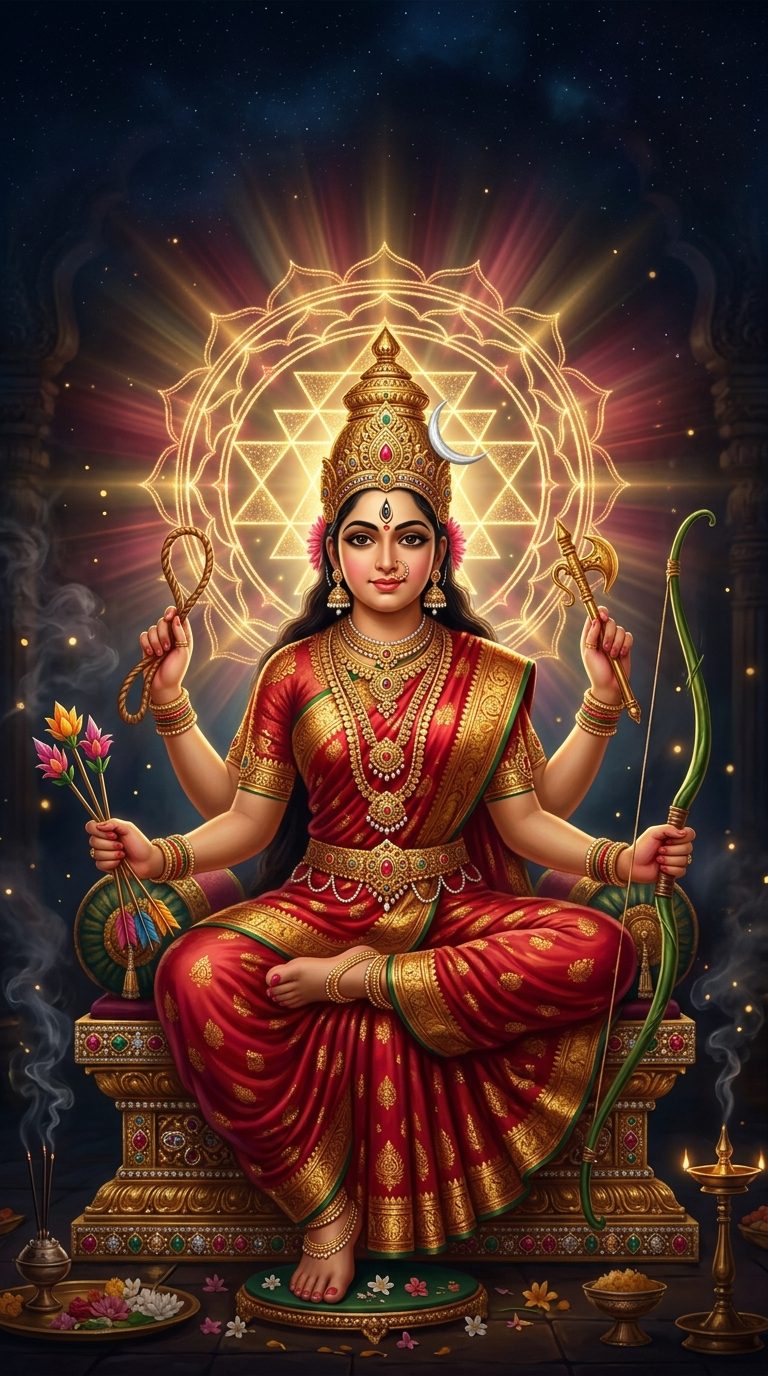
Goddess Annapurna seated on a jewelled throne in Kashi, serving rice with a golden ladle to Shiva who stands before her as a mendicant
DeviStotram

Annapurna Stotram

Lyrics · Meaning · Audio

Shankaracharya’s hymn to Annapurna, the Goddess who feeds the whole world from her golden ladle in Kashi — every verse ending “O Mother Annapurna, grant me alms, you who give the support of grace.”

Attributed to Adi Shankaracharya

Listen

Annapurna Stotram

Son of Kali · Power of Durga

0:005:44
Deity
Devi
Type
Stotram
Verses
7
Language
Sanskrit

Annapurna Stotram Lyrics with Meaning

Each line shows an easy way to say it, with its English meaning. Turn on the Sanskrit, the exact pronunciation or the word-by-word meaning whenever you want to go deeper.

Verse 1

नित्यानन्दकरी वराभयकरी सौन्दर्यरत्नाकरी

Nityanandakari Varabhayakari Saundarya Ratnakari

nityānandakarī varābhayakarī saundaryaratnākarī

Giver of eternal bliss, granting boons and fearlessness, an ocean of beauty,

    निर्धूताखिलघोरपावनकरी प्रत्यक्षमाहेश्वरी ।

    Nirdhutakhila Ghora Pavanakari Pratyaksha Maheshvari

    nirdhūtākhilaghorapāvanakarī pratyakṣamāheśvarī

    who shakes off every dreadful sin and purifies, the great Goddess made visible,

      प्रालेयाचलवंशपावनकरी काशीपुराधीश्वरी

      Praleyachala Vamsha Pavanakari Kashipuradhishvari

      prāleyācalavaṃśapāvanakarī kāśīpurādhīśvarī

      who makes holy the family of the snowy mountain, queen of the city of Kashi —

        भिक्षां देहि कृपावलम्बनकरी मातान्नपूर्णेश्वरी ॥ १ ॥

        Bhiksham Dehi Kripavalambanakari Matannapurneshvari

        bhikṣāṃ dehi kṛpāvalambanakarī mātānnapūrṇeśvarī

        grant me alms, O Mother, Goddess Annapurna, you who give the support of compassion.

          Verse 2

          नानारत्नविचित्रभूषणकरी हेमाम्बराडम्बरी

          Nana Ratna Vichitra Bhushanakari Hemambaradambari

          nānāratnavicitrabhūṣaṇakarī hemāmbarāḍambarī

          Wearing ornaments of many jewels, splendid in golden garments,

            मुक्ताहारविलम्बमानविलसद्वक्षोजकुम्भान्तरी ।

            Muktahara Vilambamana Vilasad Vakshoja Kumbhantari

            muktāhāravilambamānavilasadvakṣojakumbhāntarī

            a pearl necklace hanging and gleaming on her breast,

              काश्मीरागरुवासिताङ्गरुचिरा काशीपुराधीश्वरी

              Kashmiragaru Vasitanga Ruchira Kashipuradhishvari

              kāśmīrāgaruvāsitāṅgarucirā kāśīpurādhīśvarī

              her lovely body fragrant with saffron and aloe — queen of the city of Kashi —

                भिक्षां देहि कृपावलम्बनकरी मातान्नपूर्णेश्वरी ॥ २ ॥

                Bhiksham Dehi Kripavalambanakari Matannapurneshvari

                bhikṣāṃ dehi kṛpāvalambanakarī mātānnapūrṇeśvarī

                grant me alms, O Mother, Goddess Annapurna, you who give the support of compassion.

                  Verse 3

                  योगानन्दकरी रिपुक्षयकरी धर्मार्थनिष्ठाकरी

                  Yogananda Kari Ripu Kshayakari Dharmartha Nishthakari

                  yogānandakarī ripukṣayakarī dharmārthaniṣṭhākarī

                  Giver of the bliss of yoga, destroyer of enemies, who makes us steadfast in dharma and right living,

                    चन्द्रार्कानलभासमानलहरी त्रैलोक्यरक्षाकरी ।

                    Chandrarkanala Bhasamana Lahari Trailokya Rakshakari

                    candrārkānalabhāsamānalaharī trailokyarakṣākarī

                    shining in waves like the moon, the sun and fire, protector of the three worlds,

                      सर्वैश्वर्यसमस्तवाञ्छितकरी काशीपुराधीश्वरी

                      Sarvaishvarya Samasta Vanchhitakari Kashipuradhishvari

                      sarvaiśvaryasamastavāñchitakarī kāśīpurādhīśvarī

                      giver of all prosperity and every wish — queen of the city of Kashi —

                        भिक्षां देहि कृपावलम्बनकरी मातान्नपूर्णेश्वरी ॥ ३ ॥

                        Bhiksham Dehi Kripavalambanakari Matannapurneshvari

                        bhikṣāṃ dehi kṛpāvalambanakarī mātānnapūrṇeśvarī

                        grant me alms, O Mother, Goddess Annapurna, you who give the support of compassion.

                          Verse 4

                          कैलासाचलकन्दरालयकरी गौरी उमा शङ्करी

                          Kailasachala Kandaralayakari Gauri Uma Shankari

                          kailāsācalakandarālayakarī gaurī umā śaṅkarī

                          Dwelling in the caves of Mount Kailash, you are Gauri, Uma, Shankari,

                            कौमारी निगमार्थगोचरकरी ओङ्कारबीजाक्षरी ।

                            Kaumari Nigamartha Gocharakari Omkara Bijakshari

                            kaumārī nigamārthagocarakarī oṅkārabījākṣarī

                            the maiden, who makes the meaning of the Vedas clear, whose seed-syllable is Om,

                              मोक्षद्वारकपाटपाटनकरी काशीपुराधीश्वरी

                              Mokshadvara Kapata Patanakari Kashipuradhishvari

                              mokṣadvārakapāṭapāṭanakarī kāśīpurādhīśvarī

                              who opens the doors to liberation — queen of the city of Kashi —

                                भिक्षां देहि कृपावलम्बनकरी मातान्नपूर्णेश्वरी ॥ ४ ॥

                                Bhiksham Dehi Kripavalambanakari Matannapurneshvari

                                bhikṣāṃ dehi kṛpāvalambanakarī mātānnapūrṇeśvarī

                                grant me alms, O Mother, Goddess Annapurna, you who give the support of compassion.

                                  Verse 5

                                  दृश्यादृश्यविभूतिवाहनकरी ब्रह्माण्डभाण्डोदरी

                                  Drishyadrishya Vibhuti Vahanakari Brahmanda Bhandodari

                                  dṛśyādṛśyavibhūtivāhanakarī brahmāṇḍabhāṇḍodarī

                                  Who carries all powers, seen and unseen, holding the whole cosmos in her womb,

                                    लीलानाटकसूत्रभेदनकरी विज्ञानदीपाङ्कुरी ।

                                    Lila Nataka Sutra Bhedanakari Vijnana Dipankuri

                                    līlānāṭakasūtrabhedanakarī vijñānadīpāṅkurī

                                    who holds the strings of the world’s play, the flame of the lamp of wisdom,

                                      श्रीविश्वेशमनःप्रसादनकरी काशीपुराधीश्वरी

                                      Shri Vishvesha Manah Prasadanakari Kashipuradhishvari

                                      śrīviśveśamanaḥprasādanakarī kāśīpurādhīśvarī

                                      who delights the heart of Vishwanath — queen of the city of Kashi —

                                        भिक्षां देहि कृपावलम्बनकरी मातान्नपूर्णेश्वरी ॥ ५ ॥

                                        Bhiksham Dehi Kripavalambanakari Matannapurneshvari

                                        bhikṣāṃ dehi kṛpāvalambanakarī mātānnapūrṇeśvarī

                                        grant me alms, O Mother, Goddess Annapurna, you who give the support of compassion.

                                          Verse 6

                                          उर्वीसर्वजनेश्वरी भगवती मातान्नपूर्णेश्वरी

                                          Urvi Sarvajaneshvari Bhagavati Matannapurneshvari

                                          urvīsarvajaneśvarī bhagavatī mātānnapūrṇeśvarī

                                          Queen of the earth and all its people, blessed Mother Annapurna,

                                            वेणीनीलसमानकुन्तलहरी नित्यान्नदानेश्वरी ।

                                            Veni Nila Samana Kuntalahari Nityanna Daneshvari

                                            veṇīnīlasamānakuntalaharī nityānnadāneśvarī

                                            your dark braided hair flowing like waves, ever the queen of giving food,

                                              सर्वानन्दकरी सदा शुभकरी काशीपुराधीश्वरी

                                              Sarvanandakari Sada Shubhakari Kashipuradhishvari

                                              sarvānandakarī sadā śubhakarī kāśīpurādhīśvarī

                                              giver of every joy, ever doing good — queen of the city of Kashi —

                                                भिक्षां देहि कृपावलम्बनकरी मातान्नपूर्णेश्वरी ॥ ६ ॥

                                                Bhiksham Dehi Kripavalambanakari Matannapurneshvari

                                                bhikṣāṃ dehi kṛpāvalambanakarī mātānnapūrṇeśvarī

                                                grant me alms, O Mother, Goddess Annapurna, you who give the support of compassion.

                                                  Closing verses

                                                  अन्नपूर्णे सदापूर्णे शङ्करप्राणवल्लभे ।

                                                  Annapurne Sadapurne Shankara Pranavallabhe

                                                  annapūrṇe sadāpūrṇe śaṅkaraprāṇavallabhe

                                                  O Annapurna, ever full, beloved of Shankara as his own life,

                                                    ज्ञानवैराग्यसिद्ध्यर्थं भिक्षां देहि च पार्वति ॥

                                                    Jnana Vairagya Siddhyartham Bhiksham Dehi Cha Parvati

                                                    jñānavairāgyasiddhyarthaṃ bhikṣāṃ dehi ca pārvati

                                                    grant me alms, O Parvati, for the attainment of wisdom and detachment.

                                                      माता च पार्वती देवी पिता देवो महेश्वरः ।

                                                      Mata Cha Parvati Devi Pita Devo Maheshvarah

                                                      mātā ca pārvatī devī pitā devo maheśvaraḥ

                                                      My mother is Goddess Parvati; my father is Lord Maheshvara;

                                                        बान्धवाः शिवभक्ताश्च स्वदेशो भुवनत्रयम् ॥

                                                        Bandhavah Shivabhaktashcha Svadesho Bhuvanatrayam

                                                        bāndhavāḥ śivabhaktāśca svadeśo bhuvanatrayam

                                                        my family are the devotees of Shiva, and my homeland is the three worlds.

                                                          About Annapurna Stotram

                                                          Annapūrṇā means “full of food.” She is Parvati as the giver of nourishment, worshipped above all at her temple in Kashi (Varanasi), next to Kashi Vishwanath. Her image holds a pot of rice and a golden ladle.

                                                          In this hymn Shankaracharya describes her beauty and power verse by verse — giver of eternal joy, granting boons and fearlessness, the ocean of beauty, queen of Kashi — and ends every verse the same way: bhikṣāṃ dehi kṛpāvalambanakarī mātānnapūrṇeśvarī, “grant me alms, O Mother Annapurna, who gives the support of compassion.”

                                                          The alms he asks for are not only food. The closing verse makes it clear: “Grant me alms for the sake of knowledge and detachment.” The last verse is a much-loved prayer on its own: “My mother is Goddess Parvati, my father is Lord Shiva, my family are Shiva’s devotees, and my homeland is the three worlds.”

                                                          The Stories Inside the Hymn

                                                          When Shiva begged for food

                                                          Once Shiva told Parvati that the material world, including food, was only illusion. To teach him otherwise, she disappeared — and with her all food vanished from the world. Gods, humans and even Shiva grew hungry.

                                                          Then she appeared in Kashi, cooking and serving food to all. Shiva himself came before her with a begging bowl, and she fed him, smiling. From then on she has been worshipped as Annapurna.

                                                          How to Chant Annapurna Stotram

                                                          When to chant

                                                          • ✦Before cooking or eating
                                                          • ✦Annapurna Jayanti and Fridays
                                                          • ✦Diwali, especially Annakut
                                                          • ✦When praying for nourishment of body and spirit

                                                          How many times

                                                          Once.

                                                          1. 1

                                                            Sit near the kitchen or before an image of Annapurna, and offer a little cooked rice or grain.

                                                          2. 2

                                                            Chant each verse, joining the refrain.

                                                          3. 3

                                                            With the last verses, ask for knowledge and detachment, not only food.

                                                          4. 4

                                                            Before eating, offer the first morsel inwardly to her.

                                                          Pronunciation Guide

                                                          The sounds that trip people up most in this hymn, and how to say them.

                                                          bhikṣāṃ dehi

                                                          bhik-shaam day-hi — “give alms.”

                                                          kṛpāvalambanakarī

                                                          kri-paa-va-lum-ba-na-ka-ree.

                                                          kāśīpurādhīśvarī

                                                          kaa-shee-pu-raa-dheesh-va-ree.

                                                          Power of Durga by Son of Kali

                                                          The music

                                                          Power of Durga

                                                          by Son of Kali

                                                          More for Devi

                                                          Frequently Asked Questions

                                                          Who is Annapurna?

                                                          Parvati as the Goddess of food and nourishment, worshipped especially at her temple in Kashi (Varanasi).

                                                          Who wrote the Annapurna Stotram?

                                                          It is attributed to Adi Shankaracharya.

                                                          What does Bhiksham Dehi mean?

                                                          “Give me alms.” In the hymn it means asking the Goddess for nourishment of every kind — and finally for knowledge and detachment.

                                                          What is the meaning of Mata Cha Parvati Devi?

                                                          “My mother is Goddess Parvati, my father is Lord Shiva, my relatives are Shiva’s devotees, and my homeland is the three worlds.”

                                                          Text: Traditional public-domain Sanskrit hymn. Easy reading, transliteration and English translation written for the Jaguar Medicine Tribe Mantra Library.

                                                          Music: Recordings by Son of Kali, produced with AI-assisted vocals and instrumentation.

                                                          Note: Benefits described here are traditional beliefs, shared for understanding — not medical or guaranteed outcomes.