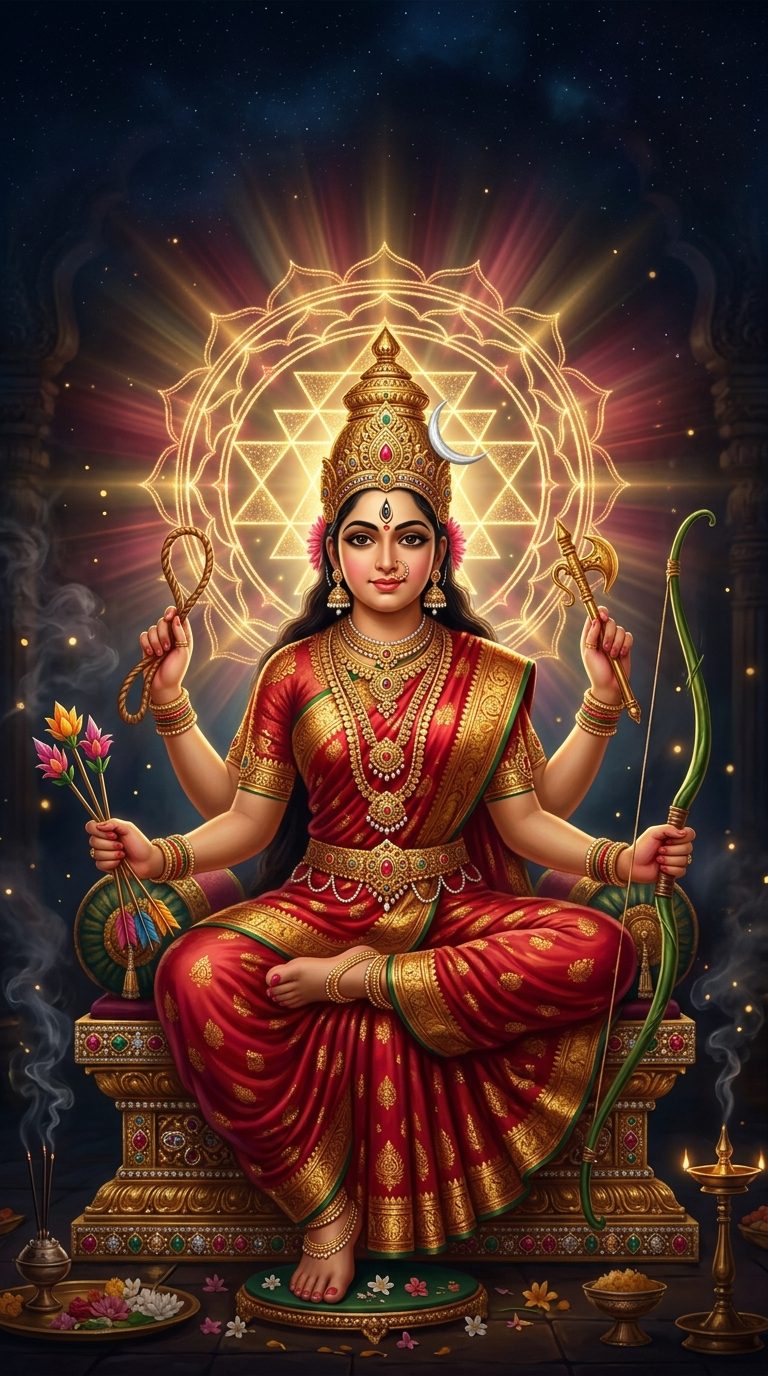
A humble, weary devotee kneeling as a vast gentle Goddess Bhavani leans down from the sky to lift them into her arms
DeviAshtakam

Bhavani Ashtakam

Lyrics · Meaning · Audio

Eight verses of total surrender — “no father, no mother, no friend, no learning; you alone are my refuge, O Bhavani” — one of the most moving prayers to the Divine Mother.

Attributed to Adi Shankaracharya

Listen

Bhavani Ashtakam

Son of Kali · Sacred Navaratri Chants

0:006:25
Deity
Devi
Type
Ashtakam
Verses
8
Language
Sanskrit

Bhavani Ashtakam Lyrics with Meaning

Each line shows an easy way to say it, with its English meaning. Turn on the Sanskrit, the exact pronunciation or the word-by-word meaning whenever you want to go deeper.

Verse 1

न तातो न माता न बन्धुर्न दाता न पुत्रो न पुत्री न भृत्यो न भर्ता ।

Na Tato Na Mata Na Bandhur Na Data Na Putro Na Putri Na Bhrityo Na Bharta

na tāto na mātā na bandhurna dātā na putro na putrī na bhṛtyo na bhartā

No father, no mother, no relative, no benefactor, no son, no daughter, no servant, no husband,

    न जाया न विद्या न वृत्तिर्ममैव गतिस्त्वं गतिस्त्वं त्वमेका भवानि ॥ १ ॥

    Na Jaya Na Vidya Na Vrittir Mamaiva Gatistvam Gatistvam Tvameka Bhavani

    na jāyā na vidyā na vṛttirmamaiva gatistvaṃ gatistvaṃ tvamekā bhavāni

    no wife, no learning, no livelihood is truly mine — you are my refuge, you are my refuge, you alone, O Bhavani.

      Verse 2

      भवाब्धावपारे महादुःखभीरु पपात प्रकामी प्रलोभी प्रमत्तः ।

      Bhavabdhav Apare Maha Duhkha Bhiru Papata Prakami Pralobhi Pramattah

      bhavābdhāvapāre mahāduḥkhabhīru papāta prakāmī pralobhī pramattaḥ

      In the shoreless ocean of worldly life I have fallen — terrified of great sorrow, full of desire, greed and carelessness,

        कुसंसारपाशप्रबद्धः सदाहं गतिस्त्वं गतिस्त्वं त्वमेका भवानि ॥ २ ॥

        Kusamsara Pasha Prabaddhah Sadaham Gatistvam Gatistvam Tvameka Bhavani

        kusaṃsārapāśaprabaddhaḥ sadāhaṃ gatistvaṃ gatistvaṃ tvamekā bhavāni

        always bound in the noose of a troubled existence — you are my refuge, you alone, O Bhavani.

          Verse 3

          न जानामि दानं न च ध्यानयोगं न जानामि तन्त्रं न च स्तोत्रमन्त्रम् ।

          Na Janami Danam Na Cha Dhyana Yogam Na Janami Tantram Na Cha Stotra Mantram

          na jānāmi dānaṃ na ca dhyānayogaṃ na jānāmi tantraṃ na ca stotramantram

          I know nothing of charity, nothing of meditation; I know no tantra, no hymn and no mantra;

            न जानामि पूजां न च न्यासयोगं गतिस्त्वं गतिस्त्वं त्वमेका भवानि ॥ ३ ॥

            Na Janami Pujam Na Cha Nyasa Yogam Gatistvam Gatistvam Tvameka Bhavani

            na jānāmi pūjāṃ na ca nyāsayogaṃ gatistvaṃ gatistvaṃ tvamekā bhavāni

            I know no worship and no sacred rites — you are my refuge, you alone, O Bhavani.

              Verse 4

              न जानामि पुण्यं न जानामि तीर्थं न जानामि मुक्तिं लयं वा कदाचित् ।

              Na Janami Punyam Na Janami Tirtham Na Janami Muktim Layam Va Kadachit

              na jānāmi puṇyaṃ na jānāmi tīrthaṃ na jānāmi muktiṃ layaṃ vā kadācit

              I know no merit, I know no pilgrimage, I have never known liberation or absorption in the Divine;

                न जानामि भक्तिं व्रतं वापि मातर्गतिस्त्वं गतिस्त्वं त्वमेका भवानि ॥ ४ ॥

                Na Janami Bhaktim Vratam Vapi Matar Gatistvam Gatistvam Tvameka Bhavani

                na jānāmi bhaktiṃ vrataṃ vāpi mātargatistvaṃ gatistvaṃ tvamekā bhavāni

                I know neither devotion nor vows, O Mother — you are my refuge, you alone, O Bhavani.

                  Verse 5

                  कुकर्मी कुसङ्गी कुबुद्धिः कुदासः कुलाचारहीनः कदाचारलीनः ।

                  Kukarmi Kusangi Kubuddhih Kudasah Kulachara Hinah Kadachara Linah

                  kukarmī kusaṅgī kubuddhiḥ kudāsaḥ kulācārahīnaḥ kadācāralīnaḥ

                  I do wrong, keep bad company, think badly and serve badly; I have lost the good ways of my family and sunk into bad habits;

                    कुदृष्टिः कुवाक्यप्रबन्धः सदाहं गतिस्त्वं गतिस्त्वं त्वमेका भवानि ॥ ५ ॥

                    Kudrishtih Kuvakya Prabandhah Sadaham Gatistvam Gatistvam Tvameka Bhavani

                    kudṛṣṭiḥ kuvākyaprabandhaḥ sadāhaṃ gatistvaṃ gatistvaṃ tvamekā bhavāni

                    my sight is impure and my words are harsh — still you are my refuge, you alone, O Bhavani.

                      Verse 6

                      प्रजेशं रमेशं महेशं सुरेशं दिनेशं निशीथेश्वरं वा कदाचित् ।

                      Prajesham Ramesham Mahesham Suresham Dinesham Nishitheshvaram Va Kadachit

                      prajeśaṃ rameśaṃ maheśaṃ sureśaṃ dineśaṃ niśītheśvaraṃ vā kadācit

                      Brahma the lord of creatures, Vishnu the lord of Lakshmi, Shiva, Indra lord of the gods, the Sun, or the Moon, lord of the night —

                        न जानामि चान्यत् सदाहं शरण्ये गतिस्त्वं गतिस्त्वं त्वमेका भवानि ॥ ६ ॥

                        Na Janami Chanyat Sadaham Sharanye Gatistvam Gatistvam Tvameka Bhavani

                        na jānāmi cānyat sadāhaṃ śaraṇye gatistvaṃ gatistvaṃ tvamekā bhavāni

                        I know none of them, nor any other, O giver of refuge — you are my refuge, you alone, O Bhavani.

                          Verse 7

                          विवादे विषादे प्रमादे प्रवासे जले चानले पर्वते शत्रुमध्ये ।

                          Vivade Vishade Pramade Pravase Jale Chanale Parvate Shatrumadhye

                          vivāde viṣāde pramāde pravāse jale cānale parvate śatrumadhye

                          In quarrels, in despair, in danger, in a foreign land, in water, in fire, on mountains and among enemies,

                            अरण्ये शरण्ये सदा मां प्रपाहि गतिस्त्वं गतिस्त्वं त्वमेका भवानि ॥ ७ ॥

                            Aranye Sharanye Sada Mam Prapahi Gatistvam Gatistvam Tvameka Bhavani

                            araṇye śaraṇye sadā māṃ prapāhi gatistvaṃ gatistvaṃ tvamekā bhavāni

                            and in the wilderness — O refuge, always protect me; you are my refuge, you alone, O Bhavani.

                              Verse 8

                              अनाथो दरिद्रो जरारोगयुक्तो महाक्षीणदीनः सदा जाड्यवक्त्रः ।

                              Anatho Daridro Jara Roga Yukto Maha Kshina Dinah Sada Jadya Vaktrah

                              anātho daridro jarārogayukto mahākṣīṇadīnaḥ sadā jāḍyavaktraḥ

                              Without a protector, poor, burdened by old age and illness, utterly weak and miserable, always slow of speech,

                                विपत्तौ प्रविष्टः प्रणष्टः सदाहं गतिस्त्वं गतिस्त्वं त्वमेका भवानि ॥ ८ ॥

                                Vipattau Pravishtah Pranashtah Sadaham Gatistvam Gatistvam Tvameka Bhavani

                                vipattau praviṣṭaḥ praṇaṣṭaḥ sadāhaṃ gatistvaṃ gatistvaṃ tvamekā bhavāni

                                sunk in misfortune, utterly lost — you are my refuge, you are my refuge, you alone, O Bhavani.

                                  About Bhavani Ashtakam

                                  The Bhavani Ashtakam is attributed to Adi Shankaracharya, the great 8th-century philosopher. It is a prayer of complete helplessness: the singer lists everything a person normally relies on — parents, family, wealth, learning, rituals, good deeds — and admits to having none of them.

                                  Every verse ends with the same refrain: gatistvaṃ gatistvaṃ tvamekā bhavāni — “You are my refuge, you are my refuge, you alone, O Bhavani.” By the end, the refrain has become the whole of the prayer.

                                  Bhavani is a name of Parvati, the Divine Mother as the consort of Shiva (Bhava). The hymn is beloved because it is so honest: it does not ask to be worthy, only to be held.

                                  The Stories Inside the Hymn

                                  The philosopher who knelt

                                  Shankaracharya is remembered as the teacher of Advaita, the subtle philosophy of non-duality. Yet his hymns to the Goddess are some of the most tender in Sanskrit.

                                  In this one, the great scholar says “I know no mantra, no hymn, no yoga” — a reminder that devotion begins where cleverness ends.

                                  How to Chant Bhavani Ashtakam

                                  When to chant

                                  • ✦Fridays and Navaratri
                                  • ✦Times of loneliness, loss or helplessness
                                  • ✦Evening, before sleep
                                  • ✦Whenever you need to let go

                                  How many times

                                  Once is enough; let the refrain sink in.

                                  1. 1

                                    Sit quietly before an image of the Divine Mother, or simply close your eyes.

                                  2. 2

                                    Chant each verse slowly, letting yourself admit what you cannot do alone.

                                  3. 3

                                    Repeat the refrain “Gatistvam Gatistvam Tvameka Bhavani” from the heart.

                                  4. 4

                                    End in silence, feeling held.

                                  Pronunciation Guide

                                  The sounds that trip people up most in this hymn, and how to say them.

                                  gatistvaṃ

                                  ga-tis-tvum — “you are my refuge.”

                                  tvamekā

                                  tvum-ay-kaa — “you alone.”

                                  bhavāni

                                  bha-vaa-ni.

                                  Sacred Navaratri Chants – Navadurga Mantras – Devi Stotras by Son of Kali

                                  The music

                                  Sacred Navaratri Chants – Navadurga Mantras – Devi Stotras

                                  by Son of Kali

                                  More for Devi

                                  Frequently Asked Questions

                                  Who wrote the Bhavani Ashtakam?

                                  It is traditionally attributed to Adi Shankaracharya.

                                  What does Gatistvam Gatistvam Tvameka Bhavani mean?

                                  “You are my refuge, you are my refuge — you alone, O Bhavani.”

                                  Who is Bhavani?

                                  Bhavani is a name of Parvati, the Divine Mother and consort of Shiva. She is especially worshipped at Tuljapur in Maharashtra.

                                  When should I chant the Bhavani Ashtakam?

                                  Any time you feel helpless or alone, and traditionally on Fridays and during Navaratri.

                                  Text: Traditional public-domain Sanskrit hymn. Easy reading, transliteration and English translation written for the Jaguar Medicine Tribe Mantra Library.

                                  Music: Recordings by Son of Kali, produced with AI-assisted vocals and instrumentation.

                                  Note: Benefits described here are traditional beliefs, shared for understanding — not medical or guaranteed outcomes.