The Mantra
ॐ ऐं सरस्वत्यै नमः
Om Aim Saraswatyai Namaha
oṃ aiṃ sarasvatyai namaḥ
Om — Aim — I bow to Saraswati, goddess of wisdom.

Lyrics · Meaning · Audio
Saraswati’s seed mantra — “Om, Aim, I bow to Saraswati” — chanted by students, musicians and writers for clear thinking, memory and creative flow.
Traditional Saraswati mantra built on the seed syllable Aim
Listen
Om Aim Saraswatyai Namah
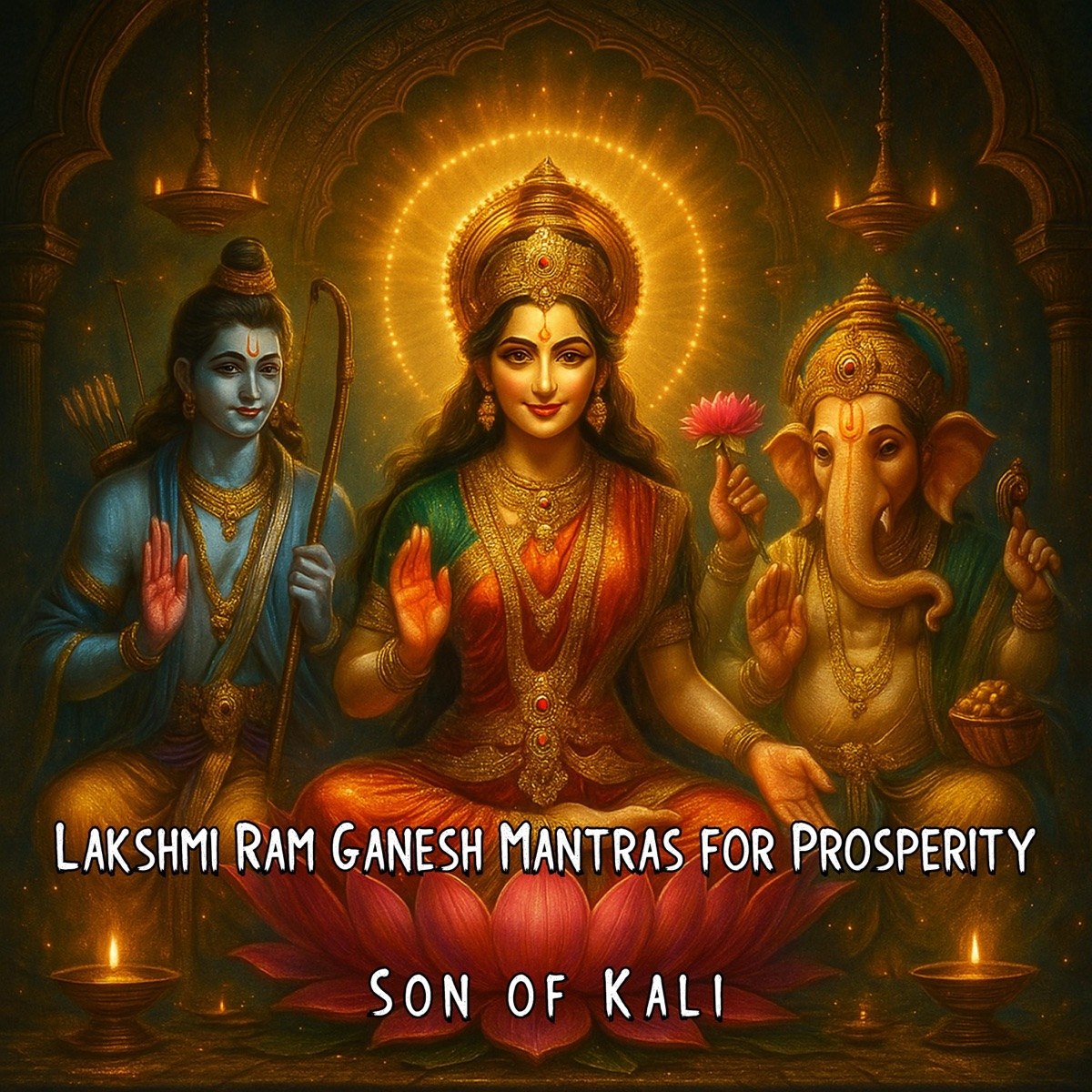
Son of Kali · Mantras for Prosperity
Each line shows an easy way to say it, with its English meaning. Turn on the Sanskrit, the exact pronunciation or the word-by-word meaning whenever you want to go deeper.
ॐ ऐं सरस्वत्यै नमः
Om Aim Saraswatyai Namaha
oṃ aiṃ sarasvatyai namaḥ
Om — Aim — I bow to Saraswati, goddess of wisdom.
Om Aim Saraswatyai Namah is the most popular everyday mantra of Saraswati, the goddess of knowledge, music, speech and the arts. Its heart is aiṃ (Aim), Saraswati’s bīja or seed sound.
Aim is the seed of vāk — speech and expression. It is chanted to awaken clarity of thought, good memory, fluent speech and artistic inspiration. Students chant it before exams, singers before performing, writers before a blank page.
The mantra is short, gentle and easy to learn, which makes it ideal for children as well as adults.
In mantra tradition each great goddess has a seed sound: Aim for Saraswati, Shreem for Lakshmi, Hreem for the Great Goddess, Kleem for attraction and love. Together Aim, Hreem and Kleem appear in the Navarna Mantra, also in this library.
Aim is described as bright and flowing, like a clear stream — the sound of thought becoming words.
On Vasant Panchami, Saraswati’s spring festival, young children traditionally write their first letters in a tray of rice or on a slate, often beginning with Om or Aim, in a ceremony called vidyarambha.
It is a lovely picture of the mantra’s purpose: the beginning of all learning.
When to chant
How many times
108 times on a crystal or tulsi mala, or 11 times before study.
Place your book, notebook or instrument in front of you.
Sit upright and take a few calm breaths.
Chant with the recording, letting “Aim” resonate gently in the throat.
Picture a clear white light in your mind.
Begin your study or creative work straight away.
The sounds that trip people up most in this hymn, and how to say them.
aiṃ
Like “I’m” — “aim” — closing into a soft nasal hum.
sarasvatyai
sa-ras-vut-yai.
namaḥ
na-ma-ha.
What does Om Aim Saraswatyai Namah mean?
“Om, Aim, I bow to Saraswati.” Om is the primal sound, Aim is Saraswati’s seed syllable, Saraswatyai means “to Saraswati,” and namah means “I bow.”
What is the meaning of Aim?
Aim is the bija (seed) sound of Saraswati, associated with speech, learning and creative expression.
What are the benefits of this mantra?
Traditionally it is chanted for focus, memory, clear speech, wisdom and artistic inspiration.
Can children chant it?
Yes. It is short and gentle, and is commonly taught to children before school or study.