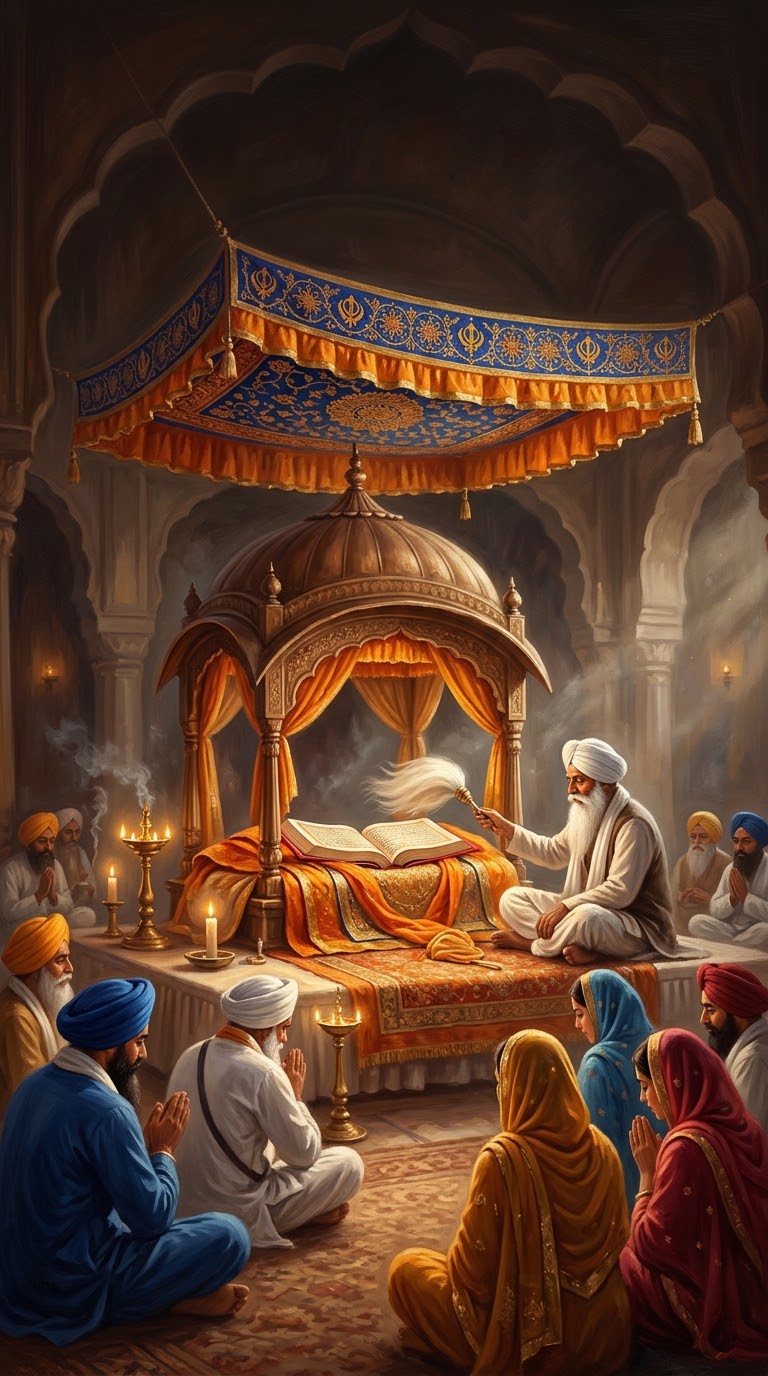
The word of the Gurus, sung as a mantra
Gurbani Mantras & Shabads
Gurbani is the word of the Sikh Gurus, gathered in the Guru Granth Sahib and in the writings of Guru Gobind Singh. Its opening lines and short refrains have been sung as mantras for centuries, because they hold the whole teaching in a few words.
Each mantra here is given with its source in Gurbani, an easy reading, the original Gurmukhi and a meaning for every line, written fresh for this library.
Gurbani Mantras with Meaning
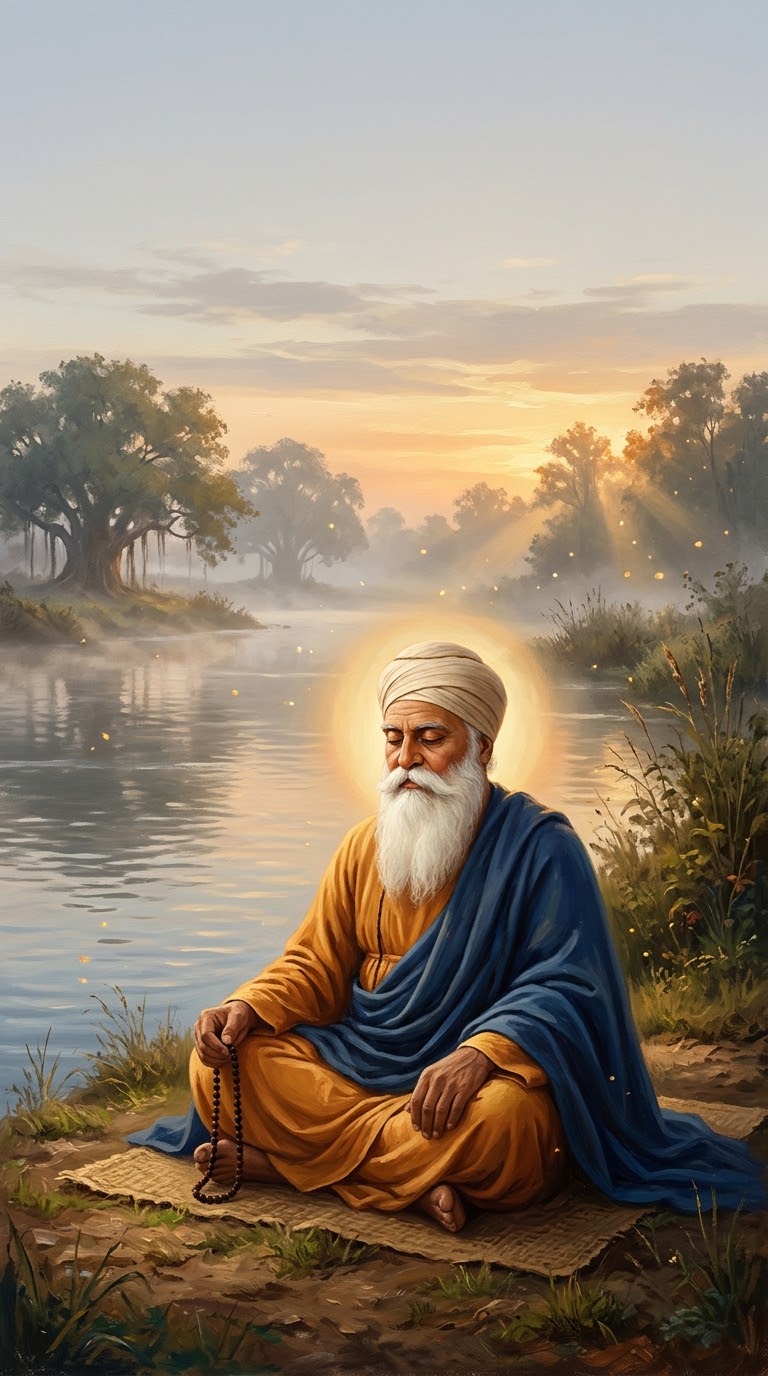
Mantra · 2 verses
Mul Mantar
The root mantra of Sikhism and the first words of the Guru Granth Sahib: Guru Nanak's description of the One Creator, true before time, true now and true for ever.

Mantra · 1 verse
Ek Ong Kar Sat Gur Prasad
“The Creator is One, known by the True Guru's grace” — the short form of the Mul Mantar that opens hundreds of hymns in the Guru Granth Sahib, chanted forwards and then backwards.
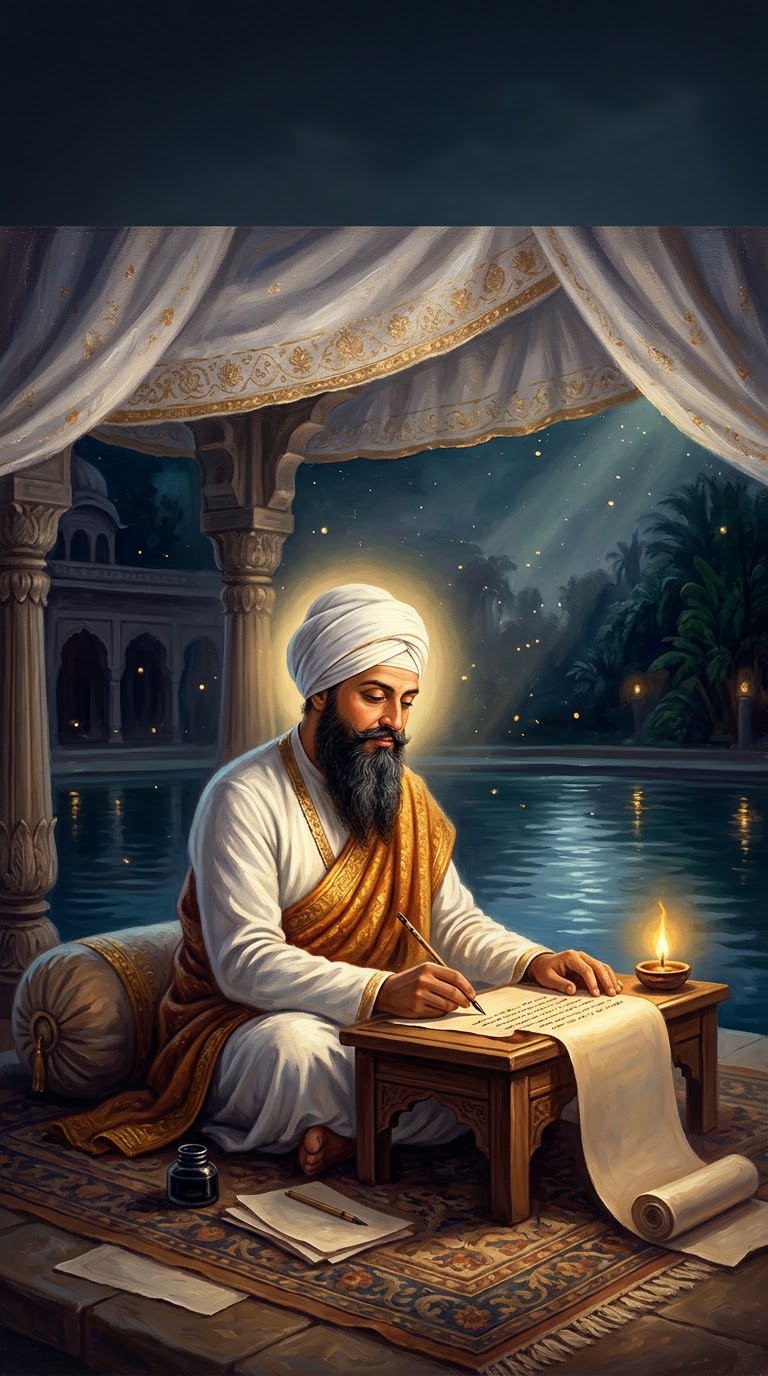
Mantra · 1 verse
Aad Guray Nameh
Four bows to the Guru who was there in the beginning, through all ages, true and divine — the opening of Guru Arjan's Sukhmani Sahib, chanted as a mantra of protection.
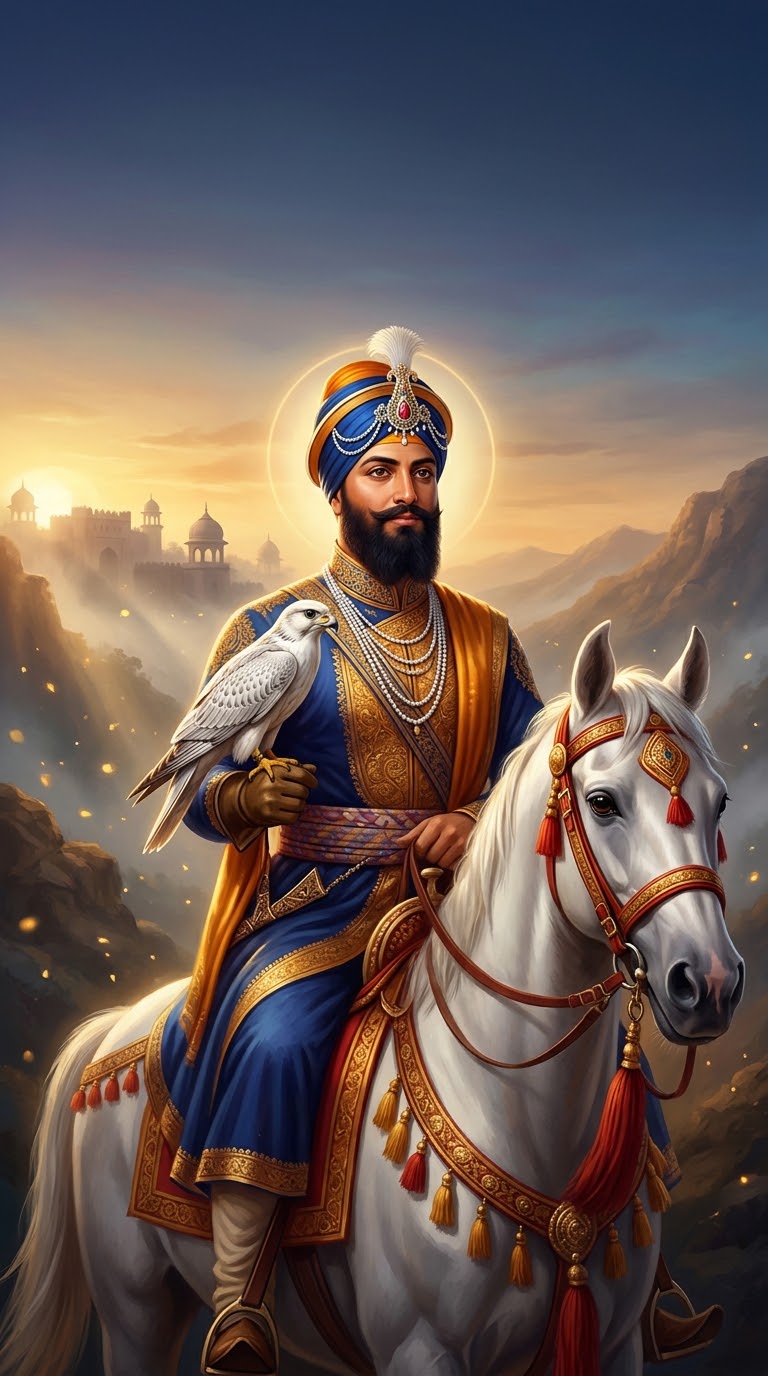
Mantra · 1 verse
Gobinday Mukunday
Eight names of the Divine from Guru Gobind Singh's Jaap Sahib — Sustainer, Liberator, Generous, Boundless, Destroyer, Creator, Nameless, Desireless — chanted to clear and balance the mind.

Bani · 2 verses
Japji Sahib: Hukam Rajai Chalna
The first two pauris of Japji Sahib: Guru Nanak says that washing, silence, wealth and cleverness cannot make us true. The way is to walk in the Divine Will, the Hukam, in which everything already lives.

Bani · 6 verses
Anand Sahib
The Song of Bliss of Guru Amar Das: “Bliss has come, O my mother, for I have found the True Guru.” This page gives the short form sung at every Sikh service: the first five pauris and the fortieth.
Bani · 4 verses
Sukhmani Sahib: Simro Simar Simar Sukh Pavo
The opening of Sukhmani Sahib, Guru Arjan's Psalm of Peace: “I remember, and remembering, remembering, I find peace.” Its second verse lists everything that falls away through simran, the remembrance of God.
Shabad · 1 verse
Bhand Jammiai
Guru Nanak's salok in honour of women: “From woman we are born … so why call her lesser, she who gives birth to kings?” Sung as an ode to the divine feminine.

Shabad · 1 verse
Dukh Bhanjan Tera Naam
“Your Name destroys pain, dear Lord.” Guru Arjan's healing shabad, which promises that not even a hot wind touches those the True Guru protects.
Shabad · 4 verses
Mera Man Lochai
“My mind longs for a sight of the Guru, crying like the rainbird for rain.” The young Guru Arjan's letters of longing to his father, Guru Ram Das, one of the most tender hymns in the scripture.
Free oracle reading
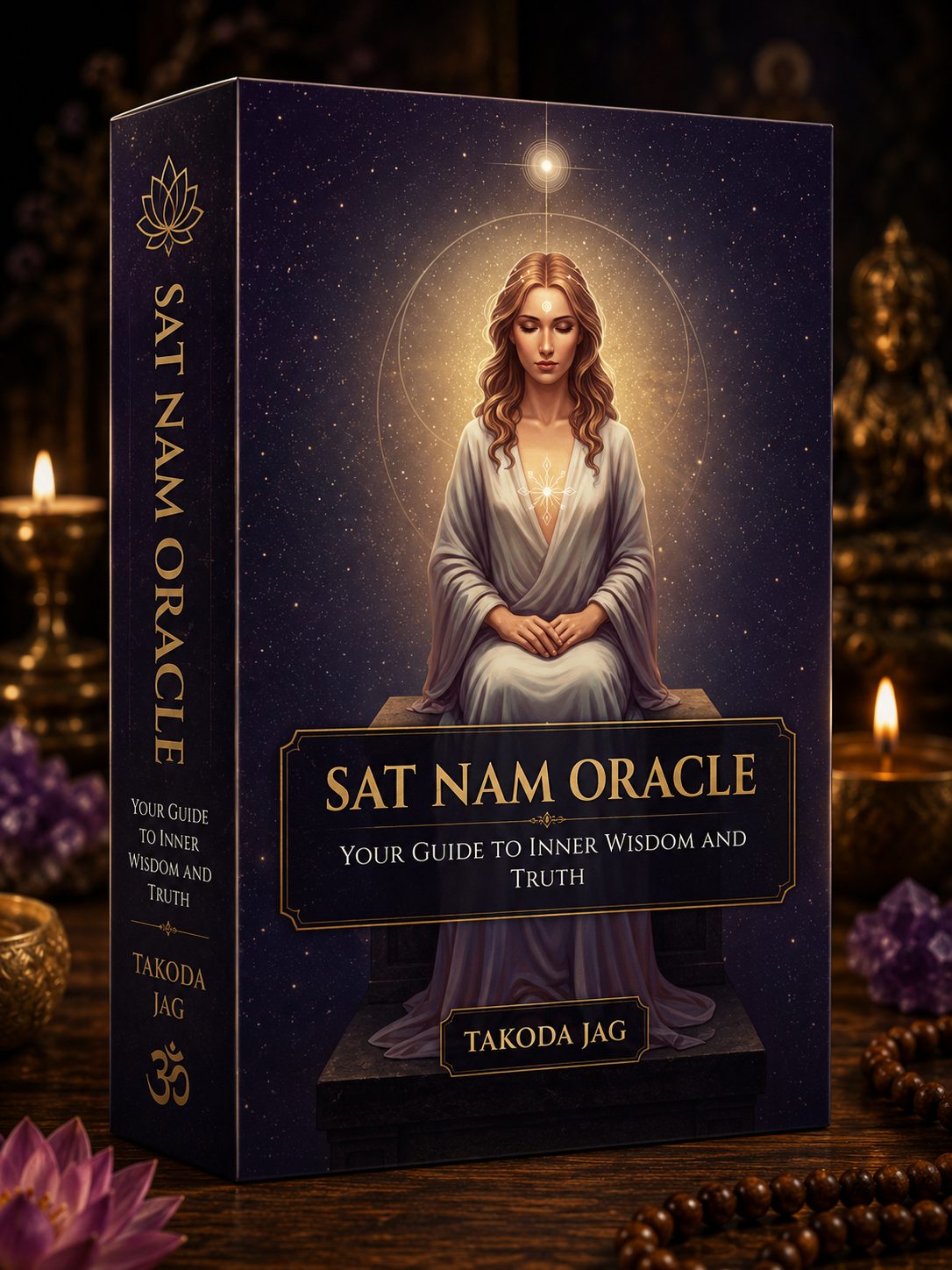
Pull a Sat Nam Oracle Card
44 sacred mantras, elements, and archetypes for inner wisdom and truth
Draw your card →