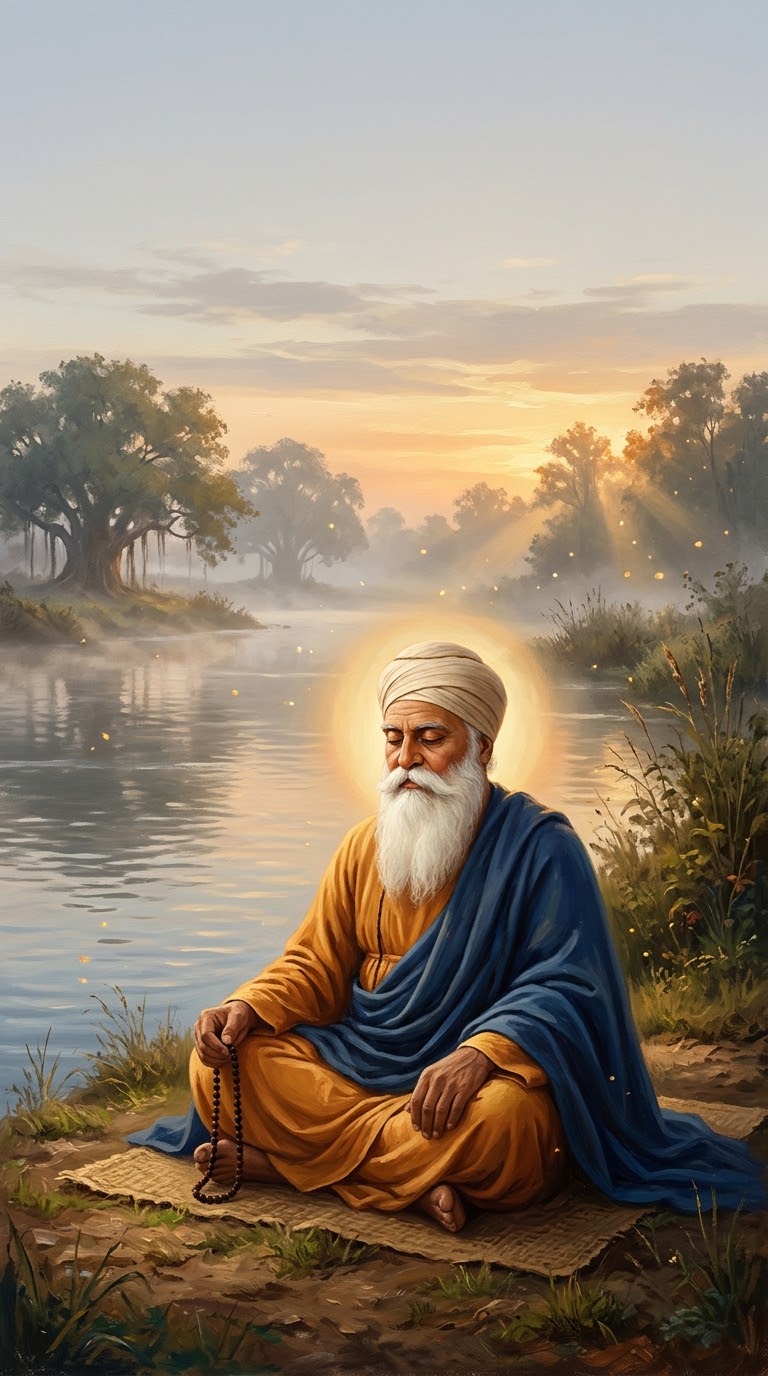
Guru Nanak in a saffron robe seated in meditation at dawn beside a river, a soft golden light in the sky above him

Gurbani · Mantra

Mul Mantar

Lyrics · Meaning · Audio

The root mantra of Sikhism and the first words of the Guru Granth Sahib: Guru Nanak's description of the One Creator, true before time, true now and true for ever.

Guru Nanak Dev Ji — the opening words of the Guru Granth Sahib (Ang 1)

Listen

Mul Mantar

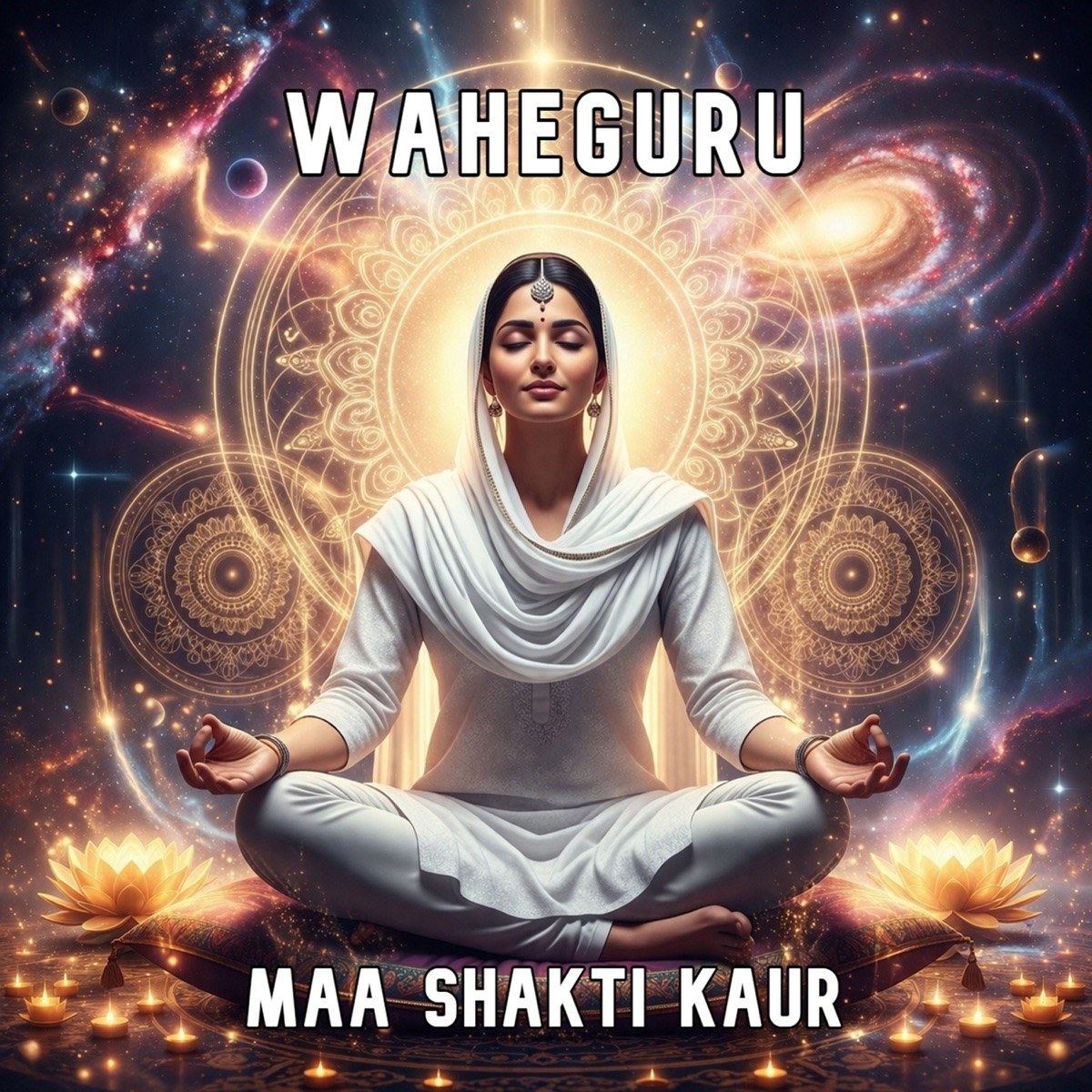
Maa Shakti Kaur · Waheguru

0:006:34
Collection
Gurbani
Type
Mantra
Verses
2
Language
Gurmukhi

Mul Mantar Lyrics with Meaning

Each line shows an easy way to say it, with its English meaning. Turn on the Gurmukhi, the exact pronunciation or the word-by-word meaning whenever you want to go deeper.

Mul Mantar

ੴ

Ek Onkaar

ik oaṅkār

There is one Creator, the One who is present in everything.

    ਸਤਿ ਨਾਮੁ

    Sat Naam

    sati nāmu

    Truth is its Name.

      ਕਰਤਾ ਪੁਰਖੁ

      Kartaa Purakh

      kartā purakhu

      It is the Maker, the spirit that lives in all it has made.

        ਨਿਰਭਉ ਨਿਰਵੈਰੁ

        Nirbhau Nirvair

        nirbhau niravairu

        Without fear, without hate.

          ਅਕਾਲ ਮੂਰਤਿ

          Akaal Moorat

          akāl mūrati

          Beyond time, a form that never dies.

            ਅਜੂਨੀ ਸੈਭੰ

            Ajoonee Saibhang

            ajūnī saibhaṅ

            Never born, existing by itself.

              ਗੁਰ ਪ੍ਰਸਾਦਿ ॥

              Gur Prasaad

              gur prasādi

              It is known by the Guru's grace.

                Jap — the first salok

                ॥ ਜਪੁ ॥

                Jap

                japu

                Repeat this; meditate on it.

                  ਆਦਿ ਸਚੁ ਜੁਗਾਦਿ ਸਚੁ ॥

                  Aad Sach, Jugaad Sach

                  ādi sachu jugādi sachu

                  True before the beginning, true through every age.

                    ਹੈ ਭੀ ਸਚੁ ਨਾਨਕ ਹੋਸੀ ਭੀ ਸਚੁ ॥੧॥

                    Hai Bhee Sach, Naanak Hosee Bhee Sach

                    hai bhī sachu nānak hosī bhī sachu

                    True now — and, says Nanak, it will always be true.

                      About Mul Mantar

                      The Mul Mantar (mool means root) is the first composition of Guru Nanak, the founder of the Sikh path, and it opens the Guru Granth Sahib on its very first page. Sikhs call it the root because everything that follows in the scripture grows out of it: in a few words it says who the Divine is.

                      It begins with ੴ, Ik Onkar: the numeral one joined to the sound Onkar. The Creator is one, and that one is present in all of creation. Then come the qualities: Truth is its Name, it is the Maker, it has no fear and no hate, it is beyond time, never born, existing by itself, and it is known through the Guru's grace.

                      The salok that follows, beginning Aad Sach, is the start of Japji Sahib, the morning prayer. It is sung together with the Mul Mantar in most recordings, so both are given here. Sikhs recite it daily, and it is chanted on the breath in Kundalini yoga as well.

                      The Stories Behind the Mantra

                      Three days in the river

                      The Sikh tradition tells that the young Nanak went to bathe in the Kali Bein river near Sultanpur and did not come back. His friends searched for three days and gave him up for drowned.

                      When he came out of the water he was silent for a day, and his first words were “there is no Hindu, there is no Muslim”. The Mul Mantar is remembered as the heart of what he received in those three days in the presence of the Divine.

                      How to Chant Mul Mantar

                      When to chant

                      • ✦In the early morning, before or after bathing
                      • ✦Before starting any important work
                      • ✦Whenever the mind feels fearful or unsettled

                      How many times

                      Sikhs often recite it 5 or 11 times; in Kundalini yoga it is chanted for 11 minutes or more.

                      1. 1

                        Sit with a straight spine and cover your head if you wish, as is the custom in a gurdwara.

                      2. 2

                        Read the meaning of each line once so you know what you are saying.

                      3. 3

                        Chant slowly, letting each quality of the Divine land in the heart before moving to the next.

                      4. 4

                        End by sitting in silence for a minute with the sound of Sat Naam.

                      Pronunciation Guide

                      The sounds that trip people up most in this mantra, and how to say them.

                      ik oaṅkār

                      ik ong-kaar — the first word is the number one; the ‘o’ is long and the ‘ng’ is nasal.

                      nirbhau

                      nir-bha-o — three soft beats, not ‘nir-bow’.

                      saibhaṅ

                      sai-bhung — the final sound is a light nasal hum.

                      prasādi

                      pra-saad — the final ‘i’ is very short and often silent.

                      Waheguru by Maa Shakti Kaur

                      The music

                      Waheguru

                      by Maa Shakti Kaur

                      More for Gurbani

                      You May Also Like

                      Frequently Asked Questions

                      What does the Mul Mantar mean?

                      It describes the Divine: there is one Creator, whose Name is Truth, the Maker, without fear or hate, beyond time, never born, self-existent, and known through the Guru's grace.

                      Who wrote the Mul Mantar?

                      Guru Nanak Dev Ji, the first Sikh Guru. It is the first composition in the Guru Granth Sahib.

                      Is it Mool Mantra or Mul Mantar?

                      Both are the same. Mul Mantar is the Punjabi pronunciation; Mool Mantra is the spelling closer to Sanskrit, common in yoga classes.

                      Where does the Mul Mantar end?

                      Strictly it ends with ‘Gur Prasaad’. The lines from ‘Jap’ to ‘Hosee Bhee Sach’ are the first salok of Japji Sahib, which is usually recited with it.

                      Text: Gurbani text from the Guru Granth Sahib (public domain), checked against BaniDB. Easy reading and English translation written for the Jaguar Medicine Tribe Mantra Library.

                      Music: Recordings by Maa Shakti Kaur, produced with AI-assisted vocals and instrumentation.

                      Note: Benefits described here are traditional beliefs, shared for understanding — not medical or guaranteed outcomes.