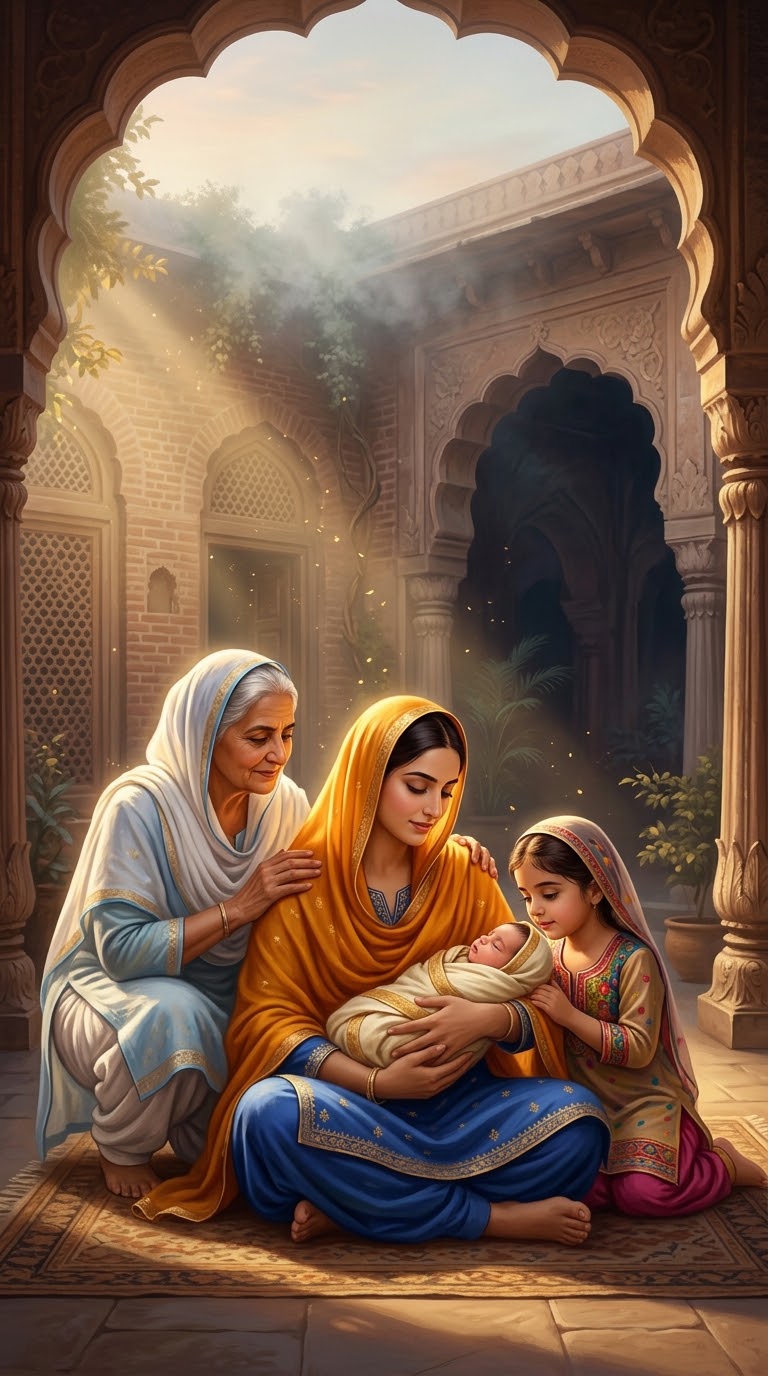

A Sikh mother in a saffron chunni holding her baby at dawn, women of three generations beside her in soft golden light

Gurbani · Shabad

Bhand Jammiai

Lyrics · Meaning · Audio

Guru Nanak's salok in honour of women: “From woman we are born … so why call her lesser, she who gives birth to kings?” Sung as an ode to the divine feminine.

Guru Nanak Dev Ji — a salok from Asa di Var, Guru Granth Sahib (Ang 473)

Listen

Bhand Jammiai

Maa Shakti Kaur · Waheguru

0:006:17
Collection
Gurbani
Type
Shabad
Verses
1
Language
Gurmukhi

Bhand Jammiai Lyrics with Meaning

Each line shows an easy way to say it, with its English meaning. Turn on the Gurmukhi, the exact pronunciation or the word-by-word meaning whenever you want to go deeper.

Salok, Mahalla 1

ਭੰਡਿ ਜੰਮੀਐ ਭੰਡਿ ਨਿੰਮੀਐ ਭੰਡਿ ਮੰਗਣੁ ਵੀਆਹੁ ॥

Bhand Jammeeai, Bhand Nimmeeai, Bhand Mangan Veeaahu

bhaṇḍi jammīai bhaṇḍi nimmīai bhaṇḍi mangaṇu vīāhu

From woman we are born, in woman we are conceived; to woman we are engaged and married.

    ਭੰਡਹੁ ਹੋਵੈ ਦੋਸਤੀ ਭੰਡਹੁ ਚਲੈ ਰਾਹੁ ॥

    Bhandahu Hovai Dostee, Bhandahu Chalai Raahu

    bhaṇḍahu hovai dosatī bhaṇḍahu chalai rāhu

    Through woman come friendship and kinship; through woman the way of the world goes on.

      ਭੰਡੁ ਮੁਆ ਭੰਡੁ ਭਾਲੀਐ ਭੰਡਿ ਹੋਵੈ ਬੰਧਾਨੁ ॥

      Bhand Muaa Bhand Bhaaleeai, Bhand Hovai Bandhaan

      bhaṇḍu muā bhaṇḍu bhālīai bhaṇḍi hovai bandhānu

      When a wife dies, another is sought; through woman the bonds of family are made.

        ਸੋ ਕਿਉ ਮੰਦਾ ਆਖੀਐ ਜਿਤੁ ਜੰਮਹਿ ਰਾਜਾਨ ॥

        So Kiu Mandaa Aakheeai, Jit Jammeh Raajaan

        so kiu mandā ākhīai jitu jammahi rājān

        So why call her lesser, she who gives birth to kings?

          ਭੰਡਹੁ ਹੀ ਭੰਡੁ ਊਪਜੈ ਭੰਡੈ ਬਾਝੁ ਨ ਕੋਇ ॥

          Bhandahu Hee Bhand Oopjai, Bhandai Baajh Na Koe

          bhaṇḍahu hī bhaṇḍu ūpajai bhaṇḍai bājhu na koi

          From woman, woman is born; without woman there would be no one at all.

            ਨਾਨਕ ਭੰਡੈ ਬਾਹਰਾ ਏਕੋ ਸਚਾ ਸੋਇ ॥

            Naanak Bhandai Baaharaa, Eko Sachaa Soe

            nānak bhaṇḍai bāharā eko sachā soi

            Nanak, only the One True Lord is beyond this, born of no woman.

              ਜਿਤੁ ਮੁਖਿ ਸਦਾ ਸਾਲਾਹੀਐ ਭਾਗਾ ਰਤੀ ਚਾਰਿ ॥

              Jit Mukh Sadaa Saalaaheeai, Bhaagaa Ratee Chaar

              jitu mukhi sadā sālāhīai bhāgā ratī chāri

              The mouth that always praises the Lord is blessed and beautiful.

                ਨਾਨਕ ਤੇ ਮੁਖ ਊਜਲੇ ਤਿਤੁ ਸਚੈ ਦਰਬਾਰਿ ॥੨॥

                Naanak Te Mukh Oojale, Tit Sachai Darbaar

                nānak te mukh ūjale titu sachai darabāri

                Nanak, those faces shine in the True Court.

                  About Bhand Jammiai

                  This salok comes from Asa di Var, the ballad Guru Nanak wrote in Raag Asa that is sung every morning in gurdwaras. In it he answers a common prejudice of his time, which treated women as impure or lesser.

                  Bhand means woman (literally a vessel, the one who carries life). Line after line, Guru Nanak points out that every person is conceived, born, married and connected to others through a woman, and then asks: so why call her bad, when she gives birth even to kings?

                  The salok ends by turning to praise: only the One True Lord stands beyond this chain of birth, and the mouth that praises the Lord is beautiful. It is often quoted as a foundation of the equality of women and men in Sikhism.

                  The Stories Behind the Mantra

                  Equality in the langar

                  Guru Nanak's teaching was put into daily practice by the Gurus who followed him. In the langar, the free community kitchen, everyone sits on the floor in the same rows and eats the same food, whatever their caste or gender.

                  Guru Amar Das, the third Guru, appointed women as well as men to lead Sikh communities, and spoke against the practices of purdah and sati. The words of this salok sit behind all of it.

                  How to Chant Bhand Jammiai

                  When to chant

                  • ✦On days that honour mothers, daughters and women
                  • ✦When you want to give thanks for the women in your life
                  • ✦In the morning, as part of Asa di Var

                  How many times

                  Sing the salok through once or three times.

                  1. 1

                    Bring to mind the women who carried and raised you.

                  2. 2

                    Sing the first six lines slowly, one gift of life at a time.

                  3. 3

                    Pause on the question, ‘So kiu manda aakhiai’, and let it be answered in the heart.

                  4. 4

                    Sing the last two lines as praise, and end in silence.

                  Pronunciation Guide

                  The sounds that trip people up most in this mantra, and how to say them.

                  bhaṇḍi

                  bhand — breathy ‘bh’; the ‘ṇḍ’ is made with the tongue curled back.

                  jammīai

                  jam-mee-ai — double ‘m’, held slightly.

                  vīāhu

                  vee-aa-hu — the wedding; three soft beats.

                  rājān

                  raa-jaan — kings; both vowels long.

                  Waheguru by Maa Shakti Kaur

                  The music

                  Waheguru

                  by Maa Shakti Kaur

                  More for Gurbani

                  You May Also Like

                  Frequently Asked Questions

                  What does ‘So kyon manda akhiye’ mean?

                  “So why call her bad (or lesser)?” Guru Nanak asks why anyone would look down on women, when every person, even a king, is born from a woman.

                  What does ‘bhand’ mean?

                  Woman. The word literally means a vessel, the one who carries life.

                  Where is Bhand Jammiai in the Guru Granth Sahib?

                  On Ang 473, as a salok in Asa di Var by Guru Nanak. Asa di Var is sung every morning in gurdwaras.

                  What does the last part of the salok mean?

                  Only the One True Lord is beyond being born of a woman, and the mouth that always praises the Lord is beautiful and shines in the True Court.

                  Text: Gurbani text from the Guru Granth Sahib (public domain), checked against BaniDB. Easy reading and English translation written for the Jaguar Medicine Tribe Mantra Library.

                  Music: Recordings by Maa Shakti Kaur, produced with AI-assisted vocals and instrumentation.

                  Note: Benefits described here are traditional beliefs, shared for understanding — not medical or guaranteed outcomes.